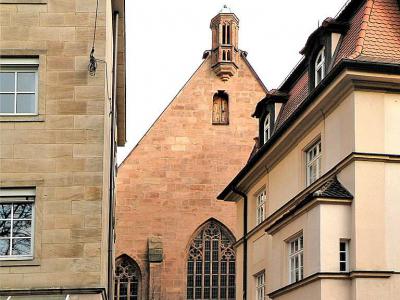


St. Martha's Church, Nuremberg
Saint Martha's Church is a historic medieval structure situated in the old town of Nuremberg. Originally established in 1363 by donors Conrad and John von Waldstomer along with an associated hospital, the church was consecrated in 1385. It became notable for its collection of stained-glass windows, generously endowed by affluent local families from 1390 to 1430, enhancing the church's chancel.
The Reformation led to the church's closure in 1526, after which it served an unconventional role as a theatre for the Nuremberg Meistersingers. By 1614, theatrical performances in churches were banned, and Saint Martha's was restored to religious use in 1627. Throughout its history, the church experienced minimal damage during World War II, surviving a bombing that struck its roof and central chancel arch, with complete restoration achieved by 1946.
A tragic event in the church's history occurred on 5 June 2014 when a fire severely damaged the interior and compromised the structure. However, the stained-glass windows were spared as they had been removed for renovations. The reconstruction did not aim to replicate the original state; instead, a contemporary interior designed by architect Florian Nagler was implemented. This modern design features a simple, elevated wooden ceiling and walls that retain visible signs of the fire damage, while the historically shaped chancel displays the preserved stained windows.
The church was temporarily closed for restoration, with the parish conducting services at the nearby Saint Klara church. Finally, on 10 November 2018, Saint Martha's Church was reopened, showcasing a blend of its historical architecture and modern renovations, continuing its legacy as a vital part of the Evangelical Reformed Church community in Nuremberg.
The Reformation led to the church's closure in 1526, after which it served an unconventional role as a theatre for the Nuremberg Meistersingers. By 1614, theatrical performances in churches were banned, and Saint Martha's was restored to religious use in 1627. Throughout its history, the church experienced minimal damage during World War II, surviving a bombing that struck its roof and central chancel arch, with complete restoration achieved by 1946.
A tragic event in the church's history occurred on 5 June 2014 when a fire severely damaged the interior and compromised the structure. However, the stained-glass windows were spared as they had been removed for renovations. The reconstruction did not aim to replicate the original state; instead, a contemporary interior designed by architect Florian Nagler was implemented. This modern design features a simple, elevated wooden ceiling and walls that retain visible signs of the fire damage, while the historically shaped chancel displays the preserved stained windows.
The church was temporarily closed for restoration, with the parish conducting services at the nearby Saint Klara church. Finally, on 10 November 2018, Saint Martha's Church was reopened, showcasing a blend of its historical architecture and modern renovations, continuing its legacy as a vital part of the Evangelical Reformed Church community in Nuremberg.
Want to visit this sight? Check out these Self-Guided Walking Tours in Nuremberg. Alternatively, you can download the mobile app "GPSmyCity: Walks in 1K+ Cities" from Apple App Store or Google Play Store. The app turns your mobile device to a personal tour guide and it works offline, so no data plan is needed when traveling abroad.
Download The GPSmyCity App



St. Martha's Church on Map
Sight Name: St. Martha's Church
Sight Location: Nuremberg, Germany (See walking tours in Nuremberg)
Sight Type: Religious
Sight Location: Nuremberg, Germany (See walking tours in Nuremberg)
Sight Type: Religious
Nearby Sights

Walking Tours in Nuremberg, Germany

Create Your Own Walk in Nuremberg
Creating your own self-guided walk in Nuremberg is easy and fun. Choose the city attractions that you want to see and a walk route map will be created just for you. You can even set your hotel as the start point of the walk.
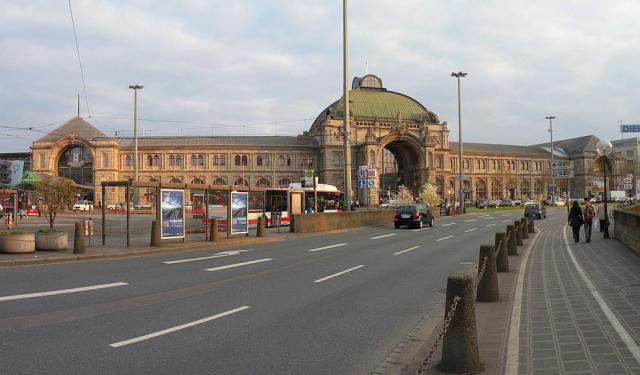
A Walk Through Nuremberg's Historical Old Town
American poet Henry Wadsworth Longfellow described Nuremberg as a “quaint old town of toil and traffic, quaint old town of art and song.”
Nuremberg has witnessed some of the most significant events in German history. For many people, the city is first associated with the rise of the Third Reich, the Nazi Party rallies, and the postwar trials of Nazi leaders. Indeed, Hitler regarded... view more
Tour Duration: 3 Hour(s)
Travel Distance: 3.8 Km or 2.4 Miles
Nuremberg has witnessed some of the most significant events in German history. For many people, the city is first associated with the rise of the Third Reich, the Nazi Party rallies, and the postwar trials of Nazi leaders. Indeed, Hitler regarded... view more
Tour Duration: 3 Hour(s)
Travel Distance: 3.8 Km or 2.4 Miles
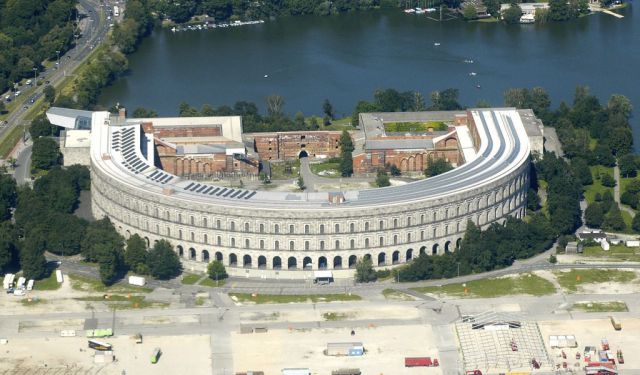
Hitler's Nuremberg Tour
Nuremberg’s association with Adolf Hitler and National Socialism is one of the darkest chapters in the city’s history. Although Nuremberg is known for its medieval architecture and storybook appearance, few German cities are as closely intertwined with the Nazi legacy. Hitler referred to it as the “City of the Party Rallies” and regarded it as a model for the ideal German city.
The... view more
Tour Duration: 2 Hour(s)
Travel Distance: 4.9 Km or 3 Miles
The... view more
Tour Duration: 2 Hour(s)
Travel Distance: 4.9 Km or 3 Miles