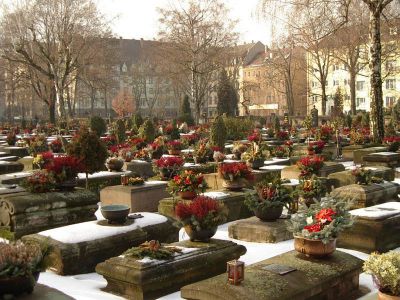


St. Rochus Cemetery, Nuremberg
Saint Rochus Cemetery (Rochusfriedhof) is located in the Gostenhof quarter of Nuremberg. Established in the late 1510s, the cemetery was specifically created to bury the victims of the plague epidemic that swept through the region from 1517 to 1518. To contain the spread of the disease, the cemetery was strategically positioned outside the old city walls.
The cemetery was consecrated on March 21, 1519, marking its official readiness to serve the community during a time of great need. A significant architectural addition to the cemetery is the Saint Rochus Chapel (Rochuskapelle), constructed between 1520 and 1521. The design of the chapel was the work of Hans Beheim the Elder, a renowned architect who also contributed to the Johannisfriedhof, another historic cemetery in Nuremberg.
Saint Rochus Cemetery parallels the Johannis Cemetery in its historical context and significance, though it primarily served the residents of the Lorenzer Old Town, which was predominantly inhabited by craftsmen and members of the lower middle class. Unlike Johannis Cemetery, which became the principal burial site for many of Nuremberg's notable citizens, Saint Rochus does not house as many famous graves.
The exterior of the Rochus Chapel is unassuming, giving little indication of the valuable artifacts it contains. These treasures, however, are not accessible to the public. The chapel was privately commissioned by the Imhoff family, who continue to own it to this day, adding a layer of personal history and exclusivity to the site.
The cemetery was consecrated on March 21, 1519, marking its official readiness to serve the community during a time of great need. A significant architectural addition to the cemetery is the Saint Rochus Chapel (Rochuskapelle), constructed between 1520 and 1521. The design of the chapel was the work of Hans Beheim the Elder, a renowned architect who also contributed to the Johannisfriedhof, another historic cemetery in Nuremberg.
Saint Rochus Cemetery parallels the Johannis Cemetery in its historical context and significance, though it primarily served the residents of the Lorenzer Old Town, which was predominantly inhabited by craftsmen and members of the lower middle class. Unlike Johannis Cemetery, which became the principal burial site for many of Nuremberg's notable citizens, Saint Rochus does not house as many famous graves.
The exterior of the Rochus Chapel is unassuming, giving little indication of the valuable artifacts it contains. These treasures, however, are not accessible to the public. The chapel was privately commissioned by the Imhoff family, who continue to own it to this day, adding a layer of personal history and exclusivity to the site.
Want to visit this sight? Check out these Self-Guided Walking Tours in Nuremberg. Alternatively, you can download the mobile app "GPSmyCity: Walks in 1K+ Cities" from Apple App Store or Google Play Store. The app turns your mobile device to a personal tour guide and it works offline, so no data plan is needed when traveling abroad.
Download The GPSmyCity App



St. Rochus Cemetery on Map
Sight Name: St. Rochus Cemetery
Sight Location: Nuremberg, Germany (See walking tours in Nuremberg)
Sight Type: Attraction/Landmark
Sight Location: Nuremberg, Germany (See walking tours in Nuremberg)
Sight Type: Attraction/Landmark
Nearby Sights

Walking Tours in Nuremberg, Germany

Create Your Own Walk in Nuremberg
Creating your own self-guided walk in Nuremberg is easy and fun. Choose the city attractions that you want to see and a walk route map will be created just for you. You can even set your hotel as the start point of the walk.
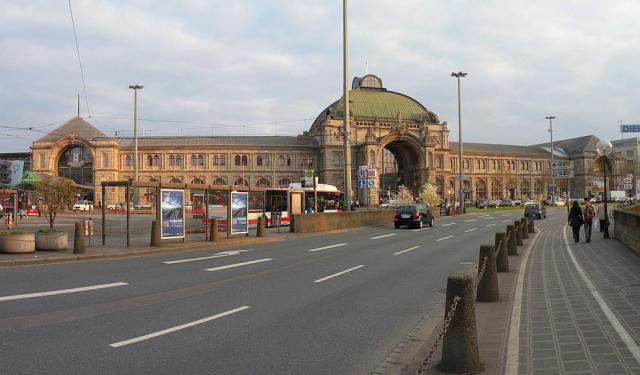
A Walk Through Nuremberg's Historical Old Town
American poet Henry Wadsworth Longfellow described Nuremberg as a “quaint old town of toil and traffic, quaint old town of art and song.”
Nuremberg has witnessed some of the most significant events in German history. For many people, the city is first associated with the rise of the Third Reich, the Nazi Party rallies, and the postwar trials of Nazi leaders. Indeed, Hitler regarded... view more
Tour Duration: 3 Hours
Travel Distance: 3.8 Km or 2.4 Miles
Nuremberg has witnessed some of the most significant events in German history. For many people, the city is first associated with the rise of the Third Reich, the Nazi Party rallies, and the postwar trials of Nazi leaders. Indeed, Hitler regarded... view more
Tour Duration: 3 Hours
Travel Distance: 3.8 Km or 2.4 Miles
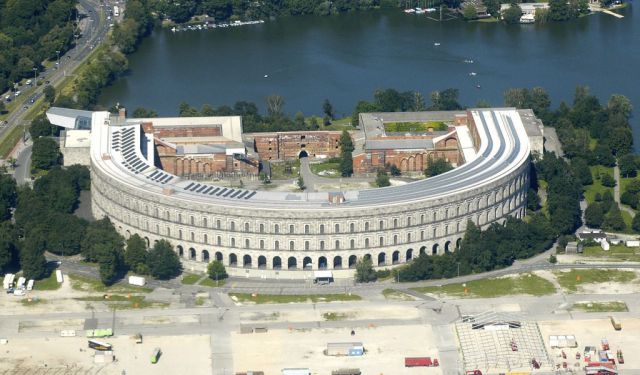
Hitler's Nuremberg Tour
Nuremberg’s association with Adolf Hitler and National Socialism is one of the darkest chapters in the city’s history. Although Nuremberg is known for its medieval architecture and storybook appearance, few German cities are as closely intertwined with the Nazi legacy. Hitler referred to it as the “City of the Party Rallies” and regarded it as a model for the ideal German city.
The... view more
Tour Duration: 2 Hours
Travel Distance: 4.9 Km or 3 Miles
The... view more
Tour Duration: 2 Hours
Travel Distance: 4.9 Km or 3 Miles
City Walks Overview
