


St. Stephens Church, Nottingham
Saint Stephen’s Church in Sneinton is a Grade II listed parish church of the Church of England, located in the eastern suburb of Nottingham. With roots reaching back to medieval times, the church was originally under the spiritual care of Lenton Priory. After the Dissolution of the Monasteries, it came under the administration of clergy from Saint Mary's Church, Nottingham, until Sneinton was established as an independent parish in 1866.
The present building dates from 1837 and was designed by noted architect Thomas Rickman. Built by W. Surplice of Nottingham, the church stands out as one of the earliest examples of Gothic Revival architecture in Nottinghamshire. It was funded in part by the Church Building Commission, earning it the designation of a Commissioners' church.
Saint Stephen’s became a pioneering church in Nottingham for its early adoption of high-church liturgical practices. By 1853, it had already introduced a surpliced male choir and the intoning of prayers-practices not yet seen in nearby Anglican churches such as Saint Mary's, which only followed suit in 1868.
The church was expanded between 1909 and 1912 under architect Cecil Greenwood Hare, following designs by George Frederick Bodley. Bodley also designed the ornate reredos, carved in Oberammergau, which illustrates scenes from the life of Christ. Additionally, the church houses choir stalls from the 14th or 15th century, originally from Saint Mary's. These stalls, featuring finely carved medieval misericords, were acquired in 1848 by the then-organist of Saint Stephen’s.
Of cultural note, the parents of author D. H. Lawrence were married here on 27 December 1875. Since 2003, following the closure of Saint Matthias’ Church, the parish has been known as Saint Stephen and Saint Matthias.
The present building dates from 1837 and was designed by noted architect Thomas Rickman. Built by W. Surplice of Nottingham, the church stands out as one of the earliest examples of Gothic Revival architecture in Nottinghamshire. It was funded in part by the Church Building Commission, earning it the designation of a Commissioners' church.
Saint Stephen’s became a pioneering church in Nottingham for its early adoption of high-church liturgical practices. By 1853, it had already introduced a surpliced male choir and the intoning of prayers-practices not yet seen in nearby Anglican churches such as Saint Mary's, which only followed suit in 1868.
The church was expanded between 1909 and 1912 under architect Cecil Greenwood Hare, following designs by George Frederick Bodley. Bodley also designed the ornate reredos, carved in Oberammergau, which illustrates scenes from the life of Christ. Additionally, the church houses choir stalls from the 14th or 15th century, originally from Saint Mary's. These stalls, featuring finely carved medieval misericords, were acquired in 1848 by the then-organist of Saint Stephen’s.
Of cultural note, the parents of author D. H. Lawrence were married here on 27 December 1875. Since 2003, following the closure of Saint Matthias’ Church, the parish has been known as Saint Stephen and Saint Matthias.
Want to visit this sight? Check out these Self-Guided Walking Tours in Nottingham. Alternatively, you can download the mobile app "GPSmyCity: Walks in 1K+ Cities" from Apple App Store or Google Play Store. The app turns your mobile device to a personal tour guide and it works offline, so no data plan is needed when traveling abroad.
Download The GPSmyCity App



St. Stephens Church on Map
Sight Name: St. Stephens Church
Sight Location: Nottingham, England (See walking tours in Nottingham)
Sight Type: Religious
Sight Location: Nottingham, England (See walking tours in Nottingham)
Sight Type: Religious
Nearby Sights

Walking Tours in Nottingham, England

Create Your Own Walk in Nottingham
Creating your own self-guided walk in Nottingham is easy and fun. Choose the city attractions that you want to see and a walk route map will be created just for you. You can even set your hotel as the start point of the walk.
Nottingham's Historical Buildings Tour
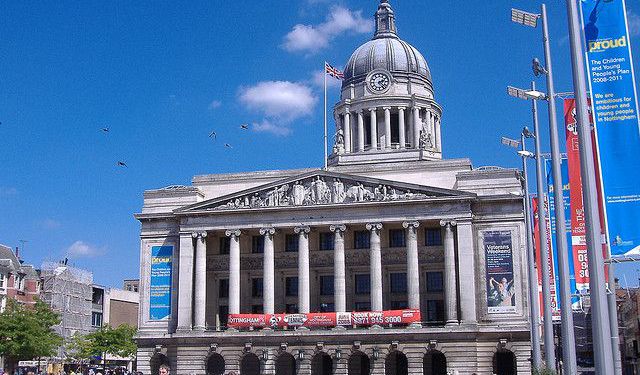
Given the variety of architectural styles and designs in Nottingham, England, it is safe to call it the city of contrasts. The tapestry of historical buildings found here, each weaving a unique story of the city's past, is quite rich and worthy of attention.
Among these architectural treasures is the Bell Inn, a charming establishment steeped in history and character. Its traditional... view more
Tour Duration: 2 Hours
Travel Distance: 3.9 Km or 2.4 Miles
Among these architectural treasures is the Bell Inn, a charming establishment steeped in history and character. Its traditional... view more
Tour Duration: 2 Hours
Travel Distance: 3.9 Km or 2.4 Miles

Nottingham's Historic City Center Walking Tour
Nottingham was known only as "The Place of Caves" in 600 AD. A Saxon chief named Snot ruled "Snotingaham", or, "the home of Snot's people." It was part of Danelaw in the 7th century, administered from a stone Hall on High Pavement, the first street of Nottingham.
In 1068 Norman invaders built a wooden motte-and-bailey fortress on a high sandstone promontory.... view more
Tour Duration: 2 Hours
Travel Distance: 2.5 Km or 1.6 Miles
In 1068 Norman invaders built a wooden motte-and-bailey fortress on a high sandstone promontory.... view more
Tour Duration: 2 Hours
Travel Distance: 2.5 Km or 1.6 Miles
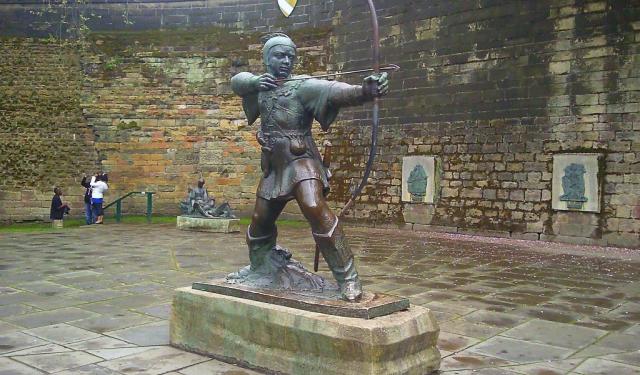
Robin Hood Trail
There's hardly anyone on this planet who hasn't heard of Robin Hood. Apparently, a Saxon nobleman born in 1160 in Loxley, this hero of numerous ballads, some dating back as far as the 14th century, earned fame by robbing from the rich and giving it back to the poor. A skilled archer and sword fighter as he was, Robin Hood famously defended villagers from attacks by corrupt noblemen,... view more
Tour Duration: 1 Hour
Travel Distance: 1.5 Km or 0.9 Miles
Tour Duration: 1 Hour
Travel Distance: 1.5 Km or 0.9 Miles
City Walks Overview
