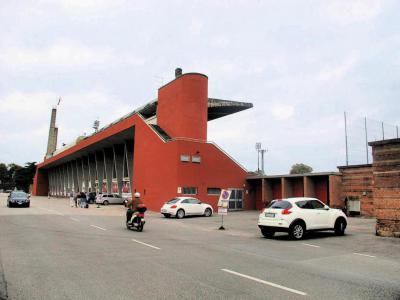


Stadio Porta Elisa (Porta Elisa Stadium), Lucca
Porta Elisa Stadium (Stadio Porta Elisa) is a historic multi-use stadium in Lucca, primarily serving as the home ground for A.S. Lucchese-Libertas. The stadium, inaugurated on January 20, 1935, during a match between U.S. Lucchese Libertas and Pro Patria et Libertate U.S.B. (which ended 2-0 in favor of the Rossoneri), has hosted the club’s home games uninterrupted since its opening.
Named after Porta Elisa, a gate on the eastern side of Lucca’s historic walls, the stadium was built with a football-centric design, featuring four distinct stands. The south stand, which is the only covered section, exhibits an interesting modernist architectural style. A distinguishing feature of the stadium is the ditch separating the stands from the pitch, a remnant of its original design that once included an athletics track. The facility was upgraded with floodlights in 1970, and further modifications in the 1990s saw the construction of the current stands behind the goals and the addition of lower rows to the south stand.
Porta Elisa Stadium, historically significant but largely unchanged, is set for redevelopment under 2021 plans. The pitch will move 8 meters closer to the south stand, while the east, north, and west stands will be replaced with new covered structures connected at the corners. Floodlight masts will be replaced with integrated canopy lighting.
Beyond football, the project envisions a multifunctional stadium, integrating underground parking, office spaces, a museum, and a library, ensuring year-round use. A wide promenade will top the new stands, and green areas surrounding the facility will echo Lucca’s city walls, which are similarly enveloped by lush landscapes. Upon completion, the stadium’s capacity will be expanded to accommodate 12,000 spectators, ensuring its continued role as a vibrant sporting and cultural venue in Lucca.
Named after Porta Elisa, a gate on the eastern side of Lucca’s historic walls, the stadium was built with a football-centric design, featuring four distinct stands. The south stand, which is the only covered section, exhibits an interesting modernist architectural style. A distinguishing feature of the stadium is the ditch separating the stands from the pitch, a remnant of its original design that once included an athletics track. The facility was upgraded with floodlights in 1970, and further modifications in the 1990s saw the construction of the current stands behind the goals and the addition of lower rows to the south stand.
Porta Elisa Stadium, historically significant but largely unchanged, is set for redevelopment under 2021 plans. The pitch will move 8 meters closer to the south stand, while the east, north, and west stands will be replaced with new covered structures connected at the corners. Floodlight masts will be replaced with integrated canopy lighting.
Beyond football, the project envisions a multifunctional stadium, integrating underground parking, office spaces, a museum, and a library, ensuring year-round use. A wide promenade will top the new stands, and green areas surrounding the facility will echo Lucca’s city walls, which are similarly enveloped by lush landscapes. Upon completion, the stadium’s capacity will be expanded to accommodate 12,000 spectators, ensuring its continued role as a vibrant sporting and cultural venue in Lucca.
Want to visit this sight? Check out these Self-Guided Walking Tours in Lucca. Alternatively, you can download the mobile app "GPSmyCity: Walks in 1K+ Cities" from Apple App Store or Google Play Store. The app turns your mobile device to a personal tour guide and it works offline, so no data plan is needed when traveling abroad.
Download The GPSmyCity App



Stadio Porta Elisa (Porta Elisa Stadium) on Map
Sight Name: Stadio Porta Elisa (Porta Elisa Stadium)
Sight Location: Lucca, Italy (See walking tours in Lucca)
Sight Type: Attraction/Landmark
Sight Location: Lucca, Italy (See walking tours in Lucca)
Sight Type: Attraction/Landmark
Nearby Sights

Walking Tours in Lucca, Italy

Create Your Own Walk in Lucca
Creating your own self-guided walk in Lucca is easy and fun. Choose the city attractions that you want to see and a walk route map will be created just for you. You can even set your hotel as the start point of the walk.
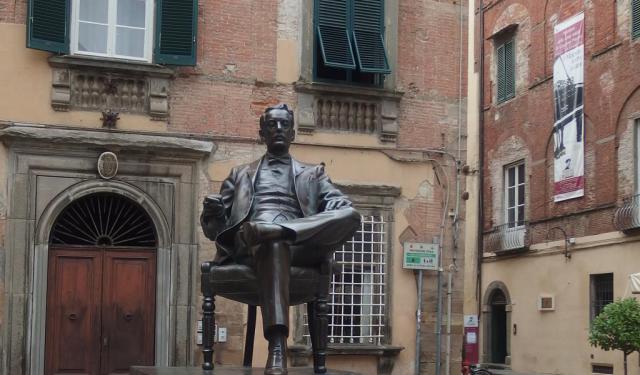
Discover Puccini's Lucca on Foot
One of the greatest musical talents of mankind, Italian composer Giacomo Puccini, was born and spent a substantial part of his life in the Tuscan city of Lucca. Today the legacy of Puccini resonates all over the world and even more so here.
Puccini's ancestors, also musicians, moved to Lucca in 1719. The future maestro was born in a house that had belonged to his family since 1815 - Casa... view more
Tour Duration: 1 Hour
Travel Distance: 1.5 Km or 0.9 Miles
Puccini's ancestors, also musicians, moved to Lucca in 1719. The future maestro was born in a house that had belonged to his family since 1815 - Casa... view more
Tour Duration: 1 Hour
Travel Distance: 1.5 Km or 0.9 Miles
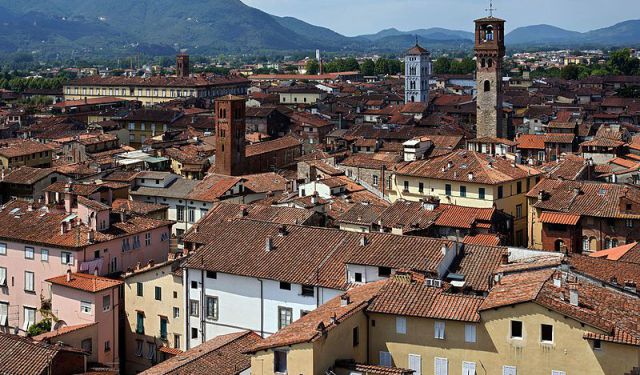
Lucca Old Town Walking Tour
Lucca is called many things: a city of arts, a city of churches, gardens, towers. Most of all it is known for its walls. From Roman times until now the walls have stood. It is the only city in Italy that has kept its walls intact.
The inner walled city is laid out in the ancient Roman grid plan. The Piazza San Michele is the site of the old forum. Bits of the Roman amphitheater can be found in... view more
Tour Duration: 2 Hours
Travel Distance: 2.9 Km or 1.8 Miles
The inner walled city is laid out in the ancient Roman grid plan. The Piazza San Michele is the site of the old forum. Bits of the Roman amphitheater can be found in... view more
Tour Duration: 2 Hours
Travel Distance: 2.9 Km or 1.8 Miles
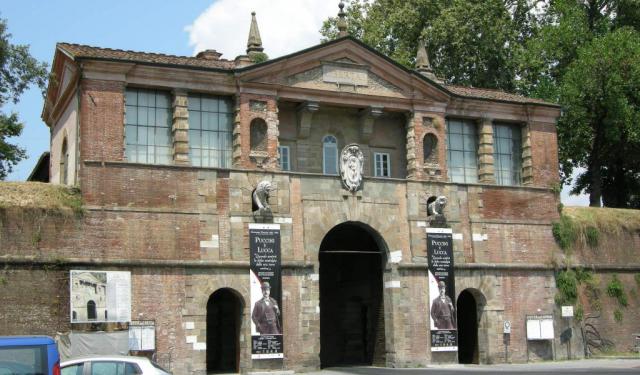
Lucca's City Wall and Gates Walking Tour
As one of Italy's Città d'arte's (arts towns), Lucca is famous, among other things, for its well-preserved ancient walls encircling the historic center. From about 570 AD until 1847 the city had been the center of the Longobard administration and the capital of old Tuscany, and as such required a defense system to render it an impenetrable fortress.
Back in the Middle Ages, the... view more
Tour Duration: 2 Hours
Travel Distance: 3.7 Km or 2.3 Miles
Back in the Middle Ages, the... view more
Tour Duration: 2 Hours
Travel Distance: 3.7 Km or 2.3 Miles