


Stanley Palace, Chester
Stanley Palace, located on Watergate Street in Chester is a remarkable Grade II* listed building, recognized for its architectural and historical significance. Built in 1591 as a townhouse for Sir Peter Warburton, a prominent lawyer and Member of Parliament, the palace has a storied history spanning over four centuries, serving various roles including private apartments, a boys' school, and a museum.
The house was constructed on the site of the former Black (Dominican) Friary, which dates back to medieval times. Upon Sir Peter Warburton's death in 1621, the house was inherited by his daughter, who married Sir Thomas Stanley, giving the residence its enduring name. During the English Civil Wars, James Stanley, the 7th Earl of Derby, was held under arrest in the house before being transported to Bolton for execution.
In the early 18th century, part of the house was demolished, and the southwest wing was rebuilt. By the 19th century, it was divided into apartments and fell into decline. In the 1870s, it became a boys' school, and in 1889, the 15th Earl of Derby acquired it. By the 1920s, Stanley Palace housed a museum with "1,000 curios." The north wing was rebuilt in 1935.
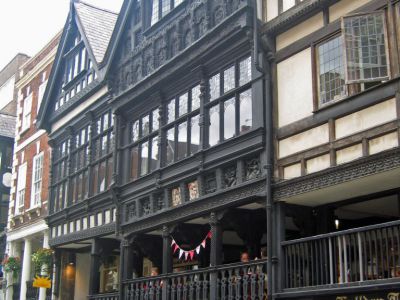
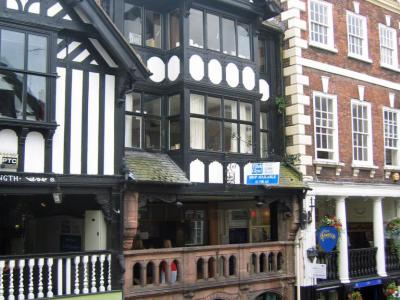
Stanley Palace is a striking example of Elizabethan architecture with its distinctive timber-framed construction resting on an ashlar sandstone plinth. The two-story structure features slate roofs and showcases four prominent gables on the east facade and three on the north, which faces Watergate Street.
Today, Stanley Palace is administered by the Friends of Stanley Palace and serves as a hireable space for meetings, events, and other community activities. Its historical significance and charming architecture make it a valuable cultural landmark in Chester.
The house was constructed on the site of the former Black (Dominican) Friary, which dates back to medieval times. Upon Sir Peter Warburton's death in 1621, the house was inherited by his daughter, who married Sir Thomas Stanley, giving the residence its enduring name. During the English Civil Wars, James Stanley, the 7th Earl of Derby, was held under arrest in the house before being transported to Bolton for execution.
In the early 18th century, part of the house was demolished, and the southwest wing was rebuilt. By the 19th century, it was divided into apartments and fell into decline. In the 1870s, it became a boys' school, and in 1889, the 15th Earl of Derby acquired it. By the 1920s, Stanley Palace housed a museum with "1,000 curios." The north wing was rebuilt in 1935.
Stanley Palace is a striking example of Elizabethan architecture with its distinctive timber-framed construction resting on an ashlar sandstone plinth. The two-story structure features slate roofs and showcases four prominent gables on the east facade and three on the north, which faces Watergate Street.
Today, Stanley Palace is administered by the Friends of Stanley Palace and serves as a hireable space for meetings, events, and other community activities. Its historical significance and charming architecture make it a valuable cultural landmark in Chester.
Want to visit this sight? Check out these Self-Guided Walking Tours in Chester. Alternatively, you can download the mobile app "GPSmyCity: Walks in 1K+ Cities" from Apple App Store or Google Play Store. The app turns your mobile device to a personal tour guide and it works offline, so no data plan is needed when traveling abroad.
Download The GPSmyCity App



Stanley Palace on Map
Sight Name: Stanley Palace
Sight Location: Chester, England (See walking tours in Chester)
Sight Type: Attraction/Landmark
Sight Location: Chester, England (See walking tours in Chester)
Sight Type: Attraction/Landmark
Nearby Sights

Walking Tours in Chester, England

Create Your Own Walk in Chester
Creating your own self-guided walk in Chester is easy and fun. Choose the city attractions that you want to see and a walk route map will be created just for you. You can even set your hotel as the start point of the walk.
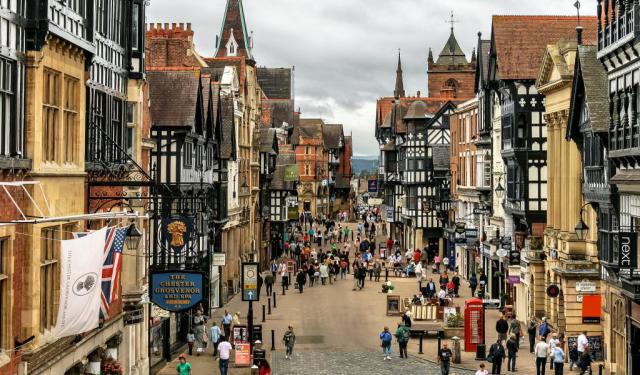
A Walking Guide To Chester's Medieval Old Town
Chester is a walled city in Cheshire. It was originally founded in 79 AD as a Roman fort with the name Deva Victrix. It was garrisoned until the 4th century when it was abandoned by the Romans. It is thought that the area was settled by Anglo-Saxons during medieval times. It was also briefly occupied by the Danes.
Chester was very important during the Industrial Revolution. This is largely due... view more
Tour Duration: 2 Hours
Travel Distance: 2.4 Km or 1.5 Miles
Chester was very important during the Industrial Revolution. This is largely due... view more
Tour Duration: 2 Hours
Travel Distance: 2.4 Km or 1.5 Miles
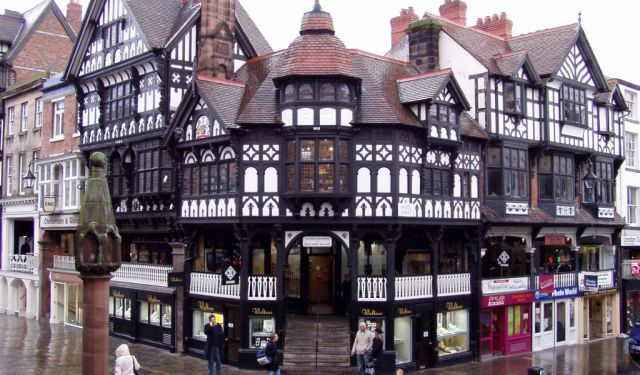
Chester's Black-and-white Architecture Tour
While the origins of Chester date back to Roman Times, much of the city center, and by far the greatest part of it, looks medieval. Indeed, if you visit the city, the first thing you notice is the magnificent black-and-white architecture. Despite their appearance, however, the majority of these buildings are Victorian by the time of construction.
The Black-and-White Revival was an architectural... view more
Tour Duration: 1 Hour
Travel Distance: 1 Km or 0.6 Miles
The Black-and-White Revival was an architectural... view more
Tour Duration: 1 Hour
Travel Distance: 1 Km or 0.6 Miles
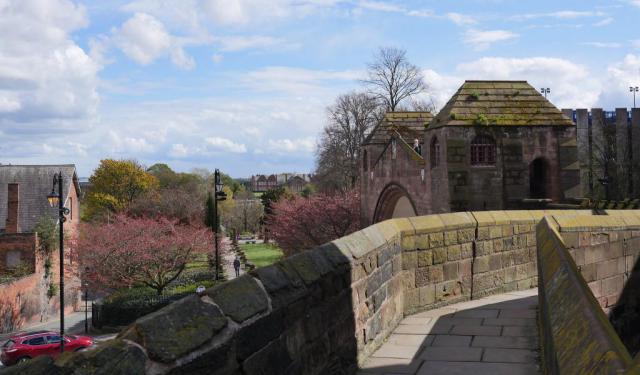
Explore Chester's Ancient City Walls on Foot
Chester City Walls are the oldest, longest and most complete (missing only just about 100 meters) historic defensive structure in Britain. Walking the full circuit of this ancient fortification provides wondrous views, wherever you choose to go, down into the city, and offers a fantastic insight into Chester's rich history.
First built by the Romans almost 2,000 years ago, the Walls were... view more
Tour Duration: 2 Hours
Travel Distance: 2.3 Km or 1.4 Miles
First built by the Romans almost 2,000 years ago, the Walls were... view more
Tour Duration: 2 Hours
Travel Distance: 2.3 Km or 1.4 Miles