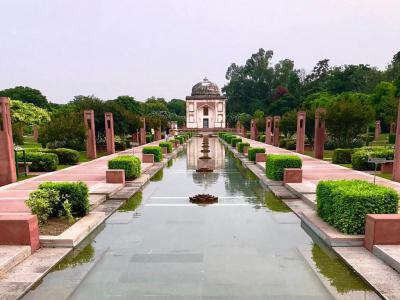


Sunder Nursery, Delhi (must see)
Sunder Nursery, previously known as Azim Bagh or Bagh-e-Azeem, stands as a 16th-century heritage park complex adjacent to Delhi's renowned Humayun's Tomb, designated as a UNESCO World Heritage site. Originating in the 16th century under the name Azim Bagh and crafted by the Mughals, this sprawling park spans 90 acres (36 hectares).
Ambitious plans seek to extend its reach, linking nearby areas to transform it into India's grandest park, covering an expansive 900 acres. At present, Sunder Nursery boasts a collection of fifteen precious heritage monuments, six of which hold UNESCO World Heritage status. Among these, the Sundarwala Burj, Sundarwala Mahal, and Lakkarwala Burj are diligently protected by the Archaeological Survey of India (ASI).
A significant restoration effort commenced in 2007, culminating in the reopening of the nursery to the public on 21st February 2018, now reimagined as a cherished heritage park. Abundantly green, it proudly houses over 300 diverse tree species, earning the distinction of Delhi's inaugural arboretum.
During British rule, the nursery was established to cultivate experimental plants, further enhanced by the presence of a serene lake, which eventually led to its classification as a nursery. The appellation "Sunder" draws inspiration from the Sunder Burj tomb located within the park's confines. Notably, even with the continued usage of the name Sunder Nursery, the park has been aptly likened to Delhi's version of a 'Central Park' following its comprehensive renovations, though it should not be confused with the central park in Connaught Place, New Delhi.
Ambitious plans seek to extend its reach, linking nearby areas to transform it into India's grandest park, covering an expansive 900 acres. At present, Sunder Nursery boasts a collection of fifteen precious heritage monuments, six of which hold UNESCO World Heritage status. Among these, the Sundarwala Burj, Sundarwala Mahal, and Lakkarwala Burj are diligently protected by the Archaeological Survey of India (ASI).
A significant restoration effort commenced in 2007, culminating in the reopening of the nursery to the public on 21st February 2018, now reimagined as a cherished heritage park. Abundantly green, it proudly houses over 300 diverse tree species, earning the distinction of Delhi's inaugural arboretum.
During British rule, the nursery was established to cultivate experimental plants, further enhanced by the presence of a serene lake, which eventually led to its classification as a nursery. The appellation "Sunder" draws inspiration from the Sunder Burj tomb located within the park's confines. Notably, even with the continued usage of the name Sunder Nursery, the park has been aptly likened to Delhi's version of a 'Central Park' following its comprehensive renovations, though it should not be confused with the central park in Connaught Place, New Delhi.
Want to visit this sight? Check out these Self-Guided Walking Tours in Delhi. Alternatively, you can download the mobile app "GPSmyCity: Walks in 1K+ Cities" from Apple App Store or Google Play Store. The app turns your mobile device to a personal tour guide and it works offline, so no data plan is needed when traveling abroad.
Download The GPSmyCity App



Sunder Nursery on Map
Sight Name: Sunder Nursery
Sight Location: Delhi, India (See walking tours in Delhi)
Sight Type: Attraction/Landmark
Sight Location: Delhi, India (See walking tours in Delhi)
Sight Type: Attraction/Landmark
Nearby Sights



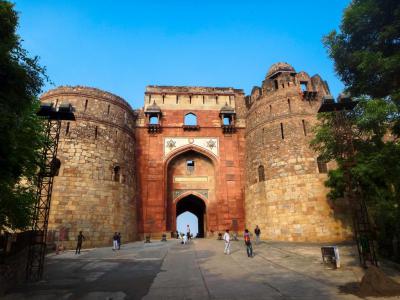

Walking Tours in Delhi, India

Create Your Own Walk in Delhi
Creating your own self-guided walk in Delhi is easy and fun. Choose the city attractions that you want to see and a walk route map will be created just for you. You can even set your hotel as the start point of the walk.
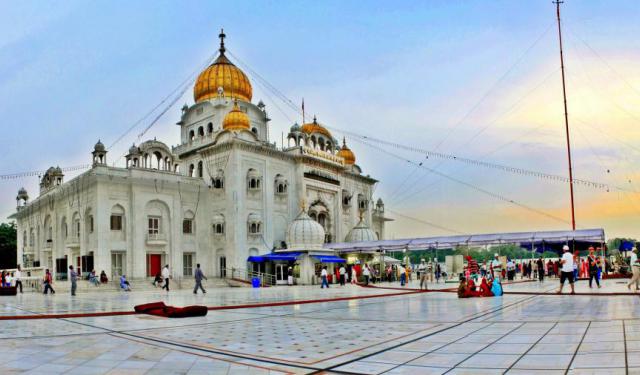
New Delhi City Center Walking Tour
Delhi is the second largest city in India and one of the world's oldest metropolitan areas, continuously inhabited since the 6th century BC. Due to its location, for years this place has been coveted by numerous empires and dynasties, starting from the ancient ruler of the Kuru Empire to the British Raj, who have fought for and seized control of it.
Although Delhi has more than two... view more
Tour Duration: 2 Hours
Travel Distance: 5.2 Km or 3.2 Miles
Although Delhi has more than two... view more
Tour Duration: 2 Hours
Travel Distance: 5.2 Km or 3.2 Miles
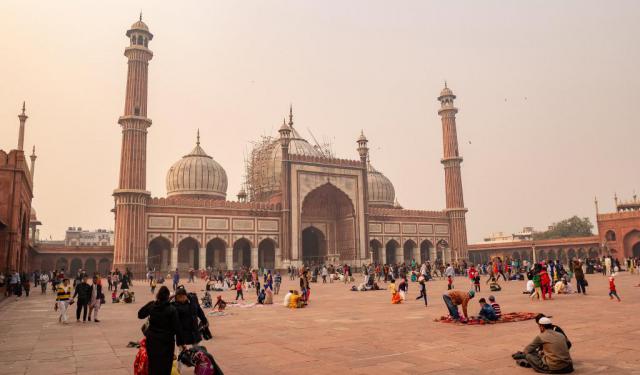
Old Delhi Walking Tour
Old Delhi, as a walled city, was founded in 1639 under the Mughal emperor Shah Jahan, who decided to move his domain's capital here from Agra. The construction of the city was completed in 1648, from which point on Delhi had remained the capital of the Mughal Empire until its fall in 1857.
Once filled with mansions and havelis (traditional townhouses) of the nobles and members of the royal... view more
Tour Duration: 2 Hours
Travel Distance: 3.3 Km or 2.1 Miles
Once filled with mansions and havelis (traditional townhouses) of the nobles and members of the royal... view more
Tour Duration: 2 Hours
Travel Distance: 3.3 Km or 2.1 Miles
Useful Travel Guides for Planning Your Trip

Delhi Shopping Tips: 16 Indian Goods To Bring Home
Singling out a thing or two for a gift from India, in general, and Delhi, in particular, is a tough job indeed, for this part of the world is rightly reputed to be the treasure trove of all things exciting. Spices, exotic food, jewellery, objects of art, oriental fashion... The list can be long....
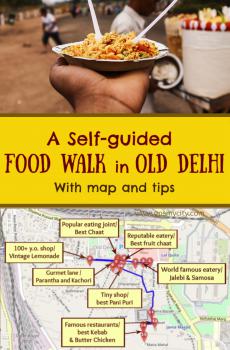
A Self-Guided Food Walk in Old Delhi
India, the Land of Spices, is a long standing superpower in terms of food whose cooking, once exotic, in recent decades has splashed out far and wide across continents. Amid the country's myriads of regional cuisines, Old Delhi has its own loud say on the matter - something one can easily...
City Walks Overview
