

Tallow House, Nuremberg
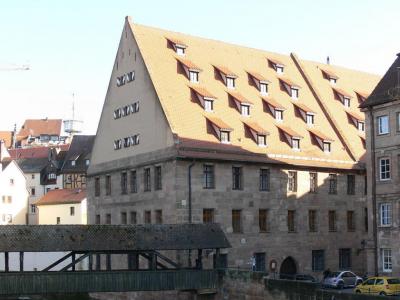
Tallow House, located in Nuremberg, boasts a rich history dating back to its construction in 1491 by Hans Beheim the Elder. Originally one of the city's seven granaries, the building was architecturally notable for its 76 skylights incorporated into a four-story roof structure, designed to ventilate the granary. These features now appear as historical windows in the form of dormers on the high roof.
From 1562 until 1835, Tallow House operated under the city's monopoly authority for the sale of fat, specifically lard, which was a vital raw material for producing tallow candles, soap, automobile grease, and shoe wax. This lucrative business led to the building's German name, "Unschlitthaus," meaning "Fat House."
Transitioning in function through the years, from 1839 to 1899, it served as a school and calibration office, and later, the city pawnshop was established there in 1899. During the Second World War, specifically on January 2, 1945, Tallow House was significantly damaged by bombing. The northern part of the building was later reconstructed, while the southern part remains preserved in its original form, including its impressive roof structure.
Today, Tallow House is distinguished by its substantial and carefully designed architecture, featuring a Gothic portal on the south side, an ornate Gothic stepped pediment, and an overhanging roof. The northern wall of the building is part of the protective structure along the Pegnitz River, integrating it into the city's historic fabric. The building currently serves various government and commercial purposes, continuing its long-standing presence in the heart of Nuremberg.
From 1562 until 1835, Tallow House operated under the city's monopoly authority for the sale of fat, specifically lard, which was a vital raw material for producing tallow candles, soap, automobile grease, and shoe wax. This lucrative business led to the building's German name, "Unschlitthaus," meaning "Fat House."
Transitioning in function through the years, from 1839 to 1899, it served as a school and calibration office, and later, the city pawnshop was established there in 1899. During the Second World War, specifically on January 2, 1945, Tallow House was significantly damaged by bombing. The northern part of the building was later reconstructed, while the southern part remains preserved in its original form, including its impressive roof structure.
Today, Tallow House is distinguished by its substantial and carefully designed architecture, featuring a Gothic portal on the south side, an ornate Gothic stepped pediment, and an overhanging roof. The northern wall of the building is part of the protective structure along the Pegnitz River, integrating it into the city's historic fabric. The building currently serves various government and commercial purposes, continuing its long-standing presence in the heart of Nuremberg.
Want to visit this sight? Check out these Self-Guided Walking Tours in Nuremberg. Alternatively, you can download the mobile app "GPSmyCity: Walks in 1K+ Cities" from Apple App Store or Google Play Store. The app turns your mobile device to a personal tour guide and it works offline, so no data plan is needed when traveling abroad.
Download The GPSmyCity App



Tallow House on Map
Sight Name: Tallow House
Sight Location: Nuremberg, Germany (See walking tours in Nuremberg)
Sight Type: Attraction/Landmark
Sight Location: Nuremberg, Germany (See walking tours in Nuremberg)
Sight Type: Attraction/Landmark
Nearby Sights

Walking Tours in Nuremberg, Germany

Create Your Own Walk in Nuremberg
Creating your own self-guided walk in Nuremberg is easy and fun. Choose the city attractions that you want to see and a walk route map will be created just for you. You can even set your hotel as the start point of the walk.
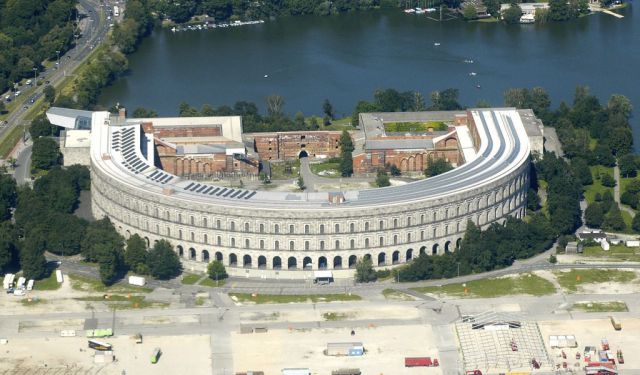
Hitler's Nuremberg Tour
Nuremberg’s association with Adolf Hitler and National Socialism is one of the darkest chapters in the city’s history. Although Nuremberg is known for its medieval architecture and storybook appearance, few German cities are as closely intertwined with the Nazi legacy. Hitler referred to it as the “City of the Party Rallies” and regarded it as a model for the ideal German city.
The... view more
Tour Duration: 2 Hour(s)
Travel Distance: 4.9 Km or 3 Miles
The... view more
Tour Duration: 2 Hour(s)
Travel Distance: 4.9 Km or 3 Miles
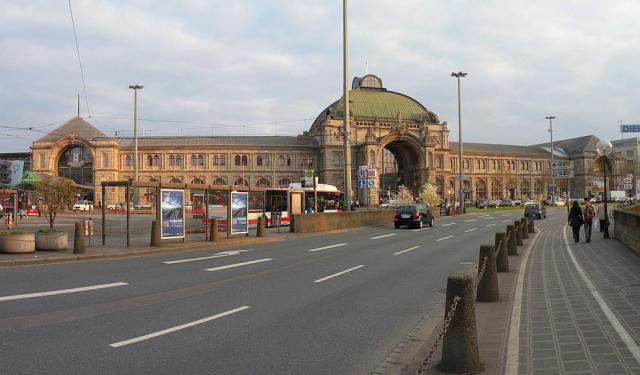
A Walk Through Nuremberg's Historical Old Town
American poet Henry Wadsworth Longfellow described Nuremberg as a “quaint old town of toil and traffic, quaint old town of art and song.”
Nuremberg has witnessed some of the most significant events in German history. For many people, the city is first associated with the rise of the Third Reich, the Nazi Party rallies, and the postwar trials of Nazi leaders. Indeed, Hitler regarded... view more
Tour Duration: 3 Hour(s)
Travel Distance: 3.8 Km or 2.4 Miles
Nuremberg has witnessed some of the most significant events in German history. For many people, the city is first associated with the rise of the Third Reich, the Nazi Party rallies, and the postwar trials of Nazi leaders. Indeed, Hitler regarded... view more
Tour Duration: 3 Hour(s)
Travel Distance: 3.8 Km or 2.4 Miles