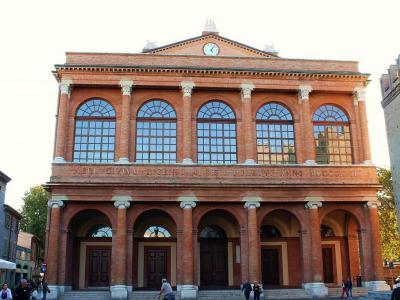


Teatro Amintore Galli (Amintore Galli Theatre), Rimini
The Amintore Galli Theatre, originally named Teatro Vittorio Emanuele II until 1947, stands as the cultural centerpiece of Rimini. Inaugurated in 1857, the theater was designed in neoclassical style by Luigi Poletti, one of Italy’s renowned architects. The project, intended to replace the aging Buonarroti Theatre and an even older wooden theater from 1681, was envisioned as a monumental backdrop to Cavour Square (Piazza Cavour), overlooking Castel Sismondo at the rear.
The theater boasts an Ionic-columned portico leading to a foyer with three spacious rooms and a loggia overlooking Piazza Cavour. The main hall originally featured 71 ornate boxes seating up to 1,400 and showcased Poletti's innovative design, including varied box sizes and an impressive second tier without a royal box. While the exterior is simple, the interiors were richly adorned, with a stage curtain by Francesco Coghetti depicting Caesar’s crossing of the Rubicon and stage designs by Michele Agli.
The theater suffered significant damage over the years. The 1916 earthquake forced restoration efforts, and the building reopened in 1923. However, Allied bombing in December 1943 during World War II devastated 90% of the structure, leaving only the façade and parts of the foyer intact. Post-war looting and demolition further degraded the site, reducing it to a warehouse and later a gym.
Restoration efforts began in the 1950s but faced delays and controversy, with modernist redesigns later rejected in favor of restoring Poletti’s original vision. A project by Pier Luigi Cervellati gained funding in 2004, and reconstruction started in 2014. During the rebuild, archaeological finds like Roman domus and medieval remains led to the creation of a museum beneath the theater, including a multimedia tribute to Giuseppe Verdi.
The theater reopened on October 28, 2018, with a semi-staged performance of Rossini’s La Cenerentola, featuring Cecilia Bartoli and Les Musiciens du Prince. Today, it stands as both a cultural venue and a symbol of resilience, blending historic charm with modern innovation, and continues to captivate audiences with its rich heritage and artistic spirit.
The theater boasts an Ionic-columned portico leading to a foyer with three spacious rooms and a loggia overlooking Piazza Cavour. The main hall originally featured 71 ornate boxes seating up to 1,400 and showcased Poletti's innovative design, including varied box sizes and an impressive second tier without a royal box. While the exterior is simple, the interiors were richly adorned, with a stage curtain by Francesco Coghetti depicting Caesar’s crossing of the Rubicon and stage designs by Michele Agli.
The theater suffered significant damage over the years. The 1916 earthquake forced restoration efforts, and the building reopened in 1923. However, Allied bombing in December 1943 during World War II devastated 90% of the structure, leaving only the façade and parts of the foyer intact. Post-war looting and demolition further degraded the site, reducing it to a warehouse and later a gym.
Restoration efforts began in the 1950s but faced delays and controversy, with modernist redesigns later rejected in favor of restoring Poletti’s original vision. A project by Pier Luigi Cervellati gained funding in 2004, and reconstruction started in 2014. During the rebuild, archaeological finds like Roman domus and medieval remains led to the creation of a museum beneath the theater, including a multimedia tribute to Giuseppe Verdi.
The theater reopened on October 28, 2018, with a semi-staged performance of Rossini’s La Cenerentola, featuring Cecilia Bartoli and Les Musiciens du Prince. Today, it stands as both a cultural venue and a symbol of resilience, blending historic charm with modern innovation, and continues to captivate audiences with its rich heritage and artistic spirit.
Want to visit this sight? Check out these Self-Guided Walking Tours in Rimini. Alternatively, you can download the mobile app "GPSmyCity: Walks in 1K+ Cities" from Apple App Store or Google Play Store. The app turns your mobile device to a personal tour guide and it works offline, so no data plan is needed when traveling abroad.
Download The GPSmyCity App



Teatro Amintore Galli (Amintore Galli Theatre) on Map
Sight Name: Teatro Amintore Galli (Amintore Galli Theatre)
Sight Location: Rimini, Italy (See walking tours in Rimini)
Sight Type: Attraction/Landmark
Sight Location: Rimini, Italy (See walking tours in Rimini)
Sight Type: Attraction/Landmark
Nearby Sights
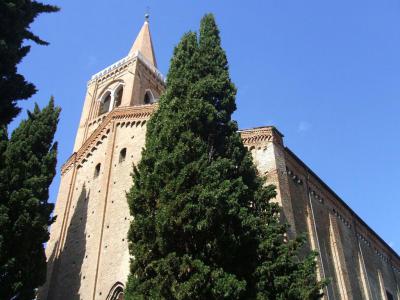
Walking Tours in Rimini, Italy

Create Your Own Walk in Rimini
Creating your own self-guided walk in Rimini is easy and fun. Choose the city attractions that you want to see and a walk route map will be created just for you. You can even set your hotel as the start point of the walk.
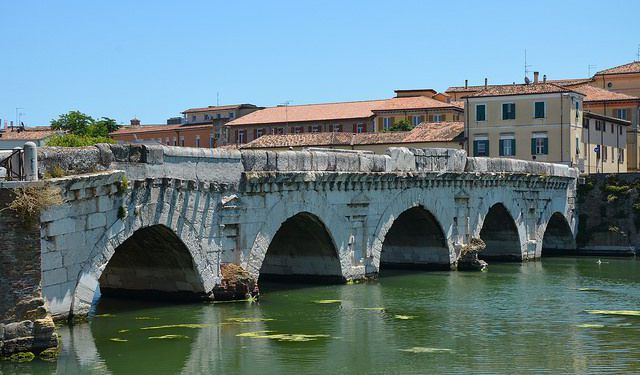
Rimini's Historic Old Town Walking Tour
The Roman Republic founded an outpost called Ariminus at the mouth of the river Marecchia in 268 BC. Rimini was a center of civil wars and invasions. Julius Caesar made his famous "Rubicon" speech to his troops in the city forum.
The city was an all-important junction. The ancient Roman road, via Flaminia, ended in Rimini at the Arch of Augustus, erected in 27 BC. Another old Roman... view more
Tour Duration: 2 Hours
Travel Distance: 2.4 Km or 1.5 Miles
The city was an all-important junction. The ancient Roman road, via Flaminia, ended in Rimini at the Arch of Augustus, erected in 27 BC. Another old Roman... view more
Tour Duration: 2 Hours
Travel Distance: 2.4 Km or 1.5 Miles
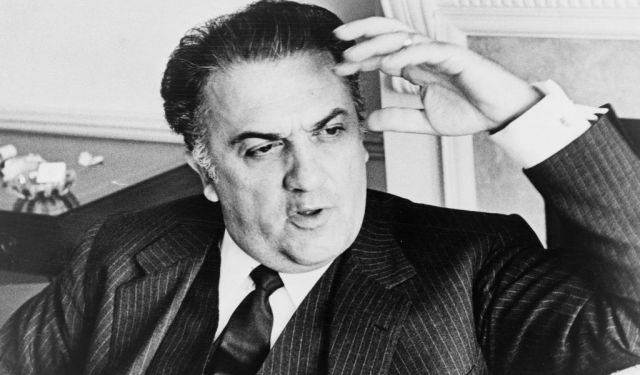
Discover Rimini's Federico Fellini Sites on Foot
Even those vaguely familiar with cinema perhaps have heard of Federico Fellini. In recent history, the picturesque resort town of Rimini, on the Adriatic coast of Italy, "marked" itself primarily as the birthplace and the final resting place of this great film director.
Fellini lived in Rimini from January 1920, when he was born, until January 1939, when he moved out to Rome. While... view more
Tour Duration: 2 Hours
Travel Distance: 3.4 Km or 2.1 Miles
Fellini lived in Rimini from January 1920, when he was born, until January 1939, when he moved out to Rome. While... view more
Tour Duration: 2 Hours
Travel Distance: 3.4 Km or 2.1 Miles
City Walks Overview
