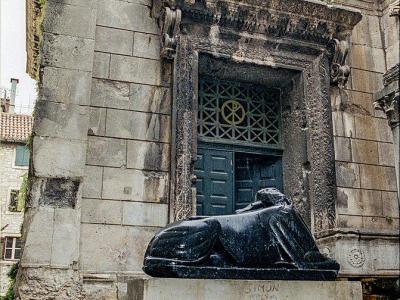


Temple of Jupiter, Split
Just a few steps from the Peristyle, in the western stretch of Diocletian's Palace, stands a compact but powerful survivor: the Temple of Jupiter. Built around the year 300 AD, it began as a shrine to Jupiter-Roman Zeus and, conveniently, Emperor Diocletian’s so-called “divine father.” Because when you rule the empire, it helps to keep the king of the gods in the family...
Out front, you’ll meet one of the twelve sphinxes Diocletian imported from Egypt. Yes, imported. Apparently, retirement plans included a touch of Nile-side décor. Above the entrance, reliefs line up like a mythological guest list: Victoria, Triton, Helios, Hercules, Apollo... Heroes, sea gods, sun gods-everyone showed up. Or almost everyone. Parts of the palace were still unfinished when the emperor returned rather suddenly after his abdication. Even divine sons, it seems, don’t always stick to the construction schedule...
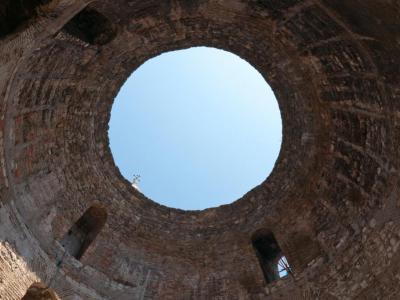
Then history pivoted. In the sixth century, the pagan temple became a baptistery dedicated to Saint John the Baptist. The pagan gods stepped aside; the Christian saints stepped in. Inside, you’ll find the sarcophagi of early archbishops Ivan of Ravenna and Lovre, linking the space to Split’s Christian story. And Saint John himself appears in striking form-a large bronze statue, adding a bold 20th-century presence to a 4th-century shell.
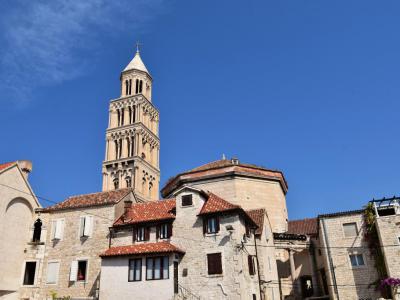
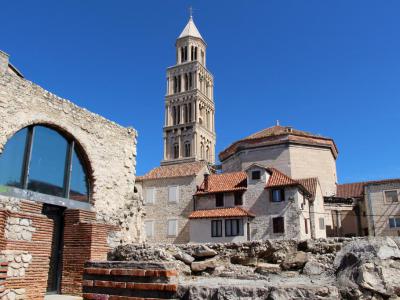
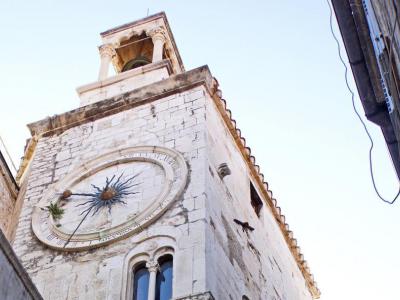
Raise your gaze, and you’ll notice yet another layer: an 11th-century Romanesque bell tower rising above the vault. Pagan temple, Christian baptistery, medieval addition-this small structure carries centuries with surprising confidence.
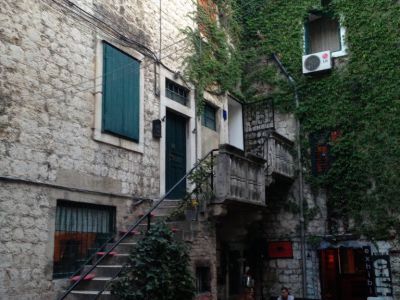
And one final twist: in 1907, the surrounding houses that had grown tightly against its walls were cleared away, finally giving the temple room to breathe again. So, standing here, be aware-you’re not merely looking at ancient stone, you’re watching a building that has reinvented itself for more than 1,700 years, without ever losing its sense of drama...
Out front, you’ll meet one of the twelve sphinxes Diocletian imported from Egypt. Yes, imported. Apparently, retirement plans included a touch of Nile-side décor. Above the entrance, reliefs line up like a mythological guest list: Victoria, Triton, Helios, Hercules, Apollo... Heroes, sea gods, sun gods-everyone showed up. Or almost everyone. Parts of the palace were still unfinished when the emperor returned rather suddenly after his abdication. Even divine sons, it seems, don’t always stick to the construction schedule...
Then history pivoted. In the sixth century, the pagan temple became a baptistery dedicated to Saint John the Baptist. The pagan gods stepped aside; the Christian saints stepped in. Inside, you’ll find the sarcophagi of early archbishops Ivan of Ravenna and Lovre, linking the space to Split’s Christian story. And Saint John himself appears in striking form-a large bronze statue, adding a bold 20th-century presence to a 4th-century shell.
Raise your gaze, and you’ll notice yet another layer: an 11th-century Romanesque bell tower rising above the vault. Pagan temple, Christian baptistery, medieval addition-this small structure carries centuries with surprising confidence.
And one final twist: in 1907, the surrounding houses that had grown tightly against its walls were cleared away, finally giving the temple room to breathe again. So, standing here, be aware-you’re not merely looking at ancient stone, you’re watching a building that has reinvented itself for more than 1,700 years, without ever losing its sense of drama...
Want to visit this sight? Check out these Self-Guided Walking Tours in Split. Alternatively, you can download the mobile app "GPSmyCity: Walks in 1K+ Cities" from Apple App Store or Google Play Store. The app turns your mobile device to a personal tour guide and it works offline, so no data plan is needed when traveling abroad.
Download The GPSmyCity App



Temple of Jupiter on Map
Sight Name: Temple of Jupiter
Sight Location: Split, Croatia (See walking tours in Split)
Sight Type: Attraction/Landmark
Guide(s) Containing This Sight:
Sight Location: Split, Croatia (See walking tours in Split)
Sight Type: Attraction/Landmark
Guide(s) Containing This Sight:
Nearby Sights
Walking Tours in Split, Croatia

Create Your Own Walk in Split
Creating your own self-guided walk in Split is easy and fun. Choose the city attractions that you want to see and a walk route map will be created just for you. You can even set your hotel as the start point of the walk.
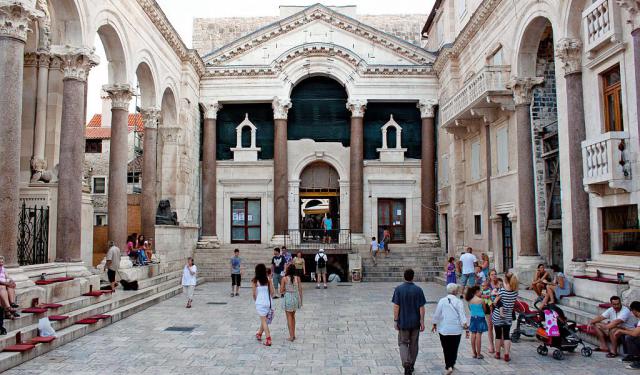
Diocletian Palace Tour
One of the best-preserved monuments of Roman architecture in the world, Diocletian’s Palace is also probably the most impressive “retirement home” in history. Imagine quitting a job at the age of sixty and deciding your quiet seaside cottage should also function as a fortress. That was exactly the plan of Roman emperor Diocletian... In 305 AD, after abdicating-which is something Roman... view more
Tour Duration: 1 Hour(s)
Travel Distance: 0.6 Km or 0.4 Miles
Tour Duration: 1 Hour(s)
Travel Distance: 0.6 Km or 0.4 Miles
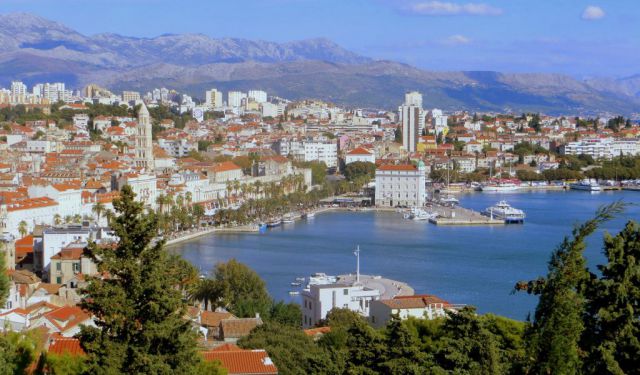
Split Old Town Walking Tour
Welcome to Split, Dalmatia’s sun-drenched heart and, believe it or not, the ultimate ancient retirement plan.
Its story has a bit of a botanical side and dates back more than two millennia, when Greek settlers from Issa (or modern-day Vis) founded here a colony they called Aspalathos, named after a prickly, yellow-flowering shrub that still dots the coastline. The Romans called it Spalatum,... view more
Tour Duration: 1 Hour(s)
Travel Distance: 1.2 Km or 0.7 Miles
Its story has a bit of a botanical side and dates back more than two millennia, when Greek settlers from Issa (or modern-day Vis) founded here a colony they called Aspalathos, named after a prickly, yellow-flowering shrub that still dots the coastline. The Romans called it Spalatum,... view more
Tour Duration: 1 Hour(s)
Travel Distance: 1.2 Km or 0.7 Miles
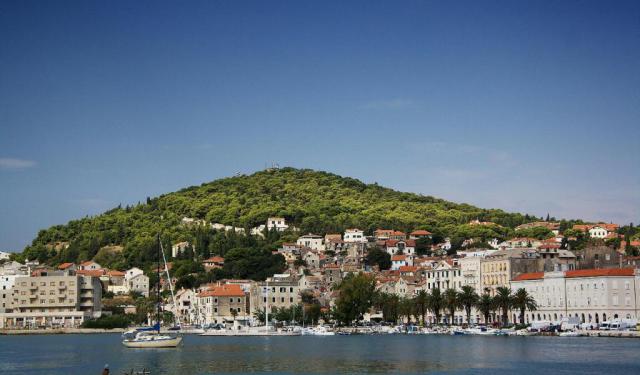
Marjan Hill Walking Tour
Marjan Hill is a picturesque natural wonder – a unique landform – located on the Split peninsula in Croatia. The majestic hill (or the low mountain, if you like) is surrounded by the sea and the city, and represents the green oasis ideal for walks, excursions, and rock climbing. Visitors to the area are greeted with a plethora of sights catering to various interests and equally enjoyed by... view more
Tour Duration: 1 Hour(s)
Travel Distance: 1.4 Km or 0.9 Miles
Tour Duration: 1 Hour(s)
Travel Distance: 1.4 Km or 0.9 Miles