

Thalbach Convent, Bregenz (must see)
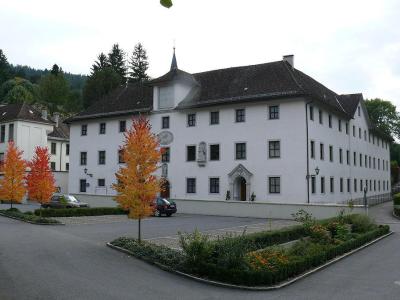
Thalbach Convent traces its beginnings to 1436, when a small chapel was established here. The first community consisted of pious women, known as Beguines, who later adopted the Rule of St. Clare and became a Poor Clare convent within the Franciscan tradition. For centuries, the site served as a place of prayer and enclosed religious life.
In 1782, Emperor Joseph II ordered the dissolution of many contemplative monasteries, and the convent was closed. The buildings were then used for secular purposes, including as a military hospital. In 1854, Dominican Sisters from Hirschberg in Prussia moved into the complex, restoring religious life and opening a new chapter.
Between 1674 and 1677, the convent had already undergone major rebuilding under architects Michael Kuen and Michael Thumb, leading figures of the Vorarlberg Baroque school. They created a symmetrical four-wing complex arranged around a central courtyard. This clear rectangular layout shaped daily monastic life, linking church, living quarters, and workspaces within one enclosed structure.
Inside the church, the space is simple and focused on the main altar. Its most important artwork is the 14th-century Madonna and Child known as the “Sedes Sapientiae” (Seat of Wisdom). The statue was brought here from Mehrerau in 1592, long before the Dominican period, showing that the convent had already become a place of pilgrimage and devotion.
Since 1983, the complex has been in the care of the spiritual family “Das Werk,” founded by Julia Verhaeghe. It remains a centre for spiritual formation and also houses the Catholic Women’s Movement of the diocese, continuing its long link between faith and community life.
In 1782, Emperor Joseph II ordered the dissolution of many contemplative monasteries, and the convent was closed. The buildings were then used for secular purposes, including as a military hospital. In 1854, Dominican Sisters from Hirschberg in Prussia moved into the complex, restoring religious life and opening a new chapter.
Between 1674 and 1677, the convent had already undergone major rebuilding under architects Michael Kuen and Michael Thumb, leading figures of the Vorarlberg Baroque school. They created a symmetrical four-wing complex arranged around a central courtyard. This clear rectangular layout shaped daily monastic life, linking church, living quarters, and workspaces within one enclosed structure.
Inside the church, the space is simple and focused on the main altar. Its most important artwork is the 14th-century Madonna and Child known as the “Sedes Sapientiae” (Seat of Wisdom). The statue was brought here from Mehrerau in 1592, long before the Dominican period, showing that the convent had already become a place of pilgrimage and devotion.
Since 1983, the complex has been in the care of the spiritual family “Das Werk,” founded by Julia Verhaeghe. It remains a centre for spiritual formation and also houses the Catholic Women’s Movement of the diocese, continuing its long link between faith and community life.
Want to visit this sight? Check out these Self-Guided Walking Tours in Bregenz. Alternatively, you can download the mobile app "GPSmyCity: Walks in 1K+ Cities" from Apple App Store or Google Play Store. The app turns your mobile device to a personal tour guide and it works offline, so no data plan is needed when traveling abroad.
Download The GPSmyCity App



Thalbach Convent on Map
Sight Name: Thalbach Convent
Sight Location: Bregenz, Austria (See walking tours in Bregenz)
Sight Type: Religious
Guide(s) Containing This Sight:
Sight Location: Bregenz, Austria (See walking tours in Bregenz)
Sight Type: Religious
Guide(s) Containing This Sight:
Nearby Sights
Walking Tours in Bregenz, Austria

Create Your Own Walk in Bregenz
Creating your own self-guided walk in Bregenz is easy and fun. Choose the city attractions that you want to see and a walk route map will be created just for you. You can even set your hotel as the start point of the walk.
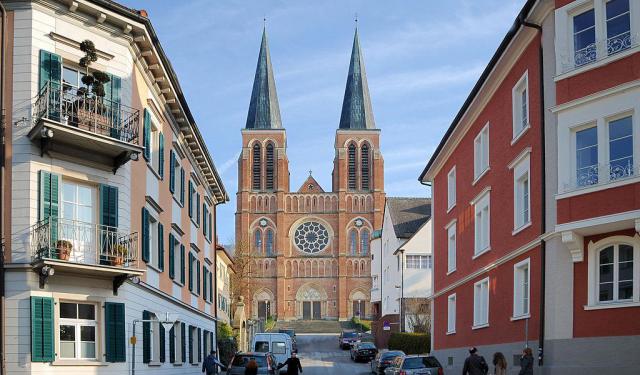
A Walking Map of Historical Buildings in Bregenz
Bregenz is home to many historic buildings, several of which were built between the 13th and 16th centuries. Federal High School, the Vorarlberg Land Theater and City Hall, located near the harbor, are landmarks of the Lower Town. Take the following tour to discover Bregenz’s best historic architecture.
Tour Duration: 3 Hours
Travel Distance: 5.5 Km or 3.4 Miles
Tour Duration: 3 Hours
Travel Distance: 5.5 Km or 3.4 Miles
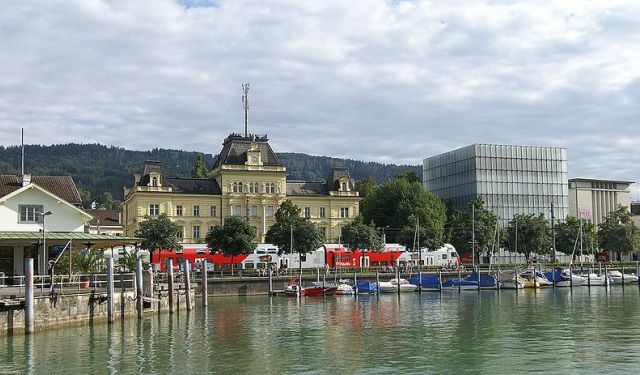
Bregenz Old Town and City Center Walking Tour
Bregenz, located where Austria meets Germany and Switzerland, contains many beautiful landmarks in both the historic and modern parts of the city. Discover Bregenz’s most popular attractions and learn about its history in the following orientation walk.
Tour Duration: 2 Hours
Travel Distance: 2.5 Km or 1.6 Miles
Tour Duration: 2 Hours
Travel Distance: 2.5 Km or 1.6 Miles
City Walks Overview
