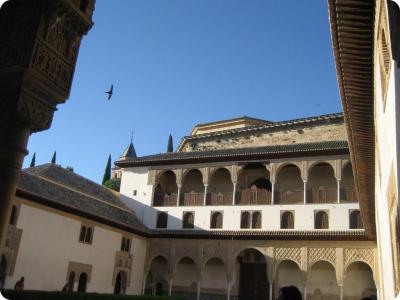


The Nasrid Royal Palaces, Granada (must see)
The Nasrid Royal Palaces in Granada are a stunning testament to the architectural and cultural grandeur of the last Muslim dynasty in the Iberian Peninsula. Founded by the Nasrid ruler Alhamar in the 13th century, the palaces primarily reflect 14th-century construction and aesthetics. This complex served as the royal residence of the kings of Granada and encapsulates the essence of the refined and delicate artistry of the Nasrid era in Al Andalus.
The complex is composed of three primary structures: the Mexuar, the Palace of Comares (or Yusuf I), and the Palace of the Lions (or Mohammed V). Each palace within the complex has its unique character and purpose, showcasing the intricate balance between robust exteriors and ornate interiors. This architectural design underscores the temporality of earthly existence, a theme recurrent in Islamic art and philosophy, emphasizing the fleeting nature of human achievements compared to the eternal cosmos.
The Mexuar is the simplest in terms of decoration and is primarily used for administration and governance. It is characterized by functional yet elegantly decorated spaces with strapwork, dark wooden ceilings, floors, and trim, creating a stark contrast against the white plaster walls.
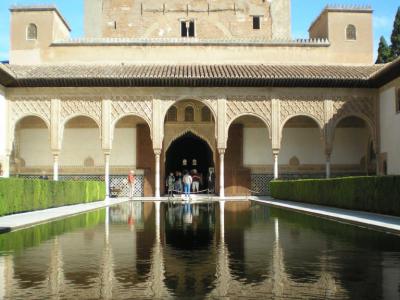
Palace of Comares, built under Yusuf I, is famous for the Patio de los Arrayanes (Court of the Myrtles). It features richly colored interiors with dado panels, plasterwork, ceramic tiles, cedar wood, and ornamental woodwork on ceilings. These elements combine to create a visually stunning environment that exemplifies Nasrid artistry.
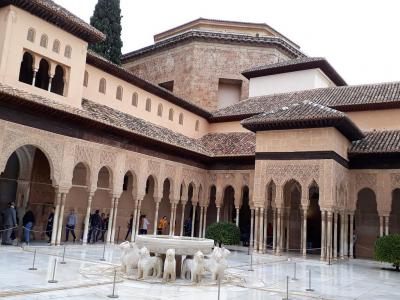
Known for its luxurious decor, the Palace of the Lions housed the private quarters of the sultan’s family and was intricately adorned with various Islamic artistic elements. It included advanced amenities such as bathrooms with hot and cold running water, baths, and sophisticated water pressure systems, highlighting the technological advancement of the Nasrid dynasty. The design of these spaces allowed for natural light and air, enhancing the comfort and aesthetic appeal.
The palaces also integrate lush courtyards inspired by Persian and Muslim garden designs, symbolizing paradisiacal oases. These gardens, along with the flowing water and fountains, play a crucial role in the overall design, linking architecture with nature. The water features represent purity and life, reinforcing the palatial spaces' symbolic and sensual allure.
The complex is composed of three primary structures: the Mexuar, the Palace of Comares (or Yusuf I), and the Palace of the Lions (or Mohammed V). Each palace within the complex has its unique character and purpose, showcasing the intricate balance between robust exteriors and ornate interiors. This architectural design underscores the temporality of earthly existence, a theme recurrent in Islamic art and philosophy, emphasizing the fleeting nature of human achievements compared to the eternal cosmos.
The Mexuar is the simplest in terms of decoration and is primarily used for administration and governance. It is characterized by functional yet elegantly decorated spaces with strapwork, dark wooden ceilings, floors, and trim, creating a stark contrast against the white plaster walls.
Palace of Comares, built under Yusuf I, is famous for the Patio de los Arrayanes (Court of the Myrtles). It features richly colored interiors with dado panels, plasterwork, ceramic tiles, cedar wood, and ornamental woodwork on ceilings. These elements combine to create a visually stunning environment that exemplifies Nasrid artistry.
Known for its luxurious decor, the Palace of the Lions housed the private quarters of the sultan’s family and was intricately adorned with various Islamic artistic elements. It included advanced amenities such as bathrooms with hot and cold running water, baths, and sophisticated water pressure systems, highlighting the technological advancement of the Nasrid dynasty. The design of these spaces allowed for natural light and air, enhancing the comfort and aesthetic appeal.
The palaces also integrate lush courtyards inspired by Persian and Muslim garden designs, symbolizing paradisiacal oases. These gardens, along with the flowing water and fountains, play a crucial role in the overall design, linking architecture with nature. The water features represent purity and life, reinforcing the palatial spaces' symbolic and sensual allure.
Want to visit this sight? Check out these Self-Guided Walking Tours in Granada. Alternatively, you can download the mobile app "GPSmyCity: Walks in 1K+ Cities" from Apple App Store or Google Play Store. The app turns your mobile device to a personal tour guide and it works offline, so no data plan is needed when traveling abroad.
Download The GPSmyCity App



The Nasrid Royal Palaces on Map
Sight Name: The Nasrid Royal Palaces
Sight Location: Granada, Spain (See walking tours in Granada)
Sight Type: Attraction/Landmark
Sight Location: Granada, Spain (See walking tours in Granada)
Sight Type: Attraction/Landmark
Nearby Sights
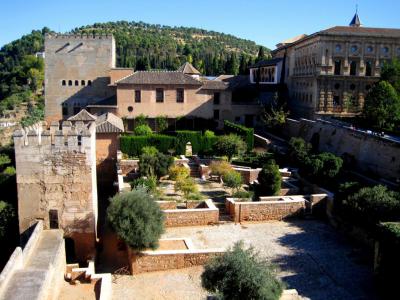

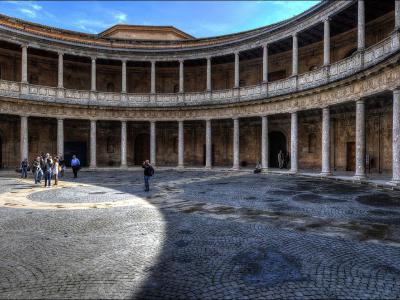

Walking Tours in Granada, Spain

Create Your Own Walk in Granada
Creating your own self-guided walk in Granada is easy and fun. Choose the city attractions that you want to see and a walk route map will be created just for you. You can even set your hotel as the start point of the walk.
Albayzín Walking Tour
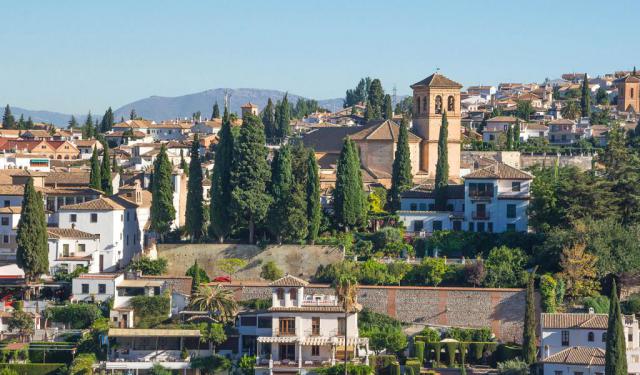
American writer Washington Irving’s book Tales of the Alhambra repeatedly features the Albayzín quarter. He was particularly struck by the district at night, when he heard “the tinkling of innumerable guitars, and the clicking of castanets” rising from its streets and gardens.
The Albayzín occupies the hill opposite the Alhambra, on the northern side of the Darro River. It is one of... view more
Tour Duration: 2 Hour(s)
Travel Distance: 2.3 Km or 1.4 Miles
The Albayzín occupies the hill opposite the Alhambra, on the northern side of the Darro River. It is one of... view more
Tour Duration: 2 Hour(s)
Travel Distance: 2.3 Km or 1.4 Miles
Alhambra Walking Tour
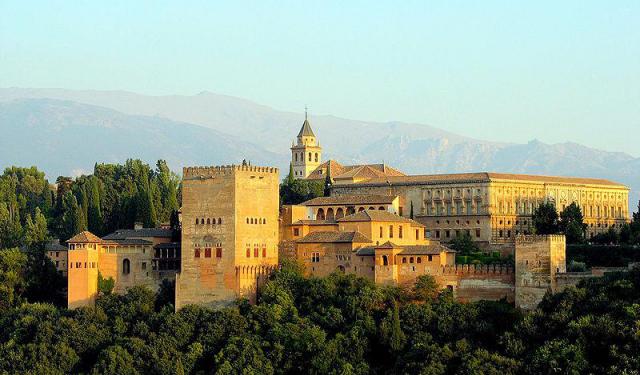
The Alhambra is Granada’s most famous monument and one of the finest surviving examples of medieval Islamic architecture in Europe. Its name comes from Arabic and is generally translated as “The Red One,” probably referring to the reddish walls of the fortress. The complex occupies Sabika Hill, overlooking Granada and the Albaicín.
The hill was fortified as early as the 9th century, but... view more
Tour Duration: 2 Hour(s)
Travel Distance: 2.0 Km or 1.2 Miles
The hill was fortified as early as the 9th century, but... view more
Tour Duration: 2 Hour(s)
Travel Distance: 2.0 Km or 1.2 Miles
Granada's Architectural Jewels
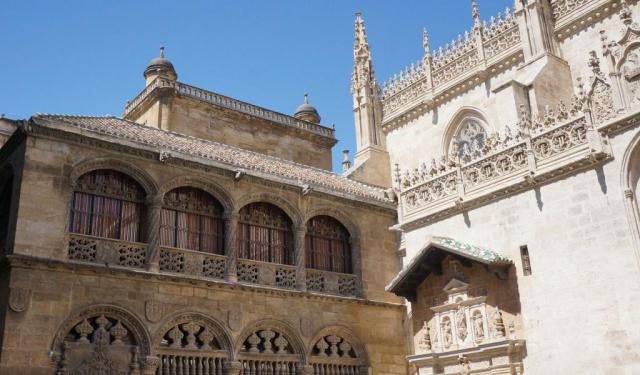
Over the course of centuries, Granada's architecture has been influenced by four major styles – Moorish, Renaissance, Gothic and Baroque. The city’s most impressive buildings date from the period of Arabic rule and the subsequent Catholic epoch which started after the Moors were displaced in 1492.
From the dazzling majesty of the Alhambra to the awe-inspiring churches and the subtly... view more
Tour Duration: 2 Hour(s)
Travel Distance: 3.5 Km or 2.2 Miles
From the dazzling majesty of the Alhambra to the awe-inspiring churches and the subtly... view more
Tour Duration: 2 Hour(s)
Travel Distance: 3.5 Km or 2.2 Miles
A Walk in Granada's Historical Old Town
American writer Washington Irving arrived at the Alhambra in 1829-and stayed for nearly three months. He became so concerned about visitors scratching their names into the monument that he and Prince Dolgorouki provided a leather-bound visitors’ book as an alternative.
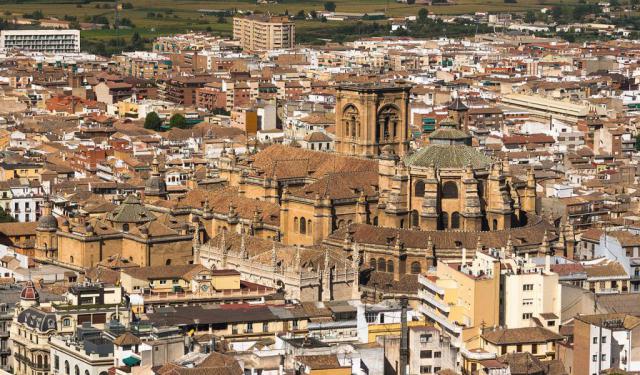
Granada lies at the foot of the Sierra Nevada mountain range, where the Darro and Genil rivers meet. Its history reaches back... view more
Tour Duration: 3 Hour(s)
Travel Distance: 3.5 Km or 2.2 Miles
Granada lies at the foot of the Sierra Nevada mountain range, where the Darro and Genil rivers meet. Its history reaches back... view more
Tour Duration: 3 Hour(s)
Travel Distance: 3.5 Km or 2.2 Miles