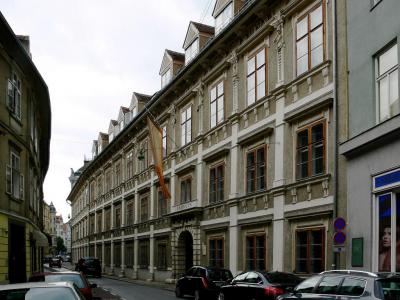


Universalmuseum Joanneum, Graz
The Universalmuseum Joanneum, located in Graz, is a significant institution that blends cultural heritage with scientific exploration. It's the oldest museum in Austria and the largest in Central Europe, housing over 4.5 million objects spread across 13 departments in Graz, Stainz, Trautenfels, and Wagna (Flavia Solva). Covering diverse subjects like archaeology, geology, art, and folk culture, it's a valuable resource for human knowledge and natural history.
Established in 1811 by Archduke Johann, the museum aimed not just to collect artifacts but also to promote education and research. It boasts prestigious collections, including the Archduke's coinage and mineralogy collections, contributing to its renown in both humanities and sciences. Notable scientific achievements, such as the Mohs scale of mineral hardness by Friedrich Mohs and advancements in botany by Franz Unger, have originated from here.
In 1887, the museum underwent significant restructuring, leading to the creation of the Graz University of Technology and the consolidation of the collections into what became the Landesmuseum Joanneum. This prompted a move to a new building in Neutorgasse, designed by August Gunold in Neo-Baroque style, called the "New Joanneum."
In 2009, the museum rebranded as the Universalmuseum Joanneum to better represent its broad scope and international significance. This change highlights its diverse collection, interdisciplinary approach, and dedication to preserving global heritage and scientific achievements.
Today, the Universalmuseum Joanneum continues to be a hub of knowledge and culture, attracting visitors worldwide to explore human creativity and natural wonders across its historic and modern buildings in Styria. It symbolizes Austria's commitment to preserving and educating about its rich cultural and scientific heritage.
Established in 1811 by Archduke Johann, the museum aimed not just to collect artifacts but also to promote education and research. It boasts prestigious collections, including the Archduke's coinage and mineralogy collections, contributing to its renown in both humanities and sciences. Notable scientific achievements, such as the Mohs scale of mineral hardness by Friedrich Mohs and advancements in botany by Franz Unger, have originated from here.
In 1887, the museum underwent significant restructuring, leading to the creation of the Graz University of Technology and the consolidation of the collections into what became the Landesmuseum Joanneum. This prompted a move to a new building in Neutorgasse, designed by August Gunold in Neo-Baroque style, called the "New Joanneum."
In 2009, the museum rebranded as the Universalmuseum Joanneum to better represent its broad scope and international significance. This change highlights its diverse collection, interdisciplinary approach, and dedication to preserving global heritage and scientific achievements.
Today, the Universalmuseum Joanneum continues to be a hub of knowledge and culture, attracting visitors worldwide to explore human creativity and natural wonders across its historic and modern buildings in Styria. It symbolizes Austria's commitment to preserving and educating about its rich cultural and scientific heritage.
Want to visit this sight? Check out these Self-Guided Walking Tours in Graz. Alternatively, you can download the mobile app "GPSmyCity: Walks in 1K+ Cities" from Apple App Store or Google Play Store. The app turns your mobile device to a personal tour guide and it works offline, so no data plan is needed when traveling abroad.
Download The GPSmyCity App



Universalmuseum Joanneum on Map
Sight Name: Universalmuseum Joanneum
Sight Location: Graz, Austria (See walking tours in Graz)
Sight Type: Museum/Gallery
Sight Location: Graz, Austria (See walking tours in Graz)
Sight Type: Museum/Gallery
Nearby Sights
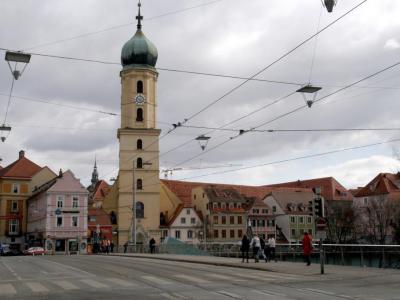
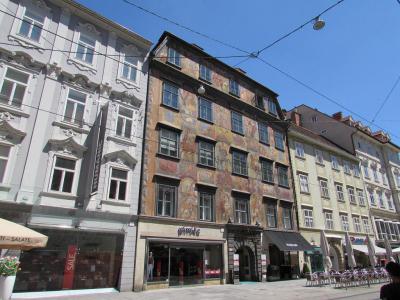
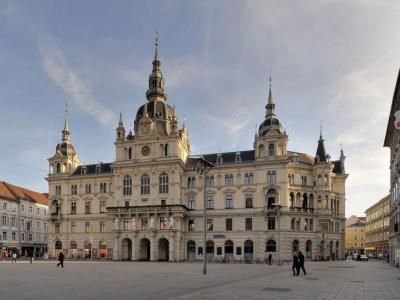

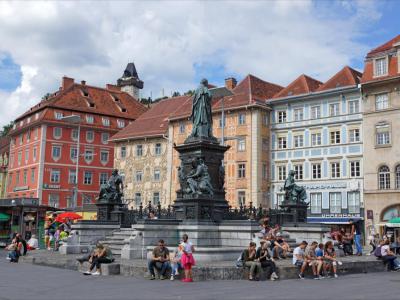
Walking Tours in Graz, Austria

Create Your Own Walk in Graz
Creating your own self-guided walk in Graz is easy and fun. Choose the city attractions that you want to see and a walk route map will be created just for you. You can even set your hotel as the start point of the walk.
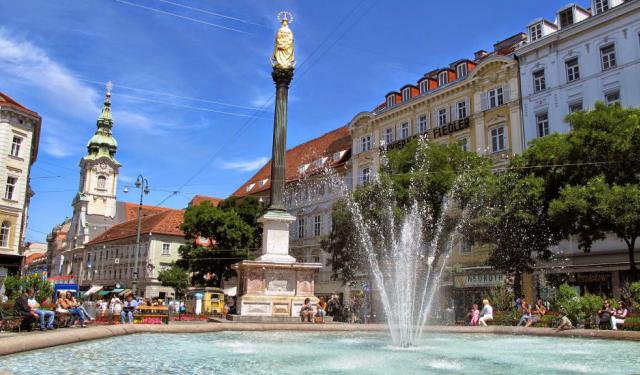
Graz Old Town Walking Tour
Before humanity understood how planets move, the renowned astronomer Johannes Kepler was studying the skies from Graz between 1594 and 1600. During his time here, he developed ideas that would eventually lead to his revolutionary laws of planetary motion.
Graz, the capital of the Austrian state of Styria, has a history stretching back more than a thousand years. Its name derives from the Slavic... view more
Tour Duration: 2 Hour(s)
Travel Distance: 3.0 Km or 1.9 Miles
Graz, the capital of the Austrian state of Styria, has a history stretching back more than a thousand years. Its name derives from the Slavic... view more
Tour Duration: 2 Hour(s)
Travel Distance: 3.0 Km or 1.9 Miles