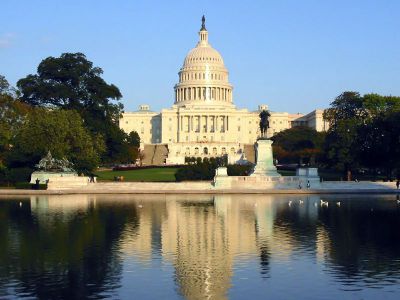


U.S. Capitol, Washington D.C. (must see)
Overlooking the Washington Monument from the opposite end of the National Mall, the United States Capitol looks all calm, balanced, and dignified, as befitting a building where political arguments have been echoing for more than two centuries. Home to the United States Congress-with the House of Representatives in the south wing and the Senate in the north-it has 540 rooms, five floors, and the grand Capitol Rotunda, where art and sculpture turn American history into something you can admire, question, and quietly compare to the version you remember from school...
Getting the Capitol built wasn't exactly a smooth group project. After plenty of debate over the design, the cornerstone was laid on September 18, 1793, by President George Washington, who arrived at the ceremony in full Masonic attire. The north wing was completed in 1800, the same year the federal government moved to Washington. Curiously, for several decades, the Capitol was used not only for government business but also for Sunday religious services, apparently handling legislation, prayer, and civic optimism all at once...
The building’s early years came with serious drama. Soon after it was completed in 1811, British troops partially burned it during the War of 1812, in August 1814. The damaged sections were rebuilt, and the Rotunda was added in 1826.
In the 1850s, the Capitol was expanded again, and its earlier wooden dome was replaced with the cast-iron dome seen today. Inside that dome is The Apotheosis of Washington, a fresco showing George Washington rising into a rather heavenly scene. From the Rotunda floor, look up through the oculus-this is one of the few places where staring at the ceiling counts as good cultural behavior...
The Capitol is open to visitors, with free tours starting at the Capitol Visitor Center, which opened in 2008. Book early for a better choice of time slots, arrive 30 to 45 minutes ahead for security, and leave food and drinks behind. Visitors may also watch Congress in session from designated galleries, with passes available through senators, representatives, or, for overseas visitors, the Senate and House Appointment Desks.
One final practical detail: both the east and west sides of the Capitol can be called the “front,” so use east or west when asking for directions. After your visit, look for the tunnel leading directly to the Library of Congress - a smooth next step from lawmaking to book-loving grandeur...
Getting the Capitol built wasn't exactly a smooth group project. After plenty of debate over the design, the cornerstone was laid on September 18, 1793, by President George Washington, who arrived at the ceremony in full Masonic attire. The north wing was completed in 1800, the same year the federal government moved to Washington. Curiously, for several decades, the Capitol was used not only for government business but also for Sunday religious services, apparently handling legislation, prayer, and civic optimism all at once...
The building’s early years came with serious drama. Soon after it was completed in 1811, British troops partially burned it during the War of 1812, in August 1814. The damaged sections were rebuilt, and the Rotunda was added in 1826.
In the 1850s, the Capitol was expanded again, and its earlier wooden dome was replaced with the cast-iron dome seen today. Inside that dome is The Apotheosis of Washington, a fresco showing George Washington rising into a rather heavenly scene. From the Rotunda floor, look up through the oculus-this is one of the few places where staring at the ceiling counts as good cultural behavior...
The Capitol is open to visitors, with free tours starting at the Capitol Visitor Center, which opened in 2008. Book early for a better choice of time slots, arrive 30 to 45 minutes ahead for security, and leave food and drinks behind. Visitors may also watch Congress in session from designated galleries, with passes available through senators, representatives, or, for overseas visitors, the Senate and House Appointment Desks.
One final practical detail: both the east and west sides of the Capitol can be called the “front,” so use east or west when asking for directions. After your visit, look for the tunnel leading directly to the Library of Congress - a smooth next step from lawmaking to book-loving grandeur...
Want to visit this sight? Check out these Self-Guided Walking Tours in Washington D.C.. Alternatively, you can download the mobile app "GPSmyCity: Walks in 1K+ Cities" from Apple App Store or Google Play Store. The app turns your mobile device to a personal tour guide and it works offline, so no data plan is needed when traveling abroad.
Download The GPSmyCity App



U.S. Capitol on Map
Sight Name: U.S. Capitol
Sight Location: Washington D.C., USA (See walking tours in Washington D.C.)
Sight Type: Attraction/Landmark
Guide(s) Containing This Sight:
Sight Location: Washington D.C., USA (See walking tours in Washington D.C.)
Sight Type: Attraction/Landmark
Guide(s) Containing This Sight:
Nearby Sights
Walking Tours in Washington D.C., USA

Create Your Own Walk in Washington D.C.
Creating your own self-guided walk in Washington D.C. is easy and fun. Choose the city attractions that you want to see and a walk route map will be created just for you. You can even set your hotel as the start point of the walk.

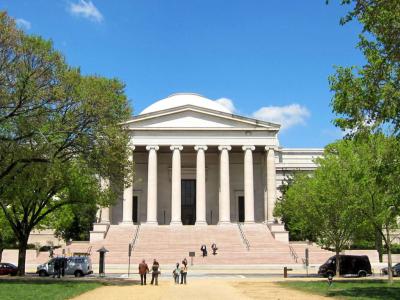
Arlington National Cemetery Tour
“The legacy of heroes is the memory of a great name and the inheritance of a great example,” a distinguished politician of the 19th century once said. Few places embody that thought more deeply than Arlington National Cemetery in Arlington, Virginia.
Established during the Civil War in 1864, this historic military cemetery is the final resting place for many of America’s heroes, whose... view more
Tour Duration: 2 Hour(s)
Travel Distance: 4.1 Km or 2.5 Miles
Established during the Civil War in 1864, this historic military cemetery is the final resting place for many of America’s heroes, whose... view more
Tour Duration: 2 Hour(s)
Travel Distance: 4.1 Km or 2.5 Miles
Georgetown Walking Tour
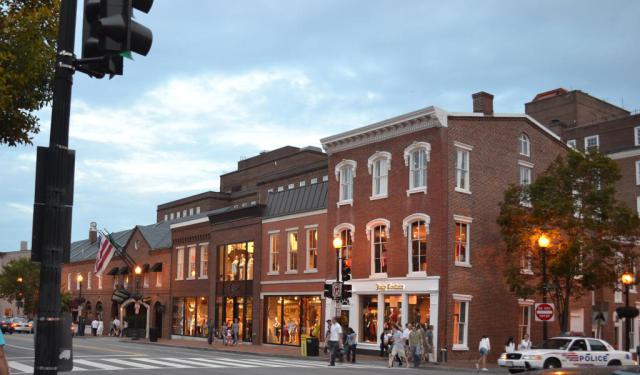
Georgetown is Washington, D.C.’s historic northwest charmer: close enough to downtown to hear the political machinery humming, yet old enough and proud enough to pretend it has no idea what all the fuss is about. Once a busy port town on the Potomac, it still keeps a character all its own, with brick sidewalks, old houses, leafy streets, and enough polished boutiques to remind you that history... view more
Tour Duration: 2 Hour(s)
Travel Distance: 3.9 Km or 2.4 Miles
Tour Duration: 2 Hour(s)
Travel Distance: 3.9 Km or 2.4 Miles
DC Monuments and Memorials Walking Tour
“In the end, it’s not the years in your life that count. It’s the life in your years,” goes the famous quote by Abraham Lincoln.
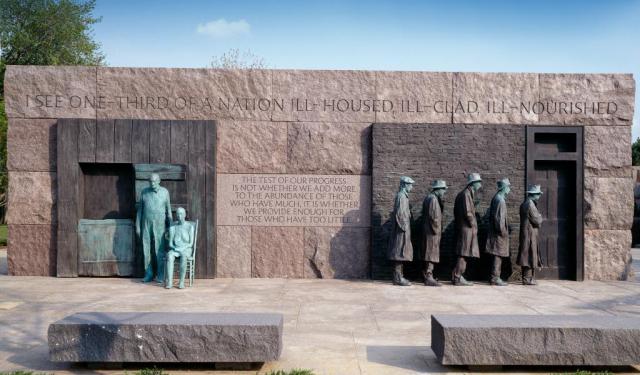
Indeed, those remembered in Washington, D.C.-statesmen, reformers, fallen soldiers, civil rights leaders, and other figures of national importance-had their lives filled with consequence. What they left behind is not only a record of public service, conflict,... view more
Tour Duration: 2 Hour(s)
Travel Distance: 3.6 Km or 2.2 Miles
Indeed, those remembered in Washington, D.C.-statesmen, reformers, fallen soldiers, civil rights leaders, and other figures of national importance-had their lives filled with consequence. What they left behind is not only a record of public service, conflict,... view more
Tour Duration: 2 Hour(s)
Travel Distance: 3.6 Km or 2.2 Miles
Federal Buildings Walking Tour
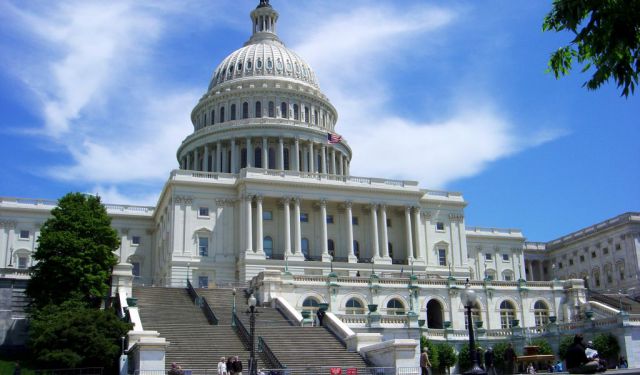
The capital of the United States is home to several notable federal buildings that hold significant historical, architectural, and governmental value.
Among the stately “emblems of authority” in Washington D.C. perhaps the most prominent is the official residence and workplace of the President of the United States – The White House. This resplendent mansion at 1600 Pennsylvania Avenue... view more
Tour Duration: 2 Hour(s)
Travel Distance: 4.9 Km or 3 Miles
Among the stately “emblems of authority” in Washington D.C. perhaps the most prominent is the official residence and workplace of the President of the United States – The White House. This resplendent mansion at 1600 Pennsylvania Avenue... view more
Tour Duration: 2 Hour(s)
Travel Distance: 4.9 Km or 3 Miles
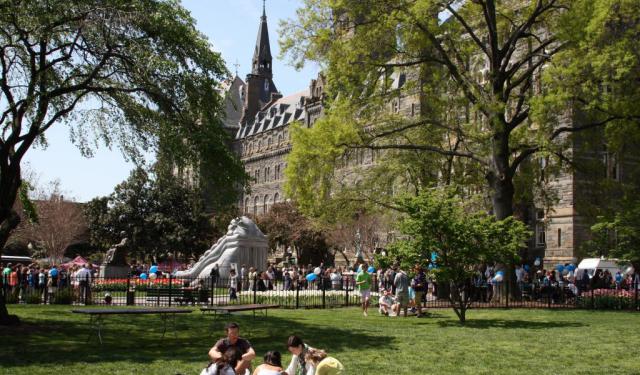
Georgetown University Walking Tour
Georgetown University, established in 1789, is America's oldest Catholic and Jesuit institution. Spanning four campuses in Washington, DC, its main undergraduate campus in Georgetown features fifty-four buildings across 104 acres.
With its Gothic and Georgian architecture, serene green spaces, and Jesuit traditions, the university promotes academic excellence and global engagement. For... view more
Tour Duration: 2 Hour(s)
Travel Distance: 2.1 Km or 1.3 Miles
With its Gothic and Georgian architecture, serene green spaces, and Jesuit traditions, the university promotes academic excellence and global engagement. For... view more
Tour Duration: 2 Hour(s)
Travel Distance: 2.1 Km or 1.3 Miles
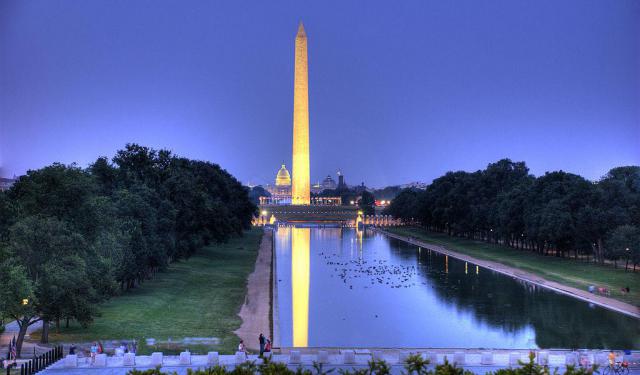
Washington D.C. Introduction Walking Tour
Washington, D.C., formally the District of Columbia, is the capital of the United States and, in many ways, the country’s grand civic stage. It is where government, history, protest, memory, and national ceremony meet in unusually concentrated form. The idea for a federal capital grew out of the young nation’s need for a seat of government independent of any state, especially after the... view more
Tour Duration: 2 Hour(s)
Travel Distance: 5.2 Km or 3.2 Miles
Tour Duration: 2 Hour(s)
Travel Distance: 5.2 Km or 3.2 Miles
Useful Travel Guides for Planning Your Trip
10 Unusual Things to Do in Washington DC
You might be inclined to think that the capital of the United States consists solely of museums and monuments, but that couldn’t be further from the truth. As a local, I’ve found that there are so many more things to do in this city than just the main tourist highlights. Read on to learn 10 of...
7 Chocolate Destinations in Washington D.C.
Let’s be honest, you hear the words "Washington, D.C." and you think politics, history, museums, etc. You can’t take five steps in the city without being surrounded by history. As important as all that culture is, it’s also a bit overwhelming. Make it fun by exploring Washington,...

Traveler's Guide to Washington DC: 16 Souvenirs to Bring Home
The capital of the United States is an attraction in its own right and many things that have originated here or in the nearby areas are of great cultural and historic significance. To decide which of them can make for an ideal souvenir for you to bring home, check out the proposed list of local...