

Vestibule, Split
Now and then, something magical happens in the Vestibule of Diocletian's Palace. A klapa group quietly gathers, forms a small circle, clears a throat or two-and suddenly, traditional Dalmatian a cappella fills the air. No instruments, no microphones. Just voices rising, blending, and bouncing off ancient stone. If emperors have ghosts, you can almost picture Diocletian pausing mid-haunt to listen.
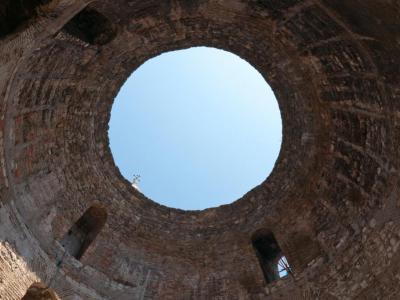
Glance upward. The Vestibule is a rotunda with its dome missing, replaced by a perfect round window of blue sky. It feels a bit like an ancient temple open to the heavens. Long ago, smoke from pagan rituals would have drifted upward. Today, it is harmonies that spiral into the open air-no fire and sacrifice, just tenor and baritone...
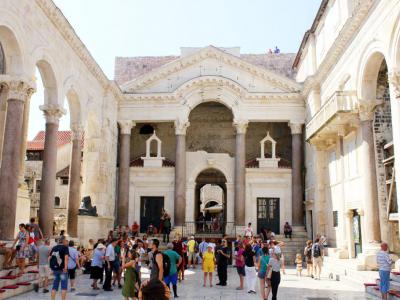
Architecturally, this space served as a grand reception hall. It linked the Peristyle to the emperor’s private apartments and was designed to impress ambassadors before they even laid eyes on the ruler himself. Imagine the scene: polished marble, guarded entrances, visiting dignitaries rehearsing their speeches. The room was built to command attention.
So, why do klapa singers choose this very spot? Quite simple-for its acoustics. The curved stone walls act like a giant resonating chamber. Every note expands, deepens, and returns richer than before. The space doesn’t just carry sound-it embraces it. And for a few minutes, under that open circle of sky, Roman architecture becomes the world’s most dramatic concert hall...
Glance upward. The Vestibule is a rotunda with its dome missing, replaced by a perfect round window of blue sky. It feels a bit like an ancient temple open to the heavens. Long ago, smoke from pagan rituals would have drifted upward. Today, it is harmonies that spiral into the open air-no fire and sacrifice, just tenor and baritone...
Architecturally, this space served as a grand reception hall. It linked the Peristyle to the emperor’s private apartments and was designed to impress ambassadors before they even laid eyes on the ruler himself. Imagine the scene: polished marble, guarded entrances, visiting dignitaries rehearsing their speeches. The room was built to command attention.
So, why do klapa singers choose this very spot? Quite simple-for its acoustics. The curved stone walls act like a giant resonating chamber. Every note expands, deepens, and returns richer than before. The space doesn’t just carry sound-it embraces it. And for a few minutes, under that open circle of sky, Roman architecture becomes the world’s most dramatic concert hall...
Want to visit this sight? Check out these Self-Guided Walking Tours in Split. Alternatively, you can download the mobile app "GPSmyCity: Walks in 1K+ Cities" from Apple App Store or Google Play Store. The app turns your mobile device to a personal tour guide and it works offline, so no data plan is needed when traveling abroad.
Download The GPSmyCity App



Vestibule on Map
Sight Name: Vestibule
Sight Location: Split, Croatia (See walking tours in Split)
Sight Type: Attraction/Landmark
Guide(s) Containing This Sight:
Sight Location: Split, Croatia (See walking tours in Split)
Sight Type: Attraction/Landmark
Guide(s) Containing This Sight:
Nearby Sights
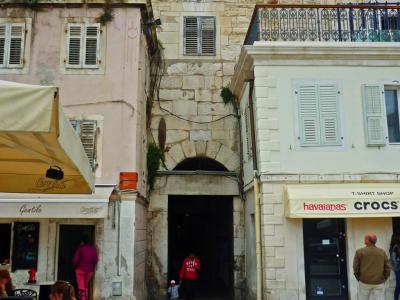
Walking Tours in Split, Croatia

Create Your Own Walk in Split
Creating your own self-guided walk in Split is easy and fun. Choose the city attractions that you want to see and a walk route map will be created just for you. You can even set your hotel as the start point of the walk.
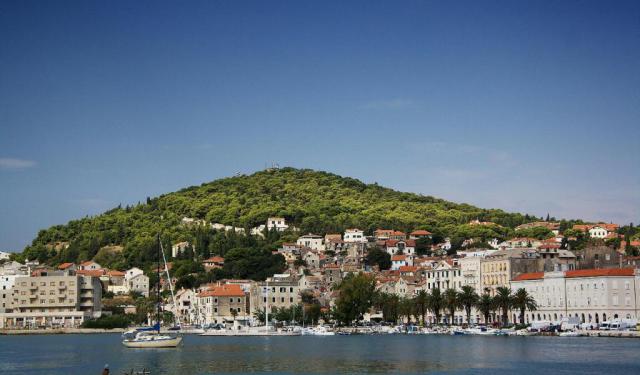
Marjan Hill Walking Tour
Marjan Hill is a picturesque natural wonder – a unique landform – located on the Split peninsula in Croatia. The majestic hill (or the low mountain, if you like) is surrounded by the sea and the city, and represents the green oasis ideal for walks, excursions, and rock climbing. Visitors to the area are greeted with a plethora of sights catering to various interests and equally enjoyed by... view more
Tour Duration: 1 Hour(s)
Travel Distance: 1.4 Km or 0.9 Miles
Tour Duration: 1 Hour(s)
Travel Distance: 1.4 Km or 0.9 Miles
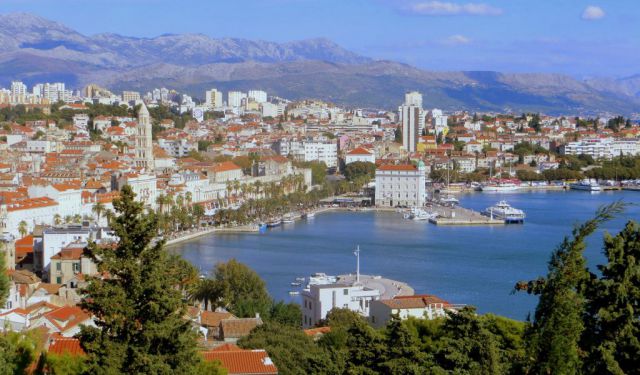
Split Old Town Walking Tour
Welcome to Split, Dalmatia’s sun-drenched heart and, believe it or not, the ultimate ancient retirement plan.
Its story has a bit of a botanical side and dates back more than two millennia, when Greek settlers from Issa (or modern-day Vis) founded here a colony they called Aspalathos, named after a prickly, yellow-flowering shrub that still dots the coastline. The Romans called it Spalatum,... view more
Tour Duration: 1 Hour(s)
Travel Distance: 1.2 Km or 0.7 Miles
Its story has a bit of a botanical side and dates back more than two millennia, when Greek settlers from Issa (or modern-day Vis) founded here a colony they called Aspalathos, named after a prickly, yellow-flowering shrub that still dots the coastline. The Romans called it Spalatum,... view more
Tour Duration: 1 Hour(s)
Travel Distance: 1.2 Km or 0.7 Miles
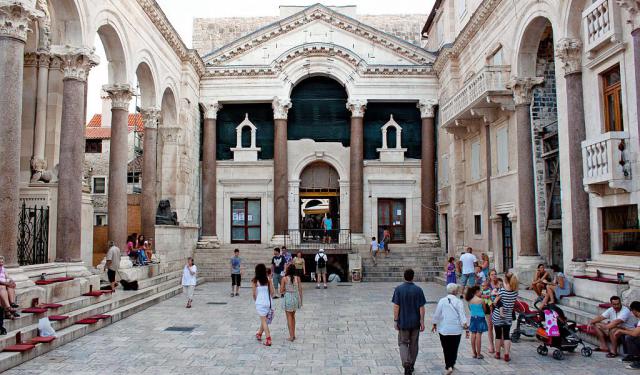
Diocletian Palace Tour
One of the best-preserved monuments of Roman architecture in the world, Diocletian’s Palace is also probably the most impressive “retirement home” in history. Imagine quitting a job at the age of sixty and deciding your quiet seaside cottage should also function as a fortress. That was exactly the plan of Roman emperor Diocletian... In 305 AD, after abdicating-which is something Roman... view more
Tour Duration: 1 Hour(s)
Travel Distance: 0.6 Km or 0.4 Miles
Tour Duration: 1 Hour(s)
Travel Distance: 0.6 Km or 0.4 Miles