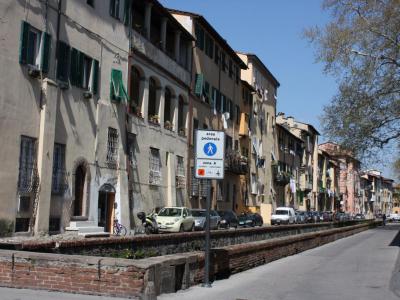


Via del Fosso, Lucca
Officially named Via del Fosso, but affectionately called "Via dei Fossi" by locals, this historic street is one of the most characteristic and evocative in Lucca. Luccans use the plural for its name, reflecting its original layout. After the Madonna dello Stellario widens, the street extends toward the city walls. In 1821, a third section was covered, now Corso Garibaldi, which dazzles in early March with blooming Japanese magnolias.
Via dei Fossi originated in 1376 alongside a defensive moat on Lucca’s eastern walls. Over time, it became an industrial hub, with its canal powering silk workshops. Lucca was among the first in Europe to use hydraulic energy for large-scale silk production. In the 14th century, political turmoil drove artisans to Venice and Bologna, where they spread their advanced techniques, shaping Northern Italy’s silk industry.
Today, the street still bears architectural traces of its industrious past. Many buildings feature open roof terraces once used as drying racks for fabrics, while their ground floors house vaulted spaces that accommodate water-powered machinery. These elements reflect the crucial role water played in the silk production chain.
In 1822, under the commission of Duchess Maria Luisa of Bourbon, architect Lorenzo Nottolini designed a grand waterway to bring fresh spring water from the hills south of Lucca to the city center. His work included two neoclassical fountains, which are still in use today, providing locals with "clear and pure waters."
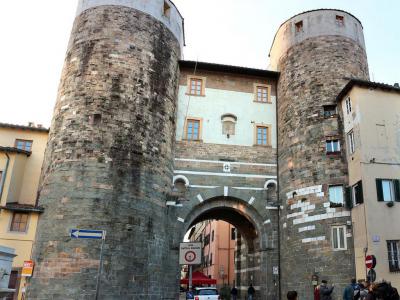
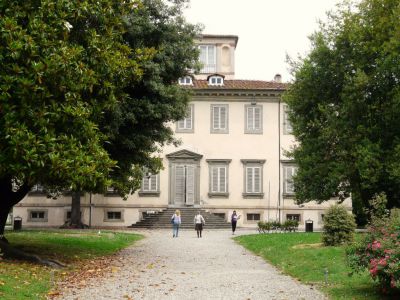
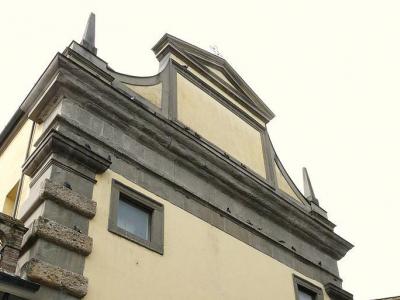
Strolling Via dei Fossi reveals Lucca’s history and hidden gems. Highlights include Villa Bottini-Buonvisi, the only traditional Luccan villa within the city walls, with its elegant garden and loggia. Nearby, the 16th-century SS. Trinità church once housed Matteo Civitali’s Madonna del Latte. A short walk leads to Porta San Gervasio, one of Lucca’s last medieval gates.
At the southern end of Via dei Fossi stands the Church of the Rose (Chiesa della Rosa), a rare Gothic church from 1309. Though old trades have faded, Lucca’s eastern side-Piazza San Francesco, Via della Zecca, and Porta dei Borghi-is now a vibrant hub of artists, craftsmen, breweries, and top trattorias. Palazzo Boccella, home to the Museum of Contemporary Art, adds a modern flair to the area.
Via dei Fossi originated in 1376 alongside a defensive moat on Lucca’s eastern walls. Over time, it became an industrial hub, with its canal powering silk workshops. Lucca was among the first in Europe to use hydraulic energy for large-scale silk production. In the 14th century, political turmoil drove artisans to Venice and Bologna, where they spread their advanced techniques, shaping Northern Italy’s silk industry.
Today, the street still bears architectural traces of its industrious past. Many buildings feature open roof terraces once used as drying racks for fabrics, while their ground floors house vaulted spaces that accommodate water-powered machinery. These elements reflect the crucial role water played in the silk production chain.
In 1822, under the commission of Duchess Maria Luisa of Bourbon, architect Lorenzo Nottolini designed a grand waterway to bring fresh spring water from the hills south of Lucca to the city center. His work included two neoclassical fountains, which are still in use today, providing locals with "clear and pure waters."
Strolling Via dei Fossi reveals Lucca’s history and hidden gems. Highlights include Villa Bottini-Buonvisi, the only traditional Luccan villa within the city walls, with its elegant garden and loggia. Nearby, the 16th-century SS. Trinità church once housed Matteo Civitali’s Madonna del Latte. A short walk leads to Porta San Gervasio, one of Lucca’s last medieval gates.
At the southern end of Via dei Fossi stands the Church of the Rose (Chiesa della Rosa), a rare Gothic church from 1309. Though old trades have faded, Lucca’s eastern side-Piazza San Francesco, Via della Zecca, and Porta dei Borghi-is now a vibrant hub of artists, craftsmen, breweries, and top trattorias. Palazzo Boccella, home to the Museum of Contemporary Art, adds a modern flair to the area.
Want to visit this sight? Check out these Self-Guided Walking Tours in Lucca. Alternatively, you can download the mobile app "GPSmyCity: Walks in 1K+ Cities" from Apple App Store or Google Play Store. The app turns your mobile device to a personal tour guide and it works offline, so no data plan is needed when traveling abroad.
Download The GPSmyCity App



Via del Fosso on Map
Sight Name: Via del Fosso
Sight Location: Lucca, Italy (See walking tours in Lucca)
Sight Type: Attraction/Landmark
Sight Location: Lucca, Italy (See walking tours in Lucca)
Sight Type: Attraction/Landmark
Nearby Sights

Walking Tours in Lucca, Italy

Create Your Own Walk in Lucca
Creating your own self-guided walk in Lucca is easy and fun. Choose the city attractions that you want to see and a walk route map will be created just for you. You can even set your hotel as the start point of the walk.
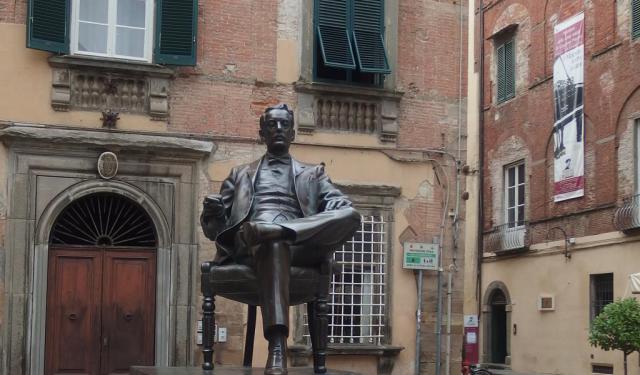
Discover Puccini's Lucca on Foot
One of the greatest musical talents of mankind, Italian composer Giacomo Puccini, was born and spent a substantial part of his life in the Tuscan city of Lucca. Today the legacy of Puccini resonates all over the world and even more so here.
Puccini's ancestors, also musicians, moved to Lucca in 1719. The future maestro was born in a house that had belonged to his family since 1815 – Casa... view more
Tour Duration: 1 Hour(s)
Travel Distance: 1.5 Km or 0.9 Miles
Puccini's ancestors, also musicians, moved to Lucca in 1719. The future maestro was born in a house that had belonged to his family since 1815 – Casa... view more
Tour Duration: 1 Hour(s)
Travel Distance: 1.5 Km or 0.9 Miles
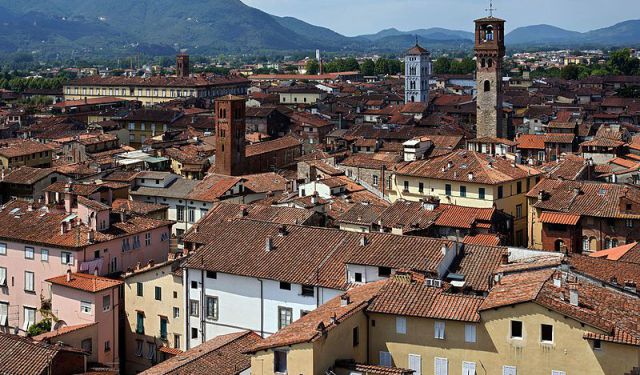
Lucca Old Town Walking Tour
Lucca is called many things: a city of arts, a city of churches, gardens, towers. Most of all it is known for its walls. From Roman times until now the walls have stood. It is the only city in Italy that has kept its walls intact.
The inner walled city is laid out in the ancient Roman grid plan. The Piazza San Michele is the site of the old forum. Bits of the Roman amphitheater can be found in... view more
Tour Duration: 2 Hour(s)
Travel Distance: 2.9 Km or 1.8 Miles
The inner walled city is laid out in the ancient Roman grid plan. The Piazza San Michele is the site of the old forum. Bits of the Roman amphitheater can be found in... view more
Tour Duration: 2 Hour(s)
Travel Distance: 2.9 Km or 1.8 Miles
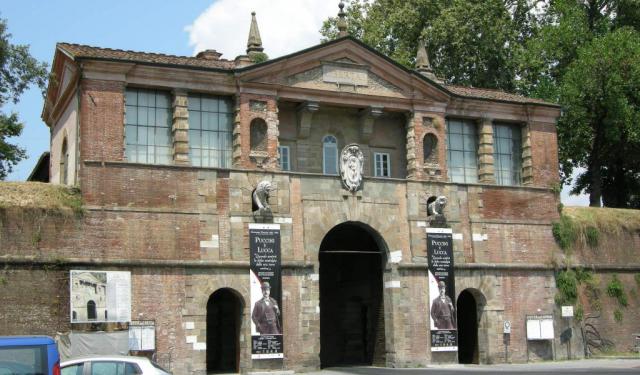
Lucca's City Wall and Gates Walking Tour
As one of Italy's Città d'arte's (arts towns), Lucca is famous, among other things, for its well-preserved ancient walls encircling the historic center. From about 570 AD until 1847 the city had been the center of the Longobard administration and the capital of old Tuscany, and as such required a defense system to render it an impenetrable fortress.
Back in the Middle Ages, the... view more
Tour Duration: 2 Hour(s)
Travel Distance: 3.7 Km or 2.3 Miles
Back in the Middle Ages, the... view more
Tour Duration: 2 Hour(s)
Travel Distance: 3.7 Km or 2.3 Miles