

Villa Bottini, Lucca
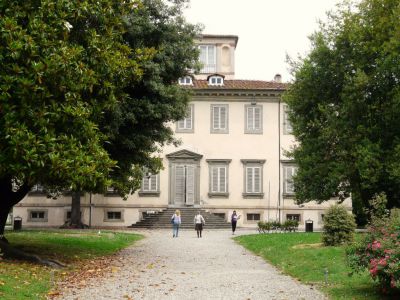
Villa Bottini stands as one of the most elegant and historically significant villas in Lucca. Built in the 16th century by the influential Buonvisi family, its architectural design became a model for many other villas in the region. The villa's balanced symmetry, large openings, and harmonious proportions give it a refined lightness rarely seen in similar structures.
In the early 19th century, Elisa Bonaparte Baciocchi, Napoleon’s sister and Grand Duchess of Tuscany, acquired the villa. During her ownership, neoclassical decorations were added to complement the existing 16th-century frescoes by Ventura Salimbeni, which remain the only surviving example of such interior decoration in Lucca’s villas. The frescoes, inspired by Raphael’s work at Villa Farnesina in Rome, adorn the main hall and the vaulted porch, adding an artistic grandeur to the residence.
The villa’s layout features a rectangular structure with a basement, a raised ground floor, a low-roofed first floor, and a central loggia. A small door on the rear façade leads into the main hall, while the large garden entrance, designed with impressive scale, contrasts with the villa’s more delicate architectural elements. The nymphaeum gate, one of the first instances of Venetian windows in Lucca’s villas, is an eye-catching detail, blending smooth and rough materials and crowned by two river statues forming a broken tympanum.
Following various changes in ownership-including the Marquis Bottini, the Motroni Andreozzi family, and the Marcheschis-the villa eventually came under the ownership of the Tuscany Region. After an extensive restoration, it was sold to the municipality of Lucca, which now uses it as a cultural venue. Today, Villa Bottini hosts exhibitions, events, and public gatherings, while its picturesque garden remains open to visitors, offering a tranquil escape in the heart of Lucca.
In the early 19th century, Elisa Bonaparte Baciocchi, Napoleon’s sister and Grand Duchess of Tuscany, acquired the villa. During her ownership, neoclassical decorations were added to complement the existing 16th-century frescoes by Ventura Salimbeni, which remain the only surviving example of such interior decoration in Lucca’s villas. The frescoes, inspired by Raphael’s work at Villa Farnesina in Rome, adorn the main hall and the vaulted porch, adding an artistic grandeur to the residence.
The villa’s layout features a rectangular structure with a basement, a raised ground floor, a low-roofed first floor, and a central loggia. A small door on the rear façade leads into the main hall, while the large garden entrance, designed with impressive scale, contrasts with the villa’s more delicate architectural elements. The nymphaeum gate, one of the first instances of Venetian windows in Lucca’s villas, is an eye-catching detail, blending smooth and rough materials and crowned by two river statues forming a broken tympanum.
Following various changes in ownership-including the Marquis Bottini, the Motroni Andreozzi family, and the Marcheschis-the villa eventually came under the ownership of the Tuscany Region. After an extensive restoration, it was sold to the municipality of Lucca, which now uses it as a cultural venue. Today, Villa Bottini hosts exhibitions, events, and public gatherings, while its picturesque garden remains open to visitors, offering a tranquil escape in the heart of Lucca.
Want to visit this sight? Check out these Self-Guided Walking Tours in Lucca. Alternatively, you can download the mobile app "GPSmyCity: Walks in 1K+ Cities" from Apple App Store or Google Play Store. The app turns your mobile device to a personal tour guide and it works offline, so no data plan is needed when traveling abroad.
Download The GPSmyCity App



Villa Bottini on Map
Sight Name: Villa Bottini
Sight Location: Lucca, Italy (See walking tours in Lucca)
Sight Type: Attraction/Landmark
Sight Location: Lucca, Italy (See walking tours in Lucca)
Sight Type: Attraction/Landmark
Nearby Sights
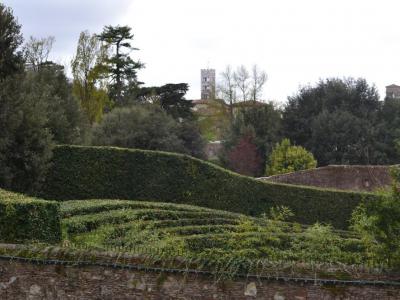
Walking Tours in Lucca, Italy

Create Your Own Walk in Lucca
Creating your own self-guided walk in Lucca is easy and fun. Choose the city attractions that you want to see and a walk route map will be created just for you. You can even set your hotel as the start point of the walk.
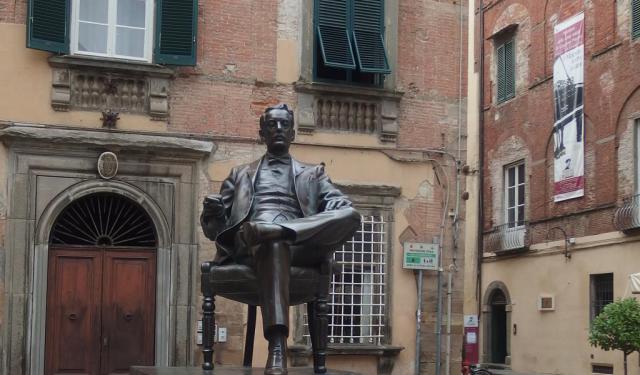
Discover Puccini's Lucca on Foot
One of the greatest musical talents of mankind, Italian composer Giacomo Puccini, was born and spent a substantial part of his life in the Tuscan city of Lucca. Today the legacy of Puccini resonates all over the world and even more so here.
Puccini's ancestors, also musicians, moved to Lucca in 1719. The future maestro was born in a house that had belonged to his family since 1815 – Casa... view more
Tour Duration: 1 Hour(s)
Travel Distance: 1.5 Km or 0.9 Miles
Puccini's ancestors, also musicians, moved to Lucca in 1719. The future maestro was born in a house that had belonged to his family since 1815 – Casa... view more
Tour Duration: 1 Hour(s)
Travel Distance: 1.5 Km or 0.9 Miles
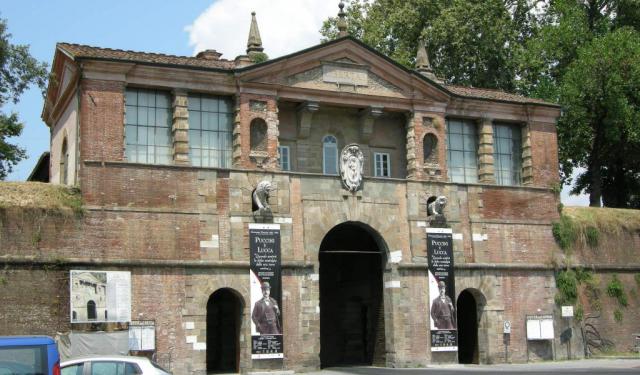
Lucca's City Wall and Gates Walking Tour
As one of Italy's Città d'arte's (arts towns), Lucca is famous, among other things, for its well-preserved ancient walls encircling the historic center. From about 570 AD until 1847 the city had been the center of the Longobard administration and the capital of old Tuscany, and as such required a defense system to render it an impenetrable fortress.
Back in the Middle Ages, the... view more
Tour Duration: 2 Hour(s)
Travel Distance: 3.7 Km or 2.3 Miles
Back in the Middle Ages, the... view more
Tour Duration: 2 Hour(s)
Travel Distance: 3.7 Km or 2.3 Miles
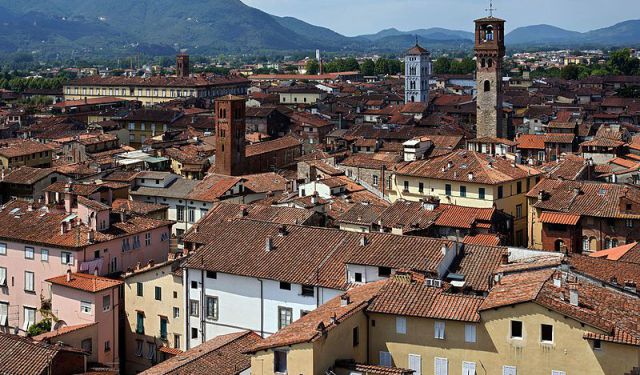
Lucca Old Town Walking Tour
Lucca is called many things: a city of arts, a city of churches, gardens, towers. Most of all it is known for its walls. From Roman times until now the walls have stood. It is the only city in Italy that has kept its walls intact.
The inner walled city is laid out in the ancient Roman grid plan. The Piazza San Michele is the site of the old forum. Bits of the Roman amphitheater can be found in... view more
Tour Duration: 2 Hour(s)
Travel Distance: 2.9 Km or 1.8 Miles
The inner walled city is laid out in the ancient Roman grid plan. The Piazza San Michele is the site of the old forum. Bits of the Roman amphitheater can be found in... view more
Tour Duration: 2 Hour(s)
Travel Distance: 2.9 Km or 1.8 Miles