

Wawel Cathedral, Krakow (must see)
Wawel Cathedral in Kraków carries nearly a millennium of Polish history under its roof.
The earliest sacred building on the hill where the cathedral stands dates back to around the year 1000, when the local bishopric was established. That first church was replaced in the 12th century by a Romanesque basilica, consecrated in 1142. After that structure was destroyed by fire in 1305, a new cathedral was built - the building whose core survives today. Construction of the present Gothic-style nave and chancel began in the early 14th century and the church was consecrated in 1364.
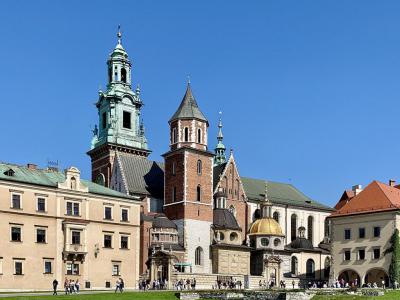
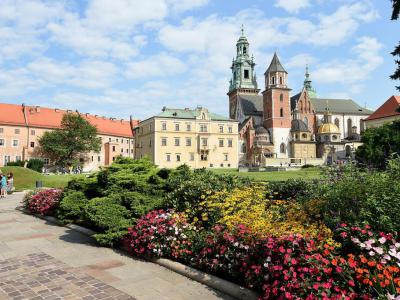
Over the centuries, successive rulers and church dignitaries added chapels, tombs, and artistic touches. This gradual layering resulted in a rich mix of architectural styles: you’ll see Gothic foundations alongside Renaissance and Baroque chapels, Renaissance-era domes and neoclassical details reflecting later modifications. As soon as the cathedral enters your view, you will notice the varied exterior. There is a golden dome, a black dome, a traditional brick tower and two other brick towers topped by jade-green helmets.
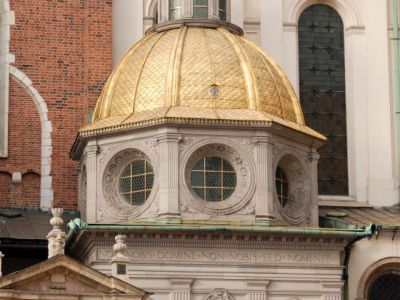
Wawel Cathedral offers many points of interest. Among the highlights is Sigismund's Chapel - a Renaissance masterpiece sometimes hailed as “the most beautiful example of Tuscan Renaissance architecture north of the Alps.” Once you step inside the cathedral, the chapel can be reached by turning right into the south aisle. After passing a series of chapels marked by plaques, you will notice a wooden-like fence with a door at its center. That is the entrance to Sigismund's Chapel. Inside, ornate sculptures and the royal tombs of Sigismund I and his son Sigismund II Augustus reflect the wealth and power of the era when Poland was a leading European kingdom. From outside, Sigismund's Chapel is located under the aforementioned golden dome.
It is recommended that you also visit the crypts and tombs beneath the cathedral as this is where many of Poland’s kings, national heroes, and cultural icons rest.
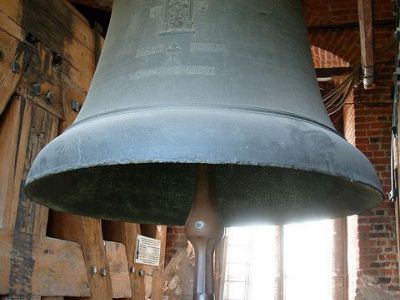
Another compelling attraction of the cathedral is the Sigismund Bell - one of Poland’s most famous bells. It can be reached by turning left from the main altar and then right. A black crucifix is placed on the left wall and to its left there is a door which is the entrance to the bell tower. The massive bell is found at the top of the tower. Cast in the 16th century, its deep toll has echoed across generations and the bell remains an important symbol of national history.
The earliest sacred building on the hill where the cathedral stands dates back to around the year 1000, when the local bishopric was established. That first church was replaced in the 12th century by a Romanesque basilica, consecrated in 1142. After that structure was destroyed by fire in 1305, a new cathedral was built - the building whose core survives today. Construction of the present Gothic-style nave and chancel began in the early 14th century and the church was consecrated in 1364.
Over the centuries, successive rulers and church dignitaries added chapels, tombs, and artistic touches. This gradual layering resulted in a rich mix of architectural styles: you’ll see Gothic foundations alongside Renaissance and Baroque chapels, Renaissance-era domes and neoclassical details reflecting later modifications. As soon as the cathedral enters your view, you will notice the varied exterior. There is a golden dome, a black dome, a traditional brick tower and two other brick towers topped by jade-green helmets.
Wawel Cathedral offers many points of interest. Among the highlights is Sigismund's Chapel - a Renaissance masterpiece sometimes hailed as “the most beautiful example of Tuscan Renaissance architecture north of the Alps.” Once you step inside the cathedral, the chapel can be reached by turning right into the south aisle. After passing a series of chapels marked by plaques, you will notice a wooden-like fence with a door at its center. That is the entrance to Sigismund's Chapel. Inside, ornate sculptures and the royal tombs of Sigismund I and his son Sigismund II Augustus reflect the wealth and power of the era when Poland was a leading European kingdom. From outside, Sigismund's Chapel is located under the aforementioned golden dome.
It is recommended that you also visit the crypts and tombs beneath the cathedral as this is where many of Poland’s kings, national heroes, and cultural icons rest.
Another compelling attraction of the cathedral is the Sigismund Bell - one of Poland’s most famous bells. It can be reached by turning left from the main altar and then right. A black crucifix is placed on the left wall and to its left there is a door which is the entrance to the bell tower. The massive bell is found at the top of the tower. Cast in the 16th century, its deep toll has echoed across generations and the bell remains an important symbol of national history.
Want to visit this sight? Check out these Self-Guided Walking Tours in Krakow. Alternatively, you can download the mobile app "GPSmyCity: Walks in 1K+ Cities" from Apple App Store or Google Play Store. The app turns your mobile device to a personal tour guide and it works offline, so no data plan is needed when traveling abroad.
Download The GPSmyCity App



Wawel Cathedral on Map
Sight Name: Wawel Cathedral
Sight Location: Krakow, Poland (See walking tours in Krakow)
Sight Type: Museum/Gallery
Guide(s) Containing This Sight:
Sight Location: Krakow, Poland (See walking tours in Krakow)
Sight Type: Museum/Gallery
Guide(s) Containing This Sight:
Nearby Sights


Walking Tours in Krakow, Poland

Create Your Own Walk in Krakow
Creating your own self-guided walk in Krakow is easy and fun. Choose the city attractions that you want to see and a walk route map will be created just for you. You can even set your hotel as the start point of the walk.
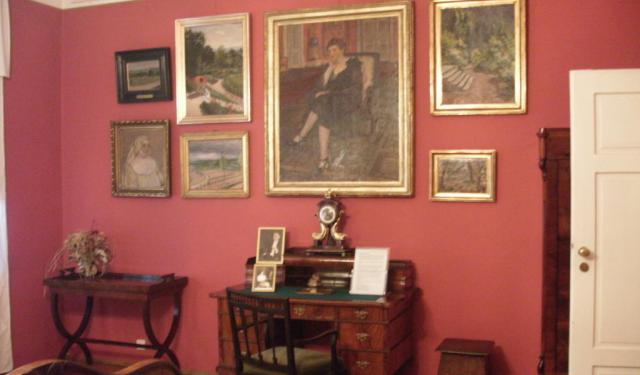
Historical House Museums Tour
Well-preserved historical buildings can often tell the stories of their city more vividly than any history book. Krakow, the old capital and cultural center of Poland, for many years, has been the home of many important Poles. Today, their former residences have been converted into house museums where visitors can learn about their inhabitants and see what life was like in the past.
One such... view more
Tour Duration: 1 Hour
Travel Distance: 2 Km or 1.2 Miles
One such... view more
Tour Duration: 1 Hour
Travel Distance: 2 Km or 1.2 Miles
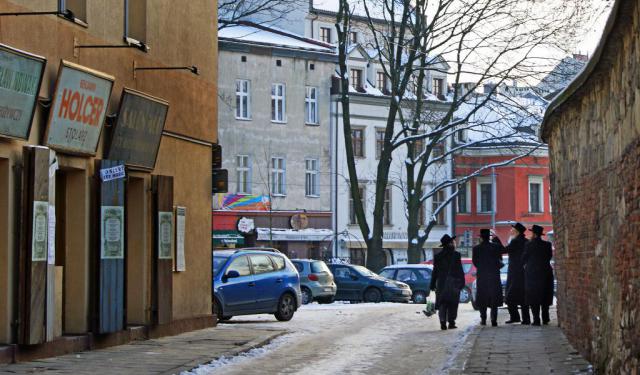
Jewish Heritage Tour in Krakow
The history of Kraków’s Jewish community stands among the most significant chapters of Jewish life in Central Europe. Jews first settled in Kraków in the 13th century, drawn by the city’s expanding trade networks and by greater tolerance compared to other European regions. Early Jewish residents lived mainly around what is today the Old Town and enjoyed a degree of royal protection. However,... view more
Tour Duration: 2 Hours
Travel Distance: 3 Km or 1.9 Miles
Tour Duration: 2 Hours
Travel Distance: 3 Km or 1.9 Miles
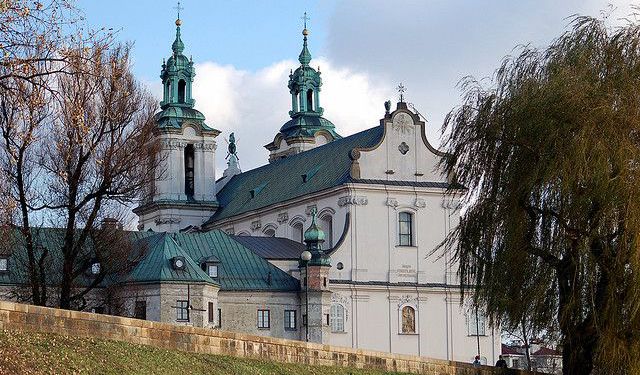
Historical Churches Walking Tour
Krakow, the center of religious life in Poland, was once considered “the Northern Rome” for its multitude of churches. Alongside the new temples continuing to appear in the city today, these remarkable sanctuaries, holding deep historical and cultural significance, still remain the most attractive and interesting to look at.
By far the most iconic of these is the Basilica of Saint Mary. A... view more
Tour Duration: 1 Hour
Travel Distance: 2.2 Km or 1.4 Miles
By far the most iconic of these is the Basilica of Saint Mary. A... view more
Tour Duration: 1 Hour
Travel Distance: 2.2 Km or 1.4 Miles
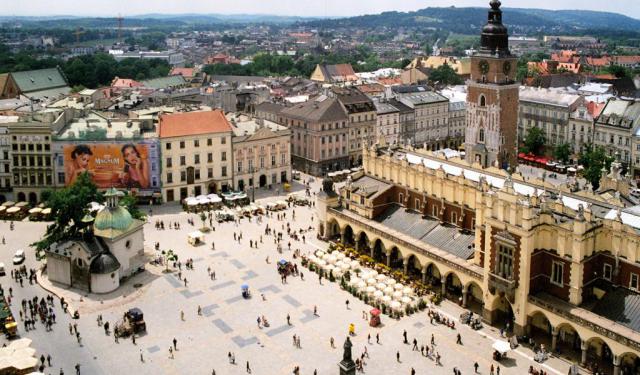
Krakow Old Town Walking Tour
“Kraków has shaped me more than any other place on Earth.” These words from Pope John Paul II brought the city into the global limelight.
The city's name is traditionally linked to Krak, or Krakus, a legendary ruler said to have founded the city after defeating a dragon beneath Wawel Hill. Though the tale is mythological, the name itself derives from this early Slavic personal name,... view more
Tour Duration: 2 Hours
Travel Distance: 3.3 Km or 2.1 Miles
The city's name is traditionally linked to Krak, or Krakus, a legendary ruler said to have founded the city after defeating a dragon beneath Wawel Hill. Though the tale is mythological, the name itself derives from this early Slavic personal name,... view more
Tour Duration: 2 Hours
Travel Distance: 3.3 Km or 2.1 Miles
City Walks Overview
