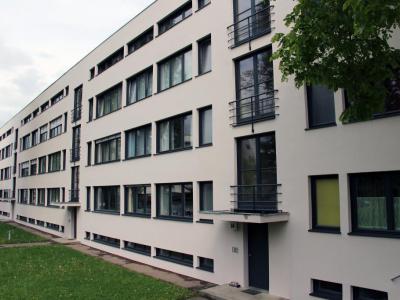


Weissenhof Colony (Weissenhofsiedlung), Stuttgart
The Weissenhof Estate (Weißenhofsiedlung) in Stuttgart is a pivotal housing estate built in 1927 as part of the Deutscher Werkbund exhibition. This estate was an emblem of modern architecture's goals to provide affordable, functional, and quality housing. The exhibition sought to demonstrate that modernist architecture could meet everyday housing needs while being aesthetically pleasing and economically viable.
The estate consists of 21 buildings, including terraced, detached houses, and apartments, totaling 60 dwellings. Seventeen European architects, led by German architect Mies van der Rohe, collaborated on this project. Van der Rohe managed everything from architect selection to construction supervision. Notably, Le Corbusier and Pierre Jeanneret were given two prime plots and the largest budget. Their designs were later recognized as a UNESCO World Heritage Site in 2016 as part of "The Architectural Work of Le Corbusier, an Outstanding Contribution to the Modern Movement."
The Weissenhof Estate's modernist architecture features streamlined facades, flat roofs used as terraces, continuous window bands, and open interiors. It was rapidly built in just five months due to extensive prefabrication. Despite a common misconception, the buildings varied in color; for instance, Bruno Taut used multiple colors, Le Corbusier incorporated white, blue, orange, and green, Mies van der Rohe opted for light pink, and Hans Scharoun added orange eaves.
Initially advertised as a model for future workers' housing, the estate ended up representing more of a prototype of avant-garde residential architecture rather than a directly applicable solution for worker accommodation. The cost and customization involved in each house exceeded what would be accessible for the average worker and did not address the broader challenges associated with mass construction.
The Weissenhof Estate was inaugurated on July 23, 1927, after a delay of one year, and it attracted large audiences, reflecting its cultural and architectural significance. Despite the destruction of several buildings during World War II and subsequent demolitions, eleven of the original twenty-one buildings remain as of 2006. The estate not only marks a significant phase in architectural history but also continues to influence contemporary architectural practices and urban housing strategies.
The estate consists of 21 buildings, including terraced, detached houses, and apartments, totaling 60 dwellings. Seventeen European architects, led by German architect Mies van der Rohe, collaborated on this project. Van der Rohe managed everything from architect selection to construction supervision. Notably, Le Corbusier and Pierre Jeanneret were given two prime plots and the largest budget. Their designs were later recognized as a UNESCO World Heritage Site in 2016 as part of "The Architectural Work of Le Corbusier, an Outstanding Contribution to the Modern Movement."
The Weissenhof Estate's modernist architecture features streamlined facades, flat roofs used as terraces, continuous window bands, and open interiors. It was rapidly built in just five months due to extensive prefabrication. Despite a common misconception, the buildings varied in color; for instance, Bruno Taut used multiple colors, Le Corbusier incorporated white, blue, orange, and green, Mies van der Rohe opted for light pink, and Hans Scharoun added orange eaves.
Initially advertised as a model for future workers' housing, the estate ended up representing more of a prototype of avant-garde residential architecture rather than a directly applicable solution for worker accommodation. The cost and customization involved in each house exceeded what would be accessible for the average worker and did not address the broader challenges associated with mass construction.
The Weissenhof Estate was inaugurated on July 23, 1927, after a delay of one year, and it attracted large audiences, reflecting its cultural and architectural significance. Despite the destruction of several buildings during World War II and subsequent demolitions, eleven of the original twenty-one buildings remain as of 2006. The estate not only marks a significant phase in architectural history but also continues to influence contemporary architectural practices and urban housing strategies.
Want to visit this sight? Check out these Self-Guided Walking Tours in Stuttgart. Alternatively, you can download the mobile app "GPSmyCity: Walks in 1K+ Cities" from Apple App Store or Google Play Store. The app turns your mobile device to a personal tour guide and it works offline, so no data plan is needed when traveling abroad.
Download The GPSmyCity App



Weissenhof Colony (Weissenhofsiedlung) on Map
Sight Name: Weissenhof Colony (Weissenhofsiedlung)
Sight Location: Stuttgart, Germany (See walking tours in Stuttgart)
Sight Type: Attraction/Landmark
Sight Location: Stuttgart, Germany (See walking tours in Stuttgart)
Sight Type: Attraction/Landmark
Nearby Sights
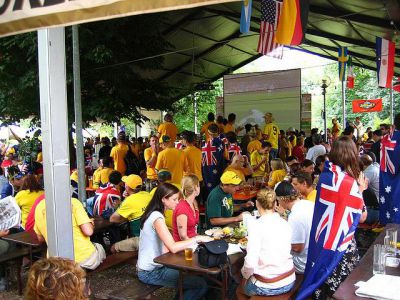
Walking Tours in Stuttgart, Germany

Create Your Own Walk in Stuttgart
Creating your own self-guided walk in Stuttgart is easy and fun. Choose the city attractions that you want to see and a walk route map will be created just for you. You can even set your hotel as the start point of the walk.
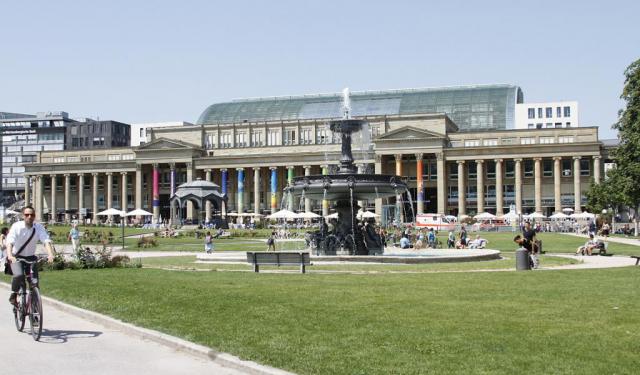
Walking Through Stuttgart's Vibrant City Center
Stuttgart is the capital of Baden-Württemberg, a German state that is often referred to as BaWü or BW. Stuttgart has a large metropolitan area, and the city is known for its high quality of living.
The area's fertile land has attracted settlements for centuries. The Romans settled here in AD 83. During the 10th century, the Duke of Swabia used the area to breed warhorses. The town grew... view more
Tour Duration: 1 Hour
Travel Distance: 1.7 Km or 1.1 Miles
The area's fertile land has attracted settlements for centuries. The Romans settled here in AD 83. During the 10th century, the Duke of Swabia used the area to breed warhorses. The town grew... view more
Tour Duration: 1 Hour
Travel Distance: 1.7 Km or 1.1 Miles
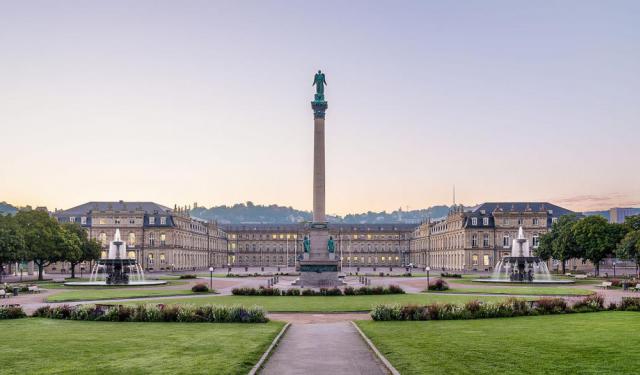
Discover Stuttgart's Historical Buildings on Foot
Despite being almost completely destroyed during World War II, Stuttgart boasts a wealth of quite impressive historical architecture. In the city center, carefully rebuilt after the war, you will find a mix of centuries-old castles, churches and other attractive buildings fit to impress anyone with their beauty and peculiar features.
For some serious architectural appreciation of Stuttgart,... view more
Tour Duration: 1 Hour
Travel Distance: 1.3 Km or 0.8 Miles
For some serious architectural appreciation of Stuttgart,... view more
Tour Duration: 1 Hour
Travel Distance: 1.3 Km or 0.8 Miles
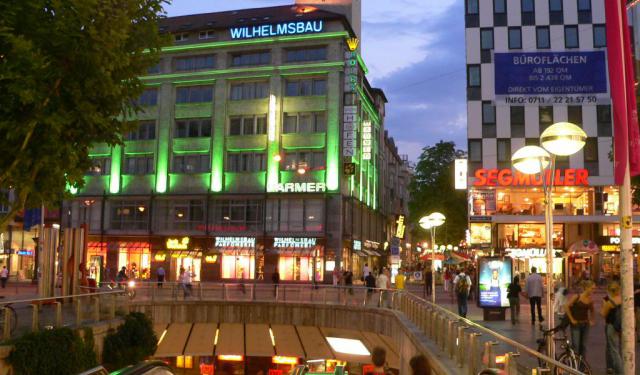
A Walking Guide to Shopping in Stuttgart
When it comes to quality shopping, Stuttgart is a great destination, offering shopping enthusiasts a plethora of options to consider.
The city's main thoroughfare, King Street, colloquially known as Konigstrasse, is one of its prime shopping areas. This bustling avenue, lined with upscale boutiques and department stores, offers everything from high-end fashion to unique souvenirs.... view more
Tour Duration: 1 Hour
Travel Distance: 2.1 Km or 1.3 Miles
The city's main thoroughfare, King Street, colloquially known as Konigstrasse, is one of its prime shopping areas. This bustling avenue, lined with upscale boutiques and department stores, offers everything from high-end fashion to unique souvenirs.... view more
Tour Duration: 1 Hour
Travel Distance: 2.1 Km or 1.3 Miles