Custom Walk in Reykjavik, Iceland by jasimpson_1493767 created on 2020-01-12
Guide Location: Iceland » Reykjavik
Guide Type: Custom Walk
# of Sights: 6
Tour Duration: 2 Hour(s)
Travel Distance: 4.9 Km or 3 Miles
Share Key: 6XWHH
Guide Type: Custom Walk
# of Sights: 6
Tour Duration: 2 Hour(s)
Travel Distance: 4.9 Km or 3 Miles
Share Key: 6XWHH
How It Works
Please retrieve this walk in the GPSmyCity app. Once done, the app will guide you from one tour stop to the next as if you had a personal tour guide. If you created the walk on this website or come to the page via a link, please follow the instructions below to retrieve the walk in the app.
Retrieve This Walk in App
Step 1. Download the app "GPSmyCity: Walks in 1K+ Cities" on Apple App Store or Google Play Store.



Step 2. In the GPSmyCity app, download(or launch) the guide "Reykjavik Map and Walking Tours".
Step 3. Tap the menu button located at upper right corner of the "Walks" screen and select "Retrieve custom walk". Enter the share key: 6XWHH

1) Radisson Blu
This custom location is created on gpsmycity.com website.
2) Austurvöllur Square
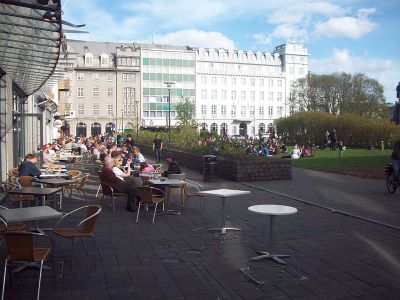
Austurvollur Square is the main public square in Reykjavik and is home to several important landmarks. Here you will find The Parliament House, Reykjavik Cathedral, the Hotel Borg, as well as several popular restaurants, cafes, and bars.
Hotel Borg was built by Jóhannes Jósefsson, who competed in the 1908 Olympics. He traveled in America and returned to Iceland in 1927 with a dream of building a luxury hotel. Iceland was preparing to host celebrations for its 1,000th parliamentary anniversary. The hotel opened in 1930 and has hosted many politicians, dignitaries, and celebrities. Built in Art Deco style, the hotel is elegant and attractive.
A statue of Jon Sigurosson stands in the middle of the square. Jon Sigurosson was a leader of Iceland's independence movement in the 19th century.
In the summer, the square is filled with locals and tourists who enjoy the outdoor cafes. In the winter, the square is home to a large Christmas tree.
Hotel Borg was built by Jóhannes Jósefsson, who competed in the 1908 Olympics. He traveled in America and returned to Iceland in 1927 with a dream of building a luxury hotel. Iceland was preparing to host celebrations for its 1,000th parliamentary anniversary. The hotel opened in 1930 and has hosted many politicians, dignitaries, and celebrities. Built in Art Deco style, the hotel is elegant and attractive.
A statue of Jon Sigurosson stands in the middle of the square. Jon Sigurosson was a leader of Iceland's independence movement in the 19th century.
In the summer, the square is filled with locals and tourists who enjoy the outdoor cafes. In the winter, the square is home to a large Christmas tree.
3) Reykjavik Old Harbor
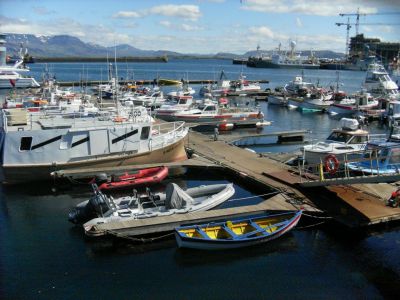
The Old Harbor was built between 1913 and 1917 and was originally used for fisheries and trade. Reykjavik was made the capital city in part due to the economic importance of the Old Harbor. This natural harbor was the main draw to original Viking explorer Ingolfur Arnarson, who settled in this area. The harbor is still a vital contributor to the economy; however, today's economy is more driven by tourism.
Today, many tours leave from the harbor. Visitors can go on whale-watching tours and often see dolphins, Minke Whales, and Humpback Whales. Some lucky visitors will also see Blue, Fin, and Beaked Whales as well as Orcas.
Puffin-watching tours also leave from the harbor. Visitors who want to see the majestic Northern Lights blanketing a winter sky can brave the cold and go on a once-in-a-lifetime Northern Lights cruise.
Landside, the Old Harbor has been transformed from a working harborside to a trendy hotspot. Many of the colorful old fishing houses have been renovated into fabulous cafes, bars, and restaurants.
Baejarins Beztu hot dog stand opened in 1937 to serve fast food to fishermen. It's one of Iceland's oldest family-run businesses and has a unique claim to fame. Former U.S. President Bill Clinton had a hot dog here in 2004 and called it "the world's best hot dog." Matur & Drykkur is a fine-dining restaurant that serves traditional Icelandic fare and is mentioned in the Michelin guide.
Art galleries, museums, and cinemas are other attractions in this scenic location. Volcano House plays documentaries about Iceland's volcanoes. Gallery i8 is known as Iceland's best modern art gallery.
Reykjavik Old Harbor is the perfect place for attractive photos, with a backdrop of traditional fishing boats and Mount Esja.
Today, many tours leave from the harbor. Visitors can go on whale-watching tours and often see dolphins, Minke Whales, and Humpback Whales. Some lucky visitors will also see Blue, Fin, and Beaked Whales as well as Orcas.
Puffin-watching tours also leave from the harbor. Visitors who want to see the majestic Northern Lights blanketing a winter sky can brave the cold and go on a once-in-a-lifetime Northern Lights cruise.
Landside, the Old Harbor has been transformed from a working harborside to a trendy hotspot. Many of the colorful old fishing houses have been renovated into fabulous cafes, bars, and restaurants.
Baejarins Beztu hot dog stand opened in 1937 to serve fast food to fishermen. It's one of Iceland's oldest family-run businesses and has a unique claim to fame. Former U.S. President Bill Clinton had a hot dog here in 2004 and called it "the world's best hot dog." Matur & Drykkur is a fine-dining restaurant that serves traditional Icelandic fare and is mentioned in the Michelin guide.
Art galleries, museums, and cinemas are other attractions in this scenic location. Volcano House plays documentaries about Iceland's volcanoes. Gallery i8 is known as Iceland's best modern art gallery.
Reykjavik Old Harbor is the perfect place for attractive photos, with a backdrop of traditional fishing boats and Mount Esja.
4) Harpa Concert Hall and Conference Centre (must see)
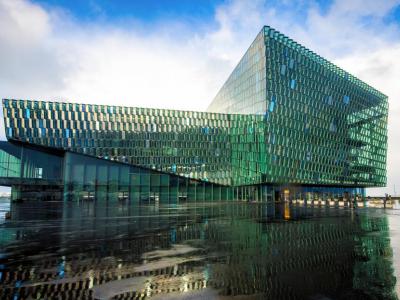
Harpa Concert Hall and Conference Centre is a modern complex completed in 2011. It is the first purpose-built concert hall in Reykjavik. Harpa is home to the Iceland Symphony Orchestra and the Icelandic Opera's offices.
The modern building features different colored geometric-shaped glass panels over a steel framework.
The 1970 The Musician sculpture is located in the water next to Harpa. Icelandic sculptor Olof Palsdottir created the sculpture which shows a cellist playing. The statue used to be located at the previous home of the Iceland Symphony Orchestra, but it moved with the Orchestra to its new home.
The concert hall also hosts performances by the Icelandic Opera and the Reykjavik Big Band.
The building won the European Union's Mies van der Rohe Award for contemporary architecture in 2013. In addition, Harpa won the MICE Report Award for the best conference center in Northern Europe.
Harpa has appeared in the series Black Mirror and in an episode of the Netflix series Sense8. It hosts several regular shows such as How to Become Icelandic in 60 Minutes, Pearls of Icelandic Songs, Reykjavik Classics,and Bowie: The Session.
Harpa features modern architecture and is stunning at night.
The modern building features different colored geometric-shaped glass panels over a steel framework.
The 1970 The Musician sculpture is located in the water next to Harpa. Icelandic sculptor Olof Palsdottir created the sculpture which shows a cellist playing. The statue used to be located at the previous home of the Iceland Symphony Orchestra, but it moved with the Orchestra to its new home.
The concert hall also hosts performances by the Icelandic Opera and the Reykjavik Big Band.
The building won the European Union's Mies van der Rohe Award for contemporary architecture in 2013. In addition, Harpa won the MICE Report Award for the best conference center in Northern Europe.
Harpa has appeared in the series Black Mirror and in an episode of the Netflix series Sense8. It hosts several regular shows such as How to Become Icelandic in 60 Minutes, Pearls of Icelandic Songs, Reykjavik Classics,and Bowie: The Session.
Harpa features modern architecture and is stunning at night.
5) Hallgrímskirkja (Church of Hallgrímur) (must see)
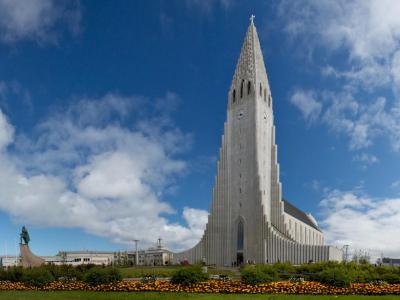
Standing at 74 meters (244 feet) tall, the striking Church of Hallgrímur is Iceland's tallest church. Architect Guojon Samuelsson began drawing the church in 1937. Construction began in 1945 and was completed in 1986.
Iceland's unique geography inspired the design of the church. Volcanic action created lava flows which cooled into grey, hexagonal columns. The dramatic, cool, jagged columns inspired the design of the Church of Hallgrímur.
The church was named after 17th-century clergyman and poet Hallgrimur Petursson. Hallgrimur Petursson was best known for his work Hymns of the Passion.
This iconic building is visible from many parts of Reykjavík. The Church of Hallgrímur is a Lutheran, or Church of Iceland establishment. Its impressive height was in part to compete with Landakot's Church, the Catholic Cathedral.
During the summer, visitors can enjoy concerts which run four days a week. Don't miss the incredible pipe organ that stands 15 meters (49 feet) tall. The pipe organ has electronic action; the pipes are remote from the pedal console. The organ has 5,275 pipes and has been featured in several recording albums.
Outside the entrance, visitors will find a statue of Leif Eriksson, a famed explorer. The United States gave the statue to Iceland in the 1930s to commemorate the 1,000th anniversary of the Icelandic Parliament. The Icelandic Parliament was first convened in the year 930 AD.
The large clock on the tower is often wrong, as strong Icelandic wind gusts often blow the hands about.
Why You Should Visit:
The Church of Hallgrímur is a dramatic church that wonderfully emulates Iceland's landscape. You will see the church's tower from all over the city and find the church even more impressive up close. The interior is surprisingly austere with clean lines.
Tips:
Admission is free, but a small fee provides access to a lift to the top of the building, where visitors can enjoy panoramic views of Reykjavik and the surrounding mountains.
Iceland's unique geography inspired the design of the church. Volcanic action created lava flows which cooled into grey, hexagonal columns. The dramatic, cool, jagged columns inspired the design of the Church of Hallgrímur.
The church was named after 17th-century clergyman and poet Hallgrimur Petursson. Hallgrimur Petursson was best known for his work Hymns of the Passion.
This iconic building is visible from many parts of Reykjavík. The Church of Hallgrímur is a Lutheran, or Church of Iceland establishment. Its impressive height was in part to compete with Landakot's Church, the Catholic Cathedral.
During the summer, visitors can enjoy concerts which run four days a week. Don't miss the incredible pipe organ that stands 15 meters (49 feet) tall. The pipe organ has electronic action; the pipes are remote from the pedal console. The organ has 5,275 pipes and has been featured in several recording albums.
Outside the entrance, visitors will find a statue of Leif Eriksson, a famed explorer. The United States gave the statue to Iceland in the 1930s to commemorate the 1,000th anniversary of the Icelandic Parliament. The Icelandic Parliament was first convened in the year 930 AD.
The large clock on the tower is often wrong, as strong Icelandic wind gusts often blow the hands about.
Why You Should Visit:
The Church of Hallgrímur is a dramatic church that wonderfully emulates Iceland's landscape. You will see the church's tower from all over the city and find the church even more impressive up close. The interior is surprisingly austere with clean lines.
Tips:
Admission is free, but a small fee provides access to a lift to the top of the building, where visitors can enjoy panoramic views of Reykjavik and the surrounding mountains.
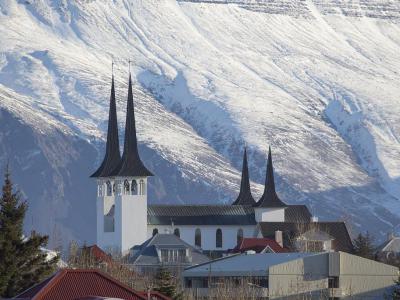
6) Háteigskirkja Church
Háteigskirkja, a stunning Lutheran church characterized by its four sharply pointed steeples, stands majestically atop a hill, easily accessible from downtown Reykjavík. The church's design meticulously follows regional architectural traditions, thus maintaining the city's historic aesthetic.
This church features a unique design with two naves located in its basement and is encircled by four towers, including a bell tower. Its tall, slender spires pierce the sky, forming a striking contrast against the building's main facade. These spires ensure the church's visibility throughout the city, making it an excellent landmark. The church's interior boasts a mosaic cross by Benedikt Gunnarsson and exquisite golden pillars.
Construction of Háteigskirkja commenced in 1957 with the laying of the foundation stone. The classical design was the brainchild of architect Haldor Jonsson. Initially, construction progressed on schedule, but financial challenges soon emerged. By 1965, during the church's consecration, it was evident that construction could not continue, leaving the building incomplete. However, the local community was deeply attached to the project and rallied to resume construction. Finally, in the early 2000s, the church opened its doors to the public.
Today, visitors to Reykjavik often include Háteigskirkja in their itinerary. Traveler accounts frequently mention Háteigskirkja, describing it with a range of adjectives from amusing to unique, ensuring sustained interest. The church provokes a spectrum of emotions, but never indifference. It stands out distinctly from any vantage point in the city.
This church features a unique design with two naves located in its basement and is encircled by four towers, including a bell tower. Its tall, slender spires pierce the sky, forming a striking contrast against the building's main facade. These spires ensure the church's visibility throughout the city, making it an excellent landmark. The church's interior boasts a mosaic cross by Benedikt Gunnarsson and exquisite golden pillars.
Construction of Háteigskirkja commenced in 1957 with the laying of the foundation stone. The classical design was the brainchild of architect Haldor Jonsson. Initially, construction progressed on schedule, but financial challenges soon emerged. By 1965, during the church's consecration, it was evident that construction could not continue, leaving the building incomplete. However, the local community was deeply attached to the project and rallied to resume construction. Finally, in the early 2000s, the church opened its doors to the public.
Today, visitors to Reykjavik often include Háteigskirkja in their itinerary. Traveler accounts frequently mention Háteigskirkja, describing it with a range of adjectives from amusing to unique, ensuring sustained interest. The church provokes a spectrum of emotions, but never indifference. It stands out distinctly from any vantage point in the city.
