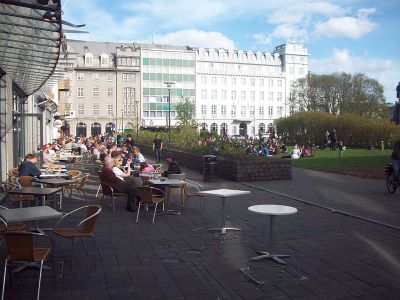


Austurvöllur Square, Reykjavik
Austurvöllur Square serves as the main public square in Reykjavík and a focal point of both daily life and national identity. The square took shape in the 18th and 19th centuries as Reykjavík developed into an administrative centre. Originally an open field on the eastern side of the early settlement-reflected in its name, meaning “Eastern Field”-it gradually evolved into a structured space framed by key landmarks, including the Parliament House, Reykjavík Cathedral, and Hotel Borg, along with a concentration of cafés, restaurants, and bars.
At the centre of the square stands a statue of Jón Sigurðsson, unveiled in 1911 to mark the centenary of his birth. Nearby, Hotel Borg adds another historical layer: built in 1930 by Jóhannes Jósefsson, who competed in the 1908 Summer Olympics, the Art Deco building was conceived as a luxury hotel ahead of the 1,000th anniversary of Iceland’s parliament and has since hosted politicians, dignitaries, and celebrities.
Today, Austurvöllur functions as both a gathering place and a social hub. In summer, the square fills with locals and visitors enjoying outdoor cafés and open space, while in winter it takes on a quieter atmosphere, often marked by the presence of a large Christmas tree.
At the centre of the square stands a statue of Jón Sigurðsson, unveiled in 1911 to mark the centenary of his birth. Nearby, Hotel Borg adds another historical layer: built in 1930 by Jóhannes Jósefsson, who competed in the 1908 Summer Olympics, the Art Deco building was conceived as a luxury hotel ahead of the 1,000th anniversary of Iceland’s parliament and has since hosted politicians, dignitaries, and celebrities.
Today, Austurvöllur functions as both a gathering place and a social hub. In summer, the square fills with locals and visitors enjoying outdoor cafés and open space, while in winter it takes on a quieter atmosphere, often marked by the presence of a large Christmas tree.
Want to visit this sight? Check out these Self-Guided Walking Tours in Reykjavik. Alternatively, you can download the mobile app "GPSmyCity: Walks in 1K+ Cities" from Apple App Store or Google Play Store. The app turns your mobile device to a personal tour guide and it works offline, so no data plan is needed when traveling abroad.
Download The GPSmyCity App



Austurvöllur Square on Map
Sight Name: Austurvöllur Square
Sight Location: Reykjavik, Iceland (See walking tours in Reykjavik)
Sight Type: Attraction/Landmark
Guide(s) Containing This Sight:
Sight Location: Reykjavik, Iceland (See walking tours in Reykjavik)
Sight Type: Attraction/Landmark
Guide(s) Containing This Sight:
Nearby Sights
Walking Tours in Reykjavik, Iceland

Create Your Own Walk in Reykjavik
Creating your own self-guided walk in Reykjavik is easy and fun. Choose the city attractions that you want to see and a walk route map will be created just for you. You can even set your hotel as the start point of the walk.
Reykjavik Downtown Walking Tour
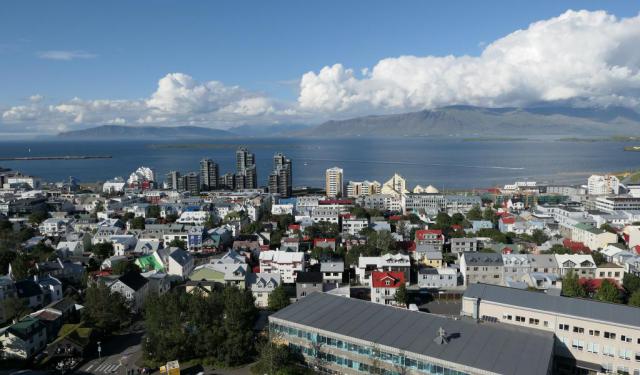
In spite of the city’s small size and remote location, the Reykjavik Summit helped ease Cold War tensions between the Soviet Union and the United States in 1986.
Reykjavík, the capital of Iceland, is both the country’s largest city and its historical starting point. Its origins trace back to around 874 AD, when the Norse settler Ingólfr Arnarson established a farmstead on the southwestern... view more
Tour Duration: 2 Hours
Travel Distance: 3.8 Km or 2.4 Miles
Reykjavík, the capital of Iceland, is both the country’s largest city and its historical starting point. Its origins trace back to around 874 AD, when the Norse settler Ingólfr Arnarson established a farmstead on the southwestern... view more
Tour Duration: 2 Hours
Travel Distance: 3.8 Km or 2.4 Miles
Reykjavik Historical Buildings Tour
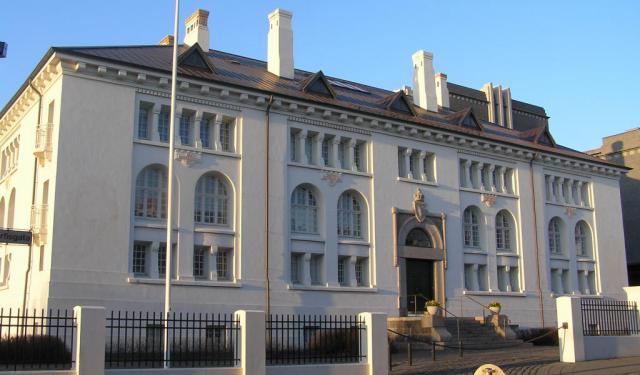
Reykjavik, although primarily famous as a base from which to explore the rest of Iceland, is surprisingly full of unique historic locations, many of which are off the beaten path and thus not overrun with tourists. In fact, unless you're accompanied by a historian or knowledgeable local, you can easily walk right past them and not realize their historical importance.
Relatively small in... view more
Tour Duration: 2 Hours
Travel Distance: 2.9 Km or 1.8 Miles
Relatively small in... view more
Tour Duration: 2 Hours
Travel Distance: 2.9 Km or 1.8 Miles