Custom Walk in Funchal, Portugal by amccurryg4792 created on 2022-04-10
Guide Location: Portugal » Funchal
Guide Type: Custom Walk
# of Sights: 8
Tour Duration: 4 Hour(s)
Travel Distance: 9.2 Km or 5.7 Miles
Share Key: 8U8CP
Guide Type: Custom Walk
# of Sights: 8
Tour Duration: 4 Hour(s)
Travel Distance: 9.2 Km or 5.7 Miles
Share Key: 8U8CP
How It Works
Please retrieve this walk in the GPSmyCity app. Once done, the app will guide you from one tour stop to the next as if you had a personal tour guide. If you created the walk on this website or come to the page via a link, please follow the instructions below to retrieve the walk in the app.
Retrieve This Walk in App
Step 1. Download the app "GPSmyCity: Walks in 1K+ Cities" on Apple App Store or Google Play Store.



Step 2. In the GPSmyCity app, download(or launch) the guide "Funchal Map and Walking Tours".
Step 3. Tap the menu button located at upper right corner of the "Walks" screen and select "Retrieve custom walk". Enter the share key: 8U8CP

1) Endemic ApartmentsR. Dom Carlos I 24 3ºb, 9054-533 Funchal, Portugal
This custom location is created on gpsmycity.com website.
2) Rua de Santa Maria (Santa Maria Street)
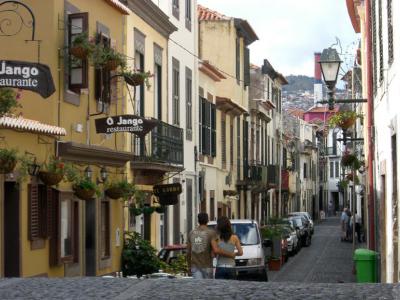
Santa Maria street lies in the parish of Santa Maria Maior, the very first district on the island of Madeira. The street itself dates back to the early settlement of Funchal and was originally little more than a stone path about 1,970 feet long running parallel to the shore. When the area was first settled, a small church known as Saint Mary of the Pebble stood nearby, and a rough square extended to the beach; from that the street gradually grew.
Today the street presents a lively mix of residential houses and commercial establishments. One of its most celebrated features is the series of painted doors on private houses: thanks to the “Art of Open Doors” initiative, more than 200 doors have been transformed into works of art by local and international artists. The result is that ordinary frontages become mini-canvases of color, making the street itself feel like an open-air gallery.
Along the street you’ll find the popular Mariazinha Bakery, offering cream cakes, fruit cakes, croissants, espresso and other tempting baked goods in a five-star cafe atmosphere. The street is also jammed with restaurants and cafe terraces, offering both traditional Madeiran menus and international dishes; there are bars serving poncha, a traditional Madeiran alcoholic drink, and venues where you might hear traditional music.
Today the street presents a lively mix of residential houses and commercial establishments. One of its most celebrated features is the series of painted doors on private houses: thanks to the “Art of Open Doors” initiative, more than 200 doors have been transformed into works of art by local and international artists. The result is that ordinary frontages become mini-canvases of color, making the street itself feel like an open-air gallery.
Along the street you’ll find the popular Mariazinha Bakery, offering cream cakes, fruit cakes, croissants, espresso and other tempting baked goods in a five-star cafe atmosphere. The street is also jammed with restaurants and cafe terraces, offering both traditional Madeiran menus and international dishes; there are bars serving poncha, a traditional Madeiran alcoholic drink, and venues where you might hear traditional music.

3) Botanical Garden (must see)
Located in the center of Funchal, Botanical Garden is a place that comprises luscious plants as orchids, magnolias, lilies, cactus, azaleas and exotic birds including canaries, talking parrots and others. It represents a combination of harmonious shapes, contrasting colours and beautiful landscapes of the Funchal Bay and the surrounding mountains.
4) Zona Velha (Old Town)
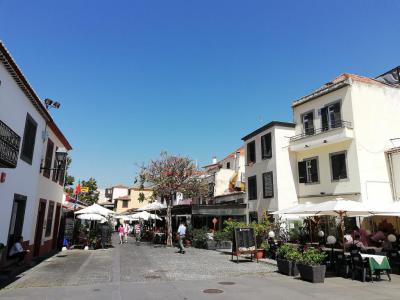
The Old Town of Funchal (Zona Velha) offers visitors the opportunity to experience the city's early colonization days. This area played a vital role in Funchal's development and was one of the first to be inhabited. It boasts a wealth of heritage buildings, including churches, facades, and architectural details that transport you back in time to significant historical periods. The Old Town is distinguished by its narrow cobbled streets and old house facades, making it a historic area of immense architectural and heritage value.
At the heart of this district is the Chapel of the Holy Body (Capela do Corpo Santo), one of the few remaining 15th-century buildings in the city. The street where it is located, Santa Maria Street (Rua de Santa Maria), is one of the oldest in Funchal and hosts numerous local businesses, such as the Hat Factory (Fábrica de Hats), which has been operating in the same location for over 60 years, and the Boots Factory (Fábrica de Botas).
As you stroll down the cobbled path of Santa Maria Street, you'll come across the stunning Church of Socorro (Igreja do Socorro). If you venture to the top, you'll find a small viewpoint that offers a breathtaking view of the city.
One of the major draws of the Old Town of Funchal is its vibrant nightlife, where art and entertainment collide. The streets of this area have undergone artistic intervention by both local and foreign artists through the "Art of Open Doors" (Arte de Portas Abertas) project, representing one of the city's cultural and urban art facets.
At the heart of this district is the Chapel of the Holy Body (Capela do Corpo Santo), one of the few remaining 15th-century buildings in the city. The street where it is located, Santa Maria Street (Rua de Santa Maria), is one of the oldest in Funchal and hosts numerous local businesses, such as the Hat Factory (Fábrica de Hats), which has been operating in the same location for over 60 years, and the Boots Factory (Fábrica de Botas).
As you stroll down the cobbled path of Santa Maria Street, you'll come across the stunning Church of Socorro (Igreja do Socorro). If you venture to the top, you'll find a small viewpoint that offers a breathtaking view of the city.
One of the major draws of the Old Town of Funchal is its vibrant nightlife, where art and entertainment collide. The streets of this area have undergone artistic intervention by both local and foreign artists through the "Art of Open Doors" (Arte de Portas Abertas) project, representing one of the city's cultural and urban art facets.
5) Avenida do Mar (Sea Avenue)
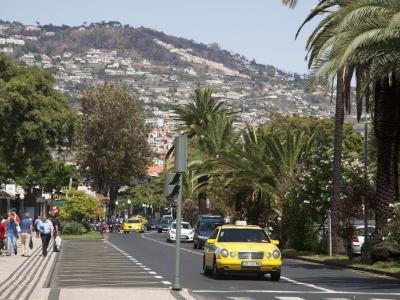
Sea Avenue is Funchal’s main seafront artery, running for about 4,270 feet along the southern edge of the historic center. Lined with palm trees, gardens, and wide pavements, it links the marina in the west to Admiral Reis Garden and the old town in the east. The avenue in its modern form dates from 1939 but follows the line of the early waterfront road; in the 1980s its name was extended to honor Madeirans who emigrated overseas by sea.
On the shore side, you cross the landscaped People’s Square, a modern waterfront park created on reclaimed land, with lawns, paths, kiosks, and open views of the harbor and cruise ships. On the city side you see a row of important public buildings: the Port Captain’s Office and the regional headquarters of the national guard, followed further along by the Legislative Assembly of Madeira and statues such as the Monument to the Madeiran Emigrant.
If you head west, with the sea on your left, the shore side opens onto Funchal Marina, lined with yachts and tour boats. On the city side you pass the reconstructed Varadouros Gate, recalling the old city walls, and then the fortified Saint Lawrence Palace and other historic facades that overlook the avenue. Near the western end, the road curves by the CR7 Museum, celebrating Cristiano Ronaldo with a bronze statue.
On the shore side, you cross the landscaped People’s Square, a modern waterfront park created on reclaimed land, with lawns, paths, kiosks, and open views of the harbor and cruise ships. On the city side you see a row of important public buildings: the Port Captain’s Office and the regional headquarters of the national guard, followed further along by the Legislative Assembly of Madeira and statues such as the Monument to the Madeiran Emigrant.
If you head west, with the sea on your left, the shore side opens onto Funchal Marina, lined with yachts and tour boats. On the city side you pass the reconstructed Varadouros Gate, recalling the old city walls, and then the fortified Saint Lawrence Palace and other historic facades that overlook the avenue. Near the western end, the road curves by the CR7 Museum, celebrating Cristiano Ronaldo with a bronze statue.
6) Estátua de Cristóvão Colombo (Statue of Christopher Columbus)
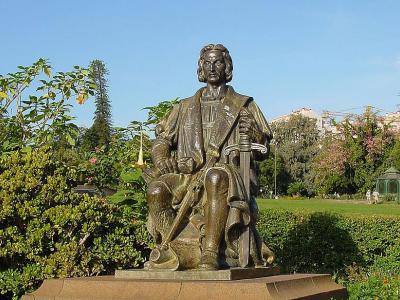
Located in the center of Funchal, Santa Catarina Park is a serene oasis with shady trees and lawns. Overlooking the harbor, within this park, stands the statue of Christopher Columbus, created by Portuguese sculptor Henrique Moreira. The City Hall acquired the statue, which was inaugurated in 1968. The bronze statue rests on a stone base, placed near the viewpoint from where one can see the city. The statue serves as a reminder of Columbus's voyages to the Americas and his stopovers in Madeira in 1475, 1480, and 1492.
In addition to the statue, several other things on the island commemorate Columbus's presence, such as the Columbus library, Columbus House, and Columbus's ship, the Santa Maria.
In addition to the statue, several other things on the island commemorate Columbus's presence, such as the Columbus library, Columbus House, and Columbus's ship, the Santa Maria.
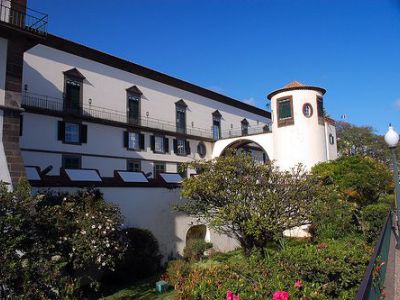
7) Fortaleza e Palácio de São Lourenço (Saint Lawrence Fortress)
Funchal's initial fortress was constructed between 1529 and 1540 in response to an incident in which a boat moored in the harbor of Funchal was plundered, following the entreaties of the local population. However, the fortification, which was finished in the latter half of the 16th century, was inadequate for all of the necessary fortification requirements, and as a result, it was easily overcome by French pirates in 1566.
Numerous alterations, extensions, and improvements were made to the primitive original structure in the following years until the 19th century, resulting in Saint Lawrence Fortress and Palace (Fortaleza e Palácio de São Lourenço), which is still standing today, and is one of the finest examples of Portuguese fortification from the 16th and 17th centuries.
The Saint Lawrence Fortress initially served as a dwelling for many island captains and governors before gradually evolving into a national residential palace. It was designated a National Monument in August of 1943 and now functions as the residence of the Prime Minister of the Autonomous Region and the Military Command.
The fortress presently houses a permanent exhibit, which was created by the Military Command and opened in July of 1993 and pertains to the history and growth of the fortress. The National Palace within the fortress can be visited after scheduling an appointment with the office of the Prime Minister.
Numerous alterations, extensions, and improvements were made to the primitive original structure in the following years until the 19th century, resulting in Saint Lawrence Fortress and Palace (Fortaleza e Palácio de São Lourenço), which is still standing today, and is one of the finest examples of Portuguese fortification from the 16th and 17th centuries.
The Saint Lawrence Fortress initially served as a dwelling for many island captains and governors before gradually evolving into a national residential palace. It was designated a National Monument in August of 1943 and now functions as the residence of the Prime Minister of the Autonomous Region and the Military Command.
The fortress presently houses a permanent exhibit, which was created by the Military Command and opened in July of 1993 and pertains to the history and growth of the fortress. The National Palace within the fortress can be visited after scheduling an appointment with the office of the Prime Minister.
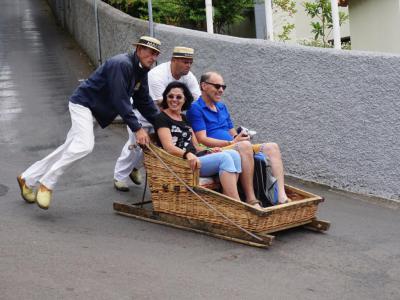
8) Carros de Cesto (Basket Carts Toboggan Downhill)
Basket Carts Toboggan Downhill (Carros de Cesto) is a popular tourist attraction in Funchal. The ride takes visitors down a thrilling descent from the village of Monte to the city of Funchal in a traditional basket sled that dates back to the early 19th century.
Originally used as a means of transport by residents to quickly travel between Monte and Funchal, the toboggan ride has become an iconic symbol of Madeira Island and a must-do activity for visitors. The descent covers a distance of approximately 2 kilometers and takes about 10 minutes to complete.
The basket sleds are operated by two runners dressed in white and wearing traditional straw boater hats. The runners control the speed of the sled using their rubber-soled boots as brakes. The ride can reach speeds of up to 30 kilometers per hour, providing a thrilling and unforgettable experience for visitors.
The route from Monte to Livramento is located in a picturesque area and offers spectacular views of the surrounding scenery. Monte is renowned for its lush gardens and stunning views over the city and beyond, making it an ideal spot for visitors to explore before or after their toboggan ride.
Originally used as a means of transport by residents to quickly travel between Monte and Funchal, the toboggan ride has become an iconic symbol of Madeira Island and a must-do activity for visitors. The descent covers a distance of approximately 2 kilometers and takes about 10 minutes to complete.
The basket sleds are operated by two runners dressed in white and wearing traditional straw boater hats. The runners control the speed of the sled using their rubber-soled boots as brakes. The ride can reach speeds of up to 30 kilometers per hour, providing a thrilling and unforgettable experience for visitors.
The route from Monte to Livramento is located in a picturesque area and offers spectacular views of the surrounding scenery. Monte is renowned for its lush gardens and stunning views over the city and beyond, making it an ideal spot for visitors to explore before or after their toboggan ride.
