Custom Walk in Washington D.C., USA by bart_44bd3 created on 2023-05-15
Guide Location: USA » Washington D.C.
Guide Type: Custom Walk
# of Sights: 7
Tour Duration: 3 Hour(s)
Travel Distance: 6.4 Km or 4 Miles
Share Key: 4HY4B
Guide Type: Custom Walk
# of Sights: 7
Tour Duration: 3 Hour(s)
Travel Distance: 6.4 Km or 4 Miles
Share Key: 4HY4B
How It Works
Please retrieve this walk in the GPSmyCity app. Once done, the app will guide you from one tour stop to the next as if you had a personal tour guide. If you created the walk on this website or come to the page via a link, please follow the instructions below to retrieve the walk in the app.
Retrieve This Walk in App
Step 1. Download the app "GPSmyCity: Walks in 1K+ Cities" on Apple App Store or Google Play Store.



Step 2. In the GPSmyCity app, download(or launch) the guide "Washington D.C. Map and Walking Tours".
Step 3. Tap the menu button located at upper right corner of the "Walks" screen and select "Retrieve custom walk". Enter the share key: 4HY4B

1) 899 O St NW
This custom location is created on gpsmycity.com website.
2) Oak Hill Cemetery
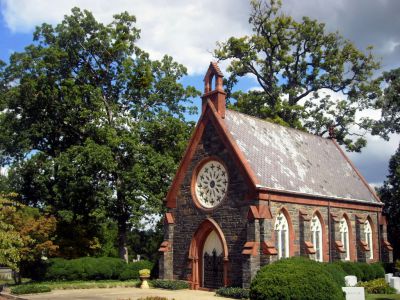
Established through an Act of Congress in 1848, Oak Hill Cemetery encompasses 22 acres of historically significant grounds, serving as both a burial site and a botanical garden. It also boasts a mausoleum and is notable for housing the renowned Oak Hill Cemetery Chapel. Having been in use since 1849, this site has earned its place on the National Register of Historic Places.
The cemetery's inception can be attributed to W.W. Corcoran, a banker, philanthropist, and prominent businessman who founded Riggs National Bank. His financial acumen played a crucial role in maintaining the financial stability of the United States during the Mexican War.
Mr. Corcoran acquired the land for the cemetery from George Corbin Washington and Lewis W. Washington, both of whom were related to the first President of the United States, George Washington. Over time, the architectural beauty of the site, including its buildings and landscaping, was meticulously crafted by architects George F. de la Roche and James Renwick Jr., known for their work at the Smithsonian Institution.
The design of the cemetery bears a striking resemblance to some of the finest English gardens, Gothic chapels, and 19th-century Romantic Art. However, what truly sets this cemetery apart is its association with Civil War burial sites, making it one of the most significant such sites in Washington, D.C. Maps of the burial plots are available to help visitors appreciate the historical significance of this 19th-century cemetery.
The cemetery's inception can be attributed to W.W. Corcoran, a banker, philanthropist, and prominent businessman who founded Riggs National Bank. His financial acumen played a crucial role in maintaining the financial stability of the United States during the Mexican War.
Mr. Corcoran acquired the land for the cemetery from George Corbin Washington and Lewis W. Washington, both of whom were related to the first President of the United States, George Washington. Over time, the architectural beauty of the site, including its buildings and landscaping, was meticulously crafted by architects George F. de la Roche and James Renwick Jr., known for their work at the Smithsonian Institution.
The design of the cemetery bears a striking resemblance to some of the finest English gardens, Gothic chapels, and 19th-century Romantic Art. However, what truly sets this cemetery apart is its association with Civil War burial sites, making it one of the most significant such sites in Washington, D.C. Maps of the burial plots are available to help visitors appreciate the historical significance of this 19th-century cemetery.
3) Dumbarton Oaks
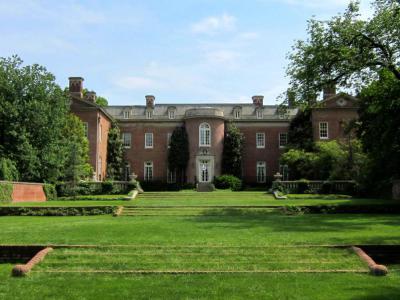
Perched atop the historic Georgetown neighborhood, Dumbarton Oaks stands as a must-visit destination within Washington, D.C. This sprawling 53-acre property is the enduring legacy of philanthropists and art enthusiasts Robert Woods Bliss and his wife Mildred.
In the year 1920, following an extensive and meticulous search, the Bliss couple acquired an old-fashioned Federal-style country house nestled amidst somewhat neglected grounds. By 1929, they expanded the estate by adding a Music Room, and in subsequent years, constructed a wing to house their renowned collection of Byzantine art. Another wing was subsequently built to showcase Mr. Bliss's assemblage of Pre-Columbian art.
In 1921, the Blisses enlisted the talents of renowned landscape designer Beatrix Farrand to craft an English garden enveloping the entire property. Over nearly three decades of close collaboration, Mildred Bliss and Beatrix Farrand meticulously planned every aspect of the gardens, including terraces, benches, urns, and borders, ultimately fashioning a stunning urban oasis.
By 1940, the upper sixteen acres of the estate were bequeathed to Harvard University for the establishment of a research institute dedicated to Byzantine studies, Pre-Columbian studies, as well as the history of gardens and landscape architecture. Concurrently, a Garden Library was established to house Mrs. Bliss's collection of rare books chronicling the history of gardens.
Presently, the entire estate operates under the auspices of Harvard University's Trustees. Its impressive art collection has been on extended loan to the National Gallery of Art.
Why You Should Visit:
The Museum is home to a world-class collection of Byzantine and Pre-Columbian art; the old music and rare books rooms are fascinating to walk through. From the tapestries and paintings in the Renaissance-inspired Music Room to the graceful lines and natural sunlight of the Philip Johnson Pavilion, visitors can admire art dating back to antiquity, as well as innovative special exhibitions.
You can easily spend a few hours wandering through the gardens and discovering every hidden corner.
Everything is well-kept up – space, lighting, staff, historical rooms, terraces, gardens, and security.
Tip:
Make sure you get the booklet and follow the suggested garden route as it helps to understand the layout. Also look out for birds and small mammals.
In the year 1920, following an extensive and meticulous search, the Bliss couple acquired an old-fashioned Federal-style country house nestled amidst somewhat neglected grounds. By 1929, they expanded the estate by adding a Music Room, and in subsequent years, constructed a wing to house their renowned collection of Byzantine art. Another wing was subsequently built to showcase Mr. Bliss's assemblage of Pre-Columbian art.
In 1921, the Blisses enlisted the talents of renowned landscape designer Beatrix Farrand to craft an English garden enveloping the entire property. Over nearly three decades of close collaboration, Mildred Bliss and Beatrix Farrand meticulously planned every aspect of the gardens, including terraces, benches, urns, and borders, ultimately fashioning a stunning urban oasis.
By 1940, the upper sixteen acres of the estate were bequeathed to Harvard University for the establishment of a research institute dedicated to Byzantine studies, Pre-Columbian studies, as well as the history of gardens and landscape architecture. Concurrently, a Garden Library was established to house Mrs. Bliss's collection of rare books chronicling the history of gardens.
Presently, the entire estate operates under the auspices of Harvard University's Trustees. Its impressive art collection has been on extended loan to the National Gallery of Art.
Why You Should Visit:
The Museum is home to a world-class collection of Byzantine and Pre-Columbian art; the old music and rare books rooms are fascinating to walk through. From the tapestries and paintings in the Renaissance-inspired Music Room to the graceful lines and natural sunlight of the Philip Johnson Pavilion, visitors can admire art dating back to antiquity, as well as innovative special exhibitions.
You can easily spend a few hours wandering through the gardens and discovering every hidden corner.
Everything is well-kept up – space, lighting, staff, historical rooms, terraces, gardens, and security.
Tip:
Make sure you get the booklet and follow the suggested garden route as it helps to understand the layout. Also look out for birds and small mammals.
4) Georgetown Flea Market
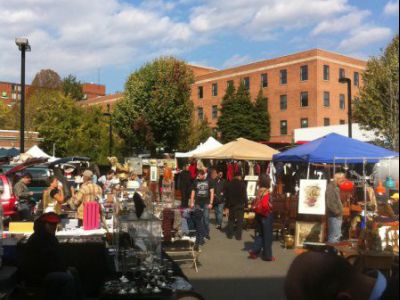
Georgetown Flea Market is a haven for antique enthusiasts, offering a wide array of unique treasures to peruse. Whether you're looking for distinctive gifts or simply want to explore, this market is the ideal destination. It attracts a diverse clientele, including notable local, national, and international figures, ensuring a diverse selection of items.
A visit to the market promises hours of discovery, with offerings spanning from antiques, collectibles, art, furniture, and rugs to pottery, china, jewelry, stained glass, books, and photographs. Since its establishment in 1972, the market has maintained its Sunday operations year-round, becoming a must-visit destination for many. Here, you can expect not only great deals but also high-quality merchandise.
What sets this market apart is the warm and welcoming atmosphere, where friendly faces at each vendor are eager to assist you. Don't miss the opportunity to visit and bring home a cherished find to adorn your apartment.
A visit to the market promises hours of discovery, with offerings spanning from antiques, collectibles, art, furniture, and rugs to pottery, china, jewelry, stained glass, books, and photographs. Since its establishment in 1972, the market has maintained its Sunday operations year-round, becoming a must-visit destination for many. Here, you can expect not only great deals but also high-quality merchandise.
What sets this market apart is the warm and welcoming atmosphere, where friendly faces at each vendor are eager to assist you. Don't miss the opportunity to visit and bring home a cherished find to adorn your apartment.
5) Georgetown Lutheran Church
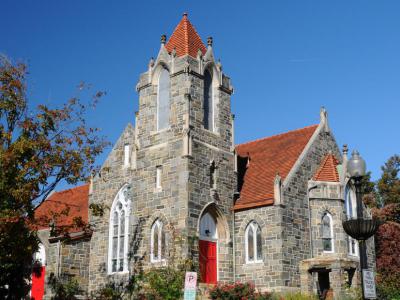
The Georgetown Lutheran Church is one of the oldest Lutheran congregations in the United States, and is the oldest Lutheran Church in Washington, D.C. You would have to travel a long way to a place like the Holy Trinity Church in Delaware to find much more history for the followers of Martin Luther.
The church was built in 1769. The original German immigrants that founded it came to the Potomac Valley to become farmers, and were enticed to settle here by offers of inexpensive land (made possible by Lord Baltimore).
The congregation itself was served for many years by itinerate preachers of the German Lutheran Church. The group officially formed into a church in 1766. Colonel Charles Beatty donated the land for the first building. The church was erected at the corner of Fourth and High Street, with its cornerstone laid in 1769.
Despite four revisions that this church had gone through over the centuries, it managed to retain a great deal of history to it, which is well worth seeing. The old bell from the church, which was given away in the 1870s, now sits in the front yard after being salvaged from a junk yard in 1937.
The church was built in 1769. The original German immigrants that founded it came to the Potomac Valley to become farmers, and were enticed to settle here by offers of inexpensive land (made possible by Lord Baltimore).
The congregation itself was served for many years by itinerate preachers of the German Lutheran Church. The group officially formed into a church in 1766. Colonel Charles Beatty donated the land for the first building. The church was erected at the corner of Fourth and High Street, with its cornerstone laid in 1769.
Despite four revisions that this church had gone through over the centuries, it managed to retain a great deal of history to it, which is well worth seeing. The old bell from the church, which was given away in the 1870s, now sits in the front yard after being salvaged from a junk yard in 1937.
6) Old Stone House
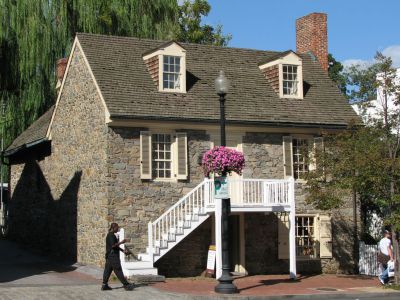
The Old Stone House in Georgetown is a significant historical site, showcasing the oldest surviving example of Pre-Revolutionary Colonial architecture in the United States still standing on its original foundation. This site offers a glimpse into a bygone era, a time before the existence of the United States and before the Revolutionary War.
The Old Stone House exemplifies vernacular architecture. Its outer structure, made of blue granite and fieldstone, was sourced from a site about 2 miles away, near the Potomac River. The walls of the house vary in thickness, ranging from two to three feet. The oak used in constructing the house was obtained from the forests that were once abundant in the Georgetown area. Adjacent to the house, there is a Colonial Revival garden, enclosed by a white picket fence. This garden extends 399 feet in depth and spans 76 feet in width. Within the garden, you'll find roses, perennial plants, and bulbs carefully arranged throughout.
One of the enjoyable aspects of visiting this venerable homestead is immersing oneself in the local legends surrounding it. Over the years, there have been claims that it served as the Engineering Headquarters for General George Washington. Another piece of folklore suggests that Suter's Tavern, a famous establishment frequented by notable figures like George Washington and associated with land deals that led to the establishment of Washington, D.C. as the "Federal City," once stood here. Unfortunately, there is no concrete evidence to support either of these historical tales.
In 1953, the United States Government acquired the land and the house, transforming it into a museum now maintained by the National Park Service. The Old Stone House is part of the Georgetown Historic District, which holds significance as a National Historic Landmark.
The Old Stone House exemplifies vernacular architecture. Its outer structure, made of blue granite and fieldstone, was sourced from a site about 2 miles away, near the Potomac River. The walls of the house vary in thickness, ranging from two to three feet. The oak used in constructing the house was obtained from the forests that were once abundant in the Georgetown area. Adjacent to the house, there is a Colonial Revival garden, enclosed by a white picket fence. This garden extends 399 feet in depth and spans 76 feet in width. Within the garden, you'll find roses, perennial plants, and bulbs carefully arranged throughout.
One of the enjoyable aspects of visiting this venerable homestead is immersing oneself in the local legends surrounding it. Over the years, there have been claims that it served as the Engineering Headquarters for General George Washington. Another piece of folklore suggests that Suter's Tavern, a famous establishment frequented by notable figures like George Washington and associated with land deals that led to the establishment of Washington, D.C. as the "Federal City," once stood here. Unfortunately, there is no concrete evidence to support either of these historical tales.
In 1953, the United States Government acquired the land and the house, transforming it into a museum now maintained by the National Park Service. The Old Stone House is part of the Georgetown Historic District, which holds significance as a National Historic Landmark.
7) Washington Harbour
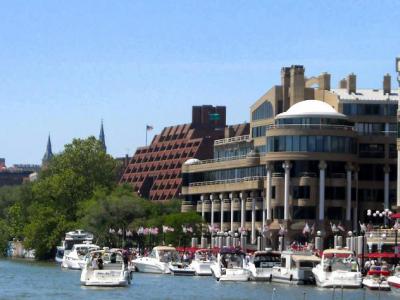
Nested along the banks of the Potomac River, Washington Harbour offers some of the most picturesque views of the river to be found, complete with the sights of the Kennedy Center, Washington Monument, Key Bridge and Roosevelt Island, also very impressive – a treasure trove for an avid photographer.
The Harbour is a part of historic Georgetown. Its shops, condominiums, and restaurants are the brainchild of Arthur Cotton Moore. In 1977, this famous Princeton graduate was honored by the American Institute of Architectures for the development of his own architectural style, hence known as “Industrial Baroque.” The Washington Harbour complex is among its most famous examples.
Upon visiting this site, one is quickly struck by the low-level construction in relation to the water level of the Potomac. You may also want to check out the flood gate system that helps to protect the area.
While marveling at the unique architecture, you may also want to partake of some of the good food at one of the four main restaurants within the complex: The Sequoia, Tony & Joe’s, Nick’s Riverside Grill, or Cabanas. After a lovely meal, try taking a river cruise aboard one of the small river boats departing from here every day.
Why You Should Visit:
Crowded but incredibly nice an area, elegant but not super fancy.
The perfect spot to culminate a self-guided walking tour of the Georgetown district.
You can watch all the watersports in the summer and feel the breeze with a nice drink in hand :)
Tip:
There are tons of places to either grab a drink or a meal by the water.
If you'd rather enjoy a restaurant, most take reservations, so plan ahead, if you can.
The Harbour is a part of historic Georgetown. Its shops, condominiums, and restaurants are the brainchild of Arthur Cotton Moore. In 1977, this famous Princeton graduate was honored by the American Institute of Architectures for the development of his own architectural style, hence known as “Industrial Baroque.” The Washington Harbour complex is among its most famous examples.
Upon visiting this site, one is quickly struck by the low-level construction in relation to the water level of the Potomac. You may also want to check out the flood gate system that helps to protect the area.
While marveling at the unique architecture, you may also want to partake of some of the good food at one of the four main restaurants within the complex: The Sequoia, Tony & Joe’s, Nick’s Riverside Grill, or Cabanas. After a lovely meal, try taking a river cruise aboard one of the small river boats departing from here every day.
Why You Should Visit:
Crowded but incredibly nice an area, elegant but not super fancy.
The perfect spot to culminate a self-guided walking tour of the Georgetown district.
You can watch all the watersports in the summer and feel the breeze with a nice drink in hand :)
Tip:
There are tons of places to either grab a drink or a meal by the water.
If you'd rather enjoy a restaurant, most take reservations, so plan ahead, if you can.
