Custom Walk in Cologne, Germany by del_aly05_a87f3 created on 2023-09-26
Guide Location: Germany » Cologne
Guide Type: Custom Walk
# of Sights: 5
Tour Duration: 3 Hour(s)
Travel Distance: 6.8 Km or 4.2 Miles
Share Key: JPNWE
Guide Type: Custom Walk
# of Sights: 5
Tour Duration: 3 Hour(s)
Travel Distance: 6.8 Km or 4.2 Miles
Share Key: JPNWE
How It Works
Please retrieve this walk in the GPSmyCity app. Once done, the app will guide you from one tour stop to the next as if you had a personal tour guide. If you created the walk on this website or come to the page via a link, please follow the instructions below to retrieve the walk in the app.
Retrieve This Walk in App
Step 1. Download the app "GPSmyCity: Walks in 1K+ Cities" on Apple App Store or Google Play Store.



Step 2. In the GPSmyCity app, download(or launch) the guide "Cologne Map and Walking Tours".
Step 3. Tap the menu button located at upper right corner of the "Walks" screen and select "Retrieve custom walk". Enter the share key: JPNWE
1) Roonstrasse Synagogue
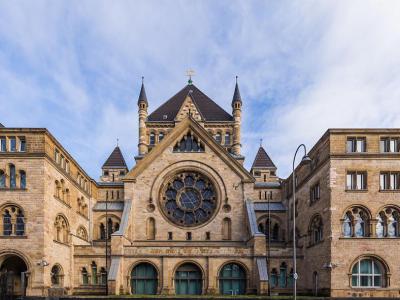
Roonstrasse Synagogue is a historic site in Cologne, and the only surviving synagogue of the five that existed before the Nazi era. The Jewish community in Cologne has a long history, being first mentioned in 321, and its population grew significantly over time. The foundation stone of the Neo-Romanesque style building, designed by Cologne architects Schreiterer & Below, was laid in 1895 and inaugurated in 1899. However, on the night of November 9, 1938, known as Kristallnacht, the synagogue was attacked and set alight like all the other synagogues in the city.
During World War II, the synagogue suffered further damage, and only the burnt-out tower and central section were left. After the war, the surviving Jewish community of Cologne decided to completely rebuild the synagogue. The reconstruction was completed in 1959, under the direction of the architect Helmut Goldschmidt, with minor changes on the outside and a simplified interior. The new leadlight windows by Lammers & Warzager were added to the building.
The synagogue has been the center of the Jewish community in Cologne since its reopening. It consists of a community center, a small display of items associated with Cologne Jewry, and a kosher restaurant. The interior of the reconstructed synagogue features a vast blue dome.
On Christmas Eve 1959, the Synagogue was smeared with anti-Jewish slogans by members of the far-right Deutsche Reichspartei. West German Chancellor Konrad Adenauer, who had been mayor of Cologne from 1917 until removed by the Nazi government in 1933, made the desecration the subject of his New Year's speech.
On August 19, 2005, Pope Benedict XVI visited the Roonstrasse Synagogue, which was his second-ever visit to any synagogue. During his visit, he condemned Nazism and antisemitism, and expressed his support for the Jewish community in Germany.
During World War II, the synagogue suffered further damage, and only the burnt-out tower and central section were left. After the war, the surviving Jewish community of Cologne decided to completely rebuild the synagogue. The reconstruction was completed in 1959, under the direction of the architect Helmut Goldschmidt, with minor changes on the outside and a simplified interior. The new leadlight windows by Lammers & Warzager were added to the building.
The synagogue has been the center of the Jewish community in Cologne since its reopening. It consists of a community center, a small display of items associated with Cologne Jewry, and a kosher restaurant. The interior of the reconstructed synagogue features a vast blue dome.
On Christmas Eve 1959, the Synagogue was smeared with anti-Jewish slogans by members of the far-right Deutsche Reichspartei. West German Chancellor Konrad Adenauer, who had been mayor of Cologne from 1917 until removed by the Nazi government in 1933, made the desecration the subject of his New Year's speech.
On August 19, 2005, Pope Benedict XVI visited the Roonstrasse Synagogue, which was his second-ever visit to any synagogue. During his visit, he condemned Nazism and antisemitism, and expressed his support for the Jewish community in Germany.
2) Chocolate Museum (must see)
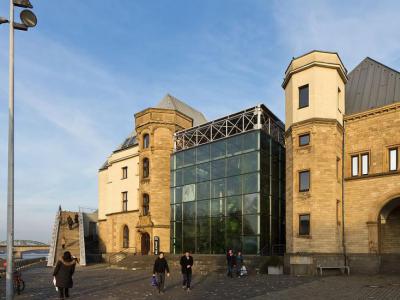
The Imhoff-Schokoladenmuseum was opened by Hans Imhoff on 31 October 1993. It is situated in the Cologne quarter Altstadt-Süd on the Rheinauhafen-peninsula. The exhibition shows the whole history of chocolate, from the beginning at the Olmecs, Maya and Aztecs until the contemporary products and their production methods. The museum belongs to the Top Ten of German museums with 5,000 guidances and 600,000 visitors a year.
A special attraction is the three-meter-high chocolate fountain, at which a woman dips wafers in the liquid chocolate and distributes them to visitors. Another interesting thing for visitors is the small tropiarium consisting of a glass cube with 10-meter edge length showing cacao trees of the species Theobroma cacao and Theobroma grandiflorum. Several production machineries were built as miniatures so that you can have a look at the production process of the small chocolate bars, which are given to the visitors at the entrance of the museum.
Why You Should Visit:
Gives a brief history of chocolate as well as more esoteric things like the religion & culture related to it. Great spot to view the Rhine river, too.
Tip:
Lots of free samples during visits and you can have your own personalized chocolate made.
A special attraction is the three-meter-high chocolate fountain, at which a woman dips wafers in the liquid chocolate and distributes them to visitors. Another interesting thing for visitors is the small tropiarium consisting of a glass cube with 10-meter edge length showing cacao trees of the species Theobroma cacao and Theobroma grandiflorum. Several production machineries were built as miniatures so that you can have a look at the production process of the small chocolate bars, which are given to the visitors at the entrance of the museum.
Why You Should Visit:
Gives a brief history of chocolate as well as more esoteric things like the religion & culture related to it. Great spot to view the Rhine river, too.
Tip:
Lots of free samples during visits and you can have your own personalized chocolate made.
3) 4711 House of Fragrances
If you’ve ever wondered where the phrase “Eau de Cologne” got its start, follow your nose to the 4711 House of Fragrances-part museum, part perfume playground, and all-around aromatic adventure.
Back in the early 1700s, an Italian-born perfumer named Johann Maria Farina set up a shop in the city. He created a light, citrusy fragrance that reminded him of “an Italian spring morning”-a stark contrast to the heavy, musky scents popular at the time. This he poetically dubbed “Eau de Cologne” (or “Water from Cologne”) in honor of his new hometown.
Farina’s creation became wildly popular across European courts as the must-have splash for royals and nobles who probably appreciated smelling like lemon zest instead of battlefield sweat. The fragrance was so successful that “Eau de Cologne” became a generic term for light, fresh scents.
But the story didn't stop there. Later in the century, another Cologne-based entrepreneurial wild card, Wilhelm Mülhens, brewed up his own “miracle water,” marketing it as medicine. During the French occupation, a soldier doing a building census randomly numbered Mülhens’ workshop as “4711.” And voilà-the most famous house number in fragrance history was born.
In 1810, Napoleon demanded that all medicinal products reveal their ingredients. Rather than spill the secret sauce, Mülhens pivoted. Forget medicine-this was now officially a perfume. Smart move. He even tried to borrow prestige by buying the rights to the Farina name... except the Farina family wasn’t selling it and took him to court. So in 1881, Mülhens finally embraced the 4711 name for good. Drama? Oh yes. But it smelled great.
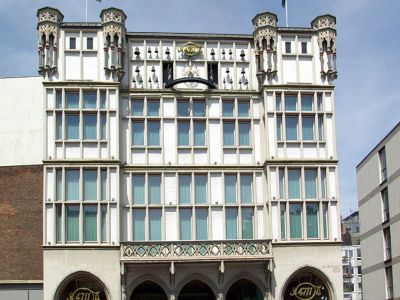
Though the original building didn’t survive, the modern 4711 flagship store still draws scent lovers from around the world. Inside, you’ll find a museum, antique Rosoli bottles, old-school perfume flasks, and the legendary Fragrance Fountain, which continuously flows with the iconic 4711 Eau de Cologne. And just to keep things classy, the building even serenades the street with 20 bells chiming out three melodies every hour.
Hot tip:
You can blend your own personal fragrance or simply stock up on gift-worthy scents and quirky souvenirs. Just don’t blame us if you leave smelling like royalty...
Back in the early 1700s, an Italian-born perfumer named Johann Maria Farina set up a shop in the city. He created a light, citrusy fragrance that reminded him of “an Italian spring morning”-a stark contrast to the heavy, musky scents popular at the time. This he poetically dubbed “Eau de Cologne” (or “Water from Cologne”) in honor of his new hometown.
Farina’s creation became wildly popular across European courts as the must-have splash for royals and nobles who probably appreciated smelling like lemon zest instead of battlefield sweat. The fragrance was so successful that “Eau de Cologne” became a generic term for light, fresh scents.
But the story didn't stop there. Later in the century, another Cologne-based entrepreneurial wild card, Wilhelm Mülhens, brewed up his own “miracle water,” marketing it as medicine. During the French occupation, a soldier doing a building census randomly numbered Mülhens’ workshop as “4711.” And voilà-the most famous house number in fragrance history was born.
In 1810, Napoleon demanded that all medicinal products reveal their ingredients. Rather than spill the secret sauce, Mülhens pivoted. Forget medicine-this was now officially a perfume. Smart move. He even tried to borrow prestige by buying the rights to the Farina name... except the Farina family wasn’t selling it and took him to court. So in 1881, Mülhens finally embraced the 4711 name for good. Drama? Oh yes. But it smelled great.
Though the original building didn’t survive, the modern 4711 flagship store still draws scent lovers from around the world. Inside, you’ll find a museum, antique Rosoli bottles, old-school perfume flasks, and the legendary Fragrance Fountain, which continuously flows with the iconic 4711 Eau de Cologne. And just to keep things classy, the building even serenades the street with 20 bells chiming out three melodies every hour.
Hot tip:
You can blend your own personal fragrance or simply stock up on gift-worthy scents and quirky souvenirs. Just don’t blame us if you leave smelling like royalty...
4) Cathedral Square Floor Paintings
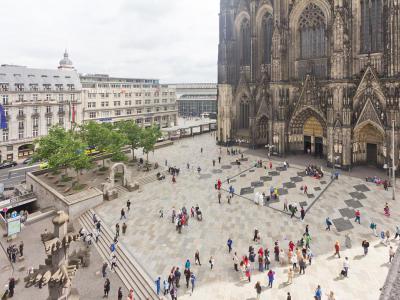
The Cathedral [Dom] Square attracts professional artists who come here to draw pictures on the pavement. Among the floor paintings the most noticeable are the portrait of German composer Ludwig van Beethoven and a replica of the world famous Mona Lisa.
5) Cologne Zoological Garden
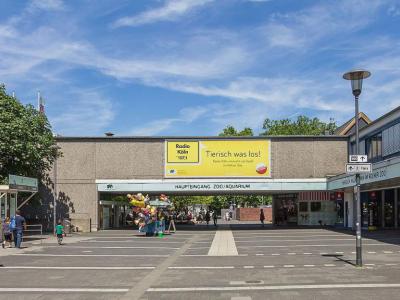
Cologne Zoo is one of the oldest and most popular zoos in the country. It has a diverse collection of over 10,000 animals, making it one of the most diverse zoos in all of Europe. The zoo's motto is "Enthusiastic about animals," reflecting the staff's commitment to providing an engaging and educational experience for visitors.
One of the main attractions of Cologne Zoo is the Elephant Park, which opened in 2004. It is the largest elephant park north of the Alps and provides a spacious and naturalistic environment for the elephants. Another popular exhibit is the Hippodom, completed in 2010 to celebrate the zoo's 150th anniversary. This exhibit features an African river landscape and is home to various species, including hippos, Nile crocodiles, and sitatunga antelopes.
The Clemenshof, which opened in 2014, is a replica of a small farm typical of the region and includes a petting zoo for children. It provides a home for rare native species and is a popular attraction for families. The Rainforest House, built in the mid-1980s, showcases animals and plants from the endangered rainforests of Southeast Asia. The exhibit is designed to allow visitors to observe the primates up close without disturbing them.
Cologne Zoo also has historic animal houses, including the Monkey Rock from 1914, the Moorish-style Elephant House built in 1863, and the "South America House" from 1899, which is modeled on a Russian Orthodox church. The combination of old buildings and modern exhibits, along with the park landscapes designed by the zoo's horticulturists, gives the zoo a unique charm and a high level of attractiveness.
In addition to the animal exhibits, Cologne Zoo offers daily feeding shows for sea lions, meerkats, raccoons, and other animals. The air show featuring rare birds of prey is also a popular attraction. Visitors can also enjoy the zoo's large playground area and grab a snack at the new zoo gastronomy.
One of the main attractions of Cologne Zoo is the Elephant Park, which opened in 2004. It is the largest elephant park north of the Alps and provides a spacious and naturalistic environment for the elephants. Another popular exhibit is the Hippodom, completed in 2010 to celebrate the zoo's 150th anniversary. This exhibit features an African river landscape and is home to various species, including hippos, Nile crocodiles, and sitatunga antelopes.
The Clemenshof, which opened in 2014, is a replica of a small farm typical of the region and includes a petting zoo for children. It provides a home for rare native species and is a popular attraction for families. The Rainforest House, built in the mid-1980s, showcases animals and plants from the endangered rainforests of Southeast Asia. The exhibit is designed to allow visitors to observe the primates up close without disturbing them.
Cologne Zoo also has historic animal houses, including the Monkey Rock from 1914, the Moorish-style Elephant House built in 1863, and the "South America House" from 1899, which is modeled on a Russian Orthodox church. The combination of old buildings and modern exhibits, along with the park landscapes designed by the zoo's horticulturists, gives the zoo a unique charm and a high level of attractiveness.
In addition to the animal exhibits, Cologne Zoo offers daily feeding shows for sea lions, meerkats, raccoons, and other animals. The air show featuring rare birds of prey is also a popular attraction. Visitors can also enjoy the zoo's large playground area and grab a snack at the new zoo gastronomy.
