Custom Walk in Victoria, British Columbia by sjani_cef4f created on 2023-12-08
Guide Location: Canada » Victoria
Guide Type: Custom Walk
# of Sights: 7
Tour Duration: 1 Hour(s)
Travel Distance: 2.2 Km or 1.4 Miles
Share Key: 3D9ZW
Guide Type: Custom Walk
# of Sights: 7
Tour Duration: 1 Hour(s)
Travel Distance: 2.2 Km or 1.4 Miles
Share Key: 3D9ZW
How It Works
Please retrieve this walk in the GPSmyCity app. Once done, the app will guide you from one tour stop to the next as if you had a personal tour guide. If you created the walk on this website or come to the page via a link, please follow the instructions below to retrieve the walk in the app.
Retrieve This Walk in App
Step 1. Download the app "GPSmyCity: Walks in 1K+ Cities" on Apple App Store or Google Play Store.



Step 2. In the GPSmyCity app, download(or launch) the guide "Victoria Map and Walking Tours".
Step 3. Tap the menu button located at upper right corner of the "Walks" screen and select "Retrieve custom walk". Enter the share key: 3D9ZW
1) Christ Church Cathedral
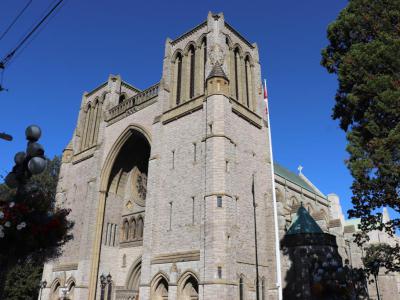
Like so many of the majestic cathedrals of old, Christ Church Cathedral took over a century to construct and has evolved dramatically from its original conception. This edifice is none other than the third Cathedral Church, proudly standing as the seat of the Bishop of the Anglican Diocese of British Columbia. It replaced two previous structures that once graced the opposite side of the road, now home to the Law Courts building. The old cathedral property may have been sold to the province for the courthouse, but the Cathedral Close still occupies an entire city block, encompassing Quadra, Rockland, Vancouver, and Burdett.
The architect Keith himself called the cathedral Gothic Revival, acknowledging the immense influence of medieval English cathedrals. The design is steeped in tradition, with the visual emphasis placed on the grand West End, which majestically towers over "Church Hill," boasting its prominence for miles around.
A grand entrance awaits worshippers, beckoning them to enter through six sets of double doors, which lead through a vestibule, also known as the narthex, into the vast and sprawling nave. At the east end, facing Jerusalem, lies the resplendent sanctuary. The finished nave is one of the largest in all of Canada, spanning a breathtaking 93 feet by 140 feet. Medieval-style texts grace the interior walls, transporting visitors to a time long gone, while other texts are artfully cast in a ribbon around the top of the walls outside, paying homage to the grandeur of this magnificent cathedral.
Why You Should Visit:
For Gothic architecture, this is really a beautiful structure – with flying buttresses, beautiful beams, and gorgeous stained glass – surrounded by impeccably manicured grounds and the peaceful cemetery.
A delightful labyrinth graces the side of the building, inviting visitors to embark on a spiritual journey of self-discovery.
Tip:
Upon arrival, kindly ask the knowledgeable stewart on duty for the complimentary self-guided tour pamphlet to fully appreciate the building's historical and architectural significance. If you are especially gracious and polite, the stewart may even unlock the door to the Columbarium. The Cathedral is also known as a frequent venue for concerts and recitals, so check their schedule.
The architect Keith himself called the cathedral Gothic Revival, acknowledging the immense influence of medieval English cathedrals. The design is steeped in tradition, with the visual emphasis placed on the grand West End, which majestically towers over "Church Hill," boasting its prominence for miles around.
A grand entrance awaits worshippers, beckoning them to enter through six sets of double doors, which lead through a vestibule, also known as the narthex, into the vast and sprawling nave. At the east end, facing Jerusalem, lies the resplendent sanctuary. The finished nave is one of the largest in all of Canada, spanning a breathtaking 93 feet by 140 feet. Medieval-style texts grace the interior walls, transporting visitors to a time long gone, while other texts are artfully cast in a ribbon around the top of the walls outside, paying homage to the grandeur of this magnificent cathedral.
Why You Should Visit:
For Gothic architecture, this is really a beautiful structure – with flying buttresses, beautiful beams, and gorgeous stained glass – surrounded by impeccably manicured grounds and the peaceful cemetery.
A delightful labyrinth graces the side of the building, inviting visitors to embark on a spiritual journey of self-discovery.
Tip:
Upon arrival, kindly ask the knowledgeable stewart on duty for the complimentary self-guided tour pamphlet to fully appreciate the building's historical and architectural significance. If you are especially gracious and polite, the stewart may even unlock the door to the Columbarium. The Cathedral is also known as a frequent venue for concerts and recitals, so check their schedule.
2) Church of Our Lord
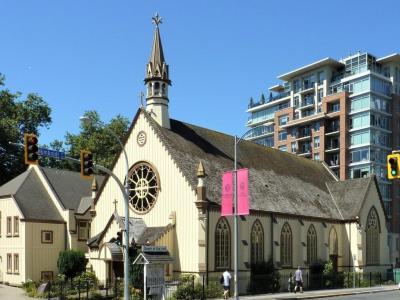
As a national historic site, the Church of Our Lord and its annex stand as an important landmark in the heart of Victoria. Erected in 1875 by the Reverend Edward Cridge, this structure stands as a remarkable example of Gothic Revival architecture.
The renowned architect, John Teague, meticulously enhanced the building's Gothic character using board-and-batten siding to accentuate the verticality of its pointed roof, pinnacles, and spire. The church's exterior showcases traditional Gothic design elements of brick and stone, all expertly adapted to wood construction, giving rise to a unique, picturesque building.
The magnificent interior boasts a Gothic hammer beam ceiling, which spans the vast open space to provide an uninterrupted view of the apse and pulpit. Visitors can appreciate the expert craftsmanship of the woodwork and design, while also admiring the stained-glass windows and grand organ inside.
The renowned architect, John Teague, meticulously enhanced the building's Gothic character using board-and-batten siding to accentuate the verticality of its pointed roof, pinnacles, and spire. The church's exterior showcases traditional Gothic design elements of brick and stone, all expertly adapted to wood construction, giving rise to a unique, picturesque building.
The magnificent interior boasts a Gothic hammer beam ceiling, which spans the vast open space to provide an uninterrupted view of the apse and pulpit. Visitors can appreciate the expert craftsmanship of the woodwork and design, while also admiring the stained-glass windows and grand organ inside.
3) St. Ann's Academy
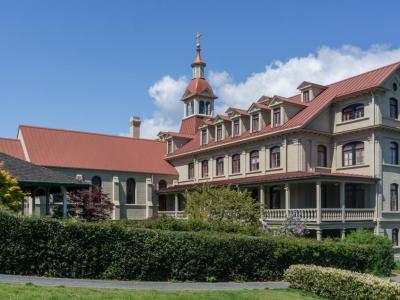
As you enter Saint Ann's Academy, you'll be greeted by a grand wrought-iron gate and an elegant drive that leads you to the formal entrance of the former school. Step inside and you'll find yourself transported to the 1920s, with the parlours and chapel boasting stunning ornate details, reminiscent of rural French Canadian churches.
The chapel, once Victoria's first Roman Catholic Cathedral, was originally built in 1858 and later moved and added to the school in 1886. It features intricate carvings on the altar and ceiling, gold-leaf detailing, original oil paintings, beautiful stained glass windows, and the 1913 Casavant pipe organ, which fills the space with majestic music.
As you stroll through the Novitiate garden at the side entrance of the chapel, you'll find a geometric herb bed, perennials, and a delightful recreated 1925 summerhouse. The formal garden at the north-west corner of the property, built in 1910, is equally impressive, with rare trees and the remains of a unique fountain.
A portion of the building, known as the Interpretive Centre, has been restored to its original 1920s appearance, while the rest has been converted into modern office space leased by the Ministry of Advanced Education. The Ministry of Technology, Innovation and Citizens' Services operates the Interpretive Center, which celebrates the rich history of this important landmark. Additionally, the beautifully restored 1910 auditorium and 6 acres of grounds are available for public use. So come and experience the grandeur and history of Saint Ann's Academy for yourself.
The chapel, once Victoria's first Roman Catholic Cathedral, was originally built in 1858 and later moved and added to the school in 1886. It features intricate carvings on the altar and ceiling, gold-leaf detailing, original oil paintings, beautiful stained glass windows, and the 1913 Casavant pipe organ, which fills the space with majestic music.
As you stroll through the Novitiate garden at the side entrance of the chapel, you'll find a geometric herb bed, perennials, and a delightful recreated 1925 summerhouse. The formal garden at the north-west corner of the property, built in 1910, is equally impressive, with rare trees and the remains of a unique fountain.
A portion of the building, known as the Interpretive Centre, has been restored to its original 1920s appearance, while the rest has been converted into modern office space leased by the Ministry of Advanced Education. The Ministry of Technology, Innovation and Citizens' Services operates the Interpretive Center, which celebrates the rich history of this important landmark. Additionally, the beautifully restored 1910 auditorium and 6 acres of grounds are available for public use. So come and experience the grandeur and history of Saint Ann's Academy for yourself.
4) St. Andrew's Presbyterian Church
Located in downtown Victoria, Saint Andrew's Presbyterian Church holds a significant place in the history of Presbyterianism. Founded in 1862 by the Irish-born Reverend John Hall, this congregation has played a pivotal role in spreading Presbyterianism throughout Vancouver Island and the province's interior.
Initially, the congregation worshiped in their first church building, which opened its doors in November 1863 at the intersection of Blanshard Street and Pandora Street. Over time, the congregation expanded, buoyed by Victoria's substantial Scottish population. This growth led to the laying of the cornerstone for the present church on March 7, 1889.
Designed in the Scottish baronial style by architect Leonard Buttress Trimen, the church's construction was completed on January 12, 1890. Notably, it was one of the earliest churches in North America to incorporate electric lighting.
Throughout its history, Saint Andrew's Presbyterian Church has been a gathering place for prominent individuals. The church counted Premier John Robson, whose funeral was held there, and industrialist Robert Dunsmuir among its notable congregants.
In 1925, during a denomination split that formed the United Church of Canada, Saint Andrew's Presbyterian Church chose to remain loyal to its Presbyterian roots. Recognizing its historical and architectural significance, the City of Victoria granted the church a heritage designation in 1979.
Initially, the congregation worshiped in their first church building, which opened its doors in November 1863 at the intersection of Blanshard Street and Pandora Street. Over time, the congregation expanded, buoyed by Victoria's substantial Scottish population. This growth led to the laying of the cornerstone for the present church on March 7, 1889.
Designed in the Scottish baronial style by architect Leonard Buttress Trimen, the church's construction was completed on January 12, 1890. Notably, it was one of the earliest churches in North America to incorporate electric lighting.
Throughout its history, Saint Andrew's Presbyterian Church has been a gathering place for prominent individuals. The church counted Premier John Robson, whose funeral was held there, and industrialist Robert Dunsmuir among its notable congregants.
In 1925, during a denomination split that formed the United Church of Canada, Saint Andrew's Presbyterian Church chose to remain loyal to its Presbyterian roots. Recognizing its historical and architectural significance, the City of Victoria granted the church a heritage designation in 1979.
5) St. Andrew's Cathedral
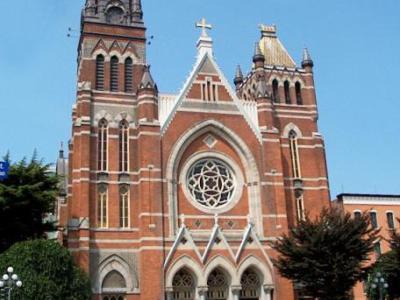
Saint Andrew's Cathedral stands as the Roman Catholic diocesan cathedral in Victoria. It was constructed in the magnificent High Victorian Gothic style.
The cathedral's design was influenced by architects Maurice Perrault and Albert Mesnard, who drew inspiration from medieval European churches, particularly one in Vaudreuil-Dorion, Quebec. They incorporated elements of Quebec churches and the High Victorian Gothic style, including double asymmetrical towers, paying homage to the captivating "unfinished" look of 14th and 15th-century churches. The central tower stands at 53.4 meters (175 feet) and houses a clock and bells.
In Saint Andrew's Catholic Cathedral, a 22-meter-long nave displays a beautiful rose window. The Institute for Stained Glass in Canada has documented the cathedral's 21 magnificent stained glass windows, designed in the Portland style, along with two large rose windows and a smaller one above the gallery.
The cathedral also features a commissioned altar honoring Bishop Remi Joseph De Roo's twenty-fifth episcopal anniversary. Crafted by Charles W. Elliott, the first Native American graduate from Saint Louis College, the altar consists of two curved wooden boxes. These boxes can be rotated to reveal four distinct designs representing different liturgical seasons. The altar's crown, carved from yellow cedar, weighs approximately 400 pounds.
Saint Andrew's Cathedral houses a remarkable carved lectern by Roy Henry Vickers, depicting Christ in black and red, representing the crucified and risen Christ.
The cathedral's design was influenced by architects Maurice Perrault and Albert Mesnard, who drew inspiration from medieval European churches, particularly one in Vaudreuil-Dorion, Quebec. They incorporated elements of Quebec churches and the High Victorian Gothic style, including double asymmetrical towers, paying homage to the captivating "unfinished" look of 14th and 15th-century churches. The central tower stands at 53.4 meters (175 feet) and houses a clock and bells.
In Saint Andrew's Catholic Cathedral, a 22-meter-long nave displays a beautiful rose window. The Institute for Stained Glass in Canada has documented the cathedral's 21 magnificent stained glass windows, designed in the Portland style, along with two large rose windows and a smaller one above the gallery.
The cathedral also features a commissioned altar honoring Bishop Remi Joseph De Roo's twenty-fifth episcopal anniversary. Crafted by Charles W. Elliott, the first Native American graduate from Saint Louis College, the altar consists of two curved wooden boxes. These boxes can be rotated to reveal four distinct designs representing different liturgical seasons. The altar's crown, carved from yellow cedar, weighs approximately 400 pounds.
Saint Andrew's Cathedral houses a remarkable carved lectern by Roy Henry Vickers, depicting Christ in black and red, representing the crucified and risen Christ.
6) Temple Emanuel
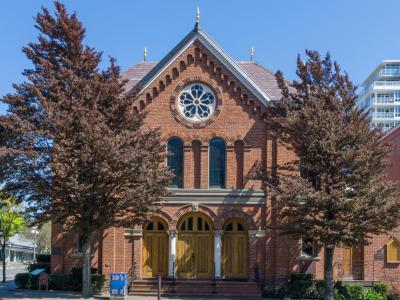
Congregation Emanu-El, located in Victoria, is a synagogue with a rich history. It holds the distinction of being the oldest synagogue building still in active use in Canada, as well as the oldest surviving synagogue on Vancouver Island. Furthermore, it proudly stands as the oldest synagogue building on the west coast of North America.
Its origins date back to 1859, when the congregation dedicated its cemetery. In 1863, they constructed the synagogue that continues to serve the community today. Affiliated with the United Synagogue of Conservative Judaism, Congregation Emanu-El is not only a testament to religious heritage but also a significant part of Canada's history.
Architect John Wright skillfully designed the synagogue during the Victoria building boom, triggered by the gold discovery on the nearby mainland in 1858. As the Fraser Canyon Gold Rush unfolded, the first Jewish settlers on Vancouver Island, primarily from the United States, found their home here.
Remarkably, the synagogue was the first structure in the town to have its cornerstone laid by the newly established Victoria chapter of the Freemasons. The dedication of the synagogue was a momentous occasion, marked by a grand procession involving benevolent societies representing diverse religions and ethnicities residing in the vibrant young city.
Recognized for its historical significance, the synagogue is a designated National Historic Site of Canada and holds the status of a heritage property under the provincial Local Government Act.
Its origins date back to 1859, when the congregation dedicated its cemetery. In 1863, they constructed the synagogue that continues to serve the community today. Affiliated with the United Synagogue of Conservative Judaism, Congregation Emanu-El is not only a testament to religious heritage but also a significant part of Canada's history.
Architect John Wright skillfully designed the synagogue during the Victoria building boom, triggered by the gold discovery on the nearby mainland in 1858. As the Fraser Canyon Gold Rush unfolded, the first Jewish settlers on Vancouver Island, primarily from the United States, found their home here.
Remarkably, the synagogue was the first structure in the town to have its cornerstone laid by the newly established Victoria chapter of the Freemasons. The dedication of the synagogue was a momentous occasion, marked by a grand procession involving benevolent societies representing diverse religions and ethnicities residing in the vibrant young city.
Recognized for its historical significance, the synagogue is a designated National Historic Site of Canada and holds the status of a heritage property under the provincial Local Government Act.
7) First Metropolitan United Church
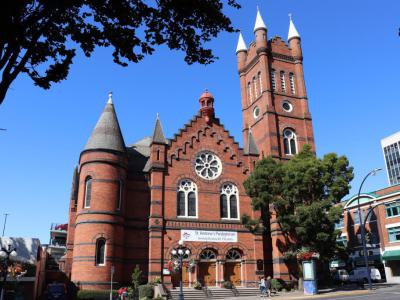
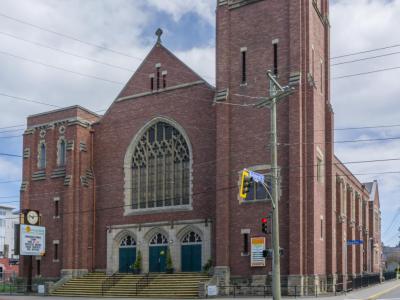
First Metropolitan United Church, located in Victoria, holds a significant place in the city's history and spiritual community. The church, established in 1997 through the merger of Metropolitan United Church and First United Church, has become a prominent tourist attraction and a beloved congregation for the faithful.
The origins of First Metropolitan United Church can be traced back to its two founding churches, Metropolitan United Church and First United Church, which both had rich histories dating back 135 years. These historic churches were situated merely two blocks apart in downtown Victoria. Metropolitan United Church had its roots in Methodism and Congregationalism, while First United Church had Presbyterian roots.
The present-day First Metropolitan United Church occupies the building that was originally constructed in 1915 as First United Church. This beautiful structure became the new home for the amalgamated congregation after the merger. It was the second church built by the First Presbyterian congregation, whose initial place of worship, from 1863 to 1913, stood at the corner of Pandora and Blanshard.
Apart from its regular worship services, First Metropolitan United Church offers a variety of engaging activities for the local community. These include seminars, musical and children's events, social gatherings, and more. The church actively contributes to the vibrant cultural and spiritual life of Victoria.
The origins of First Metropolitan United Church can be traced back to its two founding churches, Metropolitan United Church and First United Church, which both had rich histories dating back 135 years. These historic churches were situated merely two blocks apart in downtown Victoria. Metropolitan United Church had its roots in Methodism and Congregationalism, while First United Church had Presbyterian roots.
The present-day First Metropolitan United Church occupies the building that was originally constructed in 1915 as First United Church. This beautiful structure became the new home for the amalgamated congregation after the merger. It was the second church built by the First Presbyterian congregation, whose initial place of worship, from 1863 to 1913, stood at the corner of Pandora and Blanshard.
Apart from its regular worship services, First Metropolitan United Church offers a variety of engaging activities for the local community. These include seminars, musical and children's events, social gatherings, and more. The church actively contributes to the vibrant cultural and spiritual life of Victoria.
