Custom Walk in Heidelberg, Germany by rubenc49_da9c5 created on 2025-03-23
Guide Location: Germany » Heidelberg
Guide Type: Custom Walk
# of Sights: 16
Tour Duration: 4 Hour(s)
Travel Distance: 9 Km or 5.6 Miles
Share Key: 3452L
Guide Type: Custom Walk
# of Sights: 16
Tour Duration: 4 Hour(s)
Travel Distance: 9 Km or 5.6 Miles
Share Key: 3452L
How It Works
Please retrieve this walk in the GPSmyCity app. Once done, the app will guide you from one tour stop to the next as if you had a personal tour guide. If you created the walk on this website or come to the page via a link, please follow the instructions below to retrieve the walk in the app.
Retrieve This Walk in App
Step 1. Download the app "GPSmyCity: Walks in 1K+ Cities" on Apple App Store or Google Play Store.



Step 2. In the GPSmyCity app, download(or launch) the guide "Heidelberg Map and Walking Tours".
Step 3. Tap the menu button located at upper right corner of the "Walks" screen and select "Retrieve custom walk". Enter the share key: 3452L
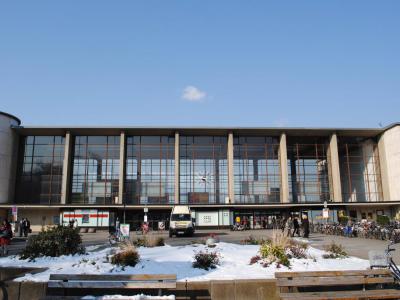
1) Heidelberg Hauptbahnhof (Heidelberg Central Station)
The relocation of Heidelberg's railway facilities to Willy-Brandt-Platz, around two kilometers west of central Heidelberg, was a project spanning over 50 years, disrupted by two world wars. Finally completed in 1955, the station is now hailed as one of the most beautiful and architecturally interesting buildings of Deutsche Bundesbahn. Since 1972, it has been designated as a "cultural monument of special importance" under the historical monuments register of Baden-Württemberg. Contemporary journalists marveled at its long glass facades, describing them as possessing an "elegance and lightness" previously unseen in railway architecture, aligning perfectly with the architectural ideals of the 1950s: transparency, lightness, and spaciousness.
In 2021, Deutsche Bahn announced plans to allocate 580,000 euros from an economic stimulus package for the maintenance of the station, with a focus on the "cross platform". Extensive reconstruction and expansion measures are slated for 2026.
In 2021, Deutsche Bahn announced plans to allocate 580,000 euros from an economic stimulus package for the maintenance of the station, with a focus on the "cross platform". Extensive reconstruction and expansion measures are slated for 2026.
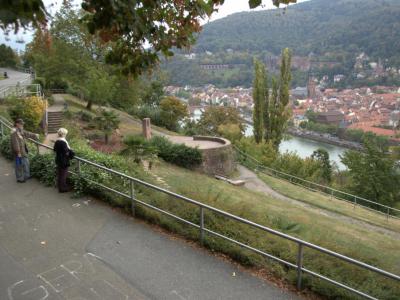
2) Philosophenweg-Eingang (Philosophers' Path Entrance)
The entrance to the Philosophers' Path, although signposted at the end of the Old Bridge ("Alte Brücke"), can be somewhat hidden from view and may be challenging for non-residents to find. However, if you manage to locate it and follow the path, you'll soon find yourself on the Philosophenweg, which passes through one of Heidelberg's finest and most exclusive residential areas, Neuenheim. The initial ascent of 700 meters may feel strenuous, but the effort is well worth it.
Once you've conquered the uphill climb, you'll be rewarded with breathtaking views of Heidelberg Castle, the Old Town, and the surrounding area, stretching all the way to the Palatinate Mountains. The sight of the Königstuhl viewpoint, accessible by funicular above the castle, adds to the impressive panorama.
Along the path, stone benches and the Philosophers' Garden ("Philosophengärtchen") invite visitors to pause and take in the scenery at their leisure. These tranquil spots provide the perfect opportunity to reflect on the beauty of the landscape and perhaps engage in some philosophical contemplation, as the name suggests.
Once you've conquered the uphill climb, you'll be rewarded with breathtaking views of Heidelberg Castle, the Old Town, and the surrounding area, stretching all the way to the Palatinate Mountains. The sight of the Königstuhl viewpoint, accessible by funicular above the castle, adds to the impressive panorama.
Along the path, stone benches and the Philosophers' Garden ("Philosophengärtchen") invite visitors to pause and take in the scenery at their leisure. These tranquil spots provide the perfect opportunity to reflect on the beauty of the landscape and perhaps engage in some philosophical contemplation, as the name suggests.
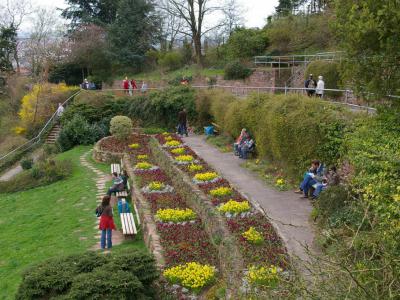
3) Philosophengartchen (Philosophers' Garden) (must see)
This beautiful, sun-soaked garden feels like a natural balcony, filled with a variety of exotic plants. Thanks to the mild climate along the Philosopher's Path, many plants from subtropical regions, such as almond trees, lemon trees, and ginkgo trees, thrive here and have become native to the area.
The garden offers a lovely view of the city. You can relax on one of the benches or the beautiful grassy areas, breathing in the fresh air while taking in the scenery. Keep in mind that it's a hilltop area, so bring a water bottle and wear good shoes, as it can get quite slippery when wet. It's definitely a spot you won't want to miss, perfect for photos.
The garden offers a lovely view of the city. You can relax on one of the benches or the beautiful grassy areas, breathing in the fresh air while taking in the scenery. Keep in mind that it's a hilltop area, so bring a water bottle and wear good shoes, as it can get quite slippery when wet. It's definitely a spot you won't want to miss, perfect for photos.
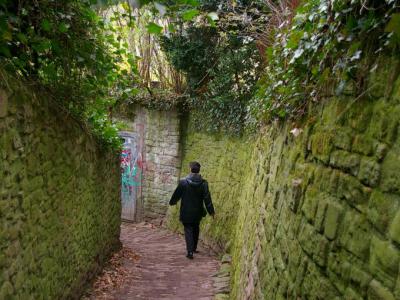
4) Schlangenweg (Snake Path)
Known as the Snake Path due to its many winding switchbacks, this footpath connects the Old Bridge to the Philosophers' Path. Stretching nearly 500 meters and climbing about 90 meters in elevation, it is largely carved into the hillside, featuring several switchbacks flanked by red sandstone walls. Originally a vineyard trail, it led to the vineyards on the south-facing slope above the Neckar, which were part of the village of Neuenheim, incorporated into Heidelberg in 1891. Today, this area is home to gardens and developed properties.
The Snake Path was renovated in 1782, with steps added. At two of the switchbacks, there are stone lookouts with shaded benches offering spectacular views of Heidelberg's Old Town. The numerous dry stone walls make the path a valuable habitat for heat-loving species like the wall lizard. Additionally, along the path, you can find medlar trees, a once significant but now rare fruit tree species.
The Snake Path was renovated in 1782, with steps added. At two of the switchbacks, there are stone lookouts with shaded benches offering spectacular views of Heidelberg's Old Town. The numerous dry stone walls make the path a valuable habitat for heat-loving species like the wall lizard. Additionally, along the path, you can find medlar trees, a once significant but now rare fruit tree species.
5) Alte Brucke (Old Bridge) (must see)
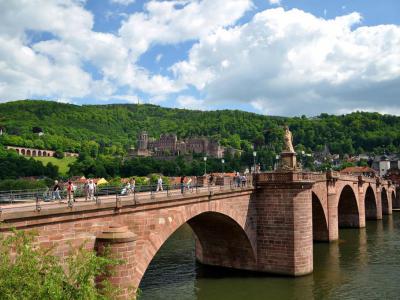
The Old Bridge spans the Neckar River, linking the Old Town with the newer eastern part of the city. Although built in 1788, it is actually one of Heidelberg's newer structures. Historically, there have been eight bridges in this location, with the current one constructed on the foundations of its predecessors. When the Theodor Heuss Bridge was built in 1877, this became known as the "Old Bridge".
The first bridge at this site was built by the Romans in the 1st century, but it collapsed, and it took nearly 1000 years to replace it. A new crossing was constructed in the 13th century when Heidelberg was founded, aligning with its present location near the marketplace. Goethe hailed its beauty as "not equalled by any other in the world", and it certainly provides a classic vista.
In the early days, the Old Bridge marked the border with the Electorate of Mainz and was part of the city's defenses. Several of its early versions were destroyed by ice floes; the seventh survived the Thirty Years' War but was destroyed during the Nine Years' War. The current nine-arch bridge, built with distinctive red sandstone, was completed thereafter, featuring an ancient gate, two towers, and statues of Prince Karl-Theodor and Minerva. During the Second World War, three of its arches were destroyed, and had to be rebuilt.
A monkey statue has been a part of the bridge since the 15th century and remains a tourist attraction. The original statue disappeared during the Nine Years' War and was later replaced; the current one depicts a monkey holding a mirror in one hand. Tourists often place their heads inside the monkey's head, rub the monkey's mirror for luck, and touch its fingers to ensure a return to Heidelberg.
The first bridge at this site was built by the Romans in the 1st century, but it collapsed, and it took nearly 1000 years to replace it. A new crossing was constructed in the 13th century when Heidelberg was founded, aligning with its present location near the marketplace. Goethe hailed its beauty as "not equalled by any other in the world", and it certainly provides a classic vista.
In the early days, the Old Bridge marked the border with the Electorate of Mainz and was part of the city's defenses. Several of its early versions were destroyed by ice floes; the seventh survived the Thirty Years' War but was destroyed during the Nine Years' War. The current nine-arch bridge, built with distinctive red sandstone, was completed thereafter, featuring an ancient gate, two towers, and statues of Prince Karl-Theodor and Minerva. During the Second World War, three of its arches were destroyed, and had to be rebuilt.
A monkey statue has been a part of the bridge since the 15th century and remains a tourist attraction. The original statue disappeared during the Nine Years' War and was later replaced; the current one depicts a monkey holding a mirror in one hand. Tourists often place their heads inside the monkey's head, rub the monkey's mirror for luck, and touch its fingers to ensure a return to Heidelberg.
6) Bruckentor (Bridge Gate)
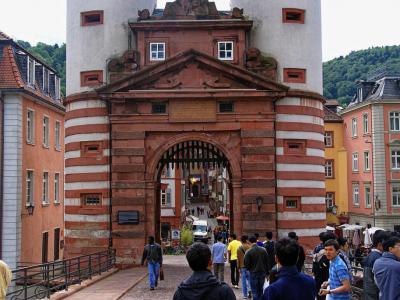
Framing the entrance to the Old Bridge or serving as a picturesque backdrop with the Old Town in the distance, this imposing structure is a true Heidelberg landmark. Originally part of the city's defensive walls, it has stood guard at the northern entrance for centuries, weathering ice floes and fires that ravaged earlier bridges. Close inspection reveals flood marks left by various deluges over the years.
Functioning as both a defensive bastion and a toll collection point, the gate could be securely shut during times of attack, while foreigners seeking passage across the Old Bridge were required to pay a toll. Additionally, it housed guards and even served as a jail, with the eastern tower featuring a spiral staircase leading to the bridge keeper's living quarters, and the western tower containing three detention rooms. Standing at 28 meters (92 feet) tall, these towers miraculously survived the destruction wrought by the French conquest in 1689. In 1788, their original tops replaced with elegant Baroque-style spires.
Today, the gate exudes an unmistakable medieval charm, inviting visitors to step back in time as they meander through Heidelberg's Old Town. For a truly enchanting experience, take a romantic stroll around dusk, and don't forget your camera to capture the views of the Neckar River, the mountains, Heidelberg Castle, and the Old Bridge.
Functioning as both a defensive bastion and a toll collection point, the gate could be securely shut during times of attack, while foreigners seeking passage across the Old Bridge were required to pay a toll. Additionally, it housed guards and even served as a jail, with the eastern tower featuring a spiral staircase leading to the bridge keeper's living quarters, and the western tower containing three detention rooms. Standing at 28 meters (92 feet) tall, these towers miraculously survived the destruction wrought by the French conquest in 1689. In 1788, their original tops replaced with elegant Baroque-style spires.
Today, the gate exudes an unmistakable medieval charm, inviting visitors to step back in time as they meander through Heidelberg's Old Town. For a truly enchanting experience, take a romantic stroll around dusk, and don't forget your camera to capture the views of the Neckar River, the mountains, Heidelberg Castle, and the Old Bridge.
7) Bruckenaffe (Bridge Monkey)
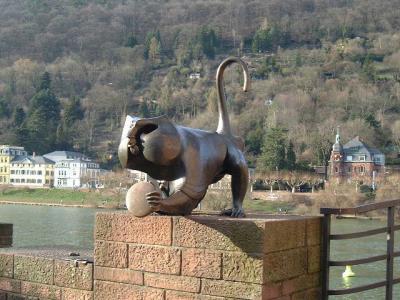
As you enter the Old Bridge from the Old Town, you'll notice a statue of an animal that appears somewhat catlike. It's actually a monkey holding a mirror. Legend has it the statue was erected to remind both city-dwellers and those from across the bridge to look over their shoulders, symbolizing that neither group was more elite than the other.
This is not the first iteration of the Bridge Monkey; a statue has stood here since the 15th century. The current version was installed in 1979 and, unlike its predecessors, the monkey's right hand shows the sign of the horns, which is supposed to ward off the evil eye. It is said that if a visitor touches the sign of horns, they will return to Heidelberg. If they touch the mirror, they will become wealthy, and if they touch the mice next to the monkey, they will have many children.
A plush toy of the monkey has been available for purchase since May 2016. There are two versions in different sizes, which can be found in several shops in the Old Town. The monkey's chest is labeled with the city's name, beneath which is a coat of arms that combines the coat of arms of the Electoral Palatinate, the coat of arms of Baden, and the flag of Germany.
This is not the first iteration of the Bridge Monkey; a statue has stood here since the 15th century. The current version was installed in 1979 and, unlike its predecessors, the monkey's right hand shows the sign of the horns, which is supposed to ward off the evil eye. It is said that if a visitor touches the sign of horns, they will return to Heidelberg. If they touch the mirror, they will become wealthy, and if they touch the mice next to the monkey, they will have many children.
A plush toy of the monkey has been available for purchase since May 2016. There are two versions in different sizes, which can be found in several shops in the Old Town. The monkey's chest is labeled with the city's name, beneath which is a coat of arms that combines the coat of arms of the Electoral Palatinate, the coat of arms of Baden, and the flag of Germany.

8) Restaurant zur Herrenmuhle
Nestled in the heart of Old Town, this enchanting restaurant breathes new life into a 17th-century grain mill, exuding a romantic ambiance that captivates visitors from the moment they step inside. Renowned for its historic charm, the restaurant offers a menu brimming with delectable homemade pasta, succulent fish, and savory lamb dishes.
The rustic allure of the old beams adds to the warm and inviting atmosphere, while the outdoor courtyard, covered in lush vines and cascading flowers, offers an intimate and enchanting setting for al fresco dining.
The service here is nothing short of world-class, ensuring that every guest receives attentive and personalized attention throughout their dining experience. Meanwhile, the culinary offerings impress with their freshness, flavor, and impeccable presentation. Complementing the exquisite fare is a thoughtful wine selection, curated to provide the perfect pairing for each dish.
While dining here may come with a hefty price tag, the unparalleled experience and culinary delights make it well worth the splurge. For those visiting Heidelberg, securing a reservation at this establishment is a must.
The rustic allure of the old beams adds to the warm and inviting atmosphere, while the outdoor courtyard, covered in lush vines and cascading flowers, offers an intimate and enchanting setting for al fresco dining.
The service here is nothing short of world-class, ensuring that every guest receives attentive and personalized attention throughout their dining experience. Meanwhile, the culinary offerings impress with their freshness, flavor, and impeccable presentation. Complementing the exquisite fare is a thoughtful wine selection, curated to provide the perfect pairing for each dish.
While dining here may come with a hefty price tag, the unparalleled experience and culinary delights make it well worth the splurge. For those visiting Heidelberg, securing a reservation at this establishment is a must.
9) Schloss Heidelberg (Heidelberg Castle) (must see)
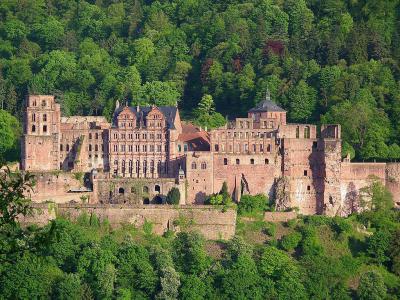
The romantic ruins of this old castle rise over the town, creating a picturesque scene. Built and expanded multiple times between the 13th and 17th centuries, it was originally a heavily fortified Gothic stronghold and the seat of the House of Wittelsbach palatines. In the 16th century, the complex was remodeled into one of Germany's most stunning residences, but its glory was short-lived due to the devastation of the Thirty Years' War and the 1689 war with France, during which most of the structure was destroyed and never rebuilt.
What's most striking here is the architectural variety. The oldest parts still standing date back to the 15th century, though most of the castle was built during the Renaissance in the 16th and 17th centuries when it was the seat of the Palatinate electors. There's an "English wing" built in 1612 by Elector Friedrich V for his teenage Scottish bride, Elizabeth Stuart; its plain, square-window facade stands out against other, more opulent styles. The architectural highlight remains the Renaissance courtyard-harmonious, graceful, and ornate.
Even if you have to wait, make a point of seeing the two-story Great Cask ("Grosses Fass") in the cellar, possibly the world's largest wine barrel, made from 130 oak trees and capable of holding 58,500 gallons. It was used to store wines paid as taxes by wine growers in the Palatinate. Also included in your ticket is the German Pharmacy Museum ("Apotheken-Museum"), where you can see six re-created apothecaries dating back as far as the 17th century, complete with a collection of books, medical instruments and medicine bottles.
In summer there are fireworks displays, on the first Saturday in June and September and the second Saturday in July, to commemorate when the castle went up in flames in 1689, 1693, and 1764 (two of the fires happened during wars with the French, and the last one was caused by lightning). June and July also feature a theater festival, with performances of "The Student Prince" often taking center stage.
Tip:
Skip the hike up the Burgweg and take the Königstuhl Bergbahn (funicular) instead-it's faster and less tiring!
What's most striking here is the architectural variety. The oldest parts still standing date back to the 15th century, though most of the castle was built during the Renaissance in the 16th and 17th centuries when it was the seat of the Palatinate electors. There's an "English wing" built in 1612 by Elector Friedrich V for his teenage Scottish bride, Elizabeth Stuart; its plain, square-window facade stands out against other, more opulent styles. The architectural highlight remains the Renaissance courtyard-harmonious, graceful, and ornate.
Even if you have to wait, make a point of seeing the two-story Great Cask ("Grosses Fass") in the cellar, possibly the world's largest wine barrel, made from 130 oak trees and capable of holding 58,500 gallons. It was used to store wines paid as taxes by wine growers in the Palatinate. Also included in your ticket is the German Pharmacy Museum ("Apotheken-Museum"), where you can see six re-created apothecaries dating back as far as the 17th century, complete with a collection of books, medical instruments and medicine bottles.
In summer there are fireworks displays, on the first Saturday in June and September and the second Saturday in July, to commemorate when the castle went up in flames in 1689, 1693, and 1764 (two of the fires happened during wars with the French, and the last one was caused by lightning). June and July also feature a theater festival, with performances of "The Student Prince" often taking center stage.
Tip:
Skip the hike up the Burgweg and take the Königstuhl Bergbahn (funicular) instead-it's faster and less tiring!
10) Kornmarkt ("Corn Market" Square)
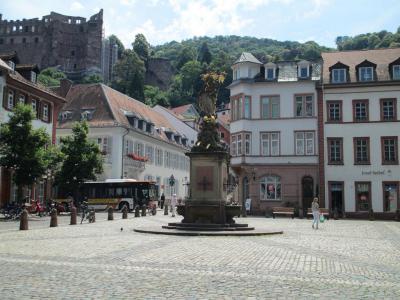
The Corn Market, or Kornmarkt, is a charming square located not far from Heidelberg Castle. At its center stands the Kornmarkt-Madonna, a Mary column crafted by Peter van den Branden in 1718, surrounded by three fountains. To the south begins the Burgweg, a path leading up to Heidelberg Castle.
Historically, the site was home to a hospital from the 13th century, with the outline of its former chapel now marked on the pavement. In 1557, the hospital buildings were demolished by the city council to create space for a milk and vegetable market. Initially called the Neuer Markt ("New Market"), the square eventually became known as the Kornmarkt.
The Town Hall ("Rathaus") lies to the north of the square, while the southeast corner is home to Graimberg Palace. On the west side, you'll find the Prinz Carl civic administrative building, which was once a luxury hotel. The area is also dotted with souvenir shops and stalls selling traditional German food. Combined with the nearby cobbled streets, Kornmarkt offers a picturesque and inviting setting, perfect for a stroll.
Historically, the site was home to a hospital from the 13th century, with the outline of its former chapel now marked on the pavement. In 1557, the hospital buildings were demolished by the city council to create space for a milk and vegetable market. Initially called the Neuer Markt ("New Market"), the square eventually became known as the Kornmarkt.
The Town Hall ("Rathaus") lies to the north of the square, while the southeast corner is home to Graimberg Palace. On the west side, you'll find the Prinz Carl civic administrative building, which was once a luxury hotel. The area is also dotted with souvenir shops and stalls selling traditional German food. Combined with the nearby cobbled streets, Kornmarkt offers a picturesque and inviting setting, perfect for a stroll.
11) Marktplatz (Market Square) (must see)
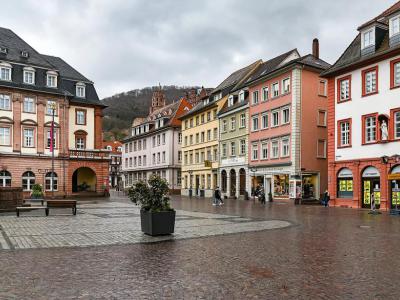
Heidelberg's main square, flanked by the Town Hall ("Rathaus") and the impressive Church of the Holy Spirit ("Heiliggeistkirche"), has been the city's focal point since medieval times. In earlier centuries, it served as the stage for public trials and the grim spectacles of witch burnings and heresy condemnations.
At the heart of the square stands the baroque Hercules Fountain, a testament to the city's resilience in the aftermath of the Thirty Years' War. Crafted by 18th-century artist Heinrich Charrasky, the fountain commemorates the Herculean efforts undertaken to rebuild Heidelberg. Adjacent to it once stood a rotating, hanging cage, serving as a stark reminder of past punishment practices. Those guilty of lesser offenses were incarcerated within, subjected to the scorn of their fellow citizens.
Today, the area bustles with activity, hosting outdoor markets every Wednesday and Saturday. Numerous eateries and cafes line its perimeter, many offering al fresco dining options to soak in the atmosphere. While here, don't miss the opportunity to ascend the church tower for a beautiful panoramic view of the surroundings, available for a small fee.
At the heart of the square stands the baroque Hercules Fountain, a testament to the city's resilience in the aftermath of the Thirty Years' War. Crafted by 18th-century artist Heinrich Charrasky, the fountain commemorates the Herculean efforts undertaken to rebuild Heidelberg. Adjacent to it once stood a rotating, hanging cage, serving as a stark reminder of past punishment practices. Those guilty of lesser offenses were incarcerated within, subjected to the scorn of their fellow citizens.
Today, the area bustles with activity, hosting outdoor markets every Wednesday and Saturday. Numerous eateries and cafes line its perimeter, many offering al fresco dining options to soak in the atmosphere. While here, don't miss the opportunity to ascend the church tower for a beautiful panoramic view of the surroundings, available for a small fee.
12) Haus zum Ritter (House of the Knight)
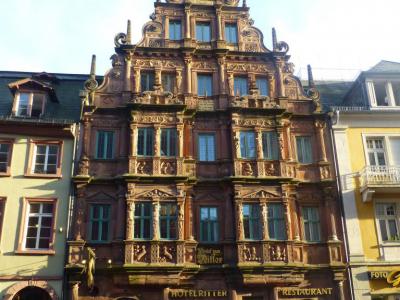
Heidelberg's oldest standing residential building, originally built in 1592, is notable for being the only structure that withstood the 1693 fire and the destruction caused by the French. Its flamboyant Renaissance facade, crafted from stone, is an uncharacteristic extravagance by Charles Belier, a French textile merchant who relocated here because he was a Calvinist. Due to its survival, the building served as the town hall from 1693 to 1703. In 1705, it was turned into the Inn to the Knight Saint George, a role it has clung to ever since.
Renowned French wordsmith Victor Hugo, on a jaunt to Heidelberg in 1838, was thoroughly impressed by this edifice's resilience and grandeur. Among its various Latin inscriptions, one whimsically decrees, "May beauty remain undefeated", while another piously declares, "Glory to God alone". A longer inscription translates to, "Unless the Lord builds the house, the builders work in vain". Oh, and watch out for the ram motif above the entrance-a cheeky nod to the Belier family, as "belier" is French for, you guessed it, ram!
Renowned French wordsmith Victor Hugo, on a jaunt to Heidelberg in 1838, was thoroughly impressed by this edifice's resilience and grandeur. Among its various Latin inscriptions, one whimsically decrees, "May beauty remain undefeated", while another piously declares, "Glory to God alone". A longer inscription translates to, "Unless the Lord builds the house, the builders work in vain". Oh, and watch out for the ram motif above the entrance-a cheeky nod to the Belier family, as "belier" is French for, you guessed it, ram!
13) Heiliggeistkirche (Church of the Holy Spirit)
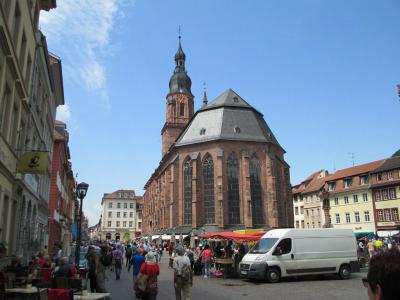
With public spectacles of punishment a thing of the past, crowds now gather over beer and coffee at the focal Market Square, or Marktplatz. At its core stands the 15th-century Gothic Church of the Holy Spirit, featuring a Baroque mansard roof that ingeniously accommodates traders' stalls between its buttresses, continuing a medieval tradition once widespread across the land.
An intriguing aspect of this grand church is its longstanding shared use by Catholics and Protestants, a tradition dating back centuries, even after its official conversion to Protestantism in 1936. The gargoyles on its southern side (where Hauptstrasse meets Marktplatz) are strikingly grotesque, yet the tower rewards climbers with fantastic city views, while the glorious organ steals the show during concerts.
History hasn't been very kind to this venerable edifice. Plundered by the Catholic League during the tumultuous Thirty Years' War, it lost its greatest treasure-the Bibliotheca Palatina, then Germany's largest library-loaded onto 500 carts and taken to the Vatican, with only a fraction ever returning. Then, in the late 17th century, marauding French troops ravaged the church once more, leaving many tombs in ruins; only the 15th-century tomb of Elector Ruprecht III and his wife, Elisabeth von Hohenzollern, stands intact. Amidst the chaos, the lone survivor was the House of the Knight across the square.
An intriguing aspect of this grand church is its longstanding shared use by Catholics and Protestants, a tradition dating back centuries, even after its official conversion to Protestantism in 1936. The gargoyles on its southern side (where Hauptstrasse meets Marktplatz) are strikingly grotesque, yet the tower rewards climbers with fantastic city views, while the glorious organ steals the show during concerts.
History hasn't been very kind to this venerable edifice. Plundered by the Catholic League during the tumultuous Thirty Years' War, it lost its greatest treasure-the Bibliotheca Palatina, then Germany's largest library-loaded onto 500 carts and taken to the Vatican, with only a fraction ever returning. Then, in the late 17th century, marauding French troops ravaged the church once more, leaving many tombs in ruins; only the 15th-century tomb of Elector Ruprecht III and his wife, Elisabeth von Hohenzollern, stands intact. Amidst the chaos, the lone survivor was the House of the Knight across the square.
14) Studentenkarzer (Student Prison)
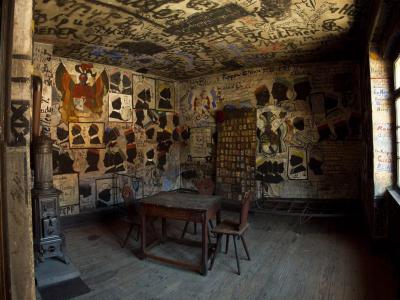
As Heidelberg University flourished since its founding in 1386, the antics of its students grew notorious. By the 16th century, exasperated city dwellers found themselves at wit's end with the rowdy behavior. In response, the University devised a novel solution: their own prison to curb the mischief. The student lockup shifted several locations, with the current one, open to visitors, in use from 1823 to 1914.
For offenses ranging from drunken revelry and streetlamp shenanigans to more egregious acts like pig chases, students could find themselves sentenced to up to two weeks in the confines of this small detention center. Graver transgressions could earn a stint of up to four weeks. Yet, rather than being a deterrent, serving time in the student slammer became a badge of honor, a rite of passage.
Although students were technically permitted to attend classes during their confinement, many opted to skip lectures, instead passing the hours crafting verse or leaving their mark on the walls with graffiti and candle-soot sketches. Today, these historical remnants-graffiti on walls, above doorways, and on the ceiling-offer a fascinating glimpse into the mischievous spirit of Heidelberg's past scholars.
For offenses ranging from drunken revelry and streetlamp shenanigans to more egregious acts like pig chases, students could find themselves sentenced to up to two weeks in the confines of this small detention center. Graver transgressions could earn a stint of up to four weeks. Yet, rather than being a deterrent, serving time in the student slammer became a badge of honor, a rite of passage.
Although students were technically permitted to attend classes during their confinement, many opted to skip lectures, instead passing the hours crafting verse or leaving their mark on the walls with graffiti and candle-soot sketches. Today, these historical remnants-graffiti on walls, above doorways, and on the ceiling-offer a fascinating glimpse into the mischievous spirit of Heidelberg's past scholars.
15) Hauptstrasse (Main Street)
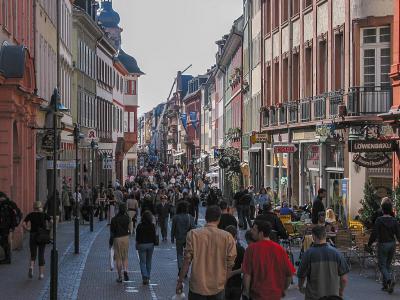
Heidelberg's Hauptstrasse is one of Europe's oldest, longest, and most beloved shopping avenues. Spanning 1.4 kilometers through the picturesque Old Town, this fully pedestrianized throroughfare links the busy Market Square with Bismarck Square. As you stroll along, you'll pass important landmarks like the Town Hall and a plethora of boutique shops.
Even before Heidelberg was founded, a small traffic route traced the path of what is now the Main Street. In the 14th century, it was expanded to its current length, with gates at each end. At the eastern end, you can see the Karlstor gate, which replaced the original gate in the 1700s and resembles a Roman triumphal arch, guarded by two lion statues.
Now considered one of Europe's most beautiful pedestrian zones, Hauptstrasse hosts arts and crafts markets and major city events such as the Heidelberg Half Marathon. Shopaholics will delight in the diverse array of offerings, from global fashion brands to quaint specialty stores, all distinguished by their attentive customer service.
When you need a break from the shopping and sightseeing, there are plenty of cafés and ice cream parlors to relax in. Especially in the summer, you can sit outside, enjoy a cool ice cream or a slice of cake, and watch the lively activity before resuming your exploration.
Even before Heidelberg was founded, a small traffic route traced the path of what is now the Main Street. In the 14th century, it was expanded to its current length, with gates at each end. At the eastern end, you can see the Karlstor gate, which replaced the original gate in the 1700s and resembles a Roman triumphal arch, guarded by two lion statues.
Now considered one of Europe's most beautiful pedestrian zones, Hauptstrasse hosts arts and crafts markets and major city events such as the Heidelberg Half Marathon. Shopaholics will delight in the diverse array of offerings, from global fashion brands to quaint specialty stores, all distinguished by their attentive customer service.
When you need a break from the shopping and sightseeing, there are plenty of cafés and ice cream parlors to relax in. Especially in the summer, you can sit outside, enjoy a cool ice cream or a slice of cake, and watch the lively activity before resuming your exploration.
16) Providenzkirche (Providence Church)
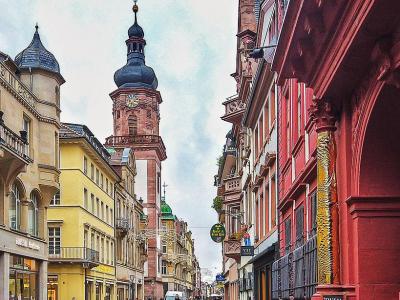
Between 1659 and 1661, the Providence Church was erected to serve Heidelberg's Lutheran community, standing on the grounds of the former electoral manor garden. Inspired by the biblical passage Genesis 22:8 ("Dominus providebit"), Elector Karl Ludwig bestowed upon it the name Providence, signifying the divine promise: God will provide.
Tragically, the church fell victim to the ravages of the great city fire during the War of the Palatinate Succession in 1693. However, resilient spirits prevailed, and the church was reconstructed after 1700. Initially lacking a tower, one was added to the north side during the post-reconstruction phase in 1717.
Fast forward to the late 19th century, and a comprehensive interior overhaul transformed the church into a luminous sanctuary in the neo-Renaissance style. Within its walls lies Heidelberg's oldest organ, crafted by organ builder Matthias Burkard.
Standing shoulder to shoulder with the Church of the Holy Spirit, the Providence Church holds a place of reverence as one of the principal Protestant churches in Heidelberg.
Tragically, the church fell victim to the ravages of the great city fire during the War of the Palatinate Succession in 1693. However, resilient spirits prevailed, and the church was reconstructed after 1700. Initially lacking a tower, one was added to the north side during the post-reconstruction phase in 1717.
Fast forward to the late 19th century, and a comprehensive interior overhaul transformed the church into a luminous sanctuary in the neo-Renaissance style. Within its walls lies Heidelberg's oldest organ, crafted by organ builder Matthias Burkard.
Standing shoulder to shoulder with the Church of the Holy Spirit, the Providence Church holds a place of reverence as one of the principal Protestant churches in Heidelberg.
