Custom Walk in Singapore, Singapore by c_willmann_2999b created on 2025-03-25
Guide Location: Singapore » Singapore
Guide Type: Custom Walk
# of Sights: 8
Tour Duration: 5 Hour(s)
Travel Distance: 11.6 Km or 7.2 Miles
Share Key: 6UE9T
Guide Type: Custom Walk
# of Sights: 8
Tour Duration: 5 Hour(s)
Travel Distance: 11.6 Km or 7.2 Miles
Share Key: 6UE9T
How It Works
Please retrieve this walk in the GPSmyCity app. Once done, the app will guide you from one tour stop to the next as if you had a personal tour guide. If you created the walk on this website or come to the page via a link, please follow the instructions below to retrieve the walk in the app.
Retrieve This Walk in App
Step 1. Download the app "GPSmyCity: Walks in 1K+ Cities" on Apple App Store or Google Play Store.



Step 2. In the GPSmyCity app, download(or launch) the guide "Singapore Map and Walking Tours".
Step 3. Tap the menu button located at upper right corner of the "Walks" screen and select "Retrieve custom walk". Enter the share key: 6UE9T
1) Little India
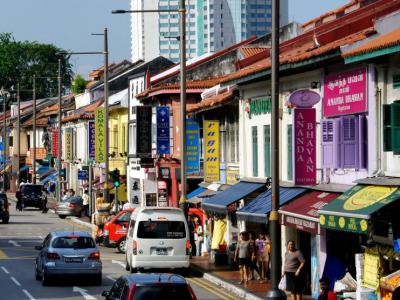
Contrary to common stereotypes, Little India is not exclusively an Indian neighborhood. It is a diverse area that includes Chinese clan associations, places of worship representing various religions, and a wide range of businesses such as electrical supply stores, hardware shops, second-hand goods outlets, as well as traditional spice grinders and grocery stores. One notable example of cultural exchange in this neighborhood, apart from culinary interactions, is the practice of Chinese parents visiting shops in Little India to grind rice for making congee for their infants.
Little India stands out from many other neighborhoods in Singapore in several aspects. Tekka Market, for instance, is a multicultural hub offering produce and everyday items that cater to the diverse ethnic groups residing in Singapore. In addition to being a vibrant shopping destination, Little India boasts several significant heritage sites, including the Sri Veeramakaliamman Temple, Angullia Mosque, Sri Vadapathira Kaliamman Temple, Jalan Mosque, and others.
Tip:
Don't miss the Indian Heritage Centre right in the heart of Little India, that foreign tourists pay to venture into. It's an amazingly rich experience after a tantalizing food tour.
Little India stands out from many other neighborhoods in Singapore in several aspects. Tekka Market, for instance, is a multicultural hub offering produce and everyday items that cater to the diverse ethnic groups residing in Singapore. In addition to being a vibrant shopping destination, Little India boasts several significant heritage sites, including the Sri Veeramakaliamman Temple, Angullia Mosque, Sri Vadapathira Kaliamman Temple, Jalan Mosque, and others.
Tip:
Don't miss the Indian Heritage Centre right in the heart of Little India, that foreign tourists pay to venture into. It's an amazingly rich experience after a tantalizing food tour.
2) Sands Skypark and Observation Deck (must see)
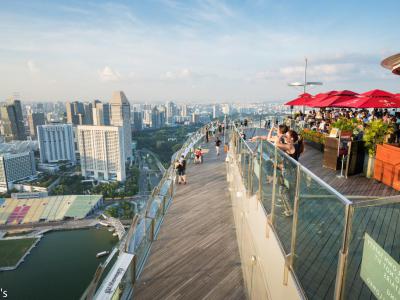
To some, it may appear as a giant celestial surfboard balancing on three skyscrapers, or maybe a sleek spaceship touching down for refuelling. Either way, the Sands SkyPark is hard to miss. Spanning 1.2 hectares across the tops of the three 55-storey Marina Bay Sands towers, it looks like it’s defying gravity for the sheer fun of it.
Dreamed up by architect Moshe Safdie, the SkyPark isn’t just big—it’s “longer-than-the-Eiffel-Tower-lying-on-its-side” big. In fact, there’s room up there for four and a half A380 jumbo jets (!!!), though luckily the only things landing are visitors armed with cameras and enthusiasm.
Once you step onto the platform, the surprise continues. You’ll find gardens filled with trees and plants that seem almost too relaxed for a rooftop setting. Scattered among the greenery are some of Marina Bay’s most talked-about bars, restaurants, and nightlife spots. These include the likes of Michelin-starred CUT by Wolfgang Puck, Black Tap Craft Burgers and Beer, AVENUE Singapore, LAVO Italian Restaurant & Rooftop Bar, and the ever-iconic Cé La Vi. It’s a place where fine dining meets high altitude, and nobody complains about the view.
But the real scene-stealer is the SkyPark’s 150-meter infinity pool—also known as the world’s largest elevated outdoor pool and quite possibly the most dramatic spot to float around at 191 meters above the ground. With a vanishing edge stretching 146 meters, it creates a perfect illusion of swimming straight into the skyline. The only catch is—you need to be a Marina Bay Sands hotel guest to slip in for a dip or access the SkyPark for free.
If you’re not staying overnight, don’t worry—the public observation deck is your VIP pass to the panorama. Cantilevered above the city, it delivers a full 360-degree sweep of Marina Bay. Open from 11:30 a.m. to 8:00 p.m., the deck lets you soak up the views, browse the souvenir shop, and tune into an audio guide that points out Singapore’s landmarks while you gaze down at them.
Up here, everything feels a little unreal—and that’s exactly the point.
Dreamed up by architect Moshe Safdie, the SkyPark isn’t just big—it’s “longer-than-the-Eiffel-Tower-lying-on-its-side” big. In fact, there’s room up there for four and a half A380 jumbo jets (!!!), though luckily the only things landing are visitors armed with cameras and enthusiasm.
Once you step onto the platform, the surprise continues. You’ll find gardens filled with trees and plants that seem almost too relaxed for a rooftop setting. Scattered among the greenery are some of Marina Bay’s most talked-about bars, restaurants, and nightlife spots. These include the likes of Michelin-starred CUT by Wolfgang Puck, Black Tap Craft Burgers and Beer, AVENUE Singapore, LAVO Italian Restaurant & Rooftop Bar, and the ever-iconic Cé La Vi. It’s a place where fine dining meets high altitude, and nobody complains about the view.
But the real scene-stealer is the SkyPark’s 150-meter infinity pool—also known as the world’s largest elevated outdoor pool and quite possibly the most dramatic spot to float around at 191 meters above the ground. With a vanishing edge stretching 146 meters, it creates a perfect illusion of swimming straight into the skyline. The only catch is—you need to be a Marina Bay Sands hotel guest to slip in for a dip or access the SkyPark for free.
If you’re not staying overnight, don’t worry—the public observation deck is your VIP pass to the panorama. Cantilevered above the city, it delivers a full 360-degree sweep of Marina Bay. Open from 11:30 a.m. to 8:00 p.m., the deck lets you soak up the views, browse the souvenir shop, and tune into an audio guide that points out Singapore’s landmarks while you gaze down at them.
Up here, everything feels a little unreal—and that’s exactly the point.
3) Gardens by the Bay (must see)
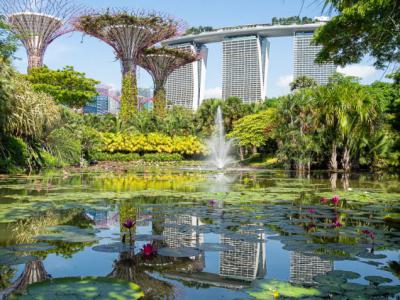
Gardens by the Bay is a sprawling natural park that covers 101 hectares (about 250 acres) in the Central Region of Singapore, right next to the Marina Reservoir. This park is divided into three distinct waterfront gardens: Bay South Garden in Marina South, Bay East Garden in Marina East, and Bay Central Garden in Downtown Core and Kallang. The largest among them is Bay South Garden, which spans 54 hectares (approximately 130 acres) and was designed by Grant Associates.
The establishment of Gardens by the Bay was part of Singapore's strategic plan to transform its identity from a "Garden City" into a "City in a Garden." The overarching goal was to elevate the residents' quality of life by increasing the presence of green spaces and diverse flora within the urban environment. The initiative was first introduced by Prime Minister Lee Hsien Loong during Singapore's National Day Rally in 2005, with the intention of making Gardens by the Bay a premier outdoor recreational area in the city and a national symbol.
The conservatory complex within Gardens by the Bay consists of two temperature-controlled conservatories: the Flower Dome and the Cloud Forest, strategically positioned along the Marina Reservoir shoreline. These conservatories, designed by WilkinsonEyre and Grant Associates, serve as impressive demonstrations of sustainable building techniques and offer an all-weather educational and entertainment space within the gardens. Each of these structures is quite spacious, covering around 2.5 acres, and the Flower Dome holds the distinction of being the world's largest glasshouse without interior support columns.
Why You Should Visit:
Once you're here, you'll just cry in endless admiration for all the beauty and technological advancement.
They constantly bring in seasonal flowers and plants from all over the world and you get to enjoy all this in the comfort of cool temperature and humidity.
Some of the sculptures are a bit kitschy and clearly aimed at children but nevertheless, the place is quite fascinating and unlike anything you've seen before.
Tip:
There's an evening sound & light show (7:45pm / 8:45pm) you can enjoy from the skyway but you have to buy tickets in advance (and the opening depends on the weather), although you can still take many beautiful pictures from the ground. If you want to see a light show please arrive early in order to get a seat.
The establishment of Gardens by the Bay was part of Singapore's strategic plan to transform its identity from a "Garden City" into a "City in a Garden." The overarching goal was to elevate the residents' quality of life by increasing the presence of green spaces and diverse flora within the urban environment. The initiative was first introduced by Prime Minister Lee Hsien Loong during Singapore's National Day Rally in 2005, with the intention of making Gardens by the Bay a premier outdoor recreational area in the city and a national symbol.
The conservatory complex within Gardens by the Bay consists of two temperature-controlled conservatories: the Flower Dome and the Cloud Forest, strategically positioned along the Marina Reservoir shoreline. These conservatories, designed by WilkinsonEyre and Grant Associates, serve as impressive demonstrations of sustainable building techniques and offer an all-weather educational and entertainment space within the gardens. Each of these structures is quite spacious, covering around 2.5 acres, and the Flower Dome holds the distinction of being the world's largest glasshouse without interior support columns.
Why You Should Visit:
Once you're here, you'll just cry in endless admiration for all the beauty and technological advancement.
They constantly bring in seasonal flowers and plants from all over the world and you get to enjoy all this in the comfort of cool temperature and humidity.
Some of the sculptures are a bit kitschy and clearly aimed at children but nevertheless, the place is quite fascinating and unlike anything you've seen before.
Tip:
There's an evening sound & light show (7:45pm / 8:45pm) you can enjoy from the skyway but you have to buy tickets in advance (and the opening depends on the weather), although you can still take many beautiful pictures from the ground. If you want to see a light show please arrive early in order to get a seat.
4) Supertree Grove and Observatory Space (must see)
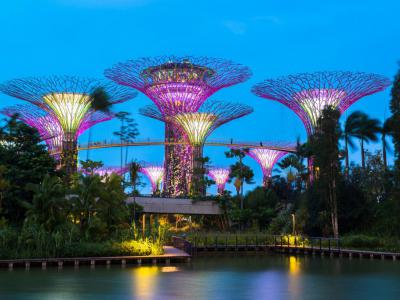
Supertrees are a set of 18 tree-like structures that dominate the landscape of the Gardens. They vary in height from 25 meters (82 feet) to 50 meters (160 feet). These structures essentially function as vertical gardens, serving multiple purposes, including planting, providing shade, and acting as environmental tools for the gardens.
Within the Supertrees, you'll find clusters of unique and exotic plant species like ferns, vines, orchids, and a wide assortment of bromeliads, such as Tillandsia. They incorporate environmental technologies designed to mimic the ecological roles of natural trees. For instance, they have photovoltaic cells that capture solar energy, much like how trees photosynthesize, and they collect rainwater for use in irrigation and fountain displays, similar to how trees absorb rainwater for growth. Additionally, the Supertrees contribute to the cooling systems of the conservatories by serving as air intake and exhaust components.
Visitors can enjoy an elevated walkway called the OCBC Skyway, which connects two of the larger Supertrees and offers a panoramic aerial view of the Gardens. Every evening at 7:45pm and 8:45pm, the Supertree Grove hosts a coordinated light and music show known as the Garden Rhapsody. The music for the show changes monthly, featuring themes like "A World of Wonder" and "A Night of Musical Theatre," which include excerpts from movies such as Jurassic Park and Pirates of the Caribbean.
There's also a relatively new attraction known as the Supertree Observatory, which opened on December 27, 2019. It is housed within the tallest Supertree, standing at 50 meters tall, and consists of three levels: the ground floor, the Observatory Space, and the Open-Air Rooftop Deck. Visitors can take an elevator to the Observatory Space and then climb a flight of stairs to reach the Rooftop Deck. The Observatory Space features an indoor area with floor-to-ceiling glass windows and an outdoor walkway around the perimeter. Here, visitors can experience a message about the impacts of climate change conveyed through digital media. The Open-Air Rooftop Deck, situated atop this Supertree canopy, provides unobstructed 360-degree views of the Gardens and the Marina Bay area.
Within the Supertrees, you'll find clusters of unique and exotic plant species like ferns, vines, orchids, and a wide assortment of bromeliads, such as Tillandsia. They incorporate environmental technologies designed to mimic the ecological roles of natural trees. For instance, they have photovoltaic cells that capture solar energy, much like how trees photosynthesize, and they collect rainwater for use in irrigation and fountain displays, similar to how trees absorb rainwater for growth. Additionally, the Supertrees contribute to the cooling systems of the conservatories by serving as air intake and exhaust components.
Visitors can enjoy an elevated walkway called the OCBC Skyway, which connects two of the larger Supertrees and offers a panoramic aerial view of the Gardens. Every evening at 7:45pm and 8:45pm, the Supertree Grove hosts a coordinated light and music show known as the Garden Rhapsody. The music for the show changes monthly, featuring themes like "A World of Wonder" and "A Night of Musical Theatre," which include excerpts from movies such as Jurassic Park and Pirates of the Caribbean.
There's also a relatively new attraction known as the Supertree Observatory, which opened on December 27, 2019. It is housed within the tallest Supertree, standing at 50 meters tall, and consists of three levels: the ground floor, the Observatory Space, and the Open-Air Rooftop Deck. Visitors can take an elevator to the Observatory Space and then climb a flight of stairs to reach the Rooftop Deck. The Observatory Space features an indoor area with floor-to-ceiling glass windows and an outdoor walkway around the perimeter. Here, visitors can experience a message about the impacts of climate change conveyed through digital media. The Open-Air Rooftop Deck, situated atop this Supertree canopy, provides unobstructed 360-degree views of the Gardens and the Marina Bay area.
5) Cloud Forest (must see)
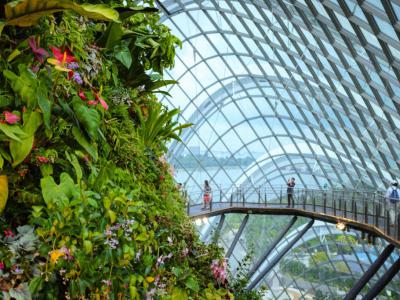
The Cloud Forest at Gardens by the Bay stands as one of Singapore's most remarkable attractions. This extraordinary glass dome, resembling a massive greenhouse, is visible from afar and is equally captivating from the inside. This expansive, climate-controlled structure boasts winding pathways and boasts one of the world's tallest indoor waterfalls, cascading from a height of over 30 meters.
Given Singapore's perennially hot climate, a visit to the Cloud Forest offers more than just a respite from the heat. Thanks to modern cooling systems, the dispersal of refreshing mist, and the presence of the majestic waterfall, the interior maintains a cool atmosphere, simulating the humid conditions found in misty tropical mountains ranging from 900 to 2,700 meters above sea level. Notably, the centerpiece of this attraction is the 42-meter "Cloud Mountain." After taking an elevator to its summit, visitors descend along a circular path that passes under the 35-meter waterfall several times.
The "Cloud Mountain" itself is a complex structure enveloped in epiphytic plants like orchids, ferns, peacock ferns, spike- and clubmosses, bromeliads, and anthuriums. The design, conceived by Grant Associates, draws inspiration from the Maiden Hair Fungus and features multiple tiers, each with a unique theme, including The Lost World, The Cavern, The Waterfall View, The Crystal Mountain, The Cloud Forest Gallery, The Cloud Forest Theatre, and The Secret Garden.
Given Singapore's perennially hot climate, a visit to the Cloud Forest offers more than just a respite from the heat. Thanks to modern cooling systems, the dispersal of refreshing mist, and the presence of the majestic waterfall, the interior maintains a cool atmosphere, simulating the humid conditions found in misty tropical mountains ranging from 900 to 2,700 meters above sea level. Notably, the centerpiece of this attraction is the 42-meter "Cloud Mountain." After taking an elevator to its summit, visitors descend along a circular path that passes under the 35-meter waterfall several times.
The "Cloud Mountain" itself is a complex structure enveloped in epiphytic plants like orchids, ferns, peacock ferns, spike- and clubmosses, bromeliads, and anthuriums. The design, conceived by Grant Associates, draws inspiration from the Maiden Hair Fungus and features multiple tiers, each with a unique theme, including The Lost World, The Cavern, The Waterfall View, The Crystal Mountain, The Cloud Forest Gallery, The Cloud Forest Theatre, and The Secret Garden.
6) Marina Bay (must see)
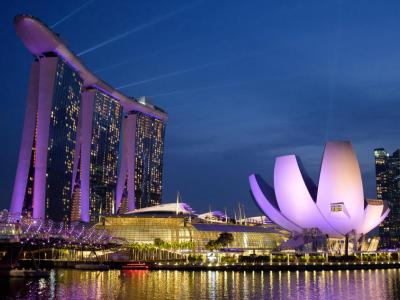
Roll into Marina Bay, and you quickly realise you’ve stepped into Singapore’s favourite showroom—an entire 360-hectare stage built on reclaimed land and polished into what many now call the city’s “new downtown.” Surrounded by the Downtown Core, Marina East, Marina South, and Straits View, the bay feels like the point where Singapore looked at the sea and probably thought, “Why not have a bit more land here?” and then went ahead and made it happen.
Here, the skyline performs graciously. Marina Bay Sands leans in with its iconic three-tower silhouette, Marina Bay Financial Centre and Asia Square compete for the title of “Most Serious Business Address,” and The Sail@Marina Bay stretches upward like it’s trying to catch a breeze that doesn’t exist. Marina One rounds out the cast with lush greenery tucked between its futuristic curves. The Urban Redevelopment Authority treats this whole district like its prized project, imagining Marina Bay as a 24-hour playground where you can work all day, enjoy dinner with a view, and still squeeze in a late-night stroll without ever leaving the neighbourhood.
And if you think the place only looks dramatic, wait until you hear it. Since 2008, the Formula One Singapore Grand Prix has turned the streets around the bay into a glowing, high-speed racetrack. The Float@Marina Bay—built in 2007—has hosted everything from National Day Parades and New Year’s Eve countdowns to fireworks festivals and the Opening and Closing Ceremonies of the first-ever Youth Olympic Games in 2010. It’s basically the city’s open-air living room, only with better lighting and a much larger guest list.
For something gentler but just as striking, the annual i Light Marina Bay festival transforms the waterfront with glowing, eco-friendly art installations. It’s a reminder that even in the middle of all the steel and glass, Singapore still enjoys a moment of creative play.
In other words, Marina Bay is where Singapore is showing off, and doing it very well...
Here, the skyline performs graciously. Marina Bay Sands leans in with its iconic three-tower silhouette, Marina Bay Financial Centre and Asia Square compete for the title of “Most Serious Business Address,” and The Sail@Marina Bay stretches upward like it’s trying to catch a breeze that doesn’t exist. Marina One rounds out the cast with lush greenery tucked between its futuristic curves. The Urban Redevelopment Authority treats this whole district like its prized project, imagining Marina Bay as a 24-hour playground where you can work all day, enjoy dinner with a view, and still squeeze in a late-night stroll without ever leaving the neighbourhood.
And if you think the place only looks dramatic, wait until you hear it. Since 2008, the Formula One Singapore Grand Prix has turned the streets around the bay into a glowing, high-speed racetrack. The Float@Marina Bay—built in 2007—has hosted everything from National Day Parades and New Year’s Eve countdowns to fireworks festivals and the Opening and Closing Ceremonies of the first-ever Youth Olympic Games in 2010. It’s basically the city’s open-air living room, only with better lighting and a much larger guest list.
For something gentler but just as striking, the annual i Light Marina Bay festival transforms the waterfront with glowing, eco-friendly art installations. It’s a reminder that even in the middle of all the steel and glass, Singapore still enjoys a moment of creative play.
In other words, Marina Bay is where Singapore is showing off, and doing it very well...
7) Merlion Park and Statue (must see)
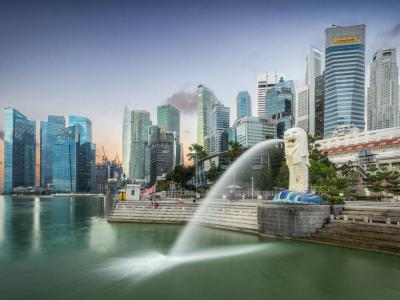
No visit to Singapore feels quite “official” until you’ve met the Merlion—the city’s most famous resident who, despite being made of stone, still manages to greet more tourists than anyone else. This half-fish, half-lion creature has been Singapore’s mascot since 1964, and its design sums up the country’s story in one glance: the fish nods to old Temasek, a humble fishing village, while the lion’s head traces back to the legend that inspired the name “Singapura,” or the “Lion City” in Sanskrit.
The Merlion may look unique, but it actually has distant cousins scattered across history. Lions with fishtails show up on ancient murals in Ajanta and Mathura in India, appear on Etruscan coins, and even swim through Western heraldry. Variations of this creature decorate the coats of arms of Portsmouth and Great Yarmouth in the UK, the City of Manila, and the old East India Company. In other words, Singapore didn’t invent the sea-lion—it just made it iconic.
Kitschy or not, the Merlion knows how to work a crowd. At nine meters tall and constantly spouting water, it offers prime views over Marina Bay, with the city’s skyscrapers rising behind it and the Singapore Flyer peeking in—that is, if you stand in just the right spot. And if you’ve already toasted the city with a Singapore Sling (an iconic gin-based cocktail invented at the Long Bar in Singapore's Raffles Hotel), dropping by to see the Merlion feels like the natural sequel.
Yes, it gets crowded. Everyone wants their moment with the stone celebrity. But the flow of people moves fast, and with a bit of patience, you’ll get your photo. Or, even better, take a breather, look around, and enjoy the scene. The Merlion may be quirky, but its little corner of the bay has a charm that always lands with visitors...
The Merlion may look unique, but it actually has distant cousins scattered across history. Lions with fishtails show up on ancient murals in Ajanta and Mathura in India, appear on Etruscan coins, and even swim through Western heraldry. Variations of this creature decorate the coats of arms of Portsmouth and Great Yarmouth in the UK, the City of Manila, and the old East India Company. In other words, Singapore didn’t invent the sea-lion—it just made it iconic.
Kitschy or not, the Merlion knows how to work a crowd. At nine meters tall and constantly spouting water, it offers prime views over Marina Bay, with the city’s skyscrapers rising behind it and the Singapore Flyer peeking in—that is, if you stand in just the right spot. And if you’ve already toasted the city with a Singapore Sling (an iconic gin-based cocktail invented at the Long Bar in Singapore's Raffles Hotel), dropping by to see the Merlion feels like the natural sequel.
Yes, it gets crowded. Everyone wants their moment with the stone celebrity. But the flow of people moves fast, and with a bit of patience, you’ll get your photo. Or, even better, take a breather, look around, and enjoy the scene. The Merlion may be quirky, but its little corner of the bay has a charm that always lands with visitors...
8) Orchard Road (must see)
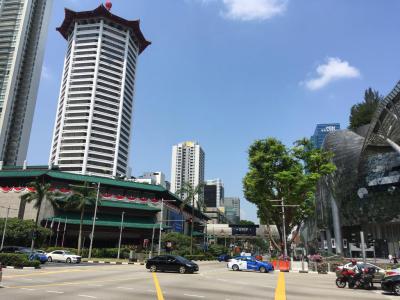
Orchard Road, often informally referred to as Orchard, is a prominent 2.5-kilometer (1.6-mile) long street situated in the Central Area of Singapore. This well-known destination is a high-end shopping district, featuring numerous internationally acclaimed department stores, restaurants, and coffee shops in its vicinity.
The Orchard Planning Area is a designated urban planning region outlined by the Urban Redevelopment Authority. It forms a part of the Central Area within the broader Central Region of Singapore. Orchard is flanked by Newton to the east and north, Tanglin to the west, River Valley to the south, and Museum to the southeast.
The name Orchard Road originates from the nutmeg, pepper, and fruit orchards or plantations that were once found at the end of this road. Such plantations were prevalent in the area during the 19th century.
At the eastern terminus of Orchard Road stands the Istana, the official residence of the President of Singapore, surrounded by Nibong palms. The house of Singapore's first Prime Minister, Lee Kuan Yew, is situated on Oxley Road, just south of Orchard Road. On the western side lies the UNESCO World Heritage Site, the Singapore Botanic Gardens.
Approximately midway down the road, you'll find Cairnhill and Emerald Hill, which are residential neighborhoods. Adjacent to Emerald Hill is Centrepoint, housing the oldest business in the area, Cold Storage. Specialists' Shopping Centre replaced Pavilion Cinema but was subsequently demolished to make room for Orchard Gateway. Scotts Road, located just off Orchard Road, was once home to Singapore's inaugural food court, which was replaced by Scotts Square in June 2007.
Notable shopping malls along Orchard Road include ION Orchard, Wisma Atria, Ngee Ann City, Orchard Central, Orchard Gateway, 313 @ Somerset, Orchard Plaza, Plaza Singapura, The Centrepoint, The Heeren, Mandarin Gallery, Cathay Cineleisure Orchard, Wheelock Place, Liat Towers, Shaw House, and Scotts Square.
Why You Should Visit:
Shopping malls after shopping malls after shopping malls... all air-conditioned and sometimes interconnected.
This is a very happening street, with all the street artists performing and the bargains on the roadside.
Tip:
The best time to visit is at night time when the street is lit up!
For budget travelers, go to food courts at the bottom levels of plazas.
You can buy spirits & wines at a bargain price at “Bottles & Bottles” at Center Point.
The Orchard Planning Area is a designated urban planning region outlined by the Urban Redevelopment Authority. It forms a part of the Central Area within the broader Central Region of Singapore. Orchard is flanked by Newton to the east and north, Tanglin to the west, River Valley to the south, and Museum to the southeast.
The name Orchard Road originates from the nutmeg, pepper, and fruit orchards or plantations that were once found at the end of this road. Such plantations were prevalent in the area during the 19th century.
At the eastern terminus of Orchard Road stands the Istana, the official residence of the President of Singapore, surrounded by Nibong palms. The house of Singapore's first Prime Minister, Lee Kuan Yew, is situated on Oxley Road, just south of Orchard Road. On the western side lies the UNESCO World Heritage Site, the Singapore Botanic Gardens.
Approximately midway down the road, you'll find Cairnhill and Emerald Hill, which are residential neighborhoods. Adjacent to Emerald Hill is Centrepoint, housing the oldest business in the area, Cold Storage. Specialists' Shopping Centre replaced Pavilion Cinema but was subsequently demolished to make room for Orchard Gateway. Scotts Road, located just off Orchard Road, was once home to Singapore's inaugural food court, which was replaced by Scotts Square in June 2007.
Notable shopping malls along Orchard Road include ION Orchard, Wisma Atria, Ngee Ann City, Orchard Central, Orchard Gateway, 313 @ Somerset, Orchard Plaza, Plaza Singapura, The Centrepoint, The Heeren, Mandarin Gallery, Cathay Cineleisure Orchard, Wheelock Place, Liat Towers, Shaw House, and Scotts Square.
Why You Should Visit:
Shopping malls after shopping malls after shopping malls... all air-conditioned and sometimes interconnected.
This is a very happening street, with all the street artists performing and the bargains on the roadside.
Tip:
The best time to visit is at night time when the street is lit up!
For budget travelers, go to food courts at the bottom levels of plazas.
You can buy spirits & wines at a bargain price at “Bottles & Bottles” at Center Point.
