Custom Walk in Reykjavik, Iceland by dianereid54_7b5b9 created on 2025-04-17
Guide Location: Iceland » Reykjavik
Guide Type: Custom Walk
# of Sights: 9
Tour Duration: 2 Hour(s)
Travel Distance: 2.8 Km or 1.7 Miles
Share Key: CFYBC
Guide Type: Custom Walk
# of Sights: 9
Tour Duration: 2 Hour(s)
Travel Distance: 2.8 Km or 1.7 Miles
Share Key: CFYBC
How It Works
Please retrieve this walk in the GPSmyCity app. Once done, the app will guide you from one tour stop to the next as if you had a personal tour guide. If you created the walk on this website or come to the page via a link, please follow the instructions below to retrieve the walk in the app.
Retrieve This Walk in App
Step 1. Download the app "GPSmyCity: Walks in 1K+ Cities" on Apple App Store or Google Play Store.



Step 2. In the GPSmyCity app, download(or launch) the guide "Reykjavik Map and Walking Tours".
Step 3. Tap the menu button located at upper right corner of the "Walks" screen and select "Retrieve custom walk". Enter the share key: CFYBC
1) Austurvöllur Square
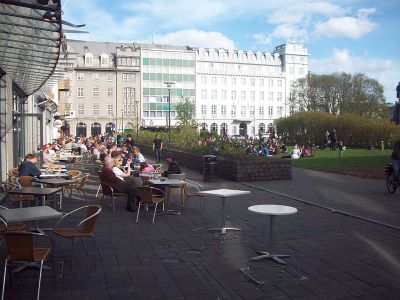
Austurvöllur Square serves as the main public square in Reykjavík and a focal point of both daily life and national identity. The square took shape in the 18th and 19th centuries as Reykjavík developed into an administrative centre. Originally an open field on the eastern side of the early settlement—reflected in its name, meaning “Eastern Field”—it gradually evolved into a structured space framed by key landmarks, including the Parliament House, Reykjavík Cathedral, and Hotel Borg, along with a concentration of cafés, restaurants, and bars.
At the centre of the square stands a statue of Jón Sigurðsson, unveiled in 1911 to mark the centenary of his birth. Nearby, Hotel Borg adds another historical layer: built in 1930 by Jóhannes Jósefsson, who competed in the 1908 Summer Olympics, the Art Deco building was conceived as a luxury hotel ahead of the 1,000th anniversary of Iceland’s parliament and has since hosted politicians, dignitaries, and celebrities.
Today, Austurvöllur functions as both a gathering place and a social hub. In summer, the square fills with locals and visitors enjoying outdoor cafés and open space, while in winter it takes on a quieter atmosphere, often marked by the presence of a large Christmas tree.
At the centre of the square stands a statue of Jón Sigurðsson, unveiled in 1911 to mark the centenary of his birth. Nearby, Hotel Borg adds another historical layer: built in 1930 by Jóhannes Jósefsson, who competed in the 1908 Summer Olympics, the Art Deco building was conceived as a luxury hotel ahead of the 1,000th anniversary of Iceland’s parliament and has since hosted politicians, dignitaries, and celebrities.
Today, Austurvöllur functions as both a gathering place and a social hub. In summer, the square fills with locals and visitors enjoying outdoor cafés and open space, while in winter it takes on a quieter atmosphere, often marked by the presence of a large Christmas tree.
2) Bæjarins beztu (The Town's Best Hot Dogs)
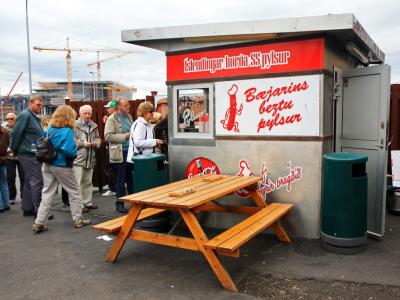
"The Town's Best Hot Dogs" (Bæjarins Beztu Pylsur) is a small chain of hot dog stands in Reykjavík. This chain has been in continuous operation since 1937 when it was originally established on Austurstræti street, right at the heart of the city. It was founded by the grandfather of the current owner, Guðrún Kristmundsdóttir. In the 1960s, the stand relocated a couple of streets north to Tryggvagata, right across from the Harpa Concert Hall, where the main flagship stand still operates today.
In August 2004, the stand gained widespread attention when it was visited by the former President of the United States, Bill Clinton, during his trip to Iceland for a UNICEF conference. This high-profile visit significantly boosted the stand's popularity, leading to its inclusion in various tourist guidebooks about Iceland. Just two years later, in August 2006, the renowned British newspaper, The Guardian, declared Bæjarins Beztu as the best hot dog stand in Europe.
Today, this chain is a favorite among both tourists and local residents alike. There are three more locations within the city, collectively selling over a thousand hot dogs on a bustling day.
The hot dogs offered by Bæjarins Beztu are primarily lamb-based but also contain pork and beef. They are served in a bun and come with a variety of condiment options, including ketchup, sweet mustard, remoulade, crispy fried onions, and raw onions. Customers who wish to have all the available toppings often use the Icelandic phrase "eina með öllu," which translates to "one with everything" in English.
In August 2004, the stand gained widespread attention when it was visited by the former President of the United States, Bill Clinton, during his trip to Iceland for a UNICEF conference. This high-profile visit significantly boosted the stand's popularity, leading to its inclusion in various tourist guidebooks about Iceland. Just two years later, in August 2006, the renowned British newspaper, The Guardian, declared Bæjarins Beztu as the best hot dog stand in Europe.
Today, this chain is a favorite among both tourists and local residents alike. There are three more locations within the city, collectively selling over a thousand hot dogs on a bustling day.
The hot dogs offered by Bæjarins Beztu are primarily lamb-based but also contain pork and beef. They are served in a bun and come with a variety of condiment options, including ketchup, sweet mustard, remoulade, crispy fried onions, and raw onions. Customers who wish to have all the available toppings often use the Icelandic phrase "eina með öllu," which translates to "one with everything" in English.
3) Kolaportið
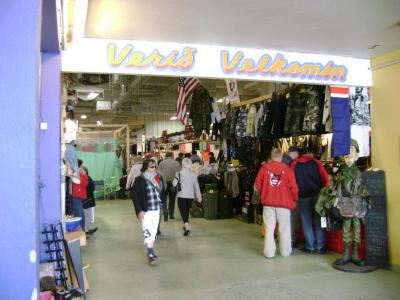
Are you looking for something specific? Perhaps an old-fashioned lamp, a modern vegetable knife, or maybe curious about tasting dried fish and fermented shark? How about acquiring a pack of unique Icelandic sweets or selecting a stylish outfit for your weekend plans? Kolaportið, Iceland's sole flea market, is your go-to destination for these and more. This indoor marketplace operates on weekends from 11:00 am to 5:00 pm and sometimes on public holidays. Situated in a vintage industrial edifice near Reykjavik's harbour, it lies between the renowned Bæjarins Beztu hot dog stand and the Old Harbour.
Kolaportið offers a distinctive vibe, attracting a diverse crowd every weekend. Visitors can browse for books, antiques, and clothing, or explore the food court for groceries. It's a place where used items find grateful new owners at fair prices, and where you can sift through various goods to uncover unexpected finds. It's akin to a treasure hunt. Cash transactions are predominant, so it's advisable to have cash on hand, although there's an ATM near one of the entrances, and a cafeteria for when hunger strikes.
Remember, one person's discard may be your new treasure. So, make it a point to start early on weekends at Kolaportið. Here, you can fill your bags with second-hand clothing, artifacts, Icelandic specialties, music, toys, and much more. The market is welcoming, genuine, and humble, ensuring that visitors leave with something special in hand.
Kolaportið offers a distinctive vibe, attracting a diverse crowd every weekend. Visitors can browse for books, antiques, and clothing, or explore the food court for groceries. It's a place where used items find grateful new owners at fair prices, and where you can sift through various goods to uncover unexpected finds. It's akin to a treasure hunt. Cash transactions are predominant, so it's advisable to have cash on hand, although there's an ATM near one of the entrances, and a cafeteria for when hunger strikes.
Remember, one person's discard may be your new treasure. So, make it a point to start early on weekends at Kolaportið. Here, you can fill your bags with second-hand clothing, artifacts, Icelandic specialties, music, toys, and much more. The market is welcoming, genuine, and humble, ensuring that visitors leave with something special in hand.

4) Prikid
Located along Laugavegur in Reykjavík, Prikid is one of the city’s longest-running coffee houses and restaurants, opening its doors in 1951. It began as a modest café at a time when coffee culture was still developing in Iceland and has since evolved into a well-known social hub. The brightly coloured exterior makes it easy to spot, while the classic interior—with its narrow layout, wooden furnishings, and retro touches—gives the space a timeless, lived-in feel that reflects decades of local life.
Throughout the day, Prikid shifts in rhythm. Mornings are relaxed, with visitors stopping in for coffee or a filling breakfast, while afternoons often bring a mix of locals and families grabbing a casual meal. The menu leans toward comforting bar food, with burgers as a staple, alongside coffee, vegan options, and a well-known milkshake that, despite its nickname, no longer costs five dollars.
By evening, the atmosphere becomes livelier. Prikid turns into a casual bar offering relatively affordable drinks—something notable in an otherwise expensive city—with happy hour deals such as two-for-one beers. On weekends in particular, it becomes a focal point for nightlife, with DJs, live music, and occasional stand-up performances drawing a steady crowd. This steady transition from café to bar makes Prikid a compact introduction to Reykjavík’s everyday social scene.
Throughout the day, Prikid shifts in rhythm. Mornings are relaxed, with visitors stopping in for coffee or a filling breakfast, while afternoons often bring a mix of locals and families grabbing a casual meal. The menu leans toward comforting bar food, with burgers as a staple, alongside coffee, vegan options, and a well-known milkshake that, despite its nickname, no longer costs five dollars.
By evening, the atmosphere becomes livelier. Prikid turns into a casual bar offering relatively affordable drinks—something notable in an otherwise expensive city—with happy hour deals such as two-for-one beers. On weekends in particular, it becomes a focal point for nightlife, with DJs, live music, and occasional stand-up performances drawing a steady crowd. This steady transition from café to bar makes Prikid a compact introduction to Reykjavík’s everyday social scene.
5) Laugavegur Street (must see)
Laugavegur is Reykjavík’s principal commercial street and one of the city’s oldest thoroughfares, stretching just over two kilometers through the heart of the capital. Its name translates to “Wash Road,” a reference to the route once used by local women carrying laundry to the geothermal pools of Laugardalur. Established in the late 19th century, the street gradually developed into a centre of trade and daily life.
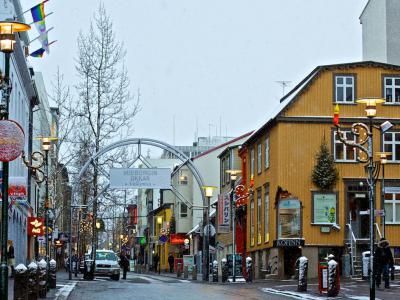
Today, Laugavegur forms the backbone of the city centre, lined with colorful, low-rise buildings and a steady flow of pedestrian activity. Visitors will find a wide range of boutique shops, many showcasing Icelandic design, fashion, and craftsmanship, alongside bookstores and souvenir shops offering everything from locally produced goods to familiar keepsakes. The street also has a noticeable mix of vintage stores and second-hand shops, adding variety to the shopping experience.
Food and drink are central to the street’s appeal. Restaurants, cafés, and bars line the route, offering both traditional Icelandic dishes and a range of international options, including vegan cuisine. As evening approaches, Laugavegur shifts into one of Reykjavík’s main nightlife areas, with venues hosting live music and late-night gatherings. Spots like Lebowski Bar add a more playful atmosphere, combining themed interiors with food, drinks, and interactive elements.
Today, Laugavegur forms the backbone of the city centre, lined with colorful, low-rise buildings and a steady flow of pedestrian activity. Visitors will find a wide range of boutique shops, many showcasing Icelandic design, fashion, and craftsmanship, alongside bookstores and souvenir shops offering everything from locally produced goods to familiar keepsakes. The street also has a noticeable mix of vintage stores and second-hand shops, adding variety to the shopping experience.
Food and drink are central to the street’s appeal. Restaurants, cafés, and bars line the route, offering both traditional Icelandic dishes and a range of international options, including vegan cuisine. As evening approaches, Laugavegur shifts into one of Reykjavík’s main nightlife areas, with venues hosting live music and late-night gatherings. Spots like Lebowski Bar add a more playful atmosphere, combining themed interiors with food, drinks, and interactive elements.
6) Hallgrímskirkja (Church of Hallgrímur) (must see)
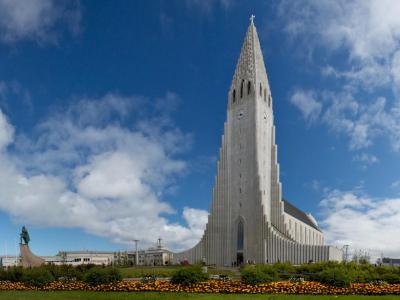
The Church of Hallgrímur is one of the country’s most recognizable landmarks and a symbol of modern Icelandic identity. Designed in 1937, the church was conceived as a reflection of Iceland’s unique geography. Volcanic activity across the island produces lava flows that cool into grey, hexagonal basalt columns, and these dramatic, jagged formations directly inspired the building’s form. Construction began in 1945 and continued for more than four decades, with the church finally consecrated in 1986.
It is named after Hallgrímur Pétursson, a 17th-century figure best known for his devotional work Hymns of the Passion. As a Lutheran place of worship belonging to the Church of Iceland, its imposing height—over 74 meters—was also intended to rival the nearby Catholic cathedral.
The architecture immediately stands out. Its stepped concrete façade resembles cooled lava or a cluster of organ pipes rising upward, giving the church a sculptural, almost geological presence visible from across the city.
Inside, the atmosphere becomes more restrained, with a bright, minimalist interior that emphasizes space and light. The main focal point is the monumental pipe organ, rising about 15 meters tall and composed of 5,275 pipes. Located directly above the main entrance inside the nave, visitors should turn around as they enter the church to see this gargantuan instrument, which weighs over 25 tons. The organ features four manuals and 72 stops; the instrument's sheer power is meant to fill the massive, minimalist hall with sound. Its electronic action system allows the pipes to be operated remotely from the console, and the instrument is frequently used for concerts, especially during summer, when performances are held several times a week.
Visitors are often drawn to the tower, where a lift leads to an observation deck with wide views over the city’s colorful rooftops, the coastline, and surrounding mountains. To reach this highlight at the uppermost level of the 74.5-meter steeple—the highest viewpoint in the city center—take the elevator located in the lobby to the 8th floor, then ascend a final short staircase to the open-air viewing platform. From here, you get a 360-degree view of the colorful corrugated iron roofs of Reykjavík, the Faxaflói Bay, and Mount Esja; on a clear day, you can even spot glaciers.
Outside the entrance stands a statue of Leif Erikson, gifted by the United States in the 1930s to mark the 1,000th anniversary of the Icelandic Parliament, first convened in 930 AD. A small local detail adds character: the large clock on the tower is often inaccurate, as strong Icelandic winds can shift its hands.
It is named after Hallgrímur Pétursson, a 17th-century figure best known for his devotional work Hymns of the Passion. As a Lutheran place of worship belonging to the Church of Iceland, its imposing height—over 74 meters—was also intended to rival the nearby Catholic cathedral.
The architecture immediately stands out. Its stepped concrete façade resembles cooled lava or a cluster of organ pipes rising upward, giving the church a sculptural, almost geological presence visible from across the city.
Inside, the atmosphere becomes more restrained, with a bright, minimalist interior that emphasizes space and light. The main focal point is the monumental pipe organ, rising about 15 meters tall and composed of 5,275 pipes. Located directly above the main entrance inside the nave, visitors should turn around as they enter the church to see this gargantuan instrument, which weighs over 25 tons. The organ features four manuals and 72 stops; the instrument's sheer power is meant to fill the massive, minimalist hall with sound. Its electronic action system allows the pipes to be operated remotely from the console, and the instrument is frequently used for concerts, especially during summer, when performances are held several times a week.
Visitors are often drawn to the tower, where a lift leads to an observation deck with wide views over the city’s colorful rooftops, the coastline, and surrounding mountains. To reach this highlight at the uppermost level of the 74.5-meter steeple—the highest viewpoint in the city center—take the elevator located in the lobby to the 8th floor, then ascend a final short staircase to the open-air viewing platform. From here, you get a 360-degree view of the colorful corrugated iron roofs of Reykjavík, the Faxaflói Bay, and Mount Esja; on a clear day, you can even spot glaciers.
Outside the entrance stands a statue of Leif Erikson, gifted by the United States in the 1930s to mark the 1,000th anniversary of the Icelandic Parliament, first convened in 930 AD. A small local detail adds character: the large clock on the tower is often inaccurate, as strong Icelandic winds can shift its hands.
7) Fríkirkjan (Free Church)
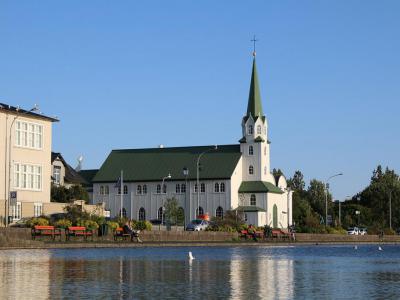
The Free Church in Reykjavik (Fríkirkjan í Reykjavík) is a separate Lutheran church from Iceland's main church, the Church of Iceland. It's located right in the heart of Iceland's capital city, next to the Tjörnin lake.
This church started in Reykjavik back in the fall of 1899. Initially, around 600 people joined, and this number quickly increased. The Free Church took inspiration from similar churches in Norway and ones set up by Icelanders who moved to North America. They wanted a church that felt more connected to everyday people. Also, Reykjavik was rapidly growing with new neighborhoods and more residents, but the Reykjavik Cathedral couldn't keep up with the needs of the expanding community, especially as more craftsmen and tradespeople settled in.
Not long after this new church group got started, they picked a spot for their church near the lake's eastern side. The church was officially opened on February 22, 1903. Just two years later, they had to make it bigger, following a design by an architect named Rögnvaldur Ólafsson. Then, in 1924, they expanded it again. They added a chancel made of concrete on the east side and made some other changes to the building. All of this was overseen by a master builder, Guðmundur H. Þorláksson.
This church started in Reykjavik back in the fall of 1899. Initially, around 600 people joined, and this number quickly increased. The Free Church took inspiration from similar churches in Norway and ones set up by Icelanders who moved to North America. They wanted a church that felt more connected to everyday people. Also, Reykjavik was rapidly growing with new neighborhoods and more residents, but the Reykjavik Cathedral couldn't keep up with the needs of the expanding community, especially as more craftsmen and tradespeople settled in.
Not long after this new church group got started, they picked a spot for their church near the lake's eastern side. The church was officially opened on February 22, 1903. Just two years later, they had to make it bigger, following a design by an architect named Rögnvaldur Ólafsson. Then, in 1924, they expanded it again. They added a chancel made of concrete on the east side and made some other changes to the building. All of this was overseen by a master builder, Guðmundur H. Þorláksson.
8) Tjornin Lake
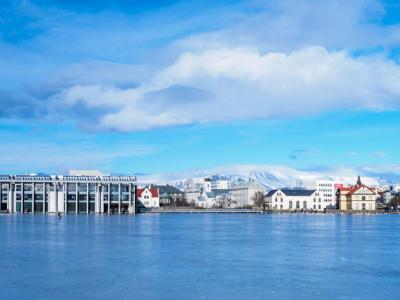
Tjörnin (The Pond) is a small lake located in the heart of Reykjavík. It's a common sight for tourists, being next to Reykjavik City Hall and various museums. Historically, it formed from a lagoon that was once part of a reef where Harbour Street (Hafnarstræti) now is. This street runs along the southern edge of the lake and leads to nearby gardens.
In winter, The Pond freezes at times, becoming a popular spot for ice skating. It's relatively shallow, with an average depth of 0.57 meters (about 1.9 feet) and a maximum depth of 0.8 meters (around 2.4 feet). Paved paths run along both sides of the lake, ending at the Concert Hall Park (Hljómskálagarður), adorned with statues, to its south. These paths are often used by joggers and cyclists, and there are boards displaying daily bird counts on the lake.
The Pond is a haven for birdwatchers, attracting 40 to 50 types of water birds, like the Arctic tern, Eider, Gadwall, Greylag goose, different goose species, Mallard, various seagulls, and the scaup. It's also a great spot to see Whooper swans up close. The arrival of the Arctic tern is a sign of summer's beginning, drawing bird enthusiasts from across the North Atlantic. The lake is a popular place for parents to bring children to watch and feed birds, earning it the playful nickname "the biggest bread soup in the world."
A wooden bridge for pedestrians was built over The Pond in 1920. To better support vehicles, it was replaced with a concrete bridge in 1942, which remains in use today.
In winter, The Pond freezes at times, becoming a popular spot for ice skating. It's relatively shallow, with an average depth of 0.57 meters (about 1.9 feet) and a maximum depth of 0.8 meters (around 2.4 feet). Paved paths run along both sides of the lake, ending at the Concert Hall Park (Hljómskálagarður), adorned with statues, to its south. These paths are often used by joggers and cyclists, and there are boards displaying daily bird counts on the lake.
The Pond is a haven for birdwatchers, attracting 40 to 50 types of water birds, like the Arctic tern, Eider, Gadwall, Greylag goose, different goose species, Mallard, various seagulls, and the scaup. It's also a great spot to see Whooper swans up close. The arrival of the Arctic tern is a sign of summer's beginning, drawing bird enthusiasts from across the North Atlantic. The lake is a popular place for parents to bring children to watch and feed birds, earning it the playful nickname "the biggest bread soup in the world."
A wooden bridge for pedestrians was built over The Pond in 1920. To better support vehicles, it was replaced with a concrete bridge in 1942, which remains in use today.
9) Dómkirkjan (Reykjavík Cathedral)
Standing beside Austurvöllur Square, Reykjavík Cathedral is one of the city’s most historically significant religious buildings and a central part of Iceland’s civic life. The site has been dedicated to churches since the 13th century, while the present neoclassical structure was designed by Andreas Kirkerup in the late 18th century. Construction began in 1788, and the cathedral was consecrated in 1796, becoming the first building completed with the idea that Reykjavík would develop into the nation’s capital.
Today, it serves as the seat of the Bishop of Iceland, the Evangelical Lutheran Church of Iceland, and the parish church for the city centre. Since 1845, each parliamentary session traditionally begins with a mass here, before members proceed together to the parliament house. The central altar area where this occurs is located at the front of the nave, serving as the spiritual heart of the building; to find it, walk straight down the center aisle toward the east end of the church to see the focal point of the chancel—the altarpiece—where the Althingi gathers.
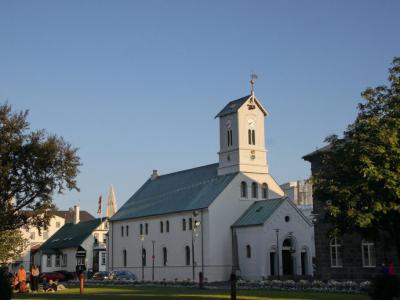
Architecturally, the cathedral remains modest in scale. Its white façade, clean lines, and restrained neoclassical design blend naturally into the square rather than dominating it. Inside, the atmosphere is calm and intimate, with simple wooden elements and soft light. Directly in front of the altar stands the masterpiece by Thorvaldsen; once you find yourself at the front of the nave, look for the delicate carvings on this white marble baptismal font, which was a gift from the world-renowned Danish-Icelandic sculptor.
Additionally, the monumental Schuke pipe organ represents a peak of the cathedral's musical life; to find this highlight, turn around immediately after entering the main doors and look upward toward the rear gallery to see the instrument. It features 31 voices and three manuals and it was built in 1985 by the Karl Schuke factory.
National traditions remain closely tied to the building: Christmas mass is broadcast across the country, and new presidents are inaugurated here. Set among cafés and government buildings, it reflects the close relationship between religion, history, and public life in Reykjavík.
Today, it serves as the seat of the Bishop of Iceland, the Evangelical Lutheran Church of Iceland, and the parish church for the city centre. Since 1845, each parliamentary session traditionally begins with a mass here, before members proceed together to the parliament house. The central altar area where this occurs is located at the front of the nave, serving as the spiritual heart of the building; to find it, walk straight down the center aisle toward the east end of the church to see the focal point of the chancel—the altarpiece—where the Althingi gathers.
Architecturally, the cathedral remains modest in scale. Its white façade, clean lines, and restrained neoclassical design blend naturally into the square rather than dominating it. Inside, the atmosphere is calm and intimate, with simple wooden elements and soft light. Directly in front of the altar stands the masterpiece by Thorvaldsen; once you find yourself at the front of the nave, look for the delicate carvings on this white marble baptismal font, which was a gift from the world-renowned Danish-Icelandic sculptor.
Additionally, the monumental Schuke pipe organ represents a peak of the cathedral's musical life; to find this highlight, turn around immediately after entering the main doors and look upward toward the rear gallery to see the instrument. It features 31 voices and three manuals and it was built in 1985 by the Karl Schuke factory.
National traditions remain closely tied to the building: Christmas mass is broadcast across the country, and new presidents are inaugurated here. Set among cafés and government buildings, it reflects the close relationship between religion, history, and public life in Reykjavík.
