Custom Walk in Key West, Florida by cgpollock_5fe9e created on 2025-04-23
Guide Location: USA » Key West
Guide Type: Custom Walk
# of Sights: 14
Tour Duration: 4 Hour(s)
Travel Distance: 7.1 Km or 4.4 Miles
Share Key: U65SB
Guide Type: Custom Walk
# of Sights: 14
Tour Duration: 4 Hour(s)
Travel Distance: 7.1 Km or 4.4 Miles
Share Key: U65SB
How It Works
Please retrieve this walk in the GPSmyCity app. Once done, the app will guide you from one tour stop to the next as if you had a personal tour guide. If you created the walk on this website or come to the page via a link, please follow the instructions below to retrieve the walk in the app.
Retrieve This Walk in App
Step 1. Download the app "GPSmyCity: Walks in 1K+ Cities" on Apple App Store or Google Play Store.



Step 2. In the GPSmyCity app, download(or launch) the guide "Key West Map and Walking Tours".
Step 3. Tap the menu button located at upper right corner of the "Walks" screen and select "Retrieve custom walk". Enter the share key: U65SB
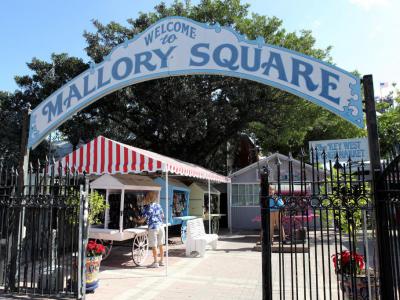
1) Mallory Square (must see)
Fronting on the world-famous Sunset Pier in the heart of Old Town Key West, Mallory Square is known for its stunning sunsets, street shows, and lively atmosphere.
The square is named after Stephen Russell Mallory, a U.S. Senator and Secretary of the Navy for the Confederacy during the American Civil War. In the early 1800s, it was used as a naval base for the U.S. Navy and, later, as a commercial port, with ships bringing goods from the Caribbean and other parts of the world. During much of the 19th century, Key West was a hub for the salvaging of shipwrecks; many of the recovered items were sold in Mallory Square.
The tradition of celebrating the sunset began here in the 1960s. Local artists and performers would gather in the evening to marvel at the sun going down over the water, and eventually, crowds began to form and join in on the festivities.
Street performers – such as fire eaters, jugglers, musicians, and other wacky tricksters – are a standalone attraction at Mallory. To perform in the square they must audition and be licensed by the city. The performers range from a one-man band and fire jugglers to world-famous Kwinci, who swallows a 40-inch balloon and walks barefoot on broken glass (you have to see this to believe it).
Then there's Warren Lee, the Sophisticated Swindler. No trip to Key West is complete without seeing Dominique and his Flying House Cats. Somehow, he has trained his cats to jump through hoops of fire and other, very un-cat-like tricks.
In 2017, Mallory Square was severely damaged by Hurricane Irma. However, it was quickly rebuilt and today remains as vibrant and popular a destination as ever.
Why You Should Visit:
People-watching at this popular location is quite fun, as you have all kinds of walks of life here. The breeze is usually pretty refreshing even on hotter and humid days due to the oceanfront location.
Tip:
Bring cash and if you stop to watch, tip the performers – they deserve it. Surrounding are many delightful shops and craftsmen selling their wares, and you can get some nice food and drinks, all coupled with the spectacular view of the sun sinking into the Gulf of Mexico – a photographer's delight.
The square is named after Stephen Russell Mallory, a U.S. Senator and Secretary of the Navy for the Confederacy during the American Civil War. In the early 1800s, it was used as a naval base for the U.S. Navy and, later, as a commercial port, with ships bringing goods from the Caribbean and other parts of the world. During much of the 19th century, Key West was a hub for the salvaging of shipwrecks; many of the recovered items were sold in Mallory Square.
The tradition of celebrating the sunset began here in the 1960s. Local artists and performers would gather in the evening to marvel at the sun going down over the water, and eventually, crowds began to form and join in on the festivities.
Street performers – such as fire eaters, jugglers, musicians, and other wacky tricksters – are a standalone attraction at Mallory. To perform in the square they must audition and be licensed by the city. The performers range from a one-man band and fire jugglers to world-famous Kwinci, who swallows a 40-inch balloon and walks barefoot on broken glass (you have to see this to believe it).
Then there's Warren Lee, the Sophisticated Swindler. No trip to Key West is complete without seeing Dominique and his Flying House Cats. Somehow, he has trained his cats to jump through hoops of fire and other, very un-cat-like tricks.
In 2017, Mallory Square was severely damaged by Hurricane Irma. However, it was quickly rebuilt and today remains as vibrant and popular a destination as ever.
Why You Should Visit:
People-watching at this popular location is quite fun, as you have all kinds of walks of life here. The breeze is usually pretty refreshing even on hotter and humid days due to the oceanfront location.
Tip:
Bring cash and if you stop to watch, tip the performers – they deserve it. Surrounding are many delightful shops and craftsmen selling their wares, and you can get some nice food and drinks, all coupled with the spectacular view of the sun sinking into the Gulf of Mexico – a photographer's delight.
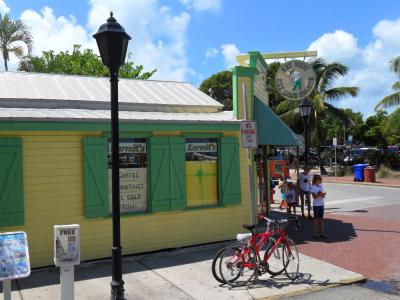
2) Kermit's Key West Key Lime Shoppe
Kermit's Key West Key Lime Shoppe is a well-known culinary destination in Key West. It is famous for its exclusive focus on Key Limes, a unique fruit that only grows in a specific region on Earth, with Key West being its primary location. This particular variety of lime is renowned for its distinct flavor and is the key ingredient in Florida's official state dessert, Key Lime Pie.
Established more than thirty years ago, Kermit’s Key West Key Lime Shoppe has established itself as a distinctive player in the culinary world. Its reputation has been further enhanced by recognition from prominent entities like the Food Network, National Geographic, and celebrity chef Paula Deen, all of whom acknowledge Kermit’s as the top source for the finest Key Lime Pie.
Nonetheless, Kermit's appeal goes beyond its famous pie. The shop offers a wide range of Key Lime-infused products, including cookies, salsa, taffy, jellybeans, tea, olive oil, and chutney. This diverse selection of products demonstrates the versatility of Key Lime, showcasing how it can turn everyday items into exceptional culinary delights.
Kermit's in Key West offers two iconic locations where you can fully experience the world of Key Lime. You can buy various Key Lime products and enjoy the laid-back Key West vibe. Don't miss the Key Lime Pie Bar – a delightful twist on the classic pie, dipped in dark chocolate, perfect for savoring on the shop's front porch.
Established more than thirty years ago, Kermit’s Key West Key Lime Shoppe has established itself as a distinctive player in the culinary world. Its reputation has been further enhanced by recognition from prominent entities like the Food Network, National Geographic, and celebrity chef Paula Deen, all of whom acknowledge Kermit’s as the top source for the finest Key Lime Pie.
Nonetheless, Kermit's appeal goes beyond its famous pie. The shop offers a wide range of Key Lime-infused products, including cookies, salsa, taffy, jellybeans, tea, olive oil, and chutney. This diverse selection of products demonstrates the versatility of Key Lime, showcasing how it can turn everyday items into exceptional culinary delights.
Kermit's in Key West offers two iconic locations where you can fully experience the world of Key Lime. You can buy various Key Lime products and enjoy the laid-back Key West vibe. Don't miss the Key Lime Pie Bar – a delightful twist on the classic pie, dipped in dark chocolate, perfect for savoring on the shop's front porch.
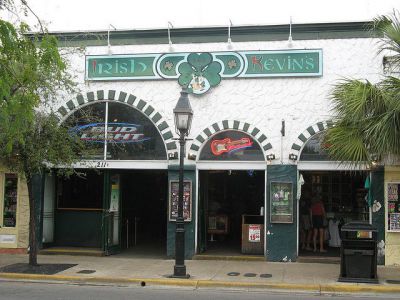
3) Irish Kevin's Bar
Anyone looking for a great place to grab a drink and have an awesome time in a fun and lively setting should consider Irish Kevin's Bar a definite must. Loud, funny, and energetic, this spot in the Old Town of Key West serves tonnes of booze mixed up with daily performances by local musicians and plenty of Irish charm to boot.
The bar was founded in 1998 by Kevin and Mary O'Sullivan, who came from Ireland. The couple wanted to create a place that would celebrate their Irish heritage while also embracing the laid-back vibe of Key West. Pursuant to this goal, the interior of the bar has been decorated with various Irish-themed items, including flags, posters, and memorabilia. Irish Kevin's also has a large outdoor seating area, which is perfect for enjoying a drink and people-watching.
Speaking of drinks, they have a great selection of draft beers, including traditional Irish brews like Guinness, as well as local favorites like Key West Sunset Ale, plus some whiskeys like Jameson.
One of Irish Kevin's main draws is the interactive show, which takes place every day of the week. During the show, the performer invites people on stage and encourages the crowd to participate in various chants, sing-alongs, and other activities. The crowd itself is pretty diverse, with some being on the younger side and some not quite right out of college, but everyone mixes in well and seems to get along great.
Over the years, the bar has been featured in numerous travel guides and won several awards, including Best Live Music Venue in Key West. In 2005, its popularity was boosted further when the place appeared on the Travel Channel show "World's Best Bars."
Tip:
You'll find some amazing finds in the gift shop, including shot glasses, T-shirts, bar signs, etc.
The bar was founded in 1998 by Kevin and Mary O'Sullivan, who came from Ireland. The couple wanted to create a place that would celebrate their Irish heritage while also embracing the laid-back vibe of Key West. Pursuant to this goal, the interior of the bar has been decorated with various Irish-themed items, including flags, posters, and memorabilia. Irish Kevin's also has a large outdoor seating area, which is perfect for enjoying a drink and people-watching.
Speaking of drinks, they have a great selection of draft beers, including traditional Irish brews like Guinness, as well as local favorites like Key West Sunset Ale, plus some whiskeys like Jameson.
One of Irish Kevin's main draws is the interactive show, which takes place every day of the week. During the show, the performer invites people on stage and encourages the crowd to participate in various chants, sing-alongs, and other activities. The crowd itself is pretty diverse, with some being on the younger side and some not quite right out of college, but everyone mixes in well and seems to get along great.
Over the years, the bar has been featured in numerous travel guides and won several awards, including Best Live Music Venue in Key West. In 2005, its popularity was boosted further when the place appeared on the Travel Channel show "World's Best Bars."
Tip:
You'll find some amazing finds in the gift shop, including shot glasses, T-shirts, bar signs, etc.
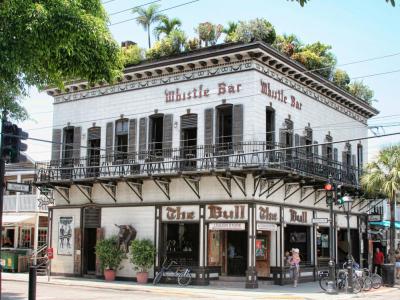
4) Bull and Whistle Bar
The Bull and Whistle Bar is one of the oldest drinking establishments in the Old Town of Key West. Harking back to the seafaring days of yore, this bar is housed in a historic building from the early 1900s and has a distinct character and charm of its own.
Originally, the building served as a boarding house and later as a brothel, catering to the sailors and seamen who frequented Key West's busy port. In the 1920s, during Prohibition, it became a speakeasy and continued to operate as an underground bar for many years. During this time, the building was also used as a gambling den and a smuggler's hideout, making it a notorious spot in Key West's underworld. In the 1950s, the property was purchased by a local businessman and turned into a retail space. It remained in use as a store until the 1970s when a group of investors bought the place and converted it into a bar.
One of Bull and Whistle's unique features is its three-story layout. Each level has its own atmosphere, giving visitors a range of options, depending on their mood. The first floor – The Bull – is one of the few remaining open-air bars of Key West. This is a lively and casual space, with a long stretch of bar, table seating, and a small stage where local musicians perform nightly. Despite being open-air, they somehow managed to have hand-painted murals all around, which is quite visually stimulating.
The second floor, called The Whistle, has a more relaxed, casual atmosphere and features a large squared bar, pool tables, games, and a balcony with a great view of Duval Street, the main drag in Key West.
For those brave enough there's the third floor. Otherwise known as the Garden of Eden, this is a clothing-optional rooftop bar, which is much popular with the adventurous lot. The bar has made more than a few people blush, over the years, for when they say “clothing optional” they literally mean it. In addition to a few daring souls in their birthday suits, the Garden – described by Rolling Stone magazine as the "best-kept secret in Key West" – also gives you a bird's eye view of the island and body painting, among other things...
Apart from its unique layout, the Bull and Whistle Bar is known for its live music and entertainment. There are bands and performers playing almost every night of the week, and the atmosphere is always lively and fun. The range of drinks on offer is wide and includes local beers, craft cocktails, and frozen drinks, and there are often specials and happy hours to take advantage of.
It is always a good place to sit and pass the time sipping on a favorite beverage, enjoying live tunes, and watching people stroll by.
Originally, the building served as a boarding house and later as a brothel, catering to the sailors and seamen who frequented Key West's busy port. In the 1920s, during Prohibition, it became a speakeasy and continued to operate as an underground bar for many years. During this time, the building was also used as a gambling den and a smuggler's hideout, making it a notorious spot in Key West's underworld. In the 1950s, the property was purchased by a local businessman and turned into a retail space. It remained in use as a store until the 1970s when a group of investors bought the place and converted it into a bar.
One of Bull and Whistle's unique features is its three-story layout. Each level has its own atmosphere, giving visitors a range of options, depending on their mood. The first floor – The Bull – is one of the few remaining open-air bars of Key West. This is a lively and casual space, with a long stretch of bar, table seating, and a small stage where local musicians perform nightly. Despite being open-air, they somehow managed to have hand-painted murals all around, which is quite visually stimulating.
The second floor, called The Whistle, has a more relaxed, casual atmosphere and features a large squared bar, pool tables, games, and a balcony with a great view of Duval Street, the main drag in Key West.
For those brave enough there's the third floor. Otherwise known as the Garden of Eden, this is a clothing-optional rooftop bar, which is much popular with the adventurous lot. The bar has made more than a few people blush, over the years, for when they say “clothing optional” they literally mean it. In addition to a few daring souls in their birthday suits, the Garden – described by Rolling Stone magazine as the "best-kept secret in Key West" – also gives you a bird's eye view of the island and body painting, among other things...
Apart from its unique layout, the Bull and Whistle Bar is known for its live music and entertainment. There are bands and performers playing almost every night of the week, and the atmosphere is always lively and fun. The range of drinks on offer is wide and includes local beers, craft cocktails, and frozen drinks, and there are often specials and happy hours to take advantage of.
It is always a good place to sit and pass the time sipping on a favorite beverage, enjoying live tunes, and watching people stroll by.
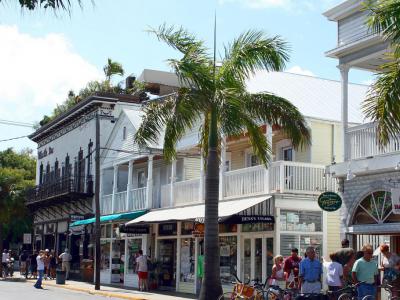
5) Duval Street (must see)
Duval Street is the most famous and most traveled street in all of Key West. Designated a "Great Street" in 2012 by the American Planning Association, it runs north-south through the entire length of the island, from the Gulf of Mexico to the Atlantic Ocean, and is the main thoroughfare of the city, renowned for its vibrant nightlife, historic buildings, and an array of unique shops and restaurants.
The street is named after William Pope Duval, the first territorial governor of Florida. It was originally a sandy path that linked Fort Zachary Taylor (in the south) to Mallory Square (in the north). As the city grew, more businesses were established on the street, and thus it became a bustling commercial hub.
In the 1800s, Duval Street was home to many of Key West's wealthiest residents. The street was lined with elegant mansions, many of which have been preserved and turned into museums or bed-and-breakfasts. During the early 20th century, it grew popular with sailors and fishermen, who frequented the numerous local eateries and watering holes.
The north (lower) end of Duval (or “wild” side) accommodates the majority of bars and tourist attractions and is where most of the carousing takes place until all hours of the night (and early morning!). The south (upper) end of Duval (the "quiet" side) houses the Southernmost Point, with a mix of early Key West Victorian mansions and bungalows dotting the neighborhood. Although it is more residential and less filled with tourists, the sidewalks still bustle with activity due to the art galleries, boutiques, inns, and bodegas lining them.
On Duval Street, you will find the famous Sloppy Joe's Bar, which used to be a favorite haunt of writer Ernest Hemingway. The street is also known for its colorful characters and street performers, such as the "Cat Man" (performing with his trained cats), and the annual Fantasy Fest celebration, a 10-day event featuring costume contests, street parties, and other festivities.
Overall, Duval Street offers a unique blend of history, culture, and entertainment, and is a must-see destination for anyone visiting Key West.
The street is named after William Pope Duval, the first territorial governor of Florida. It was originally a sandy path that linked Fort Zachary Taylor (in the south) to Mallory Square (in the north). As the city grew, more businesses were established on the street, and thus it became a bustling commercial hub.
In the 1800s, Duval Street was home to many of Key West's wealthiest residents. The street was lined with elegant mansions, many of which have been preserved and turned into museums or bed-and-breakfasts. During the early 20th century, it grew popular with sailors and fishermen, who frequented the numerous local eateries and watering holes.
The north (lower) end of Duval (or “wild” side) accommodates the majority of bars and tourist attractions and is where most of the carousing takes place until all hours of the night (and early morning!). The south (upper) end of Duval (the "quiet" side) houses the Southernmost Point, with a mix of early Key West Victorian mansions and bungalows dotting the neighborhood. Although it is more residential and less filled with tourists, the sidewalks still bustle with activity due to the art galleries, boutiques, inns, and bodegas lining them.
On Duval Street, you will find the famous Sloppy Joe's Bar, which used to be a favorite haunt of writer Ernest Hemingway. The street is also known for its colorful characters and street performers, such as the "Cat Man" (performing with his trained cats), and the annual Fantasy Fest celebration, a 10-day event featuring costume contests, street parties, and other festivities.
Overall, Duval Street offers a unique blend of history, culture, and entertainment, and is a must-see destination for anyone visiting Key West.
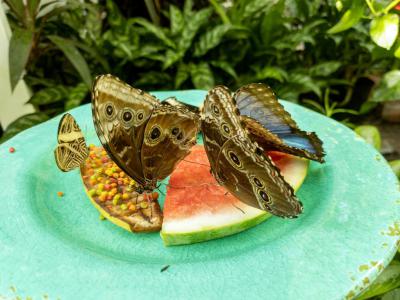
6) Key West Butterfly & Nature Conservatory (must see)
If you seek a unique and enchanting experience with a chance to escape into a world of natural beauty and wonder, right in the middle of a bustling city, make sure to visit the Key West Butterfly and Nature Conservatory on Duval Street. This climate-controlled, glass-enclosed space houses hundreds of live butterflies from around the world, as well as exotic birds, flowering plants, trees, and cascading waterfalls.
The conservatory was established in 2003 and covers an area of approximately 5,000 square feet. It is designed to replicate a natural rainforest environment and offers visitors an up-close (almost hands-on) experience where they can walk through and observe the butterflies as they flutter around freely, feed on nectar, and interact with each other.
The conservatory is home to over 50 species of butterflies, including the striking blue morpho, vibrant monarch, and the delicate swallowtail. You can also get a close-up view of a variety of live caterpillars feeding and developing on their host plants.
In addition to the butterflies, there is a variety of "butterfly-friendly" tropical birds, such as red-factor canaries, zebra finches, cordon-blue finches, and "button" or Chinese painted quails. The birds fly freely and sing in their natural habitat.
The on-site gift shop offers souvenirs and educational materials related to butterflies and nature conservation. Guided tours are also available for those who want to learn more about butterflies and their natural environment.
Tip:
Best to go in the morning while everything is out and moving. You will love it!
Spend as much time as you like, but be sure to follow the tour guide to get the low-down on everything in the enclosure. Alternatively, the self-guided tour has signs and descriptions explaining all of the different types of butterflies.
The conservatory was established in 2003 and covers an area of approximately 5,000 square feet. It is designed to replicate a natural rainforest environment and offers visitors an up-close (almost hands-on) experience where they can walk through and observe the butterflies as they flutter around freely, feed on nectar, and interact with each other.
The conservatory is home to over 50 species of butterflies, including the striking blue morpho, vibrant monarch, and the delicate swallowtail. You can also get a close-up view of a variety of live caterpillars feeding and developing on their host plants.
In addition to the butterflies, there is a variety of "butterfly-friendly" tropical birds, such as red-factor canaries, zebra finches, cordon-blue finches, and "button" or Chinese painted quails. The birds fly freely and sing in their natural habitat.
The on-site gift shop offers souvenirs and educational materials related to butterflies and nature conservation. Guided tours are also available for those who want to learn more about butterflies and their natural environment.
Tip:
Best to go in the morning while everything is out and moving. You will love it!
Spend as much time as you like, but be sure to follow the tour guide to get the low-down on everything in the enclosure. Alternatively, the self-guided tour has signs and descriptions explaining all of the different types of butterflies.
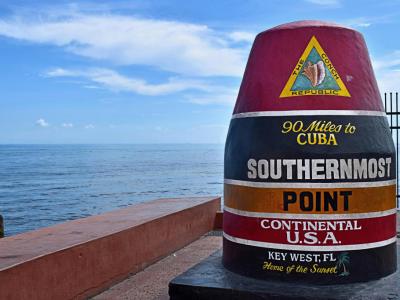
7) The Southernmost Point (must see)
Just a few blocks from Duval Street, at the intersection of South Street and Whitehead Street, is a painted concrete buoy – 12 feet tall and 7 feet wide. This landmark indicates the southernmost point in the continental United States, as well as the southernmost point of the island chain that makes up the Florida Keys.
Originally, the place was marked with a simple sign, which often got stolen. In response to this, by 1983, the city authorities erected the now famous concrete structure. Its location is only about 90 miles from Cuba, and the proximity of the island nation is part of what makes the Southernmost Point Buoy such an iconic symbol of Key West.
The buoy is effectively an old sewer junction that was dug up in the area and found too heavy and large to move, so they decided to paint it up to look like a buoy.
The current text on it, reading "The Conch Republic. 90 Miles to Cuba, Southernmost Point Continental U.S.A., Key West, F.L., Home of the Sunset", dates back to 2011. The phrases "90 miles to Cuba" and "Home of the Sunset" were added in 1986. Previously, the line "90 miles to Cuba" was written on a smaller sign on the fence nearby. Also next to the buoy, there was a script "America Begins" painted on a curb below the “90 miles to Cuba” sign.
The buoy paint job was done by local painter-artist Danny Acosta; the city hired him again to paint the buoy after it was damaged by Hurricane Irma in 2017.
Just a little east of the marker is a small cement structure. This is a former telegraph hut that used to house an underwater telephone cable that connected Key West to Havana in 1921.
Tip:
Considering this is a favorite spot for taking photographs, it is always crowded during the day, so be prepared to queue up for about 30-40 minutes for the photo op. If you don't like crowds, you can come early in the morning and admire the unforgettable view of the sun rising from the Atlantic.
Originally, the place was marked with a simple sign, which often got stolen. In response to this, by 1983, the city authorities erected the now famous concrete structure. Its location is only about 90 miles from Cuba, and the proximity of the island nation is part of what makes the Southernmost Point Buoy such an iconic symbol of Key West.
The buoy is effectively an old sewer junction that was dug up in the area and found too heavy and large to move, so they decided to paint it up to look like a buoy.
The current text on it, reading "The Conch Republic. 90 Miles to Cuba, Southernmost Point Continental U.S.A., Key West, F.L., Home of the Sunset", dates back to 2011. The phrases "90 miles to Cuba" and "Home of the Sunset" were added in 1986. Previously, the line "90 miles to Cuba" was written on a smaller sign on the fence nearby. Also next to the buoy, there was a script "America Begins" painted on a curb below the “90 miles to Cuba” sign.
The buoy paint job was done by local painter-artist Danny Acosta; the city hired him again to paint the buoy after it was damaged by Hurricane Irma in 2017.
Just a little east of the marker is a small cement structure. This is a former telegraph hut that used to house an underwater telephone cable that connected Key West to Havana in 1921.
Tip:
Considering this is a favorite spot for taking photographs, it is always crowded during the day, so be prepared to queue up for about 30-40 minutes for the photo op. If you don't like crowds, you can come early in the morning and admire the unforgettable view of the sun rising from the Atlantic.
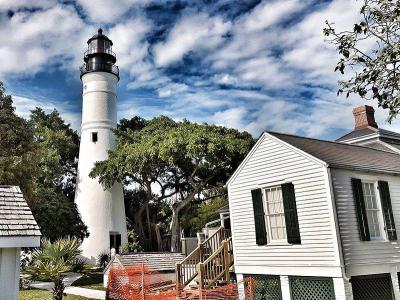
8) Key West Lighthouse & Museum (must see)
The Key West Lighthouse Museum occupies the first lighthouse built in the Florida Keys. Historically, a lighthouse on this site has been since 1825. The current Key West Light tower was constructed in 1848 after its predecessor was destroyed by a hurricane. Following several modifications, it stands 73 feet tall.
During the mid-1800s, Key West was the busiest port in Florida and one of the busiest in the entire United States. The lighthouse played an important role in the history of the city, as it helped guide ships through the treacherous waters surrounding the island.
After the Coast Guard decommissioned the Key West Light in 1969, it was handed over to Monroe County, which in turn leased it to the Key West Arts and Historical Society. The latter operates the lighthouse and its associated buildings as the Key West Light House and Keeper's Quarters Museum.
If you can fend off the claustrophobia and don't mind heights, you can climb 88 tiny and constricting steps to the top of this historic building to see the old lantern and enjoy panoramic views of the entire island/key and the surrounding ocean. Along the way up, there are three small landings you can stop on and rest if you need to.
The museum features exhibits that showcase the history of the structure, the people who operated it, and the maritime history of Key West. Visitors can explore the collection of navigational tools, historical photographs, and displays about the area's shipwrecks and salvaging industry.
Also, near the tower, you can see an interesting banyan tree that seems to have been planted when the lighthouse was built.
Tip:
Climbing the stairs up might get a bit challenging if you're not in sneakers, so it might be a good idea to swap the flip-flops if you do the climb.
During the mid-1800s, Key West was the busiest port in Florida and one of the busiest in the entire United States. The lighthouse played an important role in the history of the city, as it helped guide ships through the treacherous waters surrounding the island.
After the Coast Guard decommissioned the Key West Light in 1969, it was handed over to Monroe County, which in turn leased it to the Key West Arts and Historical Society. The latter operates the lighthouse and its associated buildings as the Key West Light House and Keeper's Quarters Museum.
If you can fend off the claustrophobia and don't mind heights, you can climb 88 tiny and constricting steps to the top of this historic building to see the old lantern and enjoy panoramic views of the entire island/key and the surrounding ocean. Along the way up, there are three small landings you can stop on and rest if you need to.
The museum features exhibits that showcase the history of the structure, the people who operated it, and the maritime history of Key West. Visitors can explore the collection of navigational tools, historical photographs, and displays about the area's shipwrecks and salvaging industry.
Also, near the tower, you can see an interesting banyan tree that seems to have been planted when the lighthouse was built.
Tip:
Climbing the stairs up might get a bit challenging if you're not in sneakers, so it might be a good idea to swap the flip-flops if you do the climb.
9) Ernest Hemingway Home & Museum (must see)
The Ernest Hemingway Home & Museum in Key West is the former residence of Ernest Hemingway, in which he lived from 1931 to 1939.
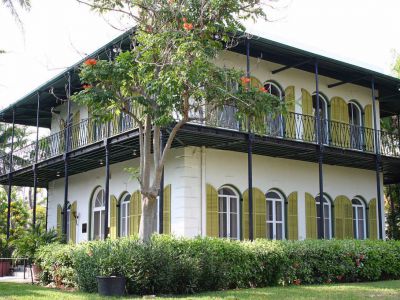
Presently a National Historic Landmark, this property was built in 1851 by a marine architect and salvage wrecker, Asa Tift. The beautiful French Colonial-style building features 18-inch-thick limestone walls, a metal roof, and large wrap-around verandas. The house was originally used as a family residence and later as a boarding house, a saloon, and a storage facility before it was purchased by Ernest Hemingway and his second wife, Pauline, in 1931.
The Hemingways lived here with their two sons. After their divorce in 1940, the writer moved to Cuba and later to Idaho, while Pauline continued living in the house until her death in 1951. Following that, the property remained vacant, although its ownership, in Hemingway's name, went on until the author's suicide in July 1961. Today, it represents an important part of his legacy.
During his time in this house, Hemingway wrote some of his best-received works, such as "The Green Hills of Africa," "To Have and Have Not," "The Snows of Kilimanjaro," and "For Whom the Bell Tolls."
Visitors to the museum can take a guided tour of the grounds, which include a lush garden and a swimming pool. The house is furnished with many of Hemingway's personal belongings, including his writing desk, typewriter, and hunting trophies.
One of the most famous features of the museum is its population of some 50 six-toed cats, which are believed to be the descendants of a cat named Snowball that was given to Hemingway by a ship's captain in the 1930s. Snowball was a polydactyl cat, meaning he had six toes on each paw instead of the usual five. Hemingway was so fascinated by the cat that he soon began acquiring more polydactyl cats. He believed they brought good luck and kept them as pets.
Today, the cats are considered an important part of the venue and a popular attraction – many a visitor come here specifically to see them. The cats are well-cared for by the museum staff and have their own veterinarian come twice a week to check on them.
Why You Should Visit:
The house is terrific, the Hemingway memorabilia is great, and the guided tour comes at no extra cost; you can afford yourself the time to explore the grounds (with a small pond) on your own, too.
Tip:
They only take cash at the door, so make sure you have some.
Don't miss the sad but adorable six-toed kitty graveyard in the back.
Presently a National Historic Landmark, this property was built in 1851 by a marine architect and salvage wrecker, Asa Tift. The beautiful French Colonial-style building features 18-inch-thick limestone walls, a metal roof, and large wrap-around verandas. The house was originally used as a family residence and later as a boarding house, a saloon, and a storage facility before it was purchased by Ernest Hemingway and his second wife, Pauline, in 1931.
The Hemingways lived here with their two sons. After their divorce in 1940, the writer moved to Cuba and later to Idaho, while Pauline continued living in the house until her death in 1951. Following that, the property remained vacant, although its ownership, in Hemingway's name, went on until the author's suicide in July 1961. Today, it represents an important part of his legacy.
During his time in this house, Hemingway wrote some of his best-received works, such as "The Green Hills of Africa," "To Have and Have Not," "The Snows of Kilimanjaro," and "For Whom the Bell Tolls."
Visitors to the museum can take a guided tour of the grounds, which include a lush garden and a swimming pool. The house is furnished with many of Hemingway's personal belongings, including his writing desk, typewriter, and hunting trophies.
One of the most famous features of the museum is its population of some 50 six-toed cats, which are believed to be the descendants of a cat named Snowball that was given to Hemingway by a ship's captain in the 1930s. Snowball was a polydactyl cat, meaning he had six toes on each paw instead of the usual five. Hemingway was so fascinated by the cat that he soon began acquiring more polydactyl cats. He believed they brought good luck and kept them as pets.
Today, the cats are considered an important part of the venue and a popular attraction – many a visitor come here specifically to see them. The cats are well-cared for by the museum staff and have their own veterinarian come twice a week to check on them.
Why You Should Visit:
The house is terrific, the Hemingway memorabilia is great, and the guided tour comes at no extra cost; you can afford yourself the time to explore the grounds (with a small pond) on your own, too.
Tip:
They only take cash at the door, so make sure you have some.
Don't miss the sad but adorable six-toed kitty graveyard in the back.
10) Fort Zachary Taylor Historic State Park (must see)
Fort Zachary Taylor Historic State Park has National Historical Monument status and is the country's southernmost state park. This park encompasses a site that predates the Civil War. The collection of armament is the world's largest and helps tell the story of what has occurred at the park in exciting ways.
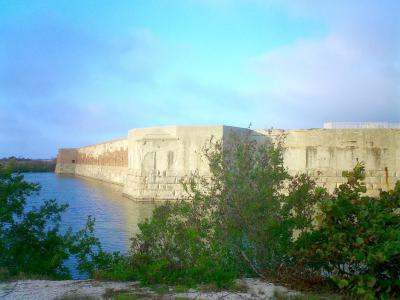
The fort contains the original red brick construction, and the cannon and gun ports are still present. This fort survived both the Civil War and the Spanish-American War. In addition to interpretive panels and guides, visitors can learn more about the fort through historical reenactments.
Another feature that this park is famous for is its beach, the most popular on Key West. Swimming, paddling, and kayaking are some of the most popular activities, alongside fishing. If you also enjoy watching birds, this park is also an excellent place for you to consider visiting while you are touring Florida's most popular sites.
Tip:
If you're a history lover, make sure to take the daily guided tour starting at 11am at the Fort.
The fort contains the original red brick construction, and the cannon and gun ports are still present. This fort survived both the Civil War and the Spanish-American War. In addition to interpretive panels and guides, visitors can learn more about the fort through historical reenactments.
Another feature that this park is famous for is its beach, the most popular on Key West. Swimming, paddling, and kayaking are some of the most popular activities, alongside fishing. If you also enjoy watching birds, this park is also an excellent place for you to consider visiting while you are touring Florida's most popular sites.
Tip:
If you're a history lover, make sure to take the daily guided tour starting at 11am at the Fort.
11) Green Parrot Bar
The iconic Green Parrot Bar has been a fixture of Key West since 1890, originally known as the Brownsville Saloon. Over the years, the establishment changed owners and names several times, and at one point even operated as a grocery store. The Great Depression ended and World War II began and the grocery store became The Brown Derby Bar, a bunker-like, air-conditioned hangout for submarine sailors stationed at the base only a block away.
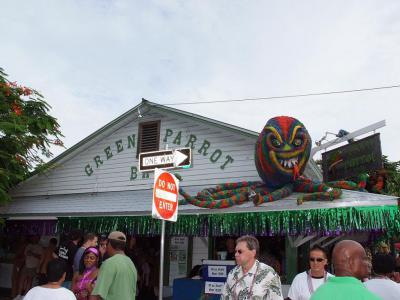
After the Navy pulled out in the early 1970s, Key West became a haven for hippies, bikers, vagabonds, and free spirits of all kinds. At that point, the then owner, Judy Sullivan, astutely turned this former Navy hangout into an open-air hipster watering hole, renaming it The Green Parrot Bar. In 1983, Jim Bean bought the place and, 27 years later, teamed up with Key West stalwart and Philadelphia entrepreneur, Pat Croce, who transformed it into the Green Parrot Bar that we know today.
The bar is often called the "last little piece of old Key West," due to its historic nature and laid-back vibe, and has been featured in a number of films and TV shows, including the movie "SpongeBob SquarePants: Sponge Out of Water."
Not only the oldest and possibly the best dive bar in Key West, this place also has hands down the best live music, acknowledged as one of the best live music venues in the country by Rolling Stone magazine. You can almost always find some decent bands playing here, and there is something for everyone – from jazz/funk to reggae, rock, and more. The bar has a unique tradition called the "Soundcheck," where patrons can watch the soundcheck of the evening's musical act for free.
Inside, it has everything you would expect, from lots of artifacts on the walls to a pool table, a pinball machine, and a mixture of locals and tourists rubbing elbows while enjoying some great (affordable) mixed drinks. You must try their signature Root Beer Barrel shot, made with Root Beer Schnapps and beer!
Tip:
The Green Parrot Bar has a strict "no credit cards" policy, so be sure to bring cash if you plan to visit!
The 'back room' is cooler in temperature than the rest of the bar.
After the Navy pulled out in the early 1970s, Key West became a haven for hippies, bikers, vagabonds, and free spirits of all kinds. At that point, the then owner, Judy Sullivan, astutely turned this former Navy hangout into an open-air hipster watering hole, renaming it The Green Parrot Bar. In 1983, Jim Bean bought the place and, 27 years later, teamed up with Key West stalwart and Philadelphia entrepreneur, Pat Croce, who transformed it into the Green Parrot Bar that we know today.
The bar is often called the "last little piece of old Key West," due to its historic nature and laid-back vibe, and has been featured in a number of films and TV shows, including the movie "SpongeBob SquarePants: Sponge Out of Water."
Not only the oldest and possibly the best dive bar in Key West, this place also has hands down the best live music, acknowledged as one of the best live music venues in the country by Rolling Stone magazine. You can almost always find some decent bands playing here, and there is something for everyone – from jazz/funk to reggae, rock, and more. The bar has a unique tradition called the "Soundcheck," where patrons can watch the soundcheck of the evening's musical act for free.
Inside, it has everything you would expect, from lots of artifacts on the walls to a pool table, a pinball machine, and a mixture of locals and tourists rubbing elbows while enjoying some great (affordable) mixed drinks. You must try their signature Root Beer Barrel shot, made with Root Beer Schnapps and beer!
Tip:
The Green Parrot Bar has a strict "no credit cards" policy, so be sure to bring cash if you plan to visit!
The 'back room' is cooler in temperature than the rest of the bar.
12) Harry S. Truman Little White House (must see)
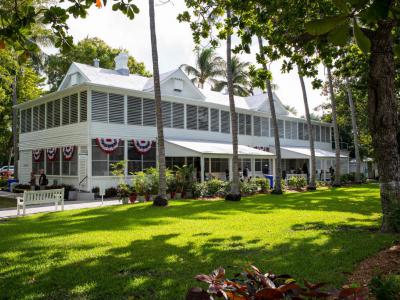
Built in 1890 and originally waterfront, this used to be the First Officer's quarters on the submarine base naval station before turning into President Harry S. Truman's winter White House for 175 days during 11 visits. During such visits, Cabinet members and foreign officials were regular guests for fishing trips and poker games. More notably, Truman came here shortly after his 1948 re-election, on which occasion Division Street was renamed Truman Avenue in his honor.
In 1991, the house opened as a state historic site and museum. Today regular guided tours take visitors through the site, and one can enter the rooms where the Trumans lived, worked and relaxed. Items such as President's briefcase, books, telephone, and famous "The Buck Stops Here" sign are still at his desk. (The reverse of the sign says, "I'm From Missouri.")
Why You Should Visit:
Docents here are friendly and knowledgeable while the facility has all of the original furnishings for enhanced authenticity. It is also worthwhile exploring the Truman Annex area which is a beautifully landscaped part of Key West that many miss.
Tip:
Although the entry fee is rather steep, you have the option to purchase the tickets at the front and bundle them with one of the other attractions in Key West to save a few dollars (they take credit cards, too).
In 1991, the house opened as a state historic site and museum. Today regular guided tours take visitors through the site, and one can enter the rooms where the Trumans lived, worked and relaxed. Items such as President's briefcase, books, telephone, and famous "The Buck Stops Here" sign are still at his desk. (The reverse of the sign says, "I'm From Missouri.")
Why You Should Visit:
Docents here are friendly and knowledgeable while the facility has all of the original furnishings for enhanced authenticity. It is also worthwhile exploring the Truman Annex area which is a beautifully landscaped part of Key West that many miss.
Tip:
Although the entry fee is rather steep, you have the option to purchase the tickets at the front and bundle them with one of the other attractions in Key West to save a few dollars (they take credit cards, too).
13) Audubon Gallery
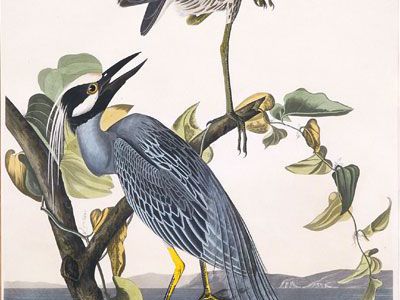
The Audubon Gallery in Key West, Florida, offers a remarkable mix of historical, artistic, and natural elements. Situated close to the Audubon House & Tropical Gardens, it's surrounded by vibrant tropical plants, creating a calm environment for art appreciation. The gallery focuses on displaying the original artworks of John James Audubon, a famous bird expert and artist. It's recognized globally as one of the most knowledgeable and respected dealers of Audubon's art.
During his 1830s trip to Key West, John James Audubon painted various birds, perfectly capturing the local birdlife. The Audubon House Gallery and the adjacent Tropical Gardens pay tribute to this visit, allowing guests to immerse themselves in the natural setting that influenced Audubon's creations.
The gallery's collection is extensive and includes all of the Royal Octavo Edition's original hand-colored lithographs from the 1840s to the 1870s. These smaller works followed Audubon's major project, the "Double Elephant Folio." The gallery also houses original Double Elephant Havell engravings from 1826-1838 and Bien Edition chromolithographs from 1858-1860.
In addition to these historical items, the Audubon Gallery presents modern, limited editions of Audubon's pieces. The collection also features old hand-colored botanical prints, sea charts, maritime history prints, and maps of the West Indies and Caribbean, offering a wide array of art for enthusiasts and collectors.
The gallery shows its dedication to conservation and presentation through its archival framing shop, which provides museum-grade framing to safeguard and enhance the art. This careful handling guarantees that every piece, whether an antique or a contemporary reprint, is exhibited and preserved to the highest standard.
During his 1830s trip to Key West, John James Audubon painted various birds, perfectly capturing the local birdlife. The Audubon House Gallery and the adjacent Tropical Gardens pay tribute to this visit, allowing guests to immerse themselves in the natural setting that influenced Audubon's creations.
The gallery's collection is extensive and includes all of the Royal Octavo Edition's original hand-colored lithographs from the 1840s to the 1870s. These smaller works followed Audubon's major project, the "Double Elephant Folio." The gallery also houses original Double Elephant Havell engravings from 1826-1838 and Bien Edition chromolithographs from 1858-1860.
In addition to these historical items, the Audubon Gallery presents modern, limited editions of Audubon's pieces. The collection also features old hand-colored botanical prints, sea charts, maritime history prints, and maps of the West Indies and Caribbean, offering a wide array of art for enthusiasts and collectors.
The gallery shows its dedication to conservation and presentation through its archival framing shop, which provides museum-grade framing to safeguard and enhance the art. This careful handling guarantees that every piece, whether an antique or a contemporary reprint, is exhibited and preserved to the highest standard.
14) Audubon House & Tropical Gardens
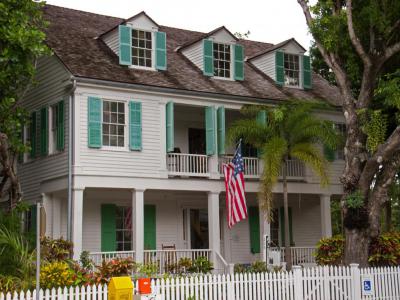
The Audubon House & Tropical Gardens is a nicely restored historic property where you can get a glimpse into the mid-19th-century life in Key West. It was built in the 1840s by Captain John Huling Geiger, Key West's first harbor pilot, who was one of the city's most prosperous citizens at the time. The residence was named after John James Audubon, the famous naturalist and ornithologist, who visited Key West in the 1830s and created some truly remarkable bird illustrations here.
It was due to this historical connection that the house, slated for demolition in 1958, was eventually saved from the wrecking ball. Instead, it was beautifully restored to its original 19th-century splendor, being the city's first restoration project, and today features a collection of original furnishings and those purchased at auctions in Europe, as well as artwork by Audubon displayed in the adjacent gallery.
Another major highlight is the tropical gardens surrounding the house. The gardens are filled with a variety of exotic plants, including orchids, bromeliads, hybrid crotons, tropical gingers, and palms, as well as several species of birds that are native to the area. Visitors can stroll along the garden paths and take in the lush beauty of this tropical oasis. A meditation pond and scattered seating areas among the plants make it a nice shady place to relax.
Why You Should Visit:
An attraction for those interested in nature, art, botany, architecture, and photography.
The grounds are very beautiful and although a corner property, it still manages to be private and very personal.
Tip:
Don't miss the unique gift shop in the garden, stocked with items that are well above much of what you can see elsewhere.
The museum offers guided tours, as well as hosts special events, weddings, and private parties.
Make sure to also watch the video on the 3rd floor for further information.
It was due to this historical connection that the house, slated for demolition in 1958, was eventually saved from the wrecking ball. Instead, it was beautifully restored to its original 19th-century splendor, being the city's first restoration project, and today features a collection of original furnishings and those purchased at auctions in Europe, as well as artwork by Audubon displayed in the adjacent gallery.
Another major highlight is the tropical gardens surrounding the house. The gardens are filled with a variety of exotic plants, including orchids, bromeliads, hybrid crotons, tropical gingers, and palms, as well as several species of birds that are native to the area. Visitors can stroll along the garden paths and take in the lush beauty of this tropical oasis. A meditation pond and scattered seating areas among the plants make it a nice shady place to relax.
Why You Should Visit:
An attraction for those interested in nature, art, botany, architecture, and photography.
The grounds are very beautiful and although a corner property, it still manages to be private and very personal.
Tip:
Don't miss the unique gift shop in the garden, stocked with items that are well above much of what you can see elsewhere.
The museum offers guided tours, as well as hosts special events, weddings, and private parties.
Make sure to also watch the video on the 3rd floor for further information.
