Custom Walk in Nassau, Bahamas by melynda_woody_be9b8 created on 2025-04-25
Guide Location: Bahamas » Nassau
Guide Type: Custom Walk
# of Sights: 10
Tour Duration: 2 Hour(s)
Travel Distance: 2.3 Km or 1.4 Miles
Share Key: 22Q6G
Guide Type: Custom Walk
# of Sights: 10
Tour Duration: 2 Hour(s)
Travel Distance: 2.3 Km or 1.4 Miles
Share Key: 22Q6G
How It Works
Please retrieve this walk in the GPSmyCity app. Once done, the app will guide you from one tour stop to the next as if you had a personal tour guide. If you created the walk on this website or come to the page via a link, please follow the instructions below to retrieve the walk in the app.
Retrieve This Walk in App
Step 1. Download the app "GPSmyCity: Walks in 1K+ Cities" on Apple App Store or Google Play Store.



Step 2. In the GPSmyCity app, download(or launch) the guide "Nassau Map and Walking Tours".
Step 3. Tap the menu button located at upper right corner of the "Walks" screen and select "Retrieve custom walk". Enter the share key: 22Q6G
1) Prince George Wharf
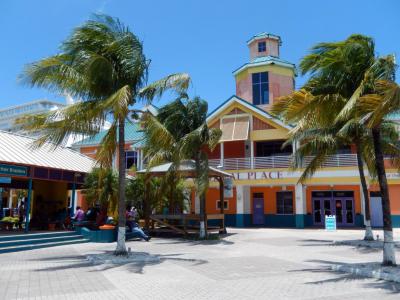
Prince George Wharf is the largest cruise port in The Bahamas. It's the place to see massive cruise liners load and unload passengers. More than a million passengers arrive at Prince George Wharf every year.
Cruise ship passengers come and go through Festival Place, which is a great place to shop for resort wear and souvenirs. Festival Place is a bright and colorful area that features over 45 artisan and seller stalls. You'll find traditional crafts such as hand-crafted straw bags, textiles, and paintings.
Prince George Wharf is a great place to arrange tourist attractions such as horse-drawn carriage rides, scooter rentals, boat excursions, and hair-braiding. Visitors can also check out live Bahamian music on Tuesdays, Fridays, and Saturdays.
The adjacent Woodes Rogers Walk offers a great viewpoint of the historic wharf.
Cruise ship passengers come and go through Festival Place, which is a great place to shop for resort wear and souvenirs. Festival Place is a bright and colorful area that features over 45 artisan and seller stalls. You'll find traditional crafts such as hand-crafted straw bags, textiles, and paintings.
Prince George Wharf is a great place to arrange tourist attractions such as horse-drawn carriage rides, scooter rentals, boat excursions, and hair-braiding. Visitors can also check out live Bahamian music on Tuesdays, Fridays, and Saturdays.
The adjacent Woodes Rogers Walk offers a great viewpoint of the historic wharf.
2) Rawson Square
Rawson Square was named for Sir Rawson William Rawson, who was Governor of The Bahamas in the 1860s. Rawson Square is often the first stop for cruise ship passengers.
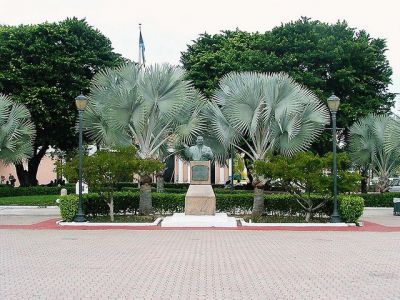
Rawson Square is a charming destination with cobblestone paving and colonial-style government buildings. The Churchill Building is on the south side of the square, and visitors can find horse-drawn surreys on the west side of the square. There's also a pavilion for open-air hair-braiding.
Rawson Square has a bronze bust of Sir Milo Butler. Butler was sworn in as the first Bahamian governor of an Independent Bahamas in 1973. Rawson Square also features a fountain named for the first Bahamian Minister of Tourism, Sir Stafford Sands. In addition, a life-size bronze statue features a woman holding a child and celebrates Bahamian women.
Visitors will also find a monument honoring Christopher Columbus. The Christopher Columbus monument was erected in 1992 during the Bahamas Quincentennial Celebrations.
Visitors can pose for pictures underneath a "The Islands of The Bahamas" sign with the historic cruise ship port in the background.
Rawson Square hosts several festivals and events throughout the year. Junkanoo festivals are held the day after Christmas, on New Year's Day, and during the summer. During Junkanoo, the square is packed with residents and tourists taking part in a vibrant parade.
Rawson Square is a charming destination with cobblestone paving and colonial-style government buildings. The Churchill Building is on the south side of the square, and visitors can find horse-drawn surreys on the west side of the square. There's also a pavilion for open-air hair-braiding.
Rawson Square has a bronze bust of Sir Milo Butler. Butler was sworn in as the first Bahamian governor of an Independent Bahamas in 1973. Rawson Square also features a fountain named for the first Bahamian Minister of Tourism, Sir Stafford Sands. In addition, a life-size bronze statue features a woman holding a child and celebrates Bahamian women.
Visitors will also find a monument honoring Christopher Columbus. The Christopher Columbus monument was erected in 1992 during the Bahamas Quincentennial Celebrations.
Visitors can pose for pictures underneath a "The Islands of The Bahamas" sign with the historic cruise ship port in the background.
Rawson Square hosts several festivals and events throughout the year. Junkanoo festivals are held the day after Christmas, on New Year's Day, and during the summer. During Junkanoo, the square is packed with residents and tourists taking part in a vibrant parade.
3) Parliament Square
Parliament Square was originally built in the early 1800s by Loyalists from North Carolina. Loyalists were residents of America who wanted to remain loyal to the British crown after England lost the Revolutionary War.
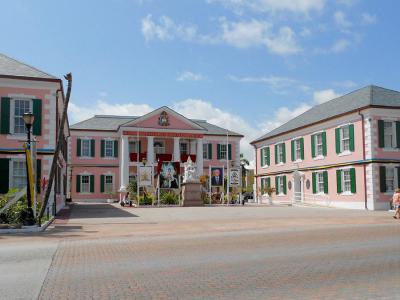
Parliament Square features gorgeous Colonial-style pink government buildings. The square is home to the House of Assembly, the Senate Building, and the Supreme Court of The Bahamas.
The two parliamentary houses meet with the Prime Minister in the House of Assembly. Visitors are welcome to watch debates from the gallery when the house is in session. The House of Assembly is one of the New World's oldest governing bodies in continuous session.
The 16-member Senate works in the beautiful Senate Building. Visitors will find a marble statue of England's Queen Victoria directly in front of the Senate Building. The statue was erected in 1905.
The Supreme Court of The Bahamas was built in 1921. The court holds sessions every quarter, and Bahamian judges wear traditional British wigs and robes during sessions. Behind the Supreme Court, there's a charming Garden of Remembrance. A cenotaph honors Bahamian soldiers who died during World War I and II. The monument's plaque is engraved with the names of the fallen soldiers.
Parliament Square features gorgeous Colonial-style pink government buildings. The square is home to the House of Assembly, the Senate Building, and the Supreme Court of The Bahamas.
The two parliamentary houses meet with the Prime Minister in the House of Assembly. Visitors are welcome to watch debates from the gallery when the house is in session. The House of Assembly is one of the New World's oldest governing bodies in continuous session.
The 16-member Senate works in the beautiful Senate Building. Visitors will find a marble statue of England's Queen Victoria directly in front of the Senate Building. The statue was erected in 1905.
The Supreme Court of The Bahamas was built in 1921. The court holds sessions every quarter, and Bahamian judges wear traditional British wigs and robes during sessions. Behind the Supreme Court, there's a charming Garden of Remembrance. A cenotaph honors Bahamian soldiers who died during World War I and II. The monument's plaque is engraved with the names of the fallen soldiers.
4) Straw Market (must see)
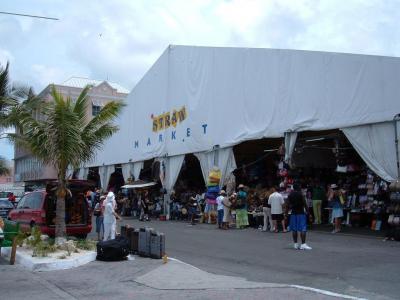
The Nassau Straw Market features thousands of hand-crafted items and has been a Nassau tradition since the 1940s. Traditionally, Bahamians weaved and braided straw baskets to use as fish traps and fruit baskets. After World War II, Americans began visiting The Bahamas on vacation and bought these beautiful hand-crafted baskets and bags.
The original Straw Market burned down in 2001. The current two-story structure was completed in 2011 and provides an indoor, air-conditioned space.
Visitors will find handmade straw items, wood carvings, shell jewelry, and delicious treats at over 400 stalls. Visitors are welcome to barter and bargain for eye-catching items. In addition, there are plenty of mass-produced souvenirs, t-shirts, and knock-off designer bags.
The Straw Market is the place to go for unique Bahamian gifts and fun souvenirs.
The original Straw Market burned down in 2001. The current two-story structure was completed in 2011 and provides an indoor, air-conditioned space.
Visitors will find handmade straw items, wood carvings, shell jewelry, and delicious treats at over 400 stalls. Visitors are welcome to barter and bargain for eye-catching items. In addition, there are plenty of mass-produced souvenirs, t-shirts, and knock-off designer bags.
The Straw Market is the place to go for unique Bahamian gifts and fun souvenirs.
5) Balcony House Museum
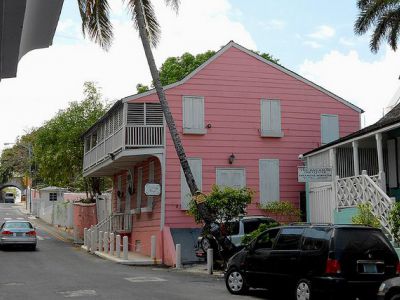
The Balcony House Museum is the oldest, still-standing wooden house in Nassau. Though there is no record of an exact date when the home was built, historical maps show its presence from at least the late-18th century. It is named for the prominent balcony that stretches along the entirety of the home's second floor.
Stephen Dillet, the first black member of the Bahamian House of Assembly, lived in the home in the mid-1800s. Dillet also served as inspect of the Nassau Police and justice of the peace.
The house was converted into a museum in 1992. It is appointed with antique furnishings and unique items that show the history of the Bahamas from the 18th and 19th centuries. The house also displays the Loyalist architecture of the period with its balcony and mahogany staircase.
The Balcony House Museum is open on Monday through Friday from 9:30 AM to 4:30 PM. It is closed on weekends. Admission to the Balcony House Museum is free.
Stephen Dillet, the first black member of the Bahamian House of Assembly, lived in the home in the mid-1800s. Dillet also served as inspect of the Nassau Police and justice of the peace.
The house was converted into a museum in 1992. It is appointed with antique furnishings and unique items that show the history of the Bahamas from the 18th and 19th centuries. The house also displays the Loyalist architecture of the period with its balcony and mahogany staircase.
The Balcony House Museum is open on Monday through Friday from 9:30 AM to 4:30 PM. It is closed on weekends. Admission to the Balcony House Museum is free.
6) Government House
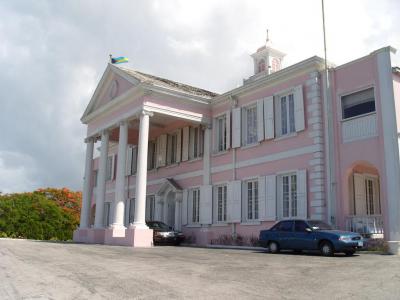
Government House is the Governor General's official residence and is one of Nassau's most stunning examples of Georgian Colonial architecture.
The beautiful house is painted conch-pink, and four Ionic columns support its entrance. The architecture shows a mix of American and Bahamian British styles. The wood shutters and bright pink paint are examples of Bahamian influence. The columns and circular driveway are examples of American style brought by Loyalists who arrived in the Bahamas after the Revolutionary War.
The first Government House was built in 1737. Government House is located on the top of Mount Fitzwilliam and overlooks the harbor. The current house was completed in 1806. The 12-foot tall statue of Christopher Columbus was added in 1830.
Government House has been renovated several times. The east wing was added in 1909. A hurricane in 1929 damaged the house, and in the 1930s, the roof, facade, and entrance were replaced.
The Duke of Windsor was the Governor of The Bahamas from 1940 to 1945 and one of Government House's most famous residents. The Duke of Windsor was the former King Edward VIII of Great Britain who famously abdicated the throne in 1936 to marry the divorcee Wallace Simpson.
The Duke and Duchess of Windsor ordered many renovations, including the addition of the west wing, known as the Windsor Wing. The Duchess of Windsor added a black glass plaque to the front door. The plaque was shipped from the Windsor's house in France and features the Duke's Order of the Garter.
The beautiful house is painted conch-pink, and four Ionic columns support its entrance. The architecture shows a mix of American and Bahamian British styles. The wood shutters and bright pink paint are examples of Bahamian influence. The columns and circular driveway are examples of American style brought by Loyalists who arrived in the Bahamas after the Revolutionary War.
The first Government House was built in 1737. Government House is located on the top of Mount Fitzwilliam and overlooks the harbor. The current house was completed in 1806. The 12-foot tall statue of Christopher Columbus was added in 1830.
Government House has been renovated several times. The east wing was added in 1909. A hurricane in 1929 damaged the house, and in the 1930s, the roof, facade, and entrance were replaced.
The Duke of Windsor was the Governor of The Bahamas from 1940 to 1945 and one of Government House's most famous residents. The Duke of Windsor was the former King Edward VIII of Great Britain who famously abdicated the throne in 1936 to marry the divorcee Wallace Simpson.
The Duke and Duchess of Windsor ordered many renovations, including the addition of the west wing, known as the Windsor Wing. The Duchess of Windsor added a black glass plaque to the front door. The plaque was shipped from the Windsor's house in France and features the Duke's Order of the Garter.
7) John Watling’s Distillery
John Watling's Distillery is located on the Buena Vista Estate, which was founded in 1789. The distillery is named after John Watling, a pirate captain who sailed Bahamian waters. John Watling was known as "the gentleman pirate" who observed the Sabbath and threw out gaming boards.
Buena Vista Estate overlooks Nassau harbor and has two acres of landscaped grounds. The beautiful estate features more than 300 years of antiques and prints that showcase the area's history and culture. Visitors will also find a well carved from limestone over 200 years ago.
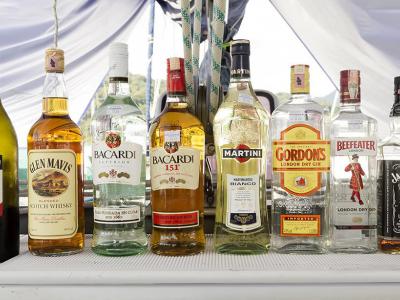
The distillery has over 1,000 white oak barrels. Guests can tour the estate and watch the rums being bottled by hand. Guests can also taste the various liquors, which are known as the Spirit of The Bahamas. Try the Amber, Pale, or Beuna Vista Rum. The Red Turtle Vodka is filtered with Eleuthera's pink sands, and the Gin is infused with botanicals from Andros.
The on-site Red Turtle Tavern offers special hand-crafted Bahamian cocktails.
Buena Vista Estate overlooks Nassau harbor and has two acres of landscaped grounds. The beautiful estate features more than 300 years of antiques and prints that showcase the area's history and culture. Visitors will also find a well carved from limestone over 200 years ago.
The distillery has over 1,000 white oak barrels. Guests can tour the estate and watch the rums being bottled by hand. Guests can also taste the various liquors, which are known as the Spirit of The Bahamas. Try the Amber, Pale, or Beuna Vista Rum. The Red Turtle Vodka is filtered with Eleuthera's pink sands, and the Gin is infused with botanicals from Andros.
The on-site Red Turtle Tavern offers special hand-crafted Bahamian cocktails.
8) Pirates of Nassau Museum (must see)
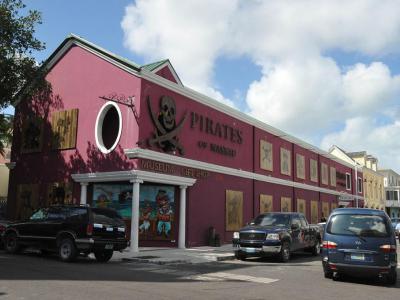
The Pirates of Nassau Museum is a fun interactive museum that immerses guests into the lives and times of Nassau's pirates. Visitors can board the Revenge pirate ship and go on an adventure through time.
The years 1690 through 1720 are known as the Golden Age of Piracy, and Nassau was known as the pirate capital of the world. Nassau was the heart of pirate activity as pirates could helm their shallow-draft ships through the waters of The Bahamas that were too shallow for larger warships. The pirates could then quickly access the deeper water trade routes that larger, slower ships used.
The museum presents its pirate history in an entertaining, interactive way. Visitors begin their pirate adventure on a recreated dock and shanty town before boarding the Revenge replica pirate ship. Onboard, visitors will learn more about pirate history and can practice their pirate lingo.
The museum displays different pirate living quarters, weaponry, and tools. In addition, the museum has exhibits detailing famous pirates such as Blackbeard and Woods Rogers. Visitors can also learn more about women pirates like Anne Bonny and Mary Reid.
In the Marooned exhibit, visitors can see what it was like for pirates who broke the pirate code and were abandoned. In the Flag Room, you'll learn that pirates would raise a black flag as they approached their victims.
The Pirates of Nassau Museum has an on-site restaurant, Smugglers, where you can enjoy local favorites like conch salad.
The years 1690 through 1720 are known as the Golden Age of Piracy, and Nassau was known as the pirate capital of the world. Nassau was the heart of pirate activity as pirates could helm their shallow-draft ships through the waters of The Bahamas that were too shallow for larger warships. The pirates could then quickly access the deeper water trade routes that larger, slower ships used.
The museum presents its pirate history in an entertaining, interactive way. Visitors begin their pirate adventure on a recreated dock and shanty town before boarding the Revenge replica pirate ship. Onboard, visitors will learn more about pirate history and can practice their pirate lingo.
The museum displays different pirate living quarters, weaponry, and tools. In addition, the museum has exhibits detailing famous pirates such as Blackbeard and Woods Rogers. Visitors can also learn more about women pirates like Anne Bonny and Mary Reid.
In the Marooned exhibit, visitors can see what it was like for pirates who broke the pirate code and were abandoned. In the Flag Room, you'll learn that pirates would raise a black flag as they approached their victims.
The Pirates of Nassau Museum has an on-site restaurant, Smugglers, where you can enjoy local favorites like conch salad.
9) Christ Church Cathedral
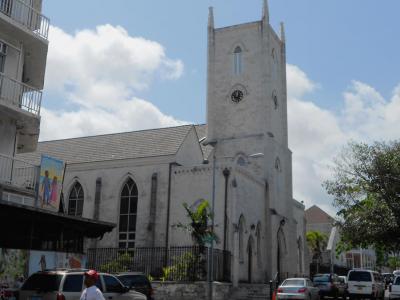
The first Bahamian church was built on Christ Church's site in 1670. Unfortunately, the Spaniards destroyed the first two churches, the third church was made of wood, and the fourth church was constructed with cut stone.
The current Christ Church Cathedral was built in 1841. In 1861, Nassau became a city, and Christ Church became a Cathedral. Christ Church Cathedral is an Anglican/Episcopal Church.
Christ Church Cathedral features Gothic-style architecture with a stunning white stone tower. The interior features vaulted mahogany ceilings. Look for a tiny mouse carved into the baptismal font.
The handmade stained glass windows are one of the church's most attractive features. The stained glass depicts scenes from the life of Jesus.
Visitors will find tablets along the cathedral's walls that describe Nassau citizens' lives during the 1800s.
Outside, visitors can walk the 400-year-old grounds and experience the Garden of Remembrance.
The current Christ Church Cathedral was built in 1841. In 1861, Nassau became a city, and Christ Church became a Cathedral. Christ Church Cathedral is an Anglican/Episcopal Church.
Christ Church Cathedral features Gothic-style architecture with a stunning white stone tower. The interior features vaulted mahogany ceilings. Look for a tiny mouse carved into the baptismal font.
The handmade stained glass windows are one of the church's most attractive features. The stained glass depicts scenes from the life of Jesus.
Visitors will find tablets along the cathedral's walls that describe Nassau citizens' lives during the 1800s.
Outside, visitors can walk the 400-year-old grounds and experience the Garden of Remembrance.
10) Bay Street (must see)
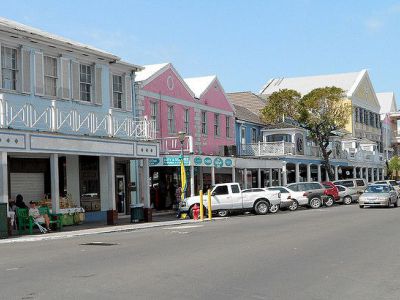
Bay Street is Nassau's busiest shopping destination. Visitors will find local vendors selling handmade crafts as well as luxury brands. As you stroll, you'll find shops selling jewelry, designer purses, liquor, and souvenirs.
The Island Book Shop features a variety of local interest books. Shoppers will also find several exclusive cigar shops. In addition, Bay Street is home to the world-famous Nassau Straw Market, where you can barter and bargain for hand-crafted straw items.
Bay Street is also home to museums and historical attractions. The interactive Pirates of Nassau Museum is one of Bay Street's attractions. In addition, you'll stroll past the Nassau Public Library, Rawson Square, Parliament Square, and the Pompey Museum. There are many waterfront adventure outfitters along Bay Street where you can book a sailing, diving, or fishing charter.
Bay Street features a variety of restaurants, cafes, and bars. Try Bahamian conch fritters or enjoy American comfort food. Two miles west of Rawson Square, you'll find the Fish Fry, a favorite place for Bahamian food and beverages.
The Island Book Shop features a variety of local interest books. Shoppers will also find several exclusive cigar shops. In addition, Bay Street is home to the world-famous Nassau Straw Market, where you can barter and bargain for hand-crafted straw items.
Bay Street is also home to museums and historical attractions. The interactive Pirates of Nassau Museum is one of Bay Street's attractions. In addition, you'll stroll past the Nassau Public Library, Rawson Square, Parliament Square, and the Pompey Museum. There are many waterfront adventure outfitters along Bay Street where you can book a sailing, diving, or fishing charter.
Bay Street features a variety of restaurants, cafes, and bars. Try Bahamian conch fritters or enjoy American comfort food. Two miles west of Rawson Square, you'll find the Fish Fry, a favorite place for Bahamian food and beverages.
