Custom Walk in Ottawa, Canada by robinety_966ce created on 2025-04-30
Guide Location: Canada » Ottawa
Guide Type: Custom Walk
# of Sights: 6
Tour Duration: 1 Hour(s)
Travel Distance: 2.7 Km or 1.7 Miles
Share Key: EUR2N
Guide Type: Custom Walk
# of Sights: 6
Tour Duration: 1 Hour(s)
Travel Distance: 2.7 Km or 1.7 Miles
Share Key: EUR2N
How It Works
Please retrieve this walk in the GPSmyCity app. Once done, the app will guide you from one tour stop to the next as if you had a personal tour guide. If you created the walk on this website or come to the page via a link, please follow the instructions below to retrieve the walk in the app.
Retrieve This Walk in App
Step 1. Download the app "GPSmyCity: Walks in 1K+ Cities" on Apple App Store or Google Play Store.



Step 2. In the GPSmyCity app, download(or launch) the guide "Ottawa Map and Walking Tours".
Step 3. Tap the menu button located at upper right corner of the "Walks" screen and select "Retrieve custom walk". Enter the share key: EUR2N
1) Canadian Tulip Festival
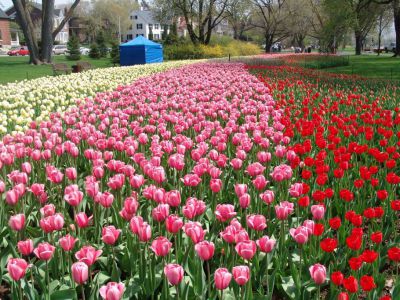
The Canadian Tulip Festival takes place every year in May in Ottawa, showcasing the beauty of tulips. It proudly claims the title of the world's largest tulip festival, captivating more than one million tulips and attracting over 500,000 visitors annually.
Stunning arrangements of tulips are strategically planted throughout the city, with the most magnificent display located in Commissioners Park, nestled by Dow's Lake and along the picturesque Rideau Canal, boasting a staggering 300,000 tulips.
Beyond the vibrant tulip exhibits, the festival delights attendees with music performances, captivating speakers, and enticing exhibits showcasing international cuisine.
In a remarkable gesture of gratitude, the Dutch royal family sent 100,000 tulip bulbs to Ottawa in 1945. This generous act was to express their appreciation for the shelter and support provided by the Canadians to Princess Juliana and her daughters during the Nazi occupation of the Netherlands in the Second World War.
A momentous event during their stay in Canada was the birth of Princess Margriet to Princess Juliana at the Ottawa Civic Hospital in 1943. To ensure her nationality remained solely Dutch, the maternity ward was temporarily declared an international territory. This significant occasion led to Juliana's subsequent donation of 20,500 tulip bulbs in 1946, with a promise to send an additional 10,000 bulbs each year.
Over time, Ottawa's tulips gained international acclaim, and in 1953, the Ottawa Board of Trade and photographer Malak Karsh joined forces to organize the inaugural "Canadian Tulip Festival." The festival's popularity soared, and it welcomed Queen Juliana back in 1967 to partake in the celebration. Princess Margriet also returned in 2002 to commemorate the festival's 50th anniversary, adding to its grandeur and historical significance.
Stunning arrangements of tulips are strategically planted throughout the city, with the most magnificent display located in Commissioners Park, nestled by Dow's Lake and along the picturesque Rideau Canal, boasting a staggering 300,000 tulips.
Beyond the vibrant tulip exhibits, the festival delights attendees with music performances, captivating speakers, and enticing exhibits showcasing international cuisine.
In a remarkable gesture of gratitude, the Dutch royal family sent 100,000 tulip bulbs to Ottawa in 1945. This generous act was to express their appreciation for the shelter and support provided by the Canadians to Princess Juliana and her daughters during the Nazi occupation of the Netherlands in the Second World War.
A momentous event during their stay in Canada was the birth of Princess Margriet to Princess Juliana at the Ottawa Civic Hospital in 1943. To ensure her nationality remained solely Dutch, the maternity ward was temporarily declared an international territory. This significant occasion led to Juliana's subsequent donation of 20,500 tulip bulbs in 1946, with a promise to send an additional 10,000 bulbs each year.
Over time, Ottawa's tulips gained international acclaim, and in 1953, the Ottawa Board of Trade and photographer Malak Karsh joined forces to organize the inaugural "Canadian Tulip Festival." The festival's popularity soared, and it welcomed Queen Juliana back in 1967 to partake in the celebration. Princess Margriet also returned in 2002 to commemorate the festival's 50th anniversary, adding to its grandeur and historical significance.
2) Rideau Canal National Historic Site (must see)
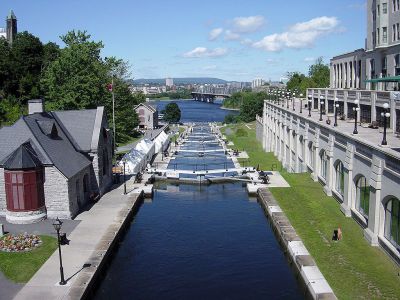
Picture this: a shimmering ribbon of water winding through the heart of the city, alive with summer paddleboards, cruise boats, and, come winter, buzzing with skaters gliding across its glassy surface. This is the Rideau Canal – a true clever multitasker: a UNESCO-listed engineering wonder, an atmospheric stage for each season, and the world’s largest skating rink by length.
Built between 1826 and 1832 as a strategic military supply route – just in case tensions flared with the United States, the canal was engineered to connect Ottawa to Kingston without relying on the vulnerable St. Lawrence River. Today, you can barely tell it was ever about defense. Instead, it whispers of leisurely cruises, historical tours, and serene afternoons spent watching locks rise and fall with surprisingly precise rhythm.
In summer, families stroll its stone-lined towpath, cyclists weave through leafy corridors, and boats drift beneath neat arched bridges. Head indoors to the lock-station visitor centers, which offer hands-on displays about 19th-century construction, interactive maps, and (bonus) refreshments with a view.
Then winter rolls in, and the canal pulls off its greatest trick: the center transforms into the Rideau Skateway, stretching close to 8 km between Downtown and Dows Lake. Lace up your skates, join the local buzz, maybe sip hot chocolate from a fire-pit stand, and feel like you’ve entered a snow-white postcard.
Why visit? Because it’s not just a canal, it’s a city-shaping waterway that doubles as a 24/7 stage for history, leisure, and community life.
Tip: Check the official Rideau Canal Skateway status before heading out – conditions change daily, and you’ll want the ice (or water) experience at its finest.
Built between 1826 and 1832 as a strategic military supply route – just in case tensions flared with the United States, the canal was engineered to connect Ottawa to Kingston without relying on the vulnerable St. Lawrence River. Today, you can barely tell it was ever about defense. Instead, it whispers of leisurely cruises, historical tours, and serene afternoons spent watching locks rise and fall with surprisingly precise rhythm.
In summer, families stroll its stone-lined towpath, cyclists weave through leafy corridors, and boats drift beneath neat arched bridges. Head indoors to the lock-station visitor centers, which offer hands-on displays about 19th-century construction, interactive maps, and (bonus) refreshments with a view.
Then winter rolls in, and the canal pulls off its greatest trick: the center transforms into the Rideau Skateway, stretching close to 8 km between Downtown and Dows Lake. Lace up your skates, join the local buzz, maybe sip hot chocolate from a fire-pit stand, and feel like you’ve entered a snow-white postcard.
Why visit? Because it’s not just a canal, it’s a city-shaping waterway that doubles as a 24/7 stage for history, leisure, and community life.
Tip: Check the official Rideau Canal Skateway status before heading out – conditions change daily, and you’ll want the ice (or water) experience at its finest.
3) Peace Tower
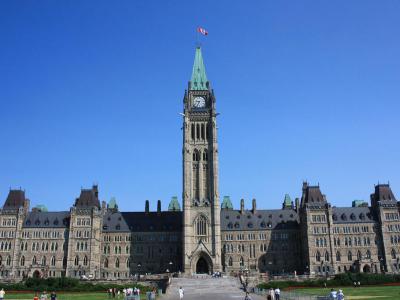
Peace Tower is one of the most prominent buildings in Canada. It is an iconic image that can be recognized by anyone who has seen a Canadian $20 bill. Peace Tower can be found in the center of the Centre Block of Parliament on Parliament Hill.
Peace Tower was built in 1916 as a replacement for the previous clock tower, Victoria Tower, which was lost in a fire. Peace Tower was designed by architects Jean Omer Marchand and John A. Pearson in the same Victorian High Gothic style as the rest of the buildings in the area. The tower is designed with friezes, grotesques, gargoyles, stone carvings and arched windows.
Visitors can explore Peace Tower as part of the free Centre Block tour. Those lucky visitors who arrive at the right time can watch the changing of the guard. On summer nights, tourists can watch the Northern Lights Sights and Sounds show. The show lights up all of the Centre Block with Peace Tower prominently featured.
Peace Tower was built in 1916 as a replacement for the previous clock tower, Victoria Tower, which was lost in a fire. Peace Tower was designed by architects Jean Omer Marchand and John A. Pearson in the same Victorian High Gothic style as the rest of the buildings in the area. The tower is designed with friezes, grotesques, gargoyles, stone carvings and arched windows.
Visitors can explore Peace Tower as part of the free Centre Block tour. Those lucky visitors who arrive at the right time can watch the changing of the guard. On summer nights, tourists can watch the Northern Lights Sights and Sounds show. The show lights up all of the Centre Block with Peace Tower prominently featured.
4) Fairmont Château Laurier
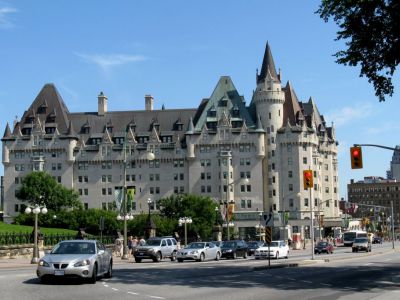
Nestled on Rideau Street opposite Parliament Hill, the Fairmont Château Laurier towers like a fairy-tale castle in the heart of Ottawa. Commissioned by railroad magnate Charles Melville Hays in 1908, the hotel opened in 1912 but in a twist worthy of a novel, Hays perished aboard the Titanic en route to the grand opening. Fun fact: did you know the dining-room furniture he ordered for the hotel was packed on that same ill-fated ship-and went down with it?
Designed by Montreal’s Ross and MacFarlane, the Château Laurier flaunts the Châteauesque style – conical turrets, copper roofs, floral gables, and Indiana limestone facades inspired by France’s Loire Valley. Inside, lavish details unfold: Tiffany stained-glass windows, Belgian marble floors, hand-molded plaster ceilings, and an Adam Room echoing 18th-century elegance.
Over the decades, it has hosted royalty, wartime leaders, and icons – from Nelson Mandela to Princesses and Prime Ministers, earning the nickname “the third chamber of Parliament.” Sir Wilfrid Laurier himself opened the hotel in person after the tragic delay.
Legend has it that the ghost of Charles Melville Hays still wanders the halls, probably looking for his lost Titanic dinner reservation. Guests have also reported mysterious footsteps and sudden chills, perfect for those who enjoy a little spooky side with their luxury stay!
Tip: Pause in the lobby and admire the original Tiffany windows, then imagine the titanic twist that shaped this landmark forever.
Designed by Montreal’s Ross and MacFarlane, the Château Laurier flaunts the Châteauesque style – conical turrets, copper roofs, floral gables, and Indiana limestone facades inspired by France’s Loire Valley. Inside, lavish details unfold: Tiffany stained-glass windows, Belgian marble floors, hand-molded plaster ceilings, and an Adam Room echoing 18th-century elegance.
Over the decades, it has hosted royalty, wartime leaders, and icons – from Nelson Mandela to Princesses and Prime Ministers, earning the nickname “the third chamber of Parliament.” Sir Wilfrid Laurier himself opened the hotel in person after the tragic delay.
Legend has it that the ghost of Charles Melville Hays still wanders the halls, probably looking for his lost Titanic dinner reservation. Guests have also reported mysterious footsteps and sudden chills, perfect for those who enjoy a little spooky side with their luxury stay!
Tip: Pause in the lobby and admire the original Tiffany windows, then imagine the titanic twist that shaped this landmark forever.
5) ByWard Market (must see)
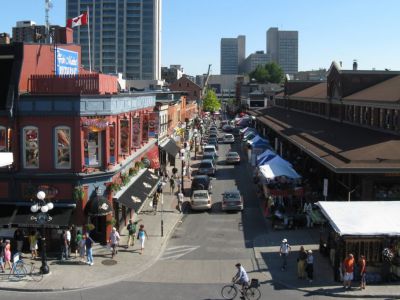
ByWard Market is Ottawa’s lively heart and soul, a place where history, culture, and just about everything edible meet in a perfect downtown mashup. Founded back in 1826 by Lt-Col. John By (yes, the same guy who masterminded the Rideau Canal), this market started as a practical spot where horse-drawn wagons unloaded fresh goods. Fun fact: Colonel By made sure the streets were wide enough for those wagons, so no one got stuck, a detail that still shapes the area today.
Fast forward almost two centuries, ByWard Market has transformed into a buzzing hotspot that attracts locals and tourists in droves. With over 260 stalls run by farmers and artisans, plus more than 500 businesses, this place is a shopper’s and foodie’s paradise. From fresh produce and handmade crafts to chic boutiques and lively bars, there’s something for everyone. And yes, street performers add that extra dash of flair – you might catch a magician, a musician, or even a juggler while wandering through.
Did you know ByWard was once a blue-collar neighborhood filled with hardworking lumbermen and canal workers? Today, it’s the city’s go-to place for nightclubs, gourmet restaurants, and yes, some seriously Instagrammable spots.
If you’re visiting, don’t miss the chance to try Ottawa’s iconic beaver tails (fried dough pastries topped with all kinds of sweet goodies). Be warned: they’re dangerously delicious and perfect for indulging your sweet tooth.
Tip: Aim for weekday mornings if you want to explore without bumping elbows, but if you love the buzz, summer weekends are where the real action happens.
Fast forward almost two centuries, ByWard Market has transformed into a buzzing hotspot that attracts locals and tourists in droves. With over 260 stalls run by farmers and artisans, plus more than 500 businesses, this place is a shopper’s and foodie’s paradise. From fresh produce and handmade crafts to chic boutiques and lively bars, there’s something for everyone. And yes, street performers add that extra dash of flair – you might catch a magician, a musician, or even a juggler while wandering through.
Did you know ByWard was once a blue-collar neighborhood filled with hardworking lumbermen and canal workers? Today, it’s the city’s go-to place for nightclubs, gourmet restaurants, and yes, some seriously Instagrammable spots.
If you’re visiting, don’t miss the chance to try Ottawa’s iconic beaver tails (fried dough pastries topped with all kinds of sweet goodies). Be warned: they’re dangerously delicious and perfect for indulging your sweet tooth.
Tip: Aim for weekday mornings if you want to explore without bumping elbows, but if you love the buzz, summer weekends are where the real action happens.
6) The Maman Statue
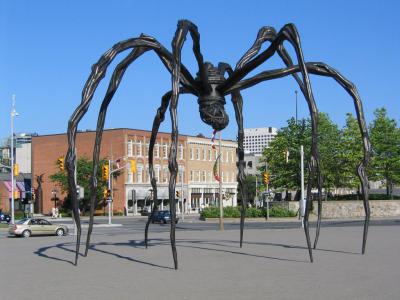
Maman is an impressive sculpture created by Louise Bourgeois, a renowned artist. Made from bronze, stainless steel, and marble, the artwork represents a spider and is considered one of the largest sculptures in the world. Its towering size measures over 30 feet in height and more than 33 feet in width. The sculpture features a sac containing 32 marble eggs, while its abdomen and thorax are crafted from ribbed bronze.
The title, "Maman," is derived from the familiar French word for "Mother" and shares similarities with the English word "Mummy." Louise Bourgeois created this sculpture in 1999 as part of The Unilever Series (2000), her inaugural commission for the Turbine Hall at London's Tate Modern. The original piece was made of steel, and subsequently, six additional castings were produced in bronze. Bourgeois selected the Modern Art Foundry for the casting process due to its reputation and expertise.
The sculpture of Maman builds upon Bourgeois' longstanding fascination with arachnids, which she first explored in a small ink and charcoal drawing in 1947. This theme continued with her 1996 sculpture titled "Spider." Through the artwork, Bourgeois incorporates metaphors of spinning, weaving, nurturing, and protection, symbolizing the strength of her mother. Josephine, Bourgeois' mother, was a skilled tapestry repairer in her father's textile restoration workshop in Paris. When Bourgeois was twenty-one years old, her mother passed away from an unknown illness.
The title, "Maman," is derived from the familiar French word for "Mother" and shares similarities with the English word "Mummy." Louise Bourgeois created this sculpture in 1999 as part of The Unilever Series (2000), her inaugural commission for the Turbine Hall at London's Tate Modern. The original piece was made of steel, and subsequently, six additional castings were produced in bronze. Bourgeois selected the Modern Art Foundry for the casting process due to its reputation and expertise.
The sculpture of Maman builds upon Bourgeois' longstanding fascination with arachnids, which she first explored in a small ink and charcoal drawing in 1947. This theme continued with her 1996 sculpture titled "Spider." Through the artwork, Bourgeois incorporates metaphors of spinning, weaving, nurturing, and protection, symbolizing the strength of her mother. Josephine, Bourgeois' mother, was a skilled tapestry repairer in her father's textile restoration workshop in Paris. When Bourgeois was twenty-one years old, her mother passed away from an unknown illness.
