Custom Walk in Tokyo, Japan by ifat_steinberg_4cfbe created on 2025-05-02
Guide Location: Japan » Tokyo
Guide Type: Custom Walk
# of Sights: 6
Tour Duration: 7 Hour(s)
Travel Distance: 18.7 Km or 11.6 Miles
Share Key: 42RBY
Guide Type: Custom Walk
# of Sights: 6
Tour Duration: 7 Hour(s)
Travel Distance: 18.7 Km or 11.6 Miles
Share Key: 42RBY
How It Works
Please retrieve this walk in the GPSmyCity app. Once done, the app will guide you from one tour stop to the next as if you had a personal tour guide. If you created the walk on this website or come to the page via a link, please follow the instructions below to retrieve the walk in the app.
Retrieve This Walk in App
Step 1. Download the app "GPSmyCity: Walks in 1K+ Cities" on Apple App Store or Google Play Store.



Step 2. In the GPSmyCity app, download(or launch) the guide "Tokyo Map and Walking Tours".
Step 3. Tap the menu button located at upper right corner of the "Walks" screen and select "Retrieve custom walk". Enter the share key: 42RBY
1) Hachiko Statue
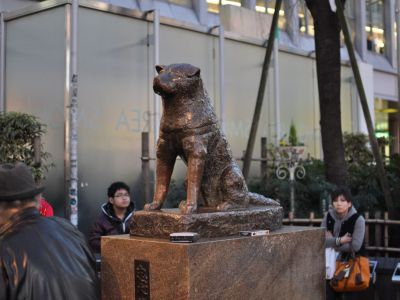
This story began in 1923, on a farm near Odate in Akita Prefecture, where a fluffy little pup named Hachiko took his first wobbly steps into history. This golden brown Akita was destined for greatness-not in a heroic, dragon-slaying way, but in a quietly loyal, heartbreakingly devoted way that would put even the most dedicated pet to shame.
Hidesaburo Ueno, a professor at the University of Tokyo, adopted Hachiko in 1924, and just like that, a legendary bond was formed. Every evening, like clockwork, Hachiko would trot down to Shibuya Station to greet his beloved owner, tail wagging, ears perked. It was their little ritual-until, one day, it wasn’t.
When Professor Ueno suddenly passed away, most would have expected Hachiko to move on. But no. This dog was built different. For the next 9 years, 9 months, and 15 days, he showed up at the station, waiting. Rain or shine. Through changing seasons, shifting crowds, and the march of time itself. And in doing so, he captured the hearts of an entire nation.
By 1934, Japan had fallen so deeply in love with this steadfast Akita that they immortalized him in bronze. Hachiko himself was present for the grand unveiling, probably wondering why his own face was suddenly staring back at him. But wartime came, and the statue was melted down for the war effort-because back then, apparently, nothing was sacred.
Thankfully, in 1948, a new statue was commissioned by none other than the original artist’s son. And today, Hachiko stands proudly once again at Shibuya Station, forever waiting. The nearby station exit is even named after him-the Hachiko Exit, a major landmark and meeting point in the city.
Speaking of which, just beyond that exit is Shibuya Crossing, Tokyo’s most iconic human stampede, where hundreds-sometimes thousands-of people cross in a beautifully choreographed spectacle of urban energy.
If you’re visiting Shibuya for shopping, nightlife, or just to people-watch, make sure to stop by and say hello to the "goodest" boy in history. And if you’re running late? Don’t worry-Hachiko’s used to waiting. Should you ever feel like giving up on someone, just remember, this dog waited almost a decade…
Hidesaburo Ueno, a professor at the University of Tokyo, adopted Hachiko in 1924, and just like that, a legendary bond was formed. Every evening, like clockwork, Hachiko would trot down to Shibuya Station to greet his beloved owner, tail wagging, ears perked. It was their little ritual-until, one day, it wasn’t.
When Professor Ueno suddenly passed away, most would have expected Hachiko to move on. But no. This dog was built different. For the next 9 years, 9 months, and 15 days, he showed up at the station, waiting. Rain or shine. Through changing seasons, shifting crowds, and the march of time itself. And in doing so, he captured the hearts of an entire nation.
By 1934, Japan had fallen so deeply in love with this steadfast Akita that they immortalized him in bronze. Hachiko himself was present for the grand unveiling, probably wondering why his own face was suddenly staring back at him. But wartime came, and the statue was melted down for the war effort-because back then, apparently, nothing was sacred.
Thankfully, in 1948, a new statue was commissioned by none other than the original artist’s son. And today, Hachiko stands proudly once again at Shibuya Station, forever waiting. The nearby station exit is even named after him-the Hachiko Exit, a major landmark and meeting point in the city.
Speaking of which, just beyond that exit is Shibuya Crossing, Tokyo’s most iconic human stampede, where hundreds-sometimes thousands-of people cross in a beautifully choreographed spectacle of urban energy.
If you’re visiting Shibuya for shopping, nightlife, or just to people-watch, make sure to stop by and say hello to the "goodest" boy in history. And if you’re running late? Don’t worry-Hachiko’s used to waiting. Should you ever feel like giving up on someone, just remember, this dog waited almost a decade…
2) Hie Shrine
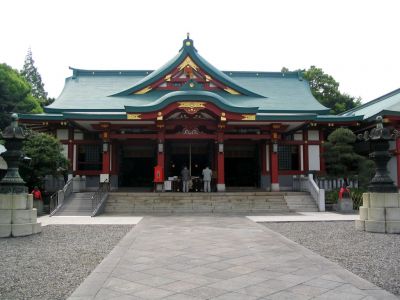
Hie Shrine, located in Tokyo, is a Shinto shrine that annually hosts the Sannō Matsuri, one of the city's largest festivals, on June 15th. This shrine is alternatively referred to as Hiyoshi Sannō or Sannō-sha and has various other names associated with it. The principal deity revered at this shrine is Ōyamakui-no-kami. Conveniently, it's just a few minutes away from Akasaka-Mitsuke Station.
The exact founding date of Hie Shrine is uncertain. However, Tokugawa Ieyasu relocated it to the grounds of Edo Castle, and his son Tokugawa Hidetada moved it out in 1604 to make it more accessible to the people of Edo for worship. Unfortunately, the shrine's main hall (shaden) was destroyed in the Great Fire of Meireki in 1657 but was later reconstructed in its current location by Tokugawa Ietsuna in 1659. The shrine is situated southwest of the castle, aligning with the ura kimon direction as per onmyōdō practices.
From 1871 to 1946, Hie Shrine held the prestigious status of being officially designated as one of the Kanpei-taisha, signifying its rank as a government-supported shrine of the highest order. Unfortunately, during World War II, the shrine's main hall was once again lost due to bombings. The present structure that stands today was constructed in 1958.
Hie Shrine boasts a significant cultural heritage, including a National Treasure in the form of a sword. Additionally, it houses 14 Important Cultural Assets, comprising 13 swords and one naginata. This shrine is also a popular destination for Japanese families to visit during the Shichigosan coming-of-age festival.
The exact founding date of Hie Shrine is uncertain. However, Tokugawa Ieyasu relocated it to the grounds of Edo Castle, and his son Tokugawa Hidetada moved it out in 1604 to make it more accessible to the people of Edo for worship. Unfortunately, the shrine's main hall (shaden) was destroyed in the Great Fire of Meireki in 1657 but was later reconstructed in its current location by Tokugawa Ietsuna in 1659. The shrine is situated southwest of the castle, aligning with the ura kimon direction as per onmyōdō practices.
From 1871 to 1946, Hie Shrine held the prestigious status of being officially designated as one of the Kanpei-taisha, signifying its rank as a government-supported shrine of the highest order. Unfortunately, during World War II, the shrine's main hall was once again lost due to bombings. The present structure that stands today was constructed in 1958.
Hie Shrine boasts a significant cultural heritage, including a National Treasure in the form of a sword. Additionally, it houses 14 Important Cultural Assets, comprising 13 swords and one naginata. This shrine is also a popular destination for Japanese families to visit during the Shichigosan coming-of-age festival.
3) Hibiya Park
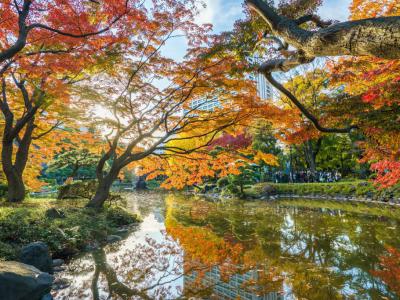
Hibiya Park, located in Tokyo, has a rich history. During the Edo period, it was occupied by the estates of the Mōri clan and Nabeshima clan. Later, during the Meiji period, it served as a space for military maneuvers. However, in 1903, it was transformed into a public park, officially opening on June 1st of that year.
On September 5, 1905, Hibiya Park became the focal point of the Hibiya Incendiary Incident, a two-day citywide riot sparked by discontent over the Treaty of Portsmouth ending the Russo-Japanese War. It led to 17 deaths, 331 arrests, and significant property damage, driven by opposition to the treaty's terms and frustration with unresponsive bureaucrats on foreign policy.
Within the park, you'll find the notable Shisei Kaikan, a Gothic-style brick building constructed in 1929. This building once served as the home of the Domei Tsushin state wire service and, in the postwar era, its successors, Kyodo News and Jiji Press. Another point of interest is the "Risky Ginkgo," a nearly 500-year-old Ginkgo tree. Interestingly, its preservation led to a heated debate in 1901 and nearly cost the park's designer his job.
Hibiya Park is also renowned for its open-air concert venue, known as the Hibiya Open-Air Concert Hall or simply Yaon. Additionally, its tennis courts are highly sought after, with reservations being fiercely contested due to their proximity to the financial and government districts. Unfortunately, during World War II, the park suffered significant losses as many of its trees and fencing were requisitioned for the war effort.
On September 5, 1905, Hibiya Park became the focal point of the Hibiya Incendiary Incident, a two-day citywide riot sparked by discontent over the Treaty of Portsmouth ending the Russo-Japanese War. It led to 17 deaths, 331 arrests, and significant property damage, driven by opposition to the treaty's terms and frustration with unresponsive bureaucrats on foreign policy.
Within the park, you'll find the notable Shisei Kaikan, a Gothic-style brick building constructed in 1929. This building once served as the home of the Domei Tsushin state wire service and, in the postwar era, its successors, Kyodo News and Jiji Press. Another point of interest is the "Risky Ginkgo," a nearly 500-year-old Ginkgo tree. Interestingly, its preservation led to a heated debate in 1901 and nearly cost the park's designer his job.
Hibiya Park is also renowned for its open-air concert venue, known as the Hibiya Open-Air Concert Hall or simply Yaon. Additionally, its tennis courts are highly sought after, with reservations being fiercely contested due to their proximity to the financial and government districts. Unfortunately, during World War II, the park suffered significant losses as many of its trees and fencing were requisitioned for the war effort.
4) Kitanomaru Park
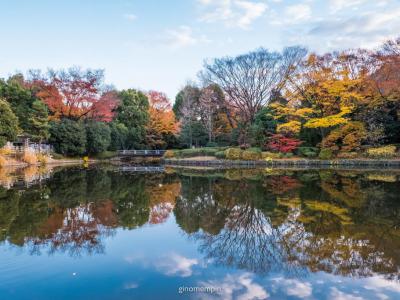
Just a stone’s throw north of Tokyo’s Imperial Palace lies a peaceful and scenic patch of green-Kitanomaru Park. Back in the day, this was the inner sanctum of Edo Castle, a fortified and fiercely guarded zone with armored samurais, secret passages, and a few stern-looking nobles-definitely not a picnic spot. Later, it became home to royal family members and local governors.
Although transformed into a public park in 1969, the samurai vibes still linger here. Two original castle gates-Shimizu and Tayasu-remain standing. The latter gate, dating back to 1685, is a true masterclass in Edo-era "keep out" design, with defensive layers and narrow courtyards set to slow down invaders. Walking through it feels like time-traveling-minus the awkward armor and no admission ticket required.
What’s more, this park isn’t just a museum with trees. It’s also home to the legendary Nippon Budokan, where martial arts meet rock concerts. Yes, that’s the same Budokan where the Beatles played. You’ll also find the Science Museum-perfect if you like your nature with a side of interactive fun-and the National Museum of Modern Art, where Japan’s creative genius is on full display. Once there, head to the top floor for one of Tokyo’s best views. Seriously, no one talks about it, but they should.
And if you’re not in a museum mood-No problem. Kitanomaru has trails for strolling, benches for loafing, and cherry blossoms that’ll make your Instagram blush. It’s a calm, crowd-free oasis in a city that never takes a nap. In short, if you're hunting cherry blossoms, geeking out on science, or just looking for a breather after sightseeing, this green escape quietly delivers all these goods-no ninja training required.
Although transformed into a public park in 1969, the samurai vibes still linger here. Two original castle gates-Shimizu and Tayasu-remain standing. The latter gate, dating back to 1685, is a true masterclass in Edo-era "keep out" design, with defensive layers and narrow courtyards set to slow down invaders. Walking through it feels like time-traveling-minus the awkward armor and no admission ticket required.
What’s more, this park isn’t just a museum with trees. It’s also home to the legendary Nippon Budokan, where martial arts meet rock concerts. Yes, that’s the same Budokan where the Beatles played. You’ll also find the Science Museum-perfect if you like your nature with a side of interactive fun-and the National Museum of Modern Art, where Japan’s creative genius is on full display. Once there, head to the top floor for one of Tokyo’s best views. Seriously, no one talks about it, but they should.
And if you’re not in a museum mood-No problem. Kitanomaru has trails for strolling, benches for loafing, and cherry blossoms that’ll make your Instagram blush. It’s a calm, crowd-free oasis in a city that never takes a nap. In short, if you're hunting cherry blossoms, geeking out on science, or just looking for a breather after sightseeing, this green escape quietly delivers all these goods-no ninja training required.
5) Hanazono Shrine
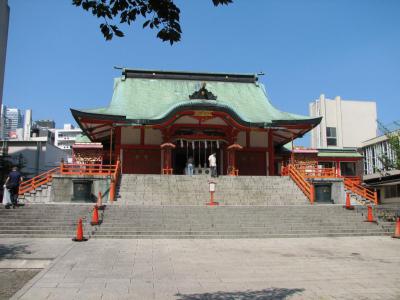
Hanazono Shrine is a Shinto shrine that was founded in the mid-17th century. Though the current shrine was rebuilt after destruction during World War II, it retains much of its character from previous centuries.
The shrine is dedicate to Inari, the God of Worldly Success. Because of this, it is a popular place for business-people to travel.
The shrine itself is quiet and serene. However, it is known for its regular celebrations and festivals. Visitors may plan their trips to Tokyo around the Setsubun, National Tournament Mochi or Two Horse festivals in February. They might attend the Koxinga Festival in March, the Flower Festival in April, Reitaisai in May or the Shinto Purification in June. Obon occurs in August and the Cock Festival in November.
Visitors can head to the Hanazono Shrine any time of the night or day. It is well lit in the evenings and always free to enter.
The shrine is dedicate to Inari, the God of Worldly Success. Because of this, it is a popular place for business-people to travel.
The shrine itself is quiet and serene. However, it is known for its regular celebrations and festivals. Visitors may plan their trips to Tokyo around the Setsubun, National Tournament Mochi or Two Horse festivals in February. They might attend the Koxinga Festival in March, the Flower Festival in April, Reitaisai in May or the Shinto Purification in June. Obon occurs in August and the Cock Festival in November.
Visitors can head to the Hanazono Shrine any time of the night or day. It is well lit in the evenings and always free to enter.
6) Meiji Jingu Shrine (must see)
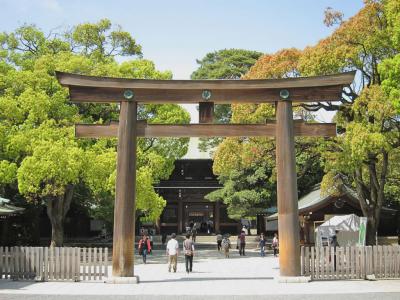
Tucked away in a lush forest of towering evergreens, Meiji Shrine is a full-blown sanctuary in the heart of Tokyo. Built to honor Emperor Meiji and Empress Shoken, this shrine celebrates their legacy in modernizing Japan, proving that emperors can leave behind more than just portraits and history books.
It all began with an iris garden-a favorite retreat of the royal couple-until the government decided it was prime real estate for something grander. The construction kicked off in 1915, showcasing Nagare-zukuri architecture with Japanese cypress and copper accents. By 1926, the shrine was fully complete.
Then came World War II, and the original structure was reduced to rubble. But thanks to public fundraising, Meiji Shrine made a comeback in 1958, proving that Tokyo never lets a good thing stay down for long.
Now, here’s where it gets really interesting-the surrounding forest is a 700,000-square-meter wonderland with 120,000 trees from 365 species, all donated from across Japan. And this woodland escape in the heart of the city isn't just for meditation and tree-hugging. New Year's first prayers? Absolutely. Shinto rituals? Plenty of those. Making wishes on wooden plaques? Of course.
The shrine's inner precinct (Naien) houses the buildings and a museum filled with royal memorabilia-because what’s a shrine without a little royal nostalgia? The outer precinct (Gaien) is where things get even more dynamic, featuring an art gallery of imperial life murals, sports venues (including the National Stadium), and the Meiji Memorial Hall, which once saw political action but now hosts the most elegant Shinto weddings you’ll ever see.
And if all that fresh air makes you peckish, no worries! There’s a charming café, a souvenir shop (with surprisingly reasonable prices!), and, for sake enthusiasts, a glorious display of stacked sake barrels-because nothing complements Japan’s sacred site quite as tastefully as a towering tribute to the country's favorite rice-based beverage.
Just don’t be surprised if you end up staying longer than planned-it’s that kind of place. And hey, if you do end up making a wish here, aim high-after all, Emperor Meiji helped modernize a whole nation. So, dream big.
Tip:
If you can, drop by on a Sunday-that’s when the Shinto weddings happen-traditional, colorful, and utterly mesmerizing. Plus, the entrance is free from sunrise to sunset.
It all began with an iris garden-a favorite retreat of the royal couple-until the government decided it was prime real estate for something grander. The construction kicked off in 1915, showcasing Nagare-zukuri architecture with Japanese cypress and copper accents. By 1926, the shrine was fully complete.
Then came World War II, and the original structure was reduced to rubble. But thanks to public fundraising, Meiji Shrine made a comeback in 1958, proving that Tokyo never lets a good thing stay down for long.
Now, here’s where it gets really interesting-the surrounding forest is a 700,000-square-meter wonderland with 120,000 trees from 365 species, all donated from across Japan. And this woodland escape in the heart of the city isn't just for meditation and tree-hugging. New Year's first prayers? Absolutely. Shinto rituals? Plenty of those. Making wishes on wooden plaques? Of course.
The shrine's inner precinct (Naien) houses the buildings and a museum filled with royal memorabilia-because what’s a shrine without a little royal nostalgia? The outer precinct (Gaien) is where things get even more dynamic, featuring an art gallery of imperial life murals, sports venues (including the National Stadium), and the Meiji Memorial Hall, which once saw political action but now hosts the most elegant Shinto weddings you’ll ever see.
And if all that fresh air makes you peckish, no worries! There’s a charming café, a souvenir shop (with surprisingly reasonable prices!), and, for sake enthusiasts, a glorious display of stacked sake barrels-because nothing complements Japan’s sacred site quite as tastefully as a towering tribute to the country's favorite rice-based beverage.
Just don’t be surprised if you end up staying longer than planned-it’s that kind of place. And hey, if you do end up making a wish here, aim high-after all, Emperor Meiji helped modernize a whole nation. So, dream big.
Tip:
If you can, drop by on a Sunday-that’s when the Shinto weddings happen-traditional, colorful, and utterly mesmerizing. Plus, the entrance is free from sunrise to sunset.
