Custom Walk in Monte-Carlo, Monaco by shiggins1267_c7deb created on 2025-05-15
Guide Location: Monaco » Monte-Carlo
Guide Type: Custom Walk
# of Sights: 6
Tour Duration: 3 Hour(s)
Travel Distance: 5.8 Km or 3.6 Miles
Share Key: NDH64
Guide Type: Custom Walk
# of Sights: 6
Tour Duration: 3 Hour(s)
Travel Distance: 5.8 Km or 3.6 Miles
Share Key: NDH64
How It Works
Please retrieve this walk in the GPSmyCity app. Once done, the app will guide you from one tour stop to the next as if you had a personal tour guide. If you created the walk on this website or come to the page via a link, please follow the instructions below to retrieve the walk in the app.
Retrieve This Walk in App
Step 1. Download the app "GPSmyCity: Walks in 1K+ Cities" on Apple App Store or Google Play Store.



Step 2. In the GPSmyCity app, download(or launch) the guide "Monte-Carlo Map and Walking Tours".
Step 3. Tap the menu button located at upper right corner of the "Walks" screen and select "Retrieve custom walk". Enter the share key: NDH64
1) Princess Grace Rose Garden (must see)
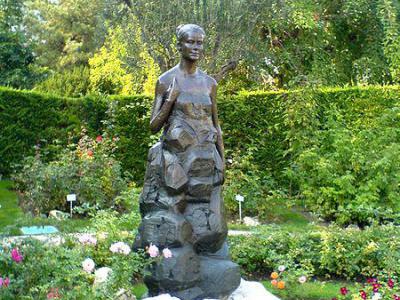
Created in 1984 as a memorial to Grace Kelly, wife of Prince Rainier III, this municipal park was re-dedicated in 2014. Princess Grace is commemorated in a statue by Kees Verkade in the rose garden, which features 4,000 unique and one-of-a-kind species of remarkable rose plants. Further through the park, you can find the herb gardens and other lovely streams and beautiful trees.
It was well known that the Princess, a former American Hollywood film star, had a love for plants and flowers. In 1980, she had published a book titled "My Book About Flowers", which was about flowers and plants from Monaco and the nearby Mediterranean area. The garden is not very big but it has several benches so you can sit down and take a rest-stop while surrounded by amazing smells and views of the coast and harbor. For those who are interested in roses, the garden even has an interactive terminal which can identify the location of each rosebush on a map.
It was well known that the Princess, a former American Hollywood film star, had a love for plants and flowers. In 1980, she had published a book titled "My Book About Flowers", which was about flowers and plants from Monaco and the nearby Mediterranean area. The garden is not very big but it has several benches so you can sit down and take a rest-stop while surrounded by amazing smells and views of the coast and harbor. For those who are interested in roses, the garden even has an interactive terminal which can identify the location of each rosebush on a map.
2) Monaco Cathedral (must see)
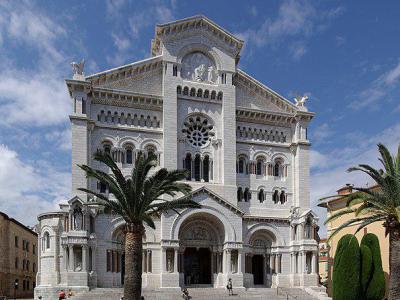
Monaco Cathedral — also known as Saint Nicholas Cathedral — is the seat of the Roman Catholic Archdiocese of Monaco and the burial place of many members of the princely Grimaldi family, including Princess Grace and Prince Rainier III. It is one of the most visited landmarks in the Old Town.
The current cathedral was built between 1875 and 1903, then consecrated in 1911, on the site of Monaco’s original parish church dating back to 1252, which was dedicated to Saint Nicholas. Constructed from white limestone from La Turbie, the exterior stands out for its solid Romanesque-Revival design, while the interior includes notable artworks such as a circa-1500 retable near the transept, the Great Altar, and the Episcopal Throne, all carved from white Carrara marble.
Major religious celebrations take place here, including the Feast of Saint Devota on 27 January — the patron saint of Monaco — and the National Day on 19 November. During special services and concerts, visitors may hear the cathedral’s impressive four-keyboard organ, inaugurated in 1976, known for its rich acoustic presence.
From September through June, the Cathedral Choir School performs during Sunday Mass at 10:00 am, continuing a centuries-old choral tradition linked to the princely court. Another annual celebration occurs on 6 December, when children gather for a festive Mass honouring Saint Nicholas.
This cathedral was the setting for some of Monaco’s most significant royal moments — including the wedding ceremony of Prince Rainier III and Grace Kelly in 1956. Visitors often pause near the royal tombs in a spirit of respect. Despite their international fame, Princess Grace and Prince Rainier III chose simple, modest gravestones, reflecting their personal values and a strong bond with the people of Monaco.
The current cathedral was built between 1875 and 1903, then consecrated in 1911, on the site of Monaco’s original parish church dating back to 1252, which was dedicated to Saint Nicholas. Constructed from white limestone from La Turbie, the exterior stands out for its solid Romanesque-Revival design, while the interior includes notable artworks such as a circa-1500 retable near the transept, the Great Altar, and the Episcopal Throne, all carved from white Carrara marble.
Major religious celebrations take place here, including the Feast of Saint Devota on 27 January — the patron saint of Monaco — and the National Day on 19 November. During special services and concerts, visitors may hear the cathedral’s impressive four-keyboard organ, inaugurated in 1976, known for its rich acoustic presence.
From September through June, the Cathedral Choir School performs during Sunday Mass at 10:00 am, continuing a centuries-old choral tradition linked to the princely court. Another annual celebration occurs on 6 December, when children gather for a festive Mass honouring Saint Nicholas.
This cathedral was the setting for some of Monaco’s most significant royal moments — including the wedding ceremony of Prince Rainier III and Grace Kelly in 1956. Visitors often pause near the royal tombs in a spirit of respect. Despite their international fame, Princess Grace and Prince Rainier III chose simple, modest gravestones, reflecting their personal values and a strong bond with the people of Monaco.
3) Prince's Palace of Monaco (must see)
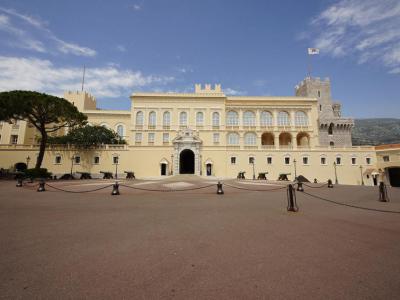
The official residence of the Sovereign Prince of Monaco, the Prince’s Palace was originally built in 1191 as a Genoese fortress. Throughout its long and sometimes turbulent history, it has been bombarded and besieged by foreign powers. The Grimaldi family first captured the fortress in 1297, and it has remained their seat ever since — first as feudal lords and, from the 17th century onward, as sovereign princes. Their authority, however, often depended on delicate alliances with larger neighbouring states.
While many European rulers constructed lavish Renaissance and Baroque palaces, Monaco’s princes were required to maintain strong fortifications for protection. This unusual circumstance resulted in a palace that combines fortified medieval elements with later decorative additions, making it one of the more distinctive royal residences in Europe. When the defensive structures were finally eased in the late 18th century, the palace was seized during the French Revolution, looted, and left in a state of decline while the Grimaldi family lived in exile for more than twenty years.
In the 19th and early 20th centuries, both the palace and its rulers became associated with the emerging glamour of Monte-Carlo and the French Riviera. That aura only grew in 1956, when American film star Grace Kelly married Prince Rainier III and became Princess Grace, bringing worldwide attention and cinematic charm to the palace.
Today, the Prince’s Palace remains the official home of the reigning monarch and is open to the public during the summer months. Visitors can explore several state rooms — richly decorated with fine tapestries, frescoes, and period furnishings — and enjoy views over the harbour and city.
Tip:
Combined tickets are available that include the Prince’s Car Collection or the Oceanographic Museum. In July and August, the palace courtyard hosts open-air concerts.
While many European rulers constructed lavish Renaissance and Baroque palaces, Monaco’s princes were required to maintain strong fortifications for protection. This unusual circumstance resulted in a palace that combines fortified medieval elements with later decorative additions, making it one of the more distinctive royal residences in Europe. When the defensive structures were finally eased in the late 18th century, the palace was seized during the French Revolution, looted, and left in a state of decline while the Grimaldi family lived in exile for more than twenty years.
In the 19th and early 20th centuries, both the palace and its rulers became associated with the emerging glamour of Monte-Carlo and the French Riviera. That aura only grew in 1956, when American film star Grace Kelly married Prince Rainier III and became Princess Grace, bringing worldwide attention and cinematic charm to the palace.
Today, the Prince’s Palace remains the official home of the reigning monarch and is open to the public during the summer months. Visitors can explore several state rooms — richly decorated with fine tapestries, frescoes, and period furnishings — and enjoy views over the harbour and city.
Tip:
Combined tickets are available that include the Prince’s Car Collection or the Oceanographic Museum. In July and August, the palace courtyard hosts open-air concerts.
4) Monte Carlo Harbor (must see)
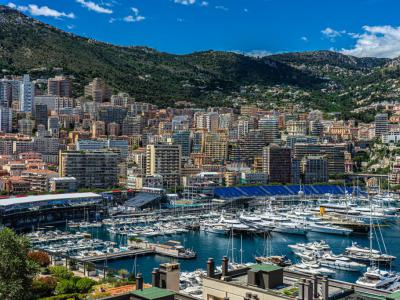
Monte-Carlo Harbor is known for its calm blue waters and the frequent arrival of yachts from around the world. Surrounded by hills and waterfront buildings, it reflects Monaco’s long connection with the sea. Although modern in appearance, the harbour has a long history of serving sailors and traders. In the 20th century, it was expanded to accommodate contemporary vessels, making it both a practical port and a representation of Monaco’s maritime character.
Officially named Port Hercules, the harbour’s title dates back to ancient Greek sailors, who believed the mythological hero Hercules protected this coastline. They referred to the area as Port Hercules, linking it to a sanctuary believed to stand nearby. While locals and official signs still use this historic name, many visitors call it Monte-Carlo Harbor, since it sits within the famous district and is closely connected to Monte-Carlo’s coastal life.
The harbour is famous for its views, especially from higher terraces overlooking the water. It’s also part of the Monaco Grand Prix circuit, where Formula One cars race past the docks every May. During major yacht shows and international sporting events, the harbour becomes an exclusive floating neighbourhood where some vessels even include helipads, swimming pools, and private cinemas.
Today, the harbour can accommodate some of the largest yachts in the world. Visitors can walk along the promenade, stop at cafés and restaurants by the water, or simply enjoy the peaceful movement of the boats. Food stalls along the quay offer burgers, hot dogs, paninis, crêpes, and churros. The area also features pleasant walking paths and gardens, with scenic views of both the sea and the surrounding cityscape.
Officially named Port Hercules, the harbour’s title dates back to ancient Greek sailors, who believed the mythological hero Hercules protected this coastline. They referred to the area as Port Hercules, linking it to a sanctuary believed to stand nearby. While locals and official signs still use this historic name, many visitors call it Monte-Carlo Harbor, since it sits within the famous district and is closely connected to Monte-Carlo’s coastal life.
The harbour is famous for its views, especially from higher terraces overlooking the water. It’s also part of the Monaco Grand Prix circuit, where Formula One cars race past the docks every May. During major yacht shows and international sporting events, the harbour becomes an exclusive floating neighbourhood where some vessels even include helipads, swimming pools, and private cinemas.
Today, the harbour can accommodate some of the largest yachts in the world. Visitors can walk along the promenade, stop at cafés and restaurants by the water, or simply enjoy the peaceful movement of the boats. Food stalls along the quay offer burgers, hot dogs, paninis, crêpes, and churros. The area also features pleasant walking paths and gardens, with scenic views of both the sea and the surrounding cityscape.
5) Casino de Monte-Carlo (must see)
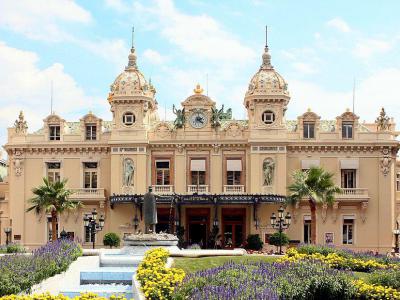
The Monte Carlo Casino is perhaps the world's most famous gambling venue, owned and operated by the Société des bains de mer de Monaco. At some point, in the 1950s, it was controlled by Aristotle Onassis.
The idea to open a gambling business in Monaco came from Princess Caroline in the late 1840s. She saw this as a chance for the Principality to avoid bankruptcy after the loss of tax proceeds from the breakaway towns of Menton and Roquebrune.
In the 1850s, Monaco was not much of a fancy place. It didn't have sufficient road link to the neighboring Nice and the rest of Europe, no suitable accommodation or any other amenities for visitors. The casino changed several managers before it started to gain profit, in 1859.
In 1863 it was taken over by François Blanc who had used his entrepreneurial skills to raise a required capital for a massive development of the area, launched in 1858. Among those who first invested in the project were Bishop of Monaco and the future Pope Leo XIII. The new casino complex, designed in a distinct Beaux Arts style by architect Charles Garnier, author of the Paris Opéra building, was finished in 1863. The area, previously known as Les Spelugues (The Caves), was renamed to Monte Carlo in honor of Prince Charles, the then ruler of Monaco. In 1879, an opera and ballet theatre, known as the Salle Garnier, was added to the complex.
For many years, the Monte Carlo Casino remained the key source of income for Monaco's economy, yet its own citizens have always been banned from gambling. It is for this reason that all visitors to the casino must present their IDs to ensure that no locals get inside.
A lot of fictional, as well as factual, peculiar events have been associated with the Monte Carlo Casino over the years. Among them the James Bond movies, partially set in and filmed on the location, and the Monaco Grand Prix (the Circuit de Monaco) Formula-1 race, passing by the casino building each year.
The idea to open a gambling business in Monaco came from Princess Caroline in the late 1840s. She saw this as a chance for the Principality to avoid bankruptcy after the loss of tax proceeds from the breakaway towns of Menton and Roquebrune.
In the 1850s, Monaco was not much of a fancy place. It didn't have sufficient road link to the neighboring Nice and the rest of Europe, no suitable accommodation or any other amenities for visitors. The casino changed several managers before it started to gain profit, in 1859.
In 1863 it was taken over by François Blanc who had used his entrepreneurial skills to raise a required capital for a massive development of the area, launched in 1858. Among those who first invested in the project were Bishop of Monaco and the future Pope Leo XIII. The new casino complex, designed in a distinct Beaux Arts style by architect Charles Garnier, author of the Paris Opéra building, was finished in 1863. The area, previously known as Les Spelugues (The Caves), was renamed to Monte Carlo in honor of Prince Charles, the then ruler of Monaco. In 1879, an opera and ballet theatre, known as the Salle Garnier, was added to the complex.
For many years, the Monte Carlo Casino remained the key source of income for Monaco's economy, yet its own citizens have always been banned from gambling. It is for this reason that all visitors to the casino must present their IDs to ensure that no locals get inside.
A lot of fictional, as well as factual, peculiar events have been associated with the Monte Carlo Casino over the years. Among them the James Bond movies, partially set in and filmed on the location, and the Monaco Grand Prix (the Circuit de Monaco) Formula-1 race, passing by the casino building each year.
6) Cafe de Paris and Casino (must see)
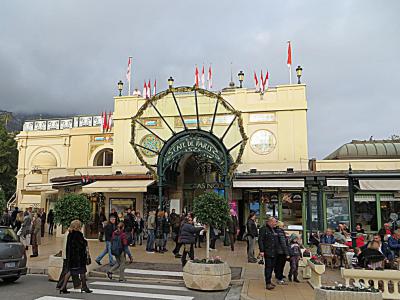
Cafe de Paris and Casino date back to 1868. The most recent renovation in 1988 gave the Cafe a Belle Époque style that mimics many Parisian bistros from the early 1900s. The cafe features two modular terraces with views of the nearby hotel that has impressive antique cars on display.
If you enjoy high-end gambling, Cafe de Paris and Casino is one of the top places to go in Monaco. There are over 140,000 square feet of gaming rooms, giving you plenty of opportunities to enjoy the games that you want. The gaming area's setting has been inspired by the Historic Grand Prix.
When you dine here, you'll be enjoying an exciting brasserie setting. Some of the most popular types of foods include pasta, fresh fish, beef dishes that include steak tartare and veal, and delicious desserts including pastries. There is also a full alcohol menu offering everything from wine to cocktails.
If you enjoy high-end gambling, Cafe de Paris and Casino is one of the top places to go in Monaco. There are over 140,000 square feet of gaming rooms, giving you plenty of opportunities to enjoy the games that you want. The gaming area's setting has been inspired by the Historic Grand Prix.
When you dine here, you'll be enjoying an exciting brasserie setting. Some of the most popular types of foods include pasta, fresh fish, beef dishes that include steak tartare and veal, and delicious desserts including pastries. There is also a full alcohol menu offering everything from wine to cocktails.
