Custom Walk in Madrid, Spain by rennjohn_34a72 created on 2025-05-21
Guide Location: Spain » Madrid
Guide Type: Custom Walk
# of Sights: 8
Tour Duration: 2 Hour(s)
Travel Distance: 3.8 Km or 2.4 Miles
Share Key: CSMLT
Guide Type: Custom Walk
# of Sights: 8
Tour Duration: 2 Hour(s)
Travel Distance: 3.8 Km or 2.4 Miles
Share Key: CSMLT
How It Works
Please retrieve this walk in the GPSmyCity app. Once done, the app will guide you from one tour stop to the next as if you had a personal tour guide. If you created the walk on this website or come to the page via a link, please follow the instructions below to retrieve the walk in the app.
Retrieve This Walk in App
Step 1. Download the app "GPSmyCity: Walks in 1K+ Cities" on Apple App Store or Google Play Store.



Step 2. In the GPSmyCity app, download(or launch) the guide "Madrid Map and Walking Tours".
Step 3. Tap the menu button located at upper right corner of the "Walks" screen and select "Retrieve custom walk". Enter the share key: CSMLT
1) Plaza Mayor (Town Square) (must see)
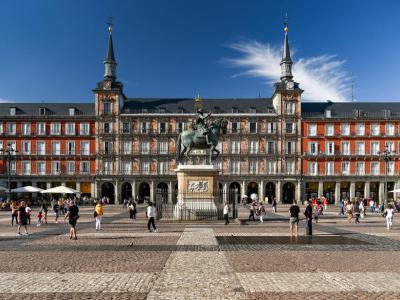
Madrid’s grand and dramatic Town Square was initially dreamed up by King Felipe II, who, in the late 16th century, envisioned a more prestigious focal point for his new capital. The oldest building here, known as the Bakery House, dates back to 1590, though extensive rebuilding occurred after devastating fires in the 17th and 18th centuries. Interestingly, its eye-catching frescoes are relatively new, added as recently as 1992. Today, this building hosts the city’s tourist information center, welcoming visitors from morning until late into the evening. At the square’s center, you’ll spot a bronze equestrian statue of Felipe III, which has stood there since 1616.
Historically, this vast plaza-with a capacity of 50,000 people-hosted a wide range of events: royal coronations, religious ceremonies, theatrical productions, bullfights, and even public trials of heretics that ended dramatically with executions. Nowadays, the square remains a lively social hub, bustling with outdoor cafés, upscale restaurants, and plenty of tourists. Still, it hasn’t lost its old-world grandeur, continuing to host seasonal events like outdoor concerts, theatrical performances, festive Christmas markets, and a popular Sunday stamp and coin fair.
While many restaurants lining the plaza can be somewhat pricey and tourist-oriented, the square’s delightful atmosphere makes it an ideal setting for relaxing with a glass of Spanish wine and a delicious tapa. One culinary treat you shouldn’t miss here is Madrid’s signature calamari sandwich-crispy battered squid served fresh in a bun-best enjoyed with a refreshing cold beer.
Among the square’s standout eateries, Los Galayos is especially noteworthy. Established back in 1894, this historic restaurant is open every day until late, featuring multiple dining rooms and two inviting outdoor terraces. For a more casual experience, tucked in a charming alley just south of the square, you'll discover Casa Revuelta, an authentic local bar renowned for its “bacalao frito”-crispy, golden fried cod, simply irresistible.
Finally, just steps away on nearby Calle de Cuchilleros, sits Sobrino de Botín. Established in 1725, it proudly holds the Guinness World Record as the oldest continuously operating restaurant in the world.
Historically, this vast plaza-with a capacity of 50,000 people-hosted a wide range of events: royal coronations, religious ceremonies, theatrical productions, bullfights, and even public trials of heretics that ended dramatically with executions. Nowadays, the square remains a lively social hub, bustling with outdoor cafés, upscale restaurants, and plenty of tourists. Still, it hasn’t lost its old-world grandeur, continuing to host seasonal events like outdoor concerts, theatrical performances, festive Christmas markets, and a popular Sunday stamp and coin fair.
While many restaurants lining the plaza can be somewhat pricey and tourist-oriented, the square’s delightful atmosphere makes it an ideal setting for relaxing with a glass of Spanish wine and a delicious tapa. One culinary treat you shouldn’t miss here is Madrid’s signature calamari sandwich-crispy battered squid served fresh in a bun-best enjoyed with a refreshing cold beer.
Among the square’s standout eateries, Los Galayos is especially noteworthy. Established back in 1894, this historic restaurant is open every day until late, featuring multiple dining rooms and two inviting outdoor terraces. For a more casual experience, tucked in a charming alley just south of the square, you'll discover Casa Revuelta, an authentic local bar renowned for its “bacalao frito”-crispy, golden fried cod, simply irresistible.
Finally, just steps away on nearby Calle de Cuchilleros, sits Sobrino de Botín. Established in 1725, it proudly holds the Guinness World Record as the oldest continuously operating restaurant in the world.
2) Mercado de San Miguel (Saint Michael's Market) (must see)
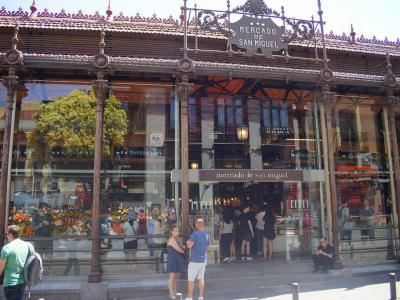
Saint Michael’s Market may not be Madrid’s largest, but it holds a unique place in the city’s history as the last surviving iron marketplace. Originally built in 1915, this striking single-level structure, encased in glass, served as a traditional neighborhood market for nearly a century. After an ambitious transformation in 2009, it emerged as a celebrated gastronomic destination, inspiring the rise of gourmet markets not just in Madrid, but across Spain.
Situated on the site of a former church-demolished in 1810 during the rule of Joseph Bonaparte-San Miguel now houses an impressive variety of food stalls. Here, you can savor freshly prepared dishes representing Spain’s diverse culinary traditions. If you’re unsure what to try, don’t hesitate to ask for a sample and find your new favorite flavor.
Beyond its tempting food offerings, the market features a wine bar, a vermouth bar, and even a flamenco venue. Live music performances add to the lively ambiance, making it much more than just a place to eat.
Tip: Before stepping inside, glance up at the fallen angel statue-“Accidente Aereo”-above the main entrance. While not as famous as the one in Retiro Park, it’s no less spectacular. And when nature calls, keep a receipt from one of your purchases handy; it might save you a restroom fee.
Situated on the site of a former church-demolished in 1810 during the rule of Joseph Bonaparte-San Miguel now houses an impressive variety of food stalls. Here, you can savor freshly prepared dishes representing Spain’s diverse culinary traditions. If you’re unsure what to try, don’t hesitate to ask for a sample and find your new favorite flavor.
Beyond its tempting food offerings, the market features a wine bar, a vermouth bar, and even a flamenco venue. Live music performances add to the lively ambiance, making it much more than just a place to eat.
Tip: Before stepping inside, glance up at the fallen angel statue-“Accidente Aereo”-above the main entrance. While not as famous as the one in Retiro Park, it’s no less spectacular. And when nature calls, keep a receipt from one of your purchases handy; it might save you a restroom fee.
3) Plaza de la Villa (Town Hall Square)
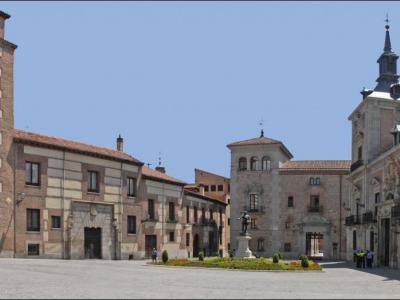
For a peaceful retreat in the heart of Madrid, look no further than the Town Hall Square. Just steps from Calle Mayor and close to the Town Square (“Plaza Mayor”), this medieval gem is among the city’s best-preserved historical landmarks. Surrounded by striking buildings that tell the story of Spanish architecture over three centuries, it offers a window into the past.
Dominating the square is the old Town Hall, or “Casa de la Villa,” a masterpiece of Habsburg Madrid completed in 1696. Noted for its beautiful stained glass windows and frescoes by Antonio Palomino, this building embodies elegance. Across the archway is the 16th-century Cisneros House, a prime example of early Spanish Renaissance style, boasting an intricate Plateresque facade and an exceptional collection of fine tapestries.
Near the Town Hall, the Lujanes House and Tower are reputedly the oldest structures in the city. Dating back to the early 15th century, the tower has an intriguing legend. Following the Battle of Pavia in 1525, King Charles I reportedly imprisoned France’s King Francis I in this very place. The French monarch, refusing to bow to his captor, was forced to use a lowered entrance, thus “bowing” each time he entered or exited-an enduring tale that adds to the tower’s mystique.
At the square’s center stands a tribute to Admiral Álvaro de Bazán, the Spanish naval hero who never lost a battle during his 50-year career. The statue, unveiled in 1891, marks the 300th anniversary of his passing.
Dominating the square is the old Town Hall, or “Casa de la Villa,” a masterpiece of Habsburg Madrid completed in 1696. Noted for its beautiful stained glass windows and frescoes by Antonio Palomino, this building embodies elegance. Across the archway is the 16th-century Cisneros House, a prime example of early Spanish Renaissance style, boasting an intricate Plateresque facade and an exceptional collection of fine tapestries.
Near the Town Hall, the Lujanes House and Tower are reputedly the oldest structures in the city. Dating back to the early 15th century, the tower has an intriguing legend. Following the Battle of Pavia in 1525, King Charles I reportedly imprisoned France’s King Francis I in this very place. The French monarch, refusing to bow to his captor, was forced to use a lowered entrance, thus “bowing” each time he entered or exited-an enduring tale that adds to the tower’s mystique.
At the square’s center stands a tribute to Admiral Álvaro de Bazán, the Spanish naval hero who never lost a battle during his 50-year career. The statue, unveiled in 1891, marks the 300th anniversary of his passing.
4) Palacio Real (Royal Palace of Madrid) (must see)
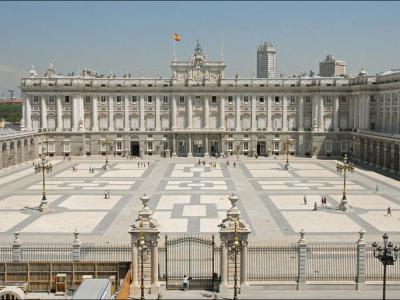
Touring this palace feels like wandering through one of the world’s most exquisite art galleries. You’ll discover a stunning array of masterpieces, from paintings and frescoes to porcelain, ornate furniture, silverware, and other historically significant treasures. Among the standout features is the only complete set of Stradivarius string quintet instruments-a true musical marvel.
The palace we see today was commissioned by Felipe V after the 9th-century wooden Moorish Alcázar fortress was lost to a devastating fire in 1734. Drawing inspiration from the lavish splendor of Versailles, where Felipe had been raised, the Bourbon king envisioned a magnificent French-Italian-style structure built from stone and granite. Although Felipe didn’t live to see its completion, the palace was finally ready for use during the reign of Carlos III in 1764. What the exterior lacks in flamboyance, the interior more than makes up for: lavish marble floors, celestial frescoes, and golden furnishings tell a story of wealth and power, standing in stark contrast to Spain’s declining status at the time.
Don’t miss the awe-inspiring Throne Room, with its ceiling by Tiepolo illustrating the Majesty of Spain, or the Gasparini Room, whose silver silk-embroidered walls and intricate marble mosaic floor offer a mesmerizing display. The Porcelain Room, with its dazzling gold, green, and white porcelain decor, is another showstopper.
Beyond the main palace, you can explore the renowned Royal Armory, home to one of the world’s finest collections of historic weapons and armor. There is also an 18th-century pharmacy resembling a laboratory and the Painting Gallery, with works by Caravaggio, Velázquez, and Goya.
Tips:
If you’re planning a visit, set aside a few hours to take it all in. To beat the crowds and save time, consider booking your tickets online in advance.
The palace we see today was commissioned by Felipe V after the 9th-century wooden Moorish Alcázar fortress was lost to a devastating fire in 1734. Drawing inspiration from the lavish splendor of Versailles, where Felipe had been raised, the Bourbon king envisioned a magnificent French-Italian-style structure built from stone and granite. Although Felipe didn’t live to see its completion, the palace was finally ready for use during the reign of Carlos III in 1764. What the exterior lacks in flamboyance, the interior more than makes up for: lavish marble floors, celestial frescoes, and golden furnishings tell a story of wealth and power, standing in stark contrast to Spain’s declining status at the time.
Don’t miss the awe-inspiring Throne Room, with its ceiling by Tiepolo illustrating the Majesty of Spain, or the Gasparini Room, whose silver silk-embroidered walls and intricate marble mosaic floor offer a mesmerizing display. The Porcelain Room, with its dazzling gold, green, and white porcelain decor, is another showstopper.
Beyond the main palace, you can explore the renowned Royal Armory, home to one of the world’s finest collections of historic weapons and armor. There is also an 18th-century pharmacy resembling a laboratory and the Painting Gallery, with works by Caravaggio, Velázquez, and Goya.
Tips:
If you’re planning a visit, set aside a few hours to take it all in. To beat the crowds and save time, consider booking your tickets online in advance.
5) Plaza de Espana (Spain Square)
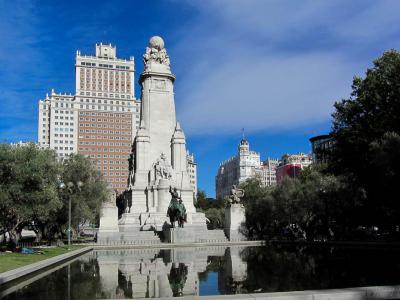
Constructed mainly during the Franco era and dominated by two early Spanish skyscrapers, this popular meeting point serves as a striking punctuation mark at the end of Gran Vía and offers a reprieve from the densely packed streets to the east.
It was the Spanish dictator's endeavor to showcase Spain as a dynamic and modern nation. The monumental residential complex of Spain Building ("Edificio de España"), positioned at the head of the square, resembles something out of 1920s New York but was actually completed in 1953. Four years later, the 32-story Madrid Tower ("Torre de Madrid"), nicknamed "La Jirafa" (the Giraffe), briefly held the title of Spain's tallest building and the tallest concrete structure in the world.
The centerpiece of the square is its magnificent stone obelisk, constructed in 1928. Standing before the obelisk is a statue of Cervantes, with Don Quixote mounted on his horse Rocinante and Sancho Panza trotting alongside on his donkey.
The space has recently been renovated, adding 1,300 new trees and two exciting playgrounds for children. It also serves as a venue for occasional festivities and hosts an intriguing craft fair during the San Isidro festival (around May 15).
Why You Should Visit:
Typical tourist destination with nice sculptures, a beautiful fountain and plenty of seats to rest and watch the sunset/world go by. There are plenty of food vendors around and the surrounding streets are teeming with cafes, bars and restaurants.
Tip:
Beyond the square lies a blend of aristocratic suburbs, university campuses, and parkland, characterized by the lush green spaces of the West Park ("Parque del Oeste") and Countryside House Park ("Casa de Campo"). Notable attractions include the eclectic collections of the Cerralbo Museum, the fascinating Museum of the Americas, the Royal Chapel of St. Anthony of La Florida with its stunning Goya frescoes, and further out, the pleasant royal residence of El Pardo. Meanwhile, the spacious terraces along the Rosales Promenade ("Paseo del Pintor Rosales") offer ample opportunities for refreshment.
It was the Spanish dictator's endeavor to showcase Spain as a dynamic and modern nation. The monumental residential complex of Spain Building ("Edificio de España"), positioned at the head of the square, resembles something out of 1920s New York but was actually completed in 1953. Four years later, the 32-story Madrid Tower ("Torre de Madrid"), nicknamed "La Jirafa" (the Giraffe), briefly held the title of Spain's tallest building and the tallest concrete structure in the world.
The centerpiece of the square is its magnificent stone obelisk, constructed in 1928. Standing before the obelisk is a statue of Cervantes, with Don Quixote mounted on his horse Rocinante and Sancho Panza trotting alongside on his donkey.
The space has recently been renovated, adding 1,300 new trees and two exciting playgrounds for children. It also serves as a venue for occasional festivities and hosts an intriguing craft fair during the San Isidro festival (around May 15).
Why You Should Visit:
Typical tourist destination with nice sculptures, a beautiful fountain and plenty of seats to rest and watch the sunset/world go by. There are plenty of food vendors around and the surrounding streets are teeming with cafes, bars and restaurants.
Tip:
Beyond the square lies a blend of aristocratic suburbs, university campuses, and parkland, characterized by the lush green spaces of the West Park ("Parque del Oeste") and Countryside House Park ("Casa de Campo"). Notable attractions include the eclectic collections of the Cerralbo Museum, the fascinating Museum of the Americas, the Royal Chapel of St. Anthony of La Florida with its stunning Goya frescoes, and further out, the pleasant royal residence of El Pardo. Meanwhile, the spacious terraces along the Rosales Promenade ("Paseo del Pintor Rosales") offer ample opportunities for refreshment.
6) Gran Via (Great Way) (must see)
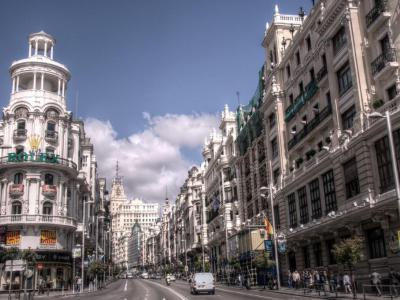
The Gran Vía, or “Great Way,” represents Madrid’s leap into modernity at the turn of the 20th century. Built in stages during an era of economic prosperity, thanks in part to Spain’s neutrality in World War I, it became the city’s commercial lifeline, separating the historic southern neighborhoods from the newer districts to the north. Today, this boulevard is alive with traffic, shopping, and a dazzling mix of architectural styles-from sleek Modernist designs to ornate Neo-Rococo facades. Along the way, you’ll encounter grand banks, imposing office buildings, and even a handful of museums and churches to enrich the experience.
The most eye-catching section is the earliest, completed between 1910 and 1924. Stretching from Calle Alcalá to the Telefónica skyscraper, this segment is home to landmarks like the Metrópolis Building, renowned for its cylindrical design, intricate white stone sculptures, and dazzling golden garlands. The Telefónica skyscraper, reaching 81 meters, was Spain’s first true high-rise. During the Civil War, it served as a reference point for Franco's forces to carry out bombings in the area.
As you venture down toward Callao Square, the street buzzes with energy, lined with shops, cafes, and cinemas. The square itself leads into Calle Preciados, a shopper’s paradise. Positioned on the corner is the iconic Art Deco Capitol Building, adorned with eye-catching neon signs. Further along, as you head towards Spain Square (“Plaza de España”), the view expands upward to reveal statues and ornate details crowning the rooftops, giving Gran Vía an unmistakable and picturesque skyline.
Tip:
If you’re visiting in the summer, an early evening stroll is ideal. The heat fades, and the street lights begin to glow, creating a magical setting for your walk.
The most eye-catching section is the earliest, completed between 1910 and 1924. Stretching from Calle Alcalá to the Telefónica skyscraper, this segment is home to landmarks like the Metrópolis Building, renowned for its cylindrical design, intricate white stone sculptures, and dazzling golden garlands. The Telefónica skyscraper, reaching 81 meters, was Spain’s first true high-rise. During the Civil War, it served as a reference point for Franco's forces to carry out bombings in the area.
As you venture down toward Callao Square, the street buzzes with energy, lined with shops, cafes, and cinemas. The square itself leads into Calle Preciados, a shopper’s paradise. Positioned on the corner is the iconic Art Deco Capitol Building, adorned with eye-catching neon signs. Further along, as you head towards Spain Square (“Plaza de España”), the view expands upward to reveal statues and ornate details crowning the rooftops, giving Gran Vía an unmistakable and picturesque skyline.
Tip:
If you’re visiting in the summer, an early evening stroll is ideal. The heat fades, and the street lights begin to glow, creating a magical setting for your walk.
7) Del Diego Cocktail Bar
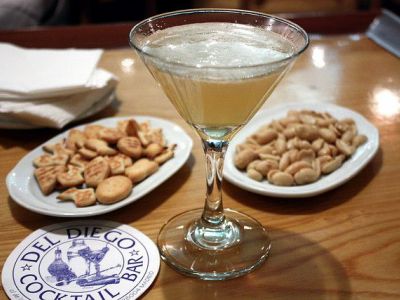
Always crowded late at night, this New York-style cocktail bar is renowned for its unparalleled cocktail creations in the heart of Madrid. Set up by the talented Fernando del Diego, formerly a waiter at the esteemed Chicote, this establishment has surpassed its predecessor, now renowned for its expertly crafted cocktails served in a warm and unhurried ambiance, complemented by simple yet satisfying snacks.
Indulge in classic favorites such as margaritas, mojitos, and manhattans, or venture into the realm of the extraordinary with their signature vodka-based concoction, bearing the bar's namesake. Another must-try is their vermouth rosso, skillfully prepared with just the right amount of ice, accompanied by an anchovy-filled olive, its subtle brininess mingling with the herbaceous notes and perfectly extracted essence of orange peel.
Indulge in classic favorites such as margaritas, mojitos, and manhattans, or venture into the realm of the extraordinary with their signature vodka-based concoction, bearing the bar's namesake. Another must-try is their vermouth rosso, skillfully prepared with just the right amount of ice, accompanied by an anchovy-filled olive, its subtle brininess mingling with the herbaceous notes and perfectly extracted essence of orange peel.
8) Puerta del Sol (Gate of the Sun) (must see)
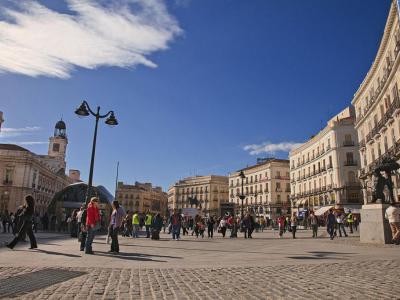
One of Madrid’s most popular gathering places, the Gate of the Sun is always buzzing with life. Historically, it marked the city’s original eastern entrance, where a gatehouse and castle once stood. Over the centuries, these structures gave way to churches, and in the late 19th century, the area transformed into the square we know today, becoming a hub of café culture and social activity.
Shaped like a half-moon, the area features a modern glass train station facing the statue of Carlos III on horseback at its center. Opposite, a red-brick government building, originally a post office from the reign of Carlos III, now houses the regional government. Later repurposed as the Ministry of the Interior, it gained its distinctive clocktower in 1866. This building, however, has a darker past-during the Franco regime, its basement cells were notorious for human rights abuses.
The Gate of the Sun itself has witnessed significant historical drama. On May 2, 1808, the Spanish uprising against French occupation began here, though the rebellion was ultimately quashed. In 1912, Prime Minister José Canalejas was assassinated in the square, and in 1931, the proclamation of the Second Republic was made from the Ministry’s balcony.
Today, it remains a focal point for festive events, bringing together locals and visitors alike. Nearby side streets offer a treasure trove of nightlife, with bars and clubs opening their doors late, creating a vibrant after-hours scene.
While here, you can also have a chance to eat like a local in a number of family-run restaurants, authentic taverns and tapas bars tucked away from the usual tourist paths. One such hidden gem is La Mallorquina, famed for its “napolitanas” and ring-shaped pastries, which can be enjoyed in an upstairs salon overlooking the square.
Shaped like a half-moon, the area features a modern glass train station facing the statue of Carlos III on horseback at its center. Opposite, a red-brick government building, originally a post office from the reign of Carlos III, now houses the regional government. Later repurposed as the Ministry of the Interior, it gained its distinctive clocktower in 1866. This building, however, has a darker past-during the Franco regime, its basement cells were notorious for human rights abuses.
The Gate of the Sun itself has witnessed significant historical drama. On May 2, 1808, the Spanish uprising against French occupation began here, though the rebellion was ultimately quashed. In 1912, Prime Minister José Canalejas was assassinated in the square, and in 1931, the proclamation of the Second Republic was made from the Ministry’s balcony.
Today, it remains a focal point for festive events, bringing together locals and visitors alike. Nearby side streets offer a treasure trove of nightlife, with bars and clubs opening their doors late, creating a vibrant after-hours scene.
While here, you can also have a chance to eat like a local in a number of family-run restaurants, authentic taverns and tapas bars tucked away from the usual tourist paths. One such hidden gem is La Mallorquina, famed for its “napolitanas” and ring-shaped pastries, which can be enjoyed in an upstairs salon overlooking the square.
