Custom Walk in Shanghai, China by danielrhr_8f575 created on 2025-05-30
Guide Location: China » Shanghai
Guide Type: Custom Walk
# of Sights: 5
Tour Duration: 2 Hour(s)
Travel Distance: 3.7 Km or 2.3 Miles
Share Key: UL4FK
Guide Type: Custom Walk
# of Sights: 5
Tour Duration: 2 Hour(s)
Travel Distance: 3.7 Km or 2.3 Miles
Share Key: UL4FK
How It Works
Please retrieve this walk in the GPSmyCity app. Once done, the app will guide you from one tour stop to the next as if you had a personal tour guide. If you created the walk on this website or come to the page via a link, please follow the instructions below to retrieve the walk in the app.
Retrieve This Walk in App
Step 1. Download the app "GPSmyCity: Walks in 1K+ Cities" on Apple App Store or Google Play Store.



Step 2. In the GPSmyCity app, download(or launch) the guide "Shanghai Map and Walking Tours".
Step 3. Tap the menu button located at upper right corner of the "Walks" screen and select "Retrieve custom walk". Enter the share key: UL4FK
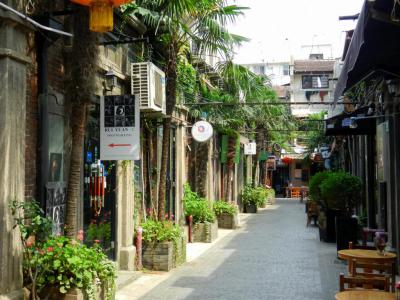
1) Tianzifang District (must see)
Tianzifang is a lively enclave that has evolved from a renovated traditional residential area in the French Concession district of Shanghai. This neighborhood abounds in tiny labyrinthine alleyways that can keep you wandering infinitely, as it is probably the most accessible, authentic, charming and vibrant example of Shanghai’s trademark back-lane architecture.
What started off as an attempt to foster a district of arts, crafts, boutiques, and cafes, based around a former candy factory, has now become a major tourist destination and a much-needed counterpoint to the mega-malls and dwarfing skyscrapers elsewhere in the city.
Some of the best bars and restaurants are found in this area, together with a handful of art galleries, handicraft workshops and jewelry and ethnic clothing boutiques – a great place to pick up one-off souvenirs, as well to practice your bargaining skills when shopping.
In particular, look out for the hand-embroidered ethnic-styled accessories at Harvest Studio and photographic prints of Shanghai scenes at Deke Erh Art Center. Wonderful surprises are practically waiting to be found around every corner, but try to arrange your visit during weekdays, since the narrow streets can get pretty packed on Saturdays and Sundays.
What started off as an attempt to foster a district of arts, crafts, boutiques, and cafes, based around a former candy factory, has now become a major tourist destination and a much-needed counterpoint to the mega-malls and dwarfing skyscrapers elsewhere in the city.
Some of the best bars and restaurants are found in this area, together with a handful of art galleries, handicraft workshops and jewelry and ethnic clothing boutiques – a great place to pick up one-off souvenirs, as well to practice your bargaining skills when shopping.
In particular, look out for the hand-embroidered ethnic-styled accessories at Harvest Studio and photographic prints of Shanghai scenes at Deke Erh Art Center. Wonderful surprises are practically waiting to be found around every corner, but try to arrange your visit during weekdays, since the narrow streets can get pretty packed on Saturdays and Sundays.
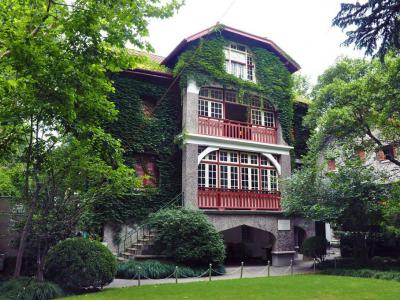
2) Zhou Enlai's Former Residence
Premier Zhou En Lai stayed at this Spanish Villa located in the former French Concession during his visits to Shanghai. It was also the office of the Communist Party of China.
The former residence of Zhou En Lai is located in a beautiful neighbourhood with many quaint European homes. The ivy covered villa has three floors and a small courtyard garden. It once belonged to a wealthy French merchant and covers an area of 850 square meters. Today, Zhou’s statue can be found in the garden. The former residence of Zhou En Lai was used more as an office than a residence during his lifetime. He gave press conferences here and met foreign dignitaries before and after the communist takeover.
The house is now preserved as a museum. The Buick that Zhou En Lai drove is still parked in the garage and the office rooms of the Communist Party are preserved like they were during his lifetime. His neat bedroom with threadbare blankets and Spartan furniture is on display and a dorm that was used by other communist officials when they came to stay is preserved. Visitors can also see photographs and documents about the life and achievements of Zhou En Lai.
The former residence of Zhou En Lai is located in a beautiful neighbourhood with many quaint European homes. The ivy covered villa has three floors and a small courtyard garden. It once belonged to a wealthy French merchant and covers an area of 850 square meters. Today, Zhou’s statue can be found in the garden. The former residence of Zhou En Lai was used more as an office than a residence during his lifetime. He gave press conferences here and met foreign dignitaries before and after the communist takeover.
The house is now preserved as a museum. The Buick that Zhou En Lai drove is still parked in the garage and the office rooms of the Communist Party are preserved like they were during his lifetime. His neat bedroom with threadbare blankets and Spartan furniture is on display and a dorm that was used by other communist officials when they came to stay is preserved. Visitors can also see photographs and documents about the life and achievements of Zhou En Lai.
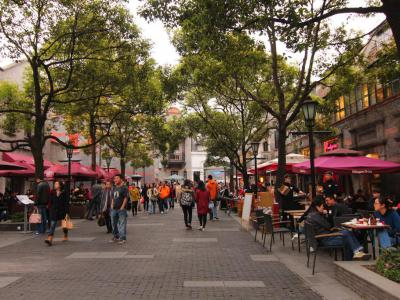
3) Xintiandi (must see)
Xintiandi in Shanghai blends East and West, with traditional Shikumen houses alongside modern Western-style buildings, creating a unique pedestrian district. The area is distinctly divided into two blocks, each offering a different experience to visitors. The Southern block is characterized by its modern architecture, incorporating a few well-preserved Shikumen houses amidst a sprawling 25,000 square meter area dedicated to shopping and entertainment. This modern enclave boasts a sprawling mall, established in 2002.
In contrast, the Northern block is a nostalgic journey back to Shanghai in the early 20th century. It is exclusively composed of preserved Shikumen houses and narrow streets, meticulously maintained to offer a glimpse into the city's historical ambiance. The exteriors of these houses may retain their original charm, but the interiors have been transformed into luxurious spaces housing high-end boutiques and cafes. These establishments serve a variety of global cuisines, catering to the tastes of a diverse clientele.
The two blocks are separated by Xingye Lu, a road of historical significance as it is the site of the memorial for the first congress of the Communist Party of China. This adds a layer of historical depth to Xintiandi's already rich cultural tapestry.
Xintiandi, which translates to "New Heaven and Earth," lives up to its name by being a bustling hub of activity. The district is renowned for its trendy restaurants and bars, many of which feature live music and outdoor seating that extends into the plazas, creating a lively atmosphere that attracts both locals and a large expatriate community. Beyond the bustling nightlife and shopping, the area offers serene escapes like a small lake bordered by trees and surrounded by exclusive residential towers, providing a tranquil contrast to the lively urban environment.
Why You Should Visit:
Elegant, beautiful and of great ambiance; one of the best places for a chilled out meal any time of day – European style.
Tip:
Eat first and burn off the calories with a long walk around the area to explore the bars, designer boutiques, art galleries, specialty stores, etc.
In contrast, the Northern block is a nostalgic journey back to Shanghai in the early 20th century. It is exclusively composed of preserved Shikumen houses and narrow streets, meticulously maintained to offer a glimpse into the city's historical ambiance. The exteriors of these houses may retain their original charm, but the interiors have been transformed into luxurious spaces housing high-end boutiques and cafes. These establishments serve a variety of global cuisines, catering to the tastes of a diverse clientele.
The two blocks are separated by Xingye Lu, a road of historical significance as it is the site of the memorial for the first congress of the Communist Party of China. This adds a layer of historical depth to Xintiandi's already rich cultural tapestry.
Xintiandi, which translates to "New Heaven and Earth," lives up to its name by being a bustling hub of activity. The district is renowned for its trendy restaurants and bars, many of which feature live music and outdoor seating that extends into the plazas, creating a lively atmosphere that attracts both locals and a large expatriate community. Beyond the bustling nightlife and shopping, the area offers serene escapes like a small lake bordered by trees and surrounded by exclusive residential towers, providing a tranquil contrast to the lively urban environment.
Why You Should Visit:
Elegant, beautiful and of great ambiance; one of the best places for a chilled out meal any time of day – European style.
Tip:
Eat first and burn off the calories with a long walk around the area to explore the bars, designer boutiques, art galleries, specialty stores, etc.
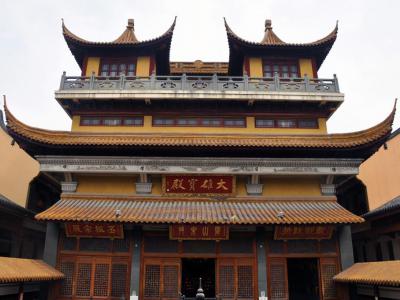
4) Fazangjiang Temple
Fazangjiang is one of the four most prominent Buddhist temples in Shanghai, alongside those of Yu Fu Chan Si (the Jade Buddha Temple), Jing'an Si (the Temple of Peace and Tranquility), and Longhua Si (the Luster of the Dragon Temple). Its unique architecture would make it a top attraction of the Old Town, but curiously enough it does not advertise itself and, without stepping through its doors, people (locals or foreigners alike) may never know it is there. On the outside, it looks pretty much like any other gated entrance with no sound or smell passing from behind the wall, even if there is a prayer in session or incense burning underway.
The temple was built in 1924 and, similarly to the acclaimed Jing’an Si temple, was used as a factory during the Cultural Revolution of the 1960s-70s. Now restored and reconsecrated, some parts of its main hall reflect Art Deco motifs, adding to the uniqueness of its location inside a tower-like structure. A large statue of Buddha Gautama Sakyamuni sat on top of a lily dominates the hall. There are also two gilded walls with the images of “Arhats” – enlightened persons who have reached nirvana – as well as golden sculptures of the Buddhist trinity. There is even a small shrine dedicated to Dizang Wang, the Chinese God of the Underworld in Buddhist mythology. Swastika, the ancient Buddhist symbol of eternity, is found on many prayer ribbons hanging around.
Much to its merit, Fazangjiang has kept its historical identity intact and is now a welcoming oasis amid the hustle and bustle of a busy metropolis. No entry ticket is required, and the serene atmosphere of the temple makes it a fine place to acquaint yourself with the merits of Chinese Buddhism.
Tip:
A vegetarian restaurant run by the temple, serving simple dishes, is right next door and is quite handy for those seeking to quench their hunger other than purely spiritual.
The temple was built in 1924 and, similarly to the acclaimed Jing’an Si temple, was used as a factory during the Cultural Revolution of the 1960s-70s. Now restored and reconsecrated, some parts of its main hall reflect Art Deco motifs, adding to the uniqueness of its location inside a tower-like structure. A large statue of Buddha Gautama Sakyamuni sat on top of a lily dominates the hall. There are also two gilded walls with the images of “Arhats” – enlightened persons who have reached nirvana – as well as golden sculptures of the Buddhist trinity. There is even a small shrine dedicated to Dizang Wang, the Chinese God of the Underworld in Buddhist mythology. Swastika, the ancient Buddhist symbol of eternity, is found on many prayer ribbons hanging around.
Much to its merit, Fazangjiang has kept its historical identity intact and is now a welcoming oasis amid the hustle and bustle of a busy metropolis. No entry ticket is required, and the serene atmosphere of the temple makes it a fine place to acquaint yourself with the merits of Chinese Buddhism.
Tip:
A vegetarian restaurant run by the temple, serving simple dishes, is right next door and is quite handy for those seeking to quench their hunger other than purely spiritual.
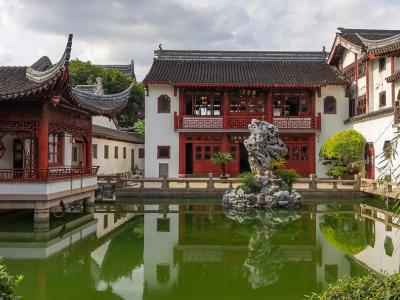
5) Shanghai Confucian Temple (must see)
This ancient shrine is the main temple of Shanghai and a definite must-see for those visiting the city. It is dedicated to the famous Chinese philosopher Confucius and was founded under the Yuan Dynasty, when Shanghai, then a small fishing village, was granted the status of a county seat. With time, this shrine became China's most prestigious academic institution and a religious temple combined.
The complex is well-tended and is much larger than it looks on the outside. Within its walls are a number of scenic spots such as the Music Terrace, Study Gate, Etiquette Gate, Hall to Listen to the Rain, Sky and Cloud Reflection Pond, and Confucian Study Hall, to mention but a few.
Facing the front gate is the Dacheng Hall, or the Hall of Great Perfection, to the right of which is found the eponymous huge Dacheng Bell, weighing some 1500 kg. They say, the sound of this bell is loud and clear, and its reverberations last up to three minutes!
The appealing atmosphere of scholarly introspection infuses the complex and is enhanced with the statues of Confucius, particularly the seated golden one beside the Dacheng Hall, flanked by the statues of his two most illustrious disciples, Yan Hui and Zeng Shen. Modern-day students, wishing to excel at exams, come here to tie a red ribbon around the pine tree for good luck.
In addition to the ancient Confucian texts, the temple houses a collection of ceramics and a tea house where tea lovers can enjoy a Chinese tea ceremony and sample local varieties of tea free of charge.
In keeping with the ancient tradition originated in the Ming and Qing periods, each Sunday in the northeastern part of the temple there is a book fair where people come to buy, sell or exchange books. Some truly old and rare editions can be found there, so it's well worth attending.
The area outside the temple is packed with stores and several eateries selling authentic Shanghai food at reasonable prices. Also nearby is the famous Xintiandi district.
Tip:
The Sunday book market has to be visited as it is something different in Shanghai, but beware that it opens at 8am and closes early around 3-4pm.
If you want full access then pay 10RMB; otherwise, you can just go to the book market inside the inner courtyard. 10RMB gets you into the temple as well as the other courtyards.
Go towards the temple and the guards will ask for your tickets. Most people think they cannot go up, but that's what your ticket covers for.
Temple
The complex is well-tended and is much larger than it looks on the outside. Within its walls are a number of scenic spots such as the Music Terrace, Study Gate, Etiquette Gate, Hall to Listen to the Rain, Sky and Cloud Reflection Pond, and Confucian Study Hall, to mention but a few.
Facing the front gate is the Dacheng Hall, or the Hall of Great Perfection, to the right of which is found the eponymous huge Dacheng Bell, weighing some 1500 kg. They say, the sound of this bell is loud and clear, and its reverberations last up to three minutes!
The appealing atmosphere of scholarly introspection infuses the complex and is enhanced with the statues of Confucius, particularly the seated golden one beside the Dacheng Hall, flanked by the statues of his two most illustrious disciples, Yan Hui and Zeng Shen. Modern-day students, wishing to excel at exams, come here to tie a red ribbon around the pine tree for good luck.
In addition to the ancient Confucian texts, the temple houses a collection of ceramics and a tea house where tea lovers can enjoy a Chinese tea ceremony and sample local varieties of tea free of charge.
In keeping with the ancient tradition originated in the Ming and Qing periods, each Sunday in the northeastern part of the temple there is a book fair where people come to buy, sell or exchange books. Some truly old and rare editions can be found there, so it's well worth attending.
The area outside the temple is packed with stores and several eateries selling authentic Shanghai food at reasonable prices. Also nearby is the famous Xintiandi district.
Tip:
The Sunday book market has to be visited as it is something different in Shanghai, but beware that it opens at 8am and closes early around 3-4pm.
If you want full access then pay 10RMB; otherwise, you can just go to the book market inside the inner courtyard. 10RMB gets you into the temple as well as the other courtyards.
Go towards the temple and the guards will ask for your tickets. Most people think they cannot go up, but that's what your ticket covers for.
Temple
