Custom Walk in Riga, Latvia by junem225_73377 created on 2025-06-14
Guide Location: Latvia » Riga
Guide Type: Custom Walk
# of Sights: 15
Tour Duration: 4 Hour(s)
Travel Distance: 8.1 Km or 5 Miles
Share Key: TARLH
Guide Type: Custom Walk
# of Sights: 15
Tour Duration: 4 Hour(s)
Travel Distance: 8.1 Km or 5 Miles
Share Key: TARLH
How It Works
Please retrieve this walk in the GPSmyCity app. Once done, the app will guide you from one tour stop to the next as if you had a personal tour guide. If you created the walk on this website or come to the page via a link, please follow the instructions below to retrieve the walk in the app.
Retrieve This Walk in App
Step 1. Download the app "GPSmyCity: Walks in 1K+ Cities" on Apple App Store or Google Play Store.



Step 2. In the GPSmyCity app, download(or launch) the guide "Riga Map and Walking Tours".
Step 3. Tap the menu button located at upper right corner of the "Walks" screen and select "Retrieve custom walk". Enter the share key: TARLH
1) 1905 Revolution Monument
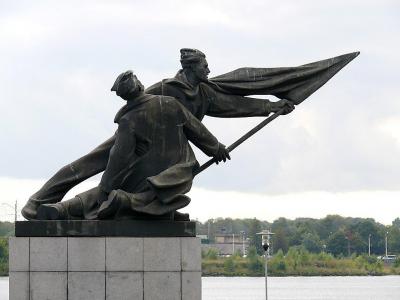
The 1905 Revolution Monument, also known as the 1905 Bloody Sunday Monument, is a significant historical landmark located on the bank of the Daugava River in Riga. This monument stands as a rare survivor among the Soviet-era landmarks within the city, embodying a poignant chapter in both Latvian and Russian history.
The monument marks the Bloody Sunday massacre on January 9, 1905, in Saint Petersburg, Russia, where the Tsar's forces killed hundreds of peaceful protestors. This event ignited widespread outrage and prompted a supportive strike in Latvia, where Latvians sought greater autonomy through meetings and songs. The movement faced harsh repression on January 13, 1905, near the Daugava River, leading to violent clashes with the Russian military, resulting in at least 70 deaths and 200 injuries, including protesters shot or drowned in the river.
Designed by Kârlis Plûksne and sculpted by Alberts Terpilovskis, the monument was erected in 1960 during the period of Soviet dominance over Latvia. It features two proletarian figures hoisting a flag, symbolizing the revolutionary fervor and the struggle against Tsarist oppression. Interestingly, the monument's construction during Soviet times adds an ironic layer to its existence, considering the complex historical relationship between Latvia and Soviet rule.
Today, the 1905 Revolution Monument not only marks the physical location of the bloody confrontation but also serves as a historical reminder of the fight for justice and autonomy in the face of oppressive regimes. It remains one of the few Soviet-era monuments still standing in Latvia, a testament to the enduring memory of those who perished in the quest for political change.
The monument marks the Bloody Sunday massacre on January 9, 1905, in Saint Petersburg, Russia, where the Tsar's forces killed hundreds of peaceful protestors. This event ignited widespread outrage and prompted a supportive strike in Latvia, where Latvians sought greater autonomy through meetings and songs. The movement faced harsh repression on January 13, 1905, near the Daugava River, leading to violent clashes with the Russian military, resulting in at least 70 deaths and 200 injuries, including protesters shot or drowned in the river.
Designed by Kârlis Plûksne and sculpted by Alberts Terpilovskis, the monument was erected in 1960 during the period of Soviet dominance over Latvia. It features two proletarian figures hoisting a flag, symbolizing the revolutionary fervor and the struggle against Tsarist oppression. Interestingly, the monument's construction during Soviet times adds an ironic layer to its existence, considering the complex historical relationship between Latvia and Soviet rule.
Today, the 1905 Revolution Monument not only marks the physical location of the bloody confrontation but also serves as a historical reminder of the fight for justice and autonomy in the face of oppressive regimes. It remains one of the few Soviet-era monuments still standing in Latvia, a testament to the enduring memory of those who perished in the quest for political change.
2) Jauniela
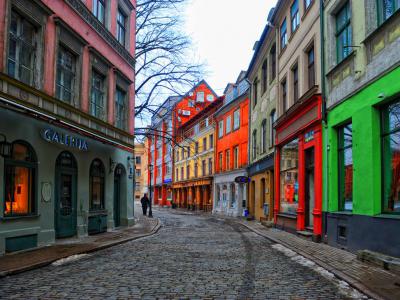
Jauniela Street in Riga epitomizes the enchanting allure of the historical Old Town, despite its name translating to "New Street." This picturesque avenue is framed by an array of pastel-colored buildings that rest on cobblestone paths, lending it a vibrant yet historic charm. Recognized as one of the prettiest streets in Riga's Old Town, Jauniela is also among the most dynamic, and bustling with hotels, bars, and restaurants that cater to both locals and tourists.
The street's pedestrian-friendly design ensures that it is a common fixture on walking tours of Riga, particularly those focused on architecture. Visitors are likely to be drawn here to admire the Art Nouveau façade of the Neiburgs Hotel, among other architectural delights. Jauniela is strategically positioned near major landmarks like the Riga Cathedral, making it an ideal route for those looking to combine historical exploration with culinary ventures or leisurely strolls.
In addition to its architectural marvels, Jauniela Street has gained fame as a filming location for notable period dramas, including adaptations of "War and Peace" and "Sherlock Holmes." The street is not just a feast for the eyes but also serves as a hub of cultural expression, showcasing vibrant street art that reflects the creativity of local artists. It offers a rich tapestry of experiences from dining in exquisite cafes serving traditional Latvian cuisine to shopping in quaint boutiques that offer unique, handcrafted souvenirs.
For anyone visiting Riga, a trip down Jauniela Street promises a blend of historical intrigue, architectural beauty, and cultural vibrancy, making it an unforgettable part of any journey through Latvia's capital.
The street's pedestrian-friendly design ensures that it is a common fixture on walking tours of Riga, particularly those focused on architecture. Visitors are likely to be drawn here to admire the Art Nouveau façade of the Neiburgs Hotel, among other architectural delights. Jauniela is strategically positioned near major landmarks like the Riga Cathedral, making it an ideal route for those looking to combine historical exploration with culinary ventures or leisurely strolls.
In addition to its architectural marvels, Jauniela Street has gained fame as a filming location for notable period dramas, including adaptations of "War and Peace" and "Sherlock Holmes." The street is not just a feast for the eyes but also serves as a hub of cultural expression, showcasing vibrant street art that reflects the creativity of local artists. It offers a rich tapestry of experiences from dining in exquisite cafes serving traditional Latvian cuisine to shopping in quaint boutiques that offer unique, handcrafted souvenirs.
For anyone visiting Riga, a trip down Jauniela Street promises a blend of historical intrigue, architectural beauty, and cultural vibrancy, making it an unforgettable part of any journey through Latvia's capital.
3) House of Blackheads (Melngalvju Nams) (must see)
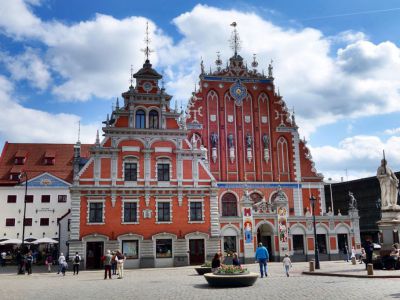
The House of the Black Heads is now a museum celebrating commerce in Riga. The building was originally erected in 1334 and has dominated Town Hall Square for centuries.
It was built by the Brotherhood of the Black Heads, a local guild made up of unmarried Riga merchants, shipowners, and foreigners. The organization was active from the middle of the 14th century until about 1940, although a chapter in Hamburg still meets. It began as a military society but gradually transitioned into a social organization.
The House of Black Heads was meant to be a meeting place for the society, where they would host banquets and cultural events. The first decorated Christmas tree was displayed on the square outside in 1510.
The building was destroyed during World War II--first leveled by Germans bombs in 1941 and then further demolished by the Soviets in 1948. As it stands today, the building was reconstructed in the late 1990s. Locals donated a few Euros each person to put a brick in the wall during an event called "I Build the House of the Black Heads."
The building has been rebuilt to its previous glory and is open to the public. The upper levels have grand ballrooms where some of Riga's most posh cultural events occurred. There are also spaces used by former Presidents of Latvia, as this house was used as the Presidential residence between 2012 and 2016.
Most interesting are the cellars, which were buried and re-excavated during the rebuilding and restoration efforts. Here you can walk through original 14th-century corridors in the authentic underground of medieval Riga. This space was used to store goods and is now used as an exhibit space.
The museum is open Wednesdays through Sundays. On the last Sunday of every month, they hold a free one-hour-long guided house tour, available in both English and German.
It was built by the Brotherhood of the Black Heads, a local guild made up of unmarried Riga merchants, shipowners, and foreigners. The organization was active from the middle of the 14th century until about 1940, although a chapter in Hamburg still meets. It began as a military society but gradually transitioned into a social organization.
The House of Black Heads was meant to be a meeting place for the society, where they would host banquets and cultural events. The first decorated Christmas tree was displayed on the square outside in 1510.
The building was destroyed during World War II--first leveled by Germans bombs in 1941 and then further demolished by the Soviets in 1948. As it stands today, the building was reconstructed in the late 1990s. Locals donated a few Euros each person to put a brick in the wall during an event called "I Build the House of the Black Heads."
The building has been rebuilt to its previous glory and is open to the public. The upper levels have grand ballrooms where some of Riga's most posh cultural events occurred. There are also spaces used by former Presidents of Latvia, as this house was used as the Presidential residence between 2012 and 2016.
Most interesting are the cellars, which were buried and re-excavated during the rebuilding and restoration efforts. Here you can walk through original 14th-century corridors in the authentic underground of medieval Riga. This space was used to store goods and is now used as an exhibit space.
The museum is open Wednesdays through Sundays. On the last Sunday of every month, they hold a free one-hour-long guided house tour, available in both English and German.
4) Baltu Rotas
What to buy here: Jewelry.
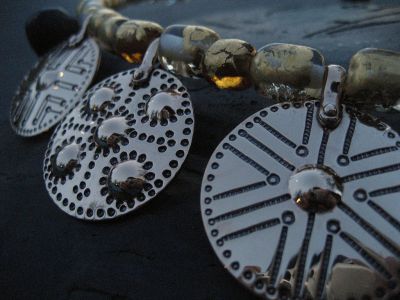
There is an old belief that one should return from Latvia with a silver ring and then luck will return together with them. These silver rings are called Namejs. All around Riga you will find jewelry which still preserves traditional design and values. There are brooches, necklaces, rings and bracelets crafted based on ancient Liv designs and methods. Many pieces are quite distinctive and unique, since most artists only make limited quantities.
For those interested in traditional items, the “Baltu Rotas Gallery” features a large collection of jewelry reminiscent of ancient Baltic designs. This jewelry has greatly gained in popularity over the recent years. One of its creators, Vitauts Straupe, proudly relates in an interview how he spots their works worn more frequently, noting the Festival in Washington where he saw people wearing his art. Vitauts Straupe and his wife, Inita Straupe, get inspired from actual pieces found by archeologists. The prices for their creations range from $25 to $150 for rings, brooches and pendants, $25 - $100 for earrings and cufflinks, $50-$240 for bracelets. They also have special collections of legendary Latvian jewelry and signs.
There is an old belief that one should return from Latvia with a silver ring and then luck will return together with them. These silver rings are called Namejs. All around Riga you will find jewelry which still preserves traditional design and values. There are brooches, necklaces, rings and bracelets crafted based on ancient Liv designs and methods. Many pieces are quite distinctive and unique, since most artists only make limited quantities.
For those interested in traditional items, the “Baltu Rotas Gallery” features a large collection of jewelry reminiscent of ancient Baltic designs. This jewelry has greatly gained in popularity over the recent years. One of its creators, Vitauts Straupe, proudly relates in an interview how he spots their works worn more frequently, noting the Festival in Washington where he saw people wearing his art. Vitauts Straupe and his wife, Inita Straupe, get inspired from actual pieces found by archeologists. The prices for their creations range from $25 to $150 for rings, brooches and pendants, $25 - $100 for earrings and cufflinks, $50-$240 for bracelets. They also have special collections of legendary Latvian jewelry and signs.
5) Cathedral Square (aka Dome Square)
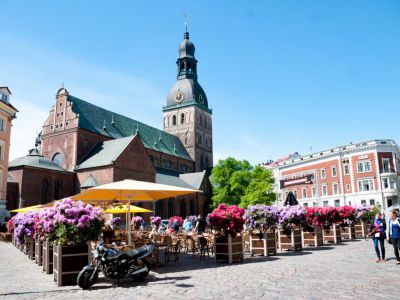
Another of Old Riga's cobblestone squares lies squarely in front of the Riga Cathedral. Commonly called the Dome Cathedral, this is one of Riga's trademark buildings. The word "Dome" comes from the German "Dom," which also means cathedral. It is considered to be the largest medieval church in the Baltics.
The church was built on the river in 1211 by Livonian Bishop Albert of Riga from Lower Saxony. It was Roman Catholic until a 1923 referendum forced it to be shared with the Lutheran Church. During the Soviet Era, the church was used as a concert hall. Religious services were restarted in 1991, and today it is used by the Evangelical Lutheran Church of Latvia.
Cathedral Square is the site of various events during the year, including a popular Christmas Market. It's a great place for souvenirs and local delicacies. But no matter what time of the year you stop through, there's bound to be something going on. From art installations and cultural festivals to bustling sidewalk cafes and great people watching, Cathedral Square is at the center of it all.
The church was built on the river in 1211 by Livonian Bishop Albert of Riga from Lower Saxony. It was Roman Catholic until a 1923 referendum forced it to be shared with the Lutheran Church. During the Soviet Era, the church was used as a concert hall. Religious services were restarted in 1991, and today it is used by the Evangelical Lutheran Church of Latvia.
Cathedral Square is the site of various events during the year, including a popular Christmas Market. It's a great place for souvenirs and local delicacies. But no matter what time of the year you stop through, there's bound to be something going on. From art installations and cultural festivals to bustling sidewalk cafes and great people watching, Cathedral Square is at the center of it all.
6) Fortification Wall
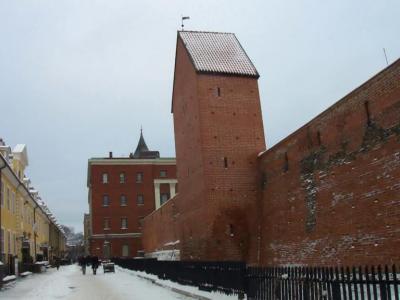
The Fortification Wall in Riga represents a significant historical remnant from the medieval period, showcasing the architectural and urban defensive strategies of the 13th and 14th centuries. Originally part of a broader system designed to protect the city, only fragments of the wall remain today, providing a window into Riga's past. One notable section is situated near the Daugava River, marking where the Marstalu Tower, a corner tower built in the 17th century and destroyed shortly thereafter, once stood.
In medieval times, like many other cities of the era, Riga was encircled by robust fortification walls. Though most of these have not survived in their original form, some sections have been incorporated into later buildings, altering their appearance but preserving their historical essence. Noteworthy is the area in the north-western part of the Old Town, near the Jacob's Barracks. Here, visitors can observe the old city walls alongside the Powder Tower, one of the original and most formidable towers.
To best experience these historic fortifications, one should start from notable landmarks like the Riga Castle or the Dome Cathedral, progressing through Maza Pils Street to view the Three Brothers buildings-a trio of medieval houses. Adjacent to the long yellow structure of Jacob’s Barracks, a restored section of the wall vividly illustrates how the original fortifications looked and how later buildings were appended to them.
Additionally, small sections of the city walls can be seen near Saint Peter’s Church and integrated within the architecture of restaurants on Livu Square, showing the adaptability and enduring legacy of these medieval structures in contemporary Riga. This historic integration of the old city walls into modern buildings not only preserves a piece of Riga’s past but also enriches the cultural and architectural tapestry of the city.
In medieval times, like many other cities of the era, Riga was encircled by robust fortification walls. Though most of these have not survived in their original form, some sections have been incorporated into later buildings, altering their appearance but preserving their historical essence. Noteworthy is the area in the north-western part of the Old Town, near the Jacob's Barracks. Here, visitors can observe the old city walls alongside the Powder Tower, one of the original and most formidable towers.
To best experience these historic fortifications, one should start from notable landmarks like the Riga Castle or the Dome Cathedral, progressing through Maza Pils Street to view the Three Brothers buildings-a trio of medieval houses. Adjacent to the long yellow structure of Jacob’s Barracks, a restored section of the wall vividly illustrates how the original fortifications looked and how later buildings were appended to them.
Additionally, small sections of the city walls can be seen near Saint Peter’s Church and integrated within the architecture of restaurants on Livu Square, showing the adaptability and enduring legacy of these medieval structures in contemporary Riga. This historic integration of the old city walls into modern buildings not only preserves a piece of Riga’s past but also enriches the cultural and architectural tapestry of the city.
7) Museum of War
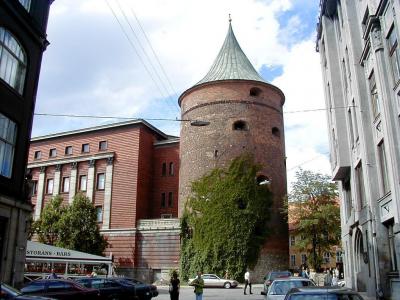
The Museum of War is located in the old part of Riga, in a 14th century architectural monument, known as the Powder Tower. The impressive red brick building was enlarged and modified during 1937-1940 so as to perfectly accommodate the museum.
The latter opened its doors for the first time in 1919 as the Latvian Riflemen's Museum. During World War II, its collection grew significantly due to many valuable artefacts brought in from battlefields and donated by the soldiers’ families and civilian survivors of the war.
The museum was temporarily closed down in 1940 by the Soviets, but then re-opened in 1957 under the name of Museum of Revolution, reflecting a new vision of history dictated by the Soviet ideology. Most of the then exhibits highlighted the political achievements of the Russians and glorified, not without a good reason, their soldiers. In 1990, Latvia regained independence and the museum got back to its original self as the Museum of War. Today, it hosts a variety of exhibits which interpret the history of Latvia and its people in the 20th century as the Latvians themselves want it, duly outlining the country's two successful independences, two survived world wars and tempestuous political life at the turn of the millennium. The collections are split into nine sections: Medieval and Modern history, WWI, Inter-war period, WWII, Post-war history, Weapons, Restoration, Public Relations and Photo-negative departments. The entrance is free.
The latter opened its doors for the first time in 1919 as the Latvian Riflemen's Museum. During World War II, its collection grew significantly due to many valuable artefacts brought in from battlefields and donated by the soldiers’ families and civilian survivors of the war.
The museum was temporarily closed down in 1940 by the Soviets, but then re-opened in 1957 under the name of Museum of Revolution, reflecting a new vision of history dictated by the Soviet ideology. Most of the then exhibits highlighted the political achievements of the Russians and glorified, not without a good reason, their soldiers. In 1990, Latvia regained independence and the museum got back to its original self as the Museum of War. Today, it hosts a variety of exhibits which interpret the history of Latvia and its people in the 20th century as the Latvians themselves want it, duly outlining the country's two successful independences, two survived world wars and tempestuous political life at the turn of the millennium. The collections are split into nine sections: Medieval and Modern history, WWI, Inter-war period, WWII, Post-war history, Weapons, Restoration, Public Relations and Photo-negative departments. The entrance is free.

8) Brivibas Piemineklis (Freedom Monument) (must see)
The Freedom Monument commemorates the soldiers who fell during the Latvian War of Independence of 1918-1920. Built in 1935 to a design by R. Mirsmeden, the monument presents Latvia's national values. It stands as the symbol of two battles fought by the country for its independence and is a ground zero for the majority of political demonstrations held in Riga nowadays.
Surprisingly enough, the monument has survived almost 50 years of the Soviet rule, in part due to its high artistic value. On 14 June 1987, about 5,000 people gathered at the monument to lay flowers. This rally renewed the national independence movement, which culminated three years later in the re-establishment of Latvian sovereignty after the dissolution of the Soviet Union.
The structure consists of three major blocks decorated by 14 statuary groups. The base block features Latvian riflemen and singers. The block above depicts scholars, people of work, Guardians of the Fatherland and the Family. The central element of the monument, topping a 19 meter (62 feet) column, is the bronze statue of a woman holding up three golden stars above her head, symbolizing three Latvian regions: Kurzeme, Vidzeme and Latgale.
With a total height of 42 meters, the Freedom Monument is visible from almost every corner of Old Riga, and acts as a sort of navigation aid for tourists en route to different locations.
Surprisingly enough, the monument has survived almost 50 years of the Soviet rule, in part due to its high artistic value. On 14 June 1987, about 5,000 people gathered at the monument to lay flowers. This rally renewed the national independence movement, which culminated three years later in the re-establishment of Latvian sovereignty after the dissolution of the Soviet Union.
The structure consists of three major blocks decorated by 14 statuary groups. The base block features Latvian riflemen and singers. The block above depicts scholars, people of work, Guardians of the Fatherland and the Family. The central element of the monument, topping a 19 meter (62 feet) column, is the bronze statue of a woman holding up three golden stars above her head, symbolizing three Latvian regions: Kurzeme, Vidzeme and Latgale.
With a total height of 42 meters, the Freedom Monument is visible from almost every corner of Old Riga, and acts as a sort of navigation aid for tourists en route to different locations.
9) Cathedral of the Nativity of Christ
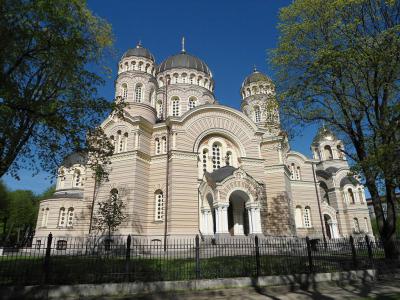
The Cathedral of the Nativity of Christ, also known as simply the Russian Orthodox Cathedral, is a Neo-Byzantine church designed by architect R.Phlug. The cathedral is considered to be the largest orthodox temple in the Baltic region and was erected with the blessing of Alexander II, the Tsar of Russia, between 1876 and 1883. The church features five domes with florid decorations on the exterior, while its interior is embellished with traditional icons, painted by Vasily Vereshchagin, and numerous gold plated items.
Two world wars had their toll on the building. During WWI, when Latvia was under the German occupation, the cathedral was converted into a Lutheran church. In 1918, it was given back to the Russians and, even though the local government wanted to impose Latvian as the main language for religious rituals, the cathedral’s masses were still held in Russian. During World War II, the cathedral was damaged both on the outside and inside, and in the 1960s it was closed down completely, transformed into a planetarium, with its interior refurbished and split into two levels. The upper floor held a scale model of the universe, while the lower was taken up by a conference hall and café.
In 1991, the cathedral was returned to its rightful owners, the Orthodox Russian Church. Since then there has been a profound restoration performed. Today, the building fully resembles the original 1883 look and is used for religious services again.
Two world wars had their toll on the building. During WWI, when Latvia was under the German occupation, the cathedral was converted into a Lutheran church. In 1918, it was given back to the Russians and, even though the local government wanted to impose Latvian as the main language for religious rituals, the cathedral’s masses were still held in Russian. During World War II, the cathedral was damaged both on the outside and inside, and in the 1960s it was closed down completely, transformed into a planetarium, with its interior refurbished and split into two levels. The upper floor held a scale model of the universe, while the lower was taken up by a conference hall and café.
In 1991, the cathedral was returned to its rightful owners, the Orthodox Russian Church. Since then there has been a profound restoration performed. Today, the building fully resembles the original 1883 look and is used for religious services again.
10) Alberta Iela (Albert Street) 1
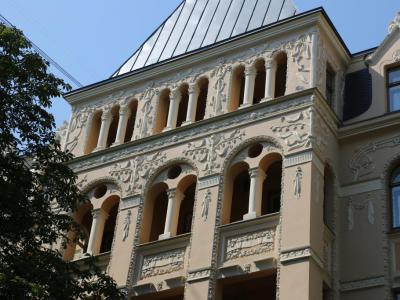
Albert Street 1 is one of the first ever Art Nouveau buildings constructed in Riga. This house dates back to 1901 and marks a transition from Eclecticism to Jugendstil. The architects, Heinrich Karl Scheel and August Friedrich Sheffel, of the legendary “Šēls un Šefels” (Scheel & Scheffel) construction firm, were among the city's Art Nouveau pioneers.
Lately, the building has regained its original splendor – the decorative elements in both the apartments and stairwells, as well as on the façades, have been carefully restored.
The tasteful refinement and testimony to the affluence of the façade – richly adorned with multiple reliefs, featuring Art Nouveau ornamental expression, complete with the ceiling ornaments and cut glass – form one of the most beautiful monuments to the residents of Riga at the dawn of the 20th century. Among those who lived here once was the Latvian writer Zenta Mauriņa.
Today, the property is included in both the UNESCO World Heritage list and the State Architectural Monument list.
Lately, the building has regained its original splendor – the decorative elements in both the apartments and stairwells, as well as on the façades, have been carefully restored.
The tasteful refinement and testimony to the affluence of the façade – richly adorned with multiple reliefs, featuring Art Nouveau ornamental expression, complete with the ceiling ornaments and cut glass – form one of the most beautiful monuments to the residents of Riga at the dawn of the 20th century. Among those who lived here once was the Latvian writer Zenta Mauriņa.
Today, the property is included in both the UNESCO World Heritage list and the State Architectural Monument list.
11) Alberta Iela (Albert Street) 13
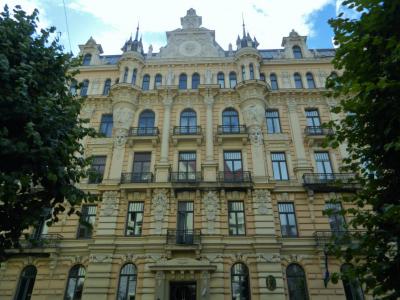
Among the most famous Art Nouveau buildings found in Riga there is one particularly fine, at 13 Alberta iela (Albert street). Designed in an eclectic and decorative Art Nouveau manner, this residential building is a brainchild of the architect Mikhail Eisenstein.
Essentially a block of flats, it was built in 1904 for the State Councillor Andrey Lebedinsky. Evidently a very rich man, Lebedinsky also had a number of other apartment houses built throughout the city to Eisenstein's design – among them Alberta iela #4 (in 1904), #6 (in 1903) and Elizabetes iela #10b (in 1903).
The central risalits (projections) on the façades are crowned, above the eaves, by sculptural reliefs, saturated with multi-stage pediments. The latter are filled with masks of various expressions as well as dragons, cartouches, straight and curved lines, circles and other geometric figures.
The central mask – one with a radiant tiara – is a symbol of freedom, sun or victory. Especially common in Riga's Art Nouveau architecture, and richly presented here, are the female images. There are two huge masks with half-open mouths.
Other common Art Nouveau symbols include a peacock with an open tail, a knight's head (protector of feminine beauty), and a huge variety of ornaments. The typical Art Nouveau line pattern is seen in metal handrails on the balconies.
In 1998, the building was acquired by the Soros Foundation and donated to the Riga Graduate School of Law. For that purpose, it was renovated, from 1999 to 2002, with both façades carefully restored.
Essentially a block of flats, it was built in 1904 for the State Councillor Andrey Lebedinsky. Evidently a very rich man, Lebedinsky also had a number of other apartment houses built throughout the city to Eisenstein's design – among them Alberta iela #4 (in 1904), #6 (in 1903) and Elizabetes iela #10b (in 1903).
The central risalits (projections) on the façades are crowned, above the eaves, by sculptural reliefs, saturated with multi-stage pediments. The latter are filled with masks of various expressions as well as dragons, cartouches, straight and curved lines, circles and other geometric figures.
The central mask – one with a radiant tiara – is a symbol of freedom, sun or victory. Especially common in Riga's Art Nouveau architecture, and richly presented here, are the female images. There are two huge masks with half-open mouths.
Other common Art Nouveau symbols include a peacock with an open tail, a knight's head (protector of feminine beauty), and a huge variety of ornaments. The typical Art Nouveau line pattern is seen in metal handrails on the balconies.
In 1998, the building was acquired by the Soros Foundation and donated to the Riga Graduate School of Law. For that purpose, it was renovated, from 1999 to 2002, with both façades carefully restored.
12) Alberta Iela (Albert Street) (must see)
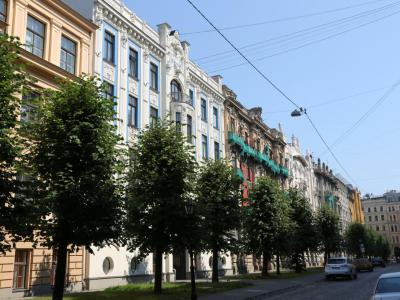
Albert Street (Alberta Iela) in Riga is renowned for its striking collection of Art Nouveau architecture, making it one of the city's most distinguished and visually compelling streets. Constructed between 1901 and 1908, the street is named after Bishop Albert, who is credited with founding Riga in 1201. This connection to the city’s historical roots is celebrated with the street’s name and its architectural grandeur.
The street's most prominent architectural contributions come from Mikhail Eisenstein, a preeminent architect of the early 20th century, known for his extravagant and decorative designs. Eisenstein's works on Alberta Street, including buildings at numbers 2, 2a, 4, 6, and 8, showcase his unique style characterized by romantic nationalism-a theme prevalent in northern European architecture at the time. These buildings are adorned with elaborate sculptures, intricate balconies, and ornate columns that epitomize the Art Nouveau aesthetic.
Other notable architects who contributed to the architectural landscape of Albert Street include Konstantīns Pēkšēns and his pupil Eižens Laube, as well as Baltic and Baltic German architects such as Paul Mandelstamm, Hermann Hilbig, and Heinrich Scheel. Pēkšēns' residence at number 12 now serves as the Riga Art Nouveau Museum, which opened in April 2009 and offers insights into the style and its elements.
In addition to its architectural significance, Alberta Street is a center of academic and diplomatic activity. It houses several institutions of higher education such as the Stockholm School of Economics in Riga, the Riga Graduate School of Law, and the College of Business Administration. Diplomatic missions for Belgium and Ireland are also located here, adding an international dimension to the street.
The entirety of Alberta Street is a testament to the creativity and innovation of the Art Nouveau movement. Eight of the buildings along the street are recognized as architectural monuments of national significance, underscoring their importance in the architectural and cultural heritage of Riga. As a living museum of Art Nouveau, Alberta Street offers both residents and visitors a chance to step back in time and experience the grandeur of early 20th-century European art and architecture.
The street's most prominent architectural contributions come from Mikhail Eisenstein, a preeminent architect of the early 20th century, known for his extravagant and decorative designs. Eisenstein's works on Alberta Street, including buildings at numbers 2, 2a, 4, 6, and 8, showcase his unique style characterized by romantic nationalism-a theme prevalent in northern European architecture at the time. These buildings are adorned with elaborate sculptures, intricate balconies, and ornate columns that epitomize the Art Nouveau aesthetic.
Other notable architects who contributed to the architectural landscape of Albert Street include Konstantīns Pēkšēns and his pupil Eižens Laube, as well as Baltic and Baltic German architects such as Paul Mandelstamm, Hermann Hilbig, and Heinrich Scheel. Pēkšēns' residence at number 12 now serves as the Riga Art Nouveau Museum, which opened in April 2009 and offers insights into the style and its elements.
In addition to its architectural significance, Alberta Street is a center of academic and diplomatic activity. It houses several institutions of higher education such as the Stockholm School of Economics in Riga, the Riga Graduate School of Law, and the College of Business Administration. Diplomatic missions for Belgium and Ireland are also located here, adding an international dimension to the street.
The entirety of Alberta Street is a testament to the creativity and innovation of the Art Nouveau movement. Eight of the buildings along the street are recognized as architectural monuments of national significance, underscoring their importance in the architectural and cultural heritage of Riga. As a living museum of Art Nouveau, Alberta Street offers both residents and visitors a chance to step back in time and experience the grandeur of early 20th-century European art and architecture.
13) Corner House (must see)
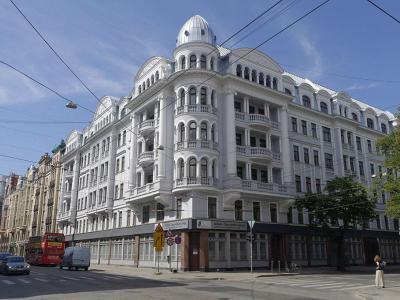
The Corner House, located in the center of Riga, is a building with a storied past, reflecting the turbulent history of the region. Originally designed by architect Aleksandrs Vanags, construction began in 1910 and was completed in 1912. Initially, it served a variety of commercial and cultural purposes, housing apartments, shops, a music school under the Imperial Russian Society of Music, a library, a bookstore, and various other establishments.
During the Latvian War of Independence in 1919, the building was briefly used by the Latvian Revolutionary War Committee. By 1920, following Latvia's independence, the new government repurposed the building for governmental use, accommodating offices such as the Ministry of the Interior and other administrative departments. Throughout the 1920s and 1930s, it was utilized by various governmental and cultural organizations including the Public Affairs Ministry, the State Statistical Bureau, the Forestry Department, and several cultural and educational directorates.
However, the onset of the Soviet occupation in 1940 marked a dark chapter in the building's history as it was transformed into the headquarters of the Soviet KGB in Latvia. It housed numerous offices and prison cells where countless atrocities were committed until 1941. During the German occupation from 1941 to 1944, the building was used by the National Watch youth group and the Latvian puppet government established by the Nazis. Following the Soviet re-occupation in 1944, the KGB reclaimed the building, continuing its operations there until the collapse of the Soviet Union in 1991.
After Latvia regained its independence, the State Police took over the building from 1990 until 2008. In a significant cultural transformation, the Corner House was opened to the public in 2014 as part of Riga's tenure as a European Capital of Culture. Since 2015, it has hosted an exposition by the Museum of the Occupation of Latvia, detailing the history of the KGB's activities in the country. The building underwent a facade renovation in 2015 and was put up for auction in 2020.
Today, the Corner House stands as a poignant reminder of Latvia’s complex history, serving both as a symbol of oppression and a beacon of cultural and historical education.
During the Latvian War of Independence in 1919, the building was briefly used by the Latvian Revolutionary War Committee. By 1920, following Latvia's independence, the new government repurposed the building for governmental use, accommodating offices such as the Ministry of the Interior and other administrative departments. Throughout the 1920s and 1930s, it was utilized by various governmental and cultural organizations including the Public Affairs Ministry, the State Statistical Bureau, the Forestry Department, and several cultural and educational directorates.
However, the onset of the Soviet occupation in 1940 marked a dark chapter in the building's history as it was transformed into the headquarters of the Soviet KGB in Latvia. It housed numerous offices and prison cells where countless atrocities were committed until 1941. During the German occupation from 1941 to 1944, the building was used by the National Watch youth group and the Latvian puppet government established by the Nazis. Following the Soviet re-occupation in 1944, the KGB reclaimed the building, continuing its operations there until the collapse of the Soviet Union in 1991.
After Latvia regained its independence, the State Police took over the building from 1990 until 2008. In a significant cultural transformation, the Corner House was opened to the public in 2014 as part of Riga's tenure as a European Capital of Culture. Since 2015, it has hosted an exposition by the Museum of the Occupation of Latvia, detailing the history of the KGB's activities in the country. The building underwent a facade renovation in 2015 and was put up for auction in 2020.
Today, the Corner House stands as a poignant reminder of Latvia’s complex history, serving both as a symbol of oppression and a beacon of cultural and historical education.
14) Dzintars
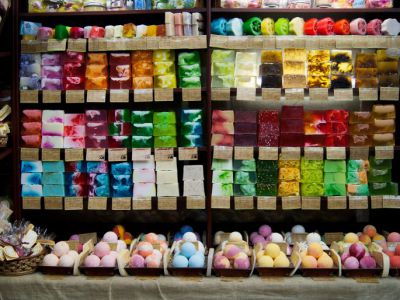
What to buy here: Dzintars Cosmetics.
For Latvians, Dzintars is a brand known and loved since childhood. What is not to love about it when each product is a combination of innovation and time proven recipes. The company has been offering soap and perfumery since 1949. Nowadays, it is famous for its bio-cosmetics composed of natural raw materials. Dzintars is the largest manufacturer of bio-cosmetics and perfumery in the Baltic, having more than 350 items in its production assortment. The ECOCERT organic certification organization has stated that Dzintars' cosmetics line "Organic Style" is of the highest level in organics.
The prices for Dzintars products vary. Perfumes cost from $10 and up, while prices for make-up start at approximately $4.
For Latvians, Dzintars is a brand known and loved since childhood. What is not to love about it when each product is a combination of innovation and time proven recipes. The company has been offering soap and perfumery since 1949. Nowadays, it is famous for its bio-cosmetics composed of natural raw materials. Dzintars is the largest manufacturer of bio-cosmetics and perfumery in the Baltic, having more than 350 items in its production assortment. The ECOCERT organic certification organization has stated that Dzintars' cosmetics line "Organic Style" is of the highest level in organics.
The prices for Dzintars products vary. Perfumes cost from $10 and up, while prices for make-up start at approximately $4.
15) Central Market (must see)
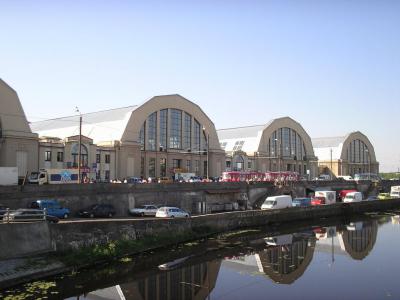
Riga's Central Market is Europe's largest market and bazaar. The enormous building was constructed by repurposing five old German Zeppelin hangars. The total covered area inside the pavilions is 72,300 square meters (778,000 square feet), and it houses more than 3,000 vendor booths.
Riga's location on the River Daugava has always made it a center for trade. The Central Market was conceived in the 1920s. An international competition was held, and the winner's idea of using the metal frames of abandoned World War I Zeppelin hangars was a hit.
Construction was completed in 1930. Only the top parts of the hangars could be used, but the effect remained. Finishing touches on the buildings were done in the Art Deco style of the time. A tunnel system under the buildings allows for goods to be transported to vendors without going through the floor. It also connects to the river for deliveries.
When the market is not held, the space is used for other events and exhibitions. Along with Old Riga, the Market was added as a UNESCO World Heritage Site in 1998. The Zeppelin hangars are five of the only nine remaining in the world.
The Market is a must-see stop for foodies or anyone looking for delectable, Latvian-grown treats. Each pavilion has a category--dairy, meats, vegetables, fish, and gastronomy products. In addition, the outdoor area also has stalls and hosts the Night Market and the Clock Farmers Market.
Riga's location on the River Daugava has always made it a center for trade. The Central Market was conceived in the 1920s. An international competition was held, and the winner's idea of using the metal frames of abandoned World War I Zeppelin hangars was a hit.
Construction was completed in 1930. Only the top parts of the hangars could be used, but the effect remained. Finishing touches on the buildings were done in the Art Deco style of the time. A tunnel system under the buildings allows for goods to be transported to vendors without going through the floor. It also connects to the river for deliveries.
When the market is not held, the space is used for other events and exhibitions. Along with Old Riga, the Market was added as a UNESCO World Heritage Site in 1998. The Zeppelin hangars are five of the only nine remaining in the world.
The Market is a must-see stop for foodies or anyone looking for delectable, Latvian-grown treats. Each pavilion has a category--dairy, meats, vegetables, fish, and gastronomy products. In addition, the outdoor area also has stalls and hosts the Night Market and the Clock Farmers Market.
