Custom Walk in Willemstad, Curacao by arherbol_54ed3 created on 2025-06-17
Guide Location: Curacao » Willemstad
Guide Type: Custom Walk
# of Sights: 7
Tour Duration: 3 Hour(s)
Travel Distance: 8.3 Km or 5.2 Miles
Share Key: JCQGS
Guide Type: Custom Walk
# of Sights: 7
Tour Duration: 3 Hour(s)
Travel Distance: 8.3 Km or 5.2 Miles
Share Key: JCQGS
How It Works
Please retrieve this walk in the GPSmyCity app. Once done, the app will guide you from one tour stop to the next as if you had a personal tour guide. If you created the walk on this website or come to the page via a link, please follow the instructions below to retrieve the walk in the app.
Retrieve This Walk in App
Step 1. Download the app "GPSmyCity: Walks in 1K+ Cities" on Apple App Store or Google Play Store.



Step 2. In the GPSmyCity app, download(or launch) the guide "Willemstad Map and Walking Tours".
Step 3. Tap the menu button located at upper right corner of the "Walks" screen and select "Retrieve custom walk". Enter the share key: JCQGS
1) Floating Market
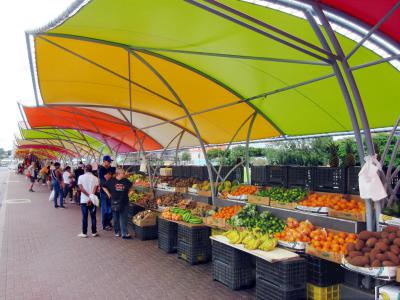
Located near the pontoon bridge on the Merchant's Quay, the Floating Market is a colorful display of wooden boats from Venezuela that dock alongside the canal, creating a lively and distinctive shopping experience.
In the early hours of the day, these wooden boats arrive, laden with a diverse array of just-caught fish and an assortment of tropical fruits and vegetables. Vendors set up shop directly from the quay, sheltering under colorful tents that add to the lively atmosphere. Mornings are considered the optimal time to visit, offering the finest selection of fresh produce, cooler temperatures before the midday sun, and the pleasant ambiance of the early hours.
The Floating Market is not just a commercial hub; it's a cultural amalgamation where Caribbean and South American influences converge. The vendors, predominantly from Venezuela, bring a piece of their culture to Curacao, creating a unique blend of traditions and flavors. The market is a testament to the rich exchange between the two regions, fostering a sense of community and connection.
For both tourists and locals, the Floating Market is a popular attraction. It provides an opportunity to engage in a distinctive shopping experience, offering fresh and diverse products directly from the boats. The sight of the colorful vessels, the aromatic scents of exotic fruits, and the lively interactions between vendors and customers contribute to the market's vibrant ambiance.
In the early hours of the day, these wooden boats arrive, laden with a diverse array of just-caught fish and an assortment of tropical fruits and vegetables. Vendors set up shop directly from the quay, sheltering under colorful tents that add to the lively atmosphere. Mornings are considered the optimal time to visit, offering the finest selection of fresh produce, cooler temperatures before the midday sun, and the pleasant ambiance of the early hours.
The Floating Market is not just a commercial hub; it's a cultural amalgamation where Caribbean and South American influences converge. The vendors, predominantly from Venezuela, bring a piece of their culture to Curacao, creating a unique blend of traditions and flavors. The market is a testament to the rich exchange between the two regions, fostering a sense of community and connection.
For both tourists and locals, the Floating Market is a popular attraction. It provides an opportunity to engage in a distinctive shopping experience, offering fresh and diverse products directly from the boats. The sight of the colorful vessels, the aromatic scents of exotic fruits, and the lively interactions between vendors and customers contribute to the market's vibrant ambiance.
2) Scharloo
Established in 1634 as a plantation under the Dutch West Indies Company, Scharloo faced challenges due to infertile soil, leading to its abandonment. However, in 1694, the neighborhood began to transform with the construction of the first wharf.
Designated as a UNESCO World Heritage Site, Scharloo boasts a rich history and architectural legacy. Scharlooweg, the main street, stands as a testament to the neighborhood's grandeur, adorned with the largest and most opulent villas, constructed in a Spanish style around charming patios often featuring central fountains.
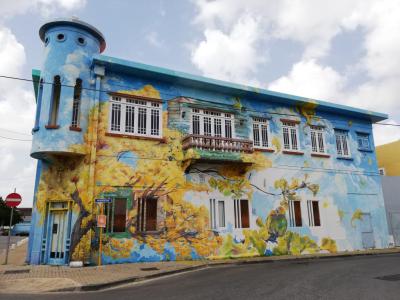
Scharloo's skyline is dominated by baroque mansions that were once inhabited by the island's wealthiest merchants. Today, these stately homes tell the tale of a bygone era. The buildings, with their vibrant hues and neoclassical architectural elements such as white columns, triangular pediments, and decorated cornices, create a captivating and picturesque streetscape.
In recent times, Scharloo has undergone a transformation, becoming a hotspot for art and culture. Street Art Skálo, a collective of emerging local artists, has contributed to this renaissance with life-size murals adorning streets like Bitterstraat and Parke Leyba. Works by acclaimed Curaçaoan artists like Francis Sling and Garrick Marchena can be admired, adding a contemporary touch to the historical surroundings.
Designated as a UNESCO World Heritage Site, Scharloo boasts a rich history and architectural legacy. Scharlooweg, the main street, stands as a testament to the neighborhood's grandeur, adorned with the largest and most opulent villas, constructed in a Spanish style around charming patios often featuring central fountains.
Scharloo's skyline is dominated by baroque mansions that were once inhabited by the island's wealthiest merchants. Today, these stately homes tell the tale of a bygone era. The buildings, with their vibrant hues and neoclassical architectural elements such as white columns, triangular pediments, and decorated cornices, create a captivating and picturesque streetscape.
In recent times, Scharloo has undergone a transformation, becoming a hotspot for art and culture. Street Art Skálo, a collective of emerging local artists, has contributed to this renaissance with life-size murals adorning streets like Bitterstraat and Parke Leyba. Works by acclaimed Curaçaoan artists like Francis Sling and Garrick Marchena can be admired, adding a contemporary touch to the historical surroundings.
3) Fort Nassau
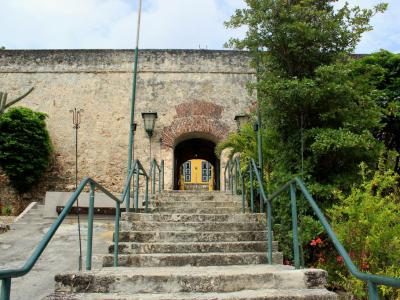
Fort Nassau, commands a strategic position overlooking the town and port, exerting control within its expansive field of fire. This historical fortification, characterized by its architectural, cultural, and military significance, stands as a rare and well-preserved testament to fortress design.
The fort comprises a rectangular main battery featuring a powder storehouse and cistern, a smaller battery, barracks, kitchen, and a latrine, all enclosed by a protective ring wall. Adjacent to the fort, a typical well with staircase access adds to its cultural and historical value.
Fort Nassau is not merely an architectural relic but a vibrant destination offering a multifaceted experience. The fort's restaurant and viewpoint, aptly named Fort Nassau, beckon visitors with an unparalleled opportunity to immerse themselves in Curaçao's rich history while enjoying breathtaking vistas.
The rooftop terrace of Fort Nassau restaurant provides a spectacular 360-degree view over St. Anna Bay, widely acknowledged as one of the most beautiful panoramas on the island. Renowned for its upscale dining experience, it opens its doors during the week for lunch, allowing patrons to savor delectable cuisine amidst a backdrop of historical grandeur.
The fort comprises a rectangular main battery featuring a powder storehouse and cistern, a smaller battery, barracks, kitchen, and a latrine, all enclosed by a protective ring wall. Adjacent to the fort, a typical well with staircase access adds to its cultural and historical value.
Fort Nassau is not merely an architectural relic but a vibrant destination offering a multifaceted experience. The fort's restaurant and viewpoint, aptly named Fort Nassau, beckon visitors with an unparalleled opportunity to immerse themselves in Curaçao's rich history while enjoying breathtaking vistas.
The rooftop terrace of Fort Nassau restaurant provides a spectacular 360-degree view over St. Anna Bay, widely acknowledged as one of the most beautiful panoramas on the island. Renowned for its upscale dining experience, it opens its doors during the week for lunch, allowing patrons to savor delectable cuisine amidst a backdrop of historical grandeur.
4) Mikve Israel-Emanuel Synagogue
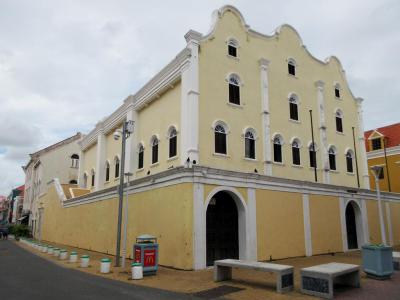
The Mikvé Israel-Emanuel Synagogue highlights the long and influential history of the Jewish community in Curaçao, which traces its roots back to Spanish and Portuguese Jews who settled in the region in the 1500s. Consecrated in 1732, it is recognized as the oldest synagogue in continuous use in the Americas, reflecting centuries of tradition and community life.
Its design pays tribute to the congregation’s Portuguese heritage. The interior was modeled after the well-known Portuguese Synagogue in Amsterdam, featuring classic architectural elements that help visitors understand the cultural connections between the Caribbean and Europe.
Next to the synagogue, the Jewish Cultural Historical Museum offers a deeper look into the island’s Jewish history. At the entrance, a timeline links key moments in Curaçao’s Jewish community with major world events, giving visitors helpful context about how this community developed and adapted over time.
Inside, the museum displays a wide collection of artifacts, photographs, and documents that illustrate everyday life, religious traditions, and the community’s role in Curaçao’s history. Many of the items—more than 1,000 in total—are centuries old, and some are still used in the synagogue today. Together, the synagogue and the museum provide a meaningful look at a community that has played an important part in shaping the island’s identity.
Its design pays tribute to the congregation’s Portuguese heritage. The interior was modeled after the well-known Portuguese Synagogue in Amsterdam, featuring classic architectural elements that help visitors understand the cultural connections between the Caribbean and Europe.
Next to the synagogue, the Jewish Cultural Historical Museum offers a deeper look into the island’s Jewish history. At the entrance, a timeline links key moments in Curaçao’s Jewish community with major world events, giving visitors helpful context about how this community developed and adapted over time.
Inside, the museum displays a wide collection of artifacts, photographs, and documents that illustrate everyday life, religious traditions, and the community’s role in Curaçao’s history. Many of the items—more than 1,000 in total—are centuries old, and some are still used in the synagogue today. Together, the synagogue and the museum provide a meaningful look at a community that has played an important part in shaping the island’s identity.
5) Handelskade (Merchant's Quay) (must see)
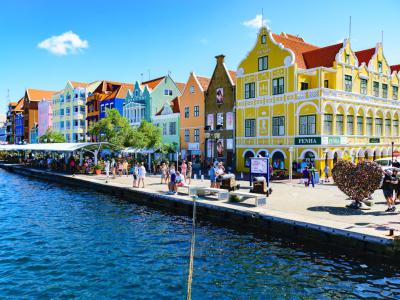
The Merchant’s Quay is a notable waterfront strip in Punda, positioned along the edge of Saint Anna Bay. This historic area is recognized for its row of well-preserved 18th-century buildings, which reflect Curaçao’s Dutch architectural heritage. The layout is often compared to Dutch canal districts, but Merchant’s Quay carries its own character thanks to the brightly colored facades that have become a defining feature of the waterfront.
The use of bold exterior colors has roots in Curaçao’s colonial past. According to local accounts, one of the island’s early Dutch governors instructed residents to avoid painting buildings white. At the time, it was believed that the strong reflection of the sun off white walls caused discomfort for the eyes. This practical decision gradually shaped the visual identity of the quay and contributed to the range of blues, yellows, pinks, and greens that now distinguish the area. Today, this tradition continues and remains an important part of the island’s cultural expression.
Visitors can experience the setting by sitting at one of the outdoor cafés positioned along the water. From these spots, guests have a clear view of daily activity on the bay, including the movement of the Queen Emma Bridge as it opens to allow ships to pass. The quay is also home to several small shops and businesses, giving visitors plenty of opportunities to explore local products and enjoy the steady pace of the harbor.
As evening approaches, the colors of the quay become more pronounced in the shifting light, creating a calm and appealing atmosphere along the waterfront. The combination of heritage architecture, active harbor life, and accessible public spaces makes Merchant’s Quay a meaningful part of the Punda district and a place where both residents and visitors spend time enjoying the surroundings.
The use of bold exterior colors has roots in Curaçao’s colonial past. According to local accounts, one of the island’s early Dutch governors instructed residents to avoid painting buildings white. At the time, it was believed that the strong reflection of the sun off white walls caused discomfort for the eyes. This practical decision gradually shaped the visual identity of the quay and contributed to the range of blues, yellows, pinks, and greens that now distinguish the area. Today, this tradition continues and remains an important part of the island’s cultural expression.
Visitors can experience the setting by sitting at one of the outdoor cafés positioned along the water. From these spots, guests have a clear view of daily activity on the bay, including the movement of the Queen Emma Bridge as it opens to allow ships to pass. The quay is also home to several small shops and businesses, giving visitors plenty of opportunities to explore local products and enjoy the steady pace of the harbor.
As evening approaches, the colors of the quay become more pronounced in the shifting light, creating a calm and appealing atmosphere along the waterfront. The combination of heritage architecture, active harbor life, and accessible public spaces makes Merchant’s Quay a meaningful part of the Punda district and a place where both residents and visitors spend time enjoying the surroundings.
6) Queen Emma Bridge (must see)
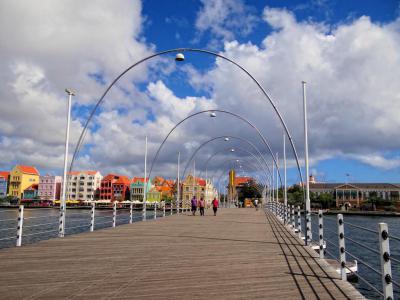
The Queen Emma Bridge is one of Curaçao’s most distinctive structures, spanning Saint Anna Bay and linking the districts of Punda and Otrobanda. This floating pontoon bridge serves both as an important pedestrian route and as a historical engineering feature that reflects the island’s development over more than a century.
Completed in 1888, the bridge was named in honor of Queen Emma of Waldeck and Pyrmont, who was queen consort of the Netherlands at the time. Since its construction, it has undergone multiple renovations to maintain reliable operation and respond to the changing needs of the harbor.
The design of the Queen Emma Bridge sets it apart from conventional bridges. Supported by a series of pontoons, it is able to swing open to make room for oceangoing vessels entering or leaving the harbor. A hinge on the Punda side allows the bridge to pivot horizontally, while an operator stationed at the opposite end manages the movement. Two diesel engines power propellers positioned perpendicular to the bridge’s length, guiding the structure as it swings parallel to the shoreline. This opening process typically takes only a few minutes and has become a routine and practical aspect of daily life in the city.
An important upgrade took place in 1955 with the installation of lighting arches, added to mark the visit of Queen Juliana and Prince Bernhard. These lights enhanced visibility and gave the bridge a stronger presence during evening hours, reinforcing its status as both a transportation link and a cultural landmark for residents and visitors.
Completed in 1888, the bridge was named in honor of Queen Emma of Waldeck and Pyrmont, who was queen consort of the Netherlands at the time. Since its construction, it has undergone multiple renovations to maintain reliable operation and respond to the changing needs of the harbor.
The design of the Queen Emma Bridge sets it apart from conventional bridges. Supported by a series of pontoons, it is able to swing open to make room for oceangoing vessels entering or leaving the harbor. A hinge on the Punda side allows the bridge to pivot horizontally, while an operator stationed at the opposite end manages the movement. Two diesel engines power propellers positioned perpendicular to the bridge’s length, guiding the structure as it swings parallel to the shoreline. This opening process typically takes only a few minutes and has become a routine and practical aspect of daily life in the city.
An important upgrade took place in 1955 with the installation of lighting arches, added to mark the visit of Queen Juliana and Prince Bernhard. These lights enhanced visibility and gave the bridge a stronger presence during evening hours, reinforcing its status as both a transportation link and a cultural landmark for residents and visitors.
7) Rif Mangrove Park
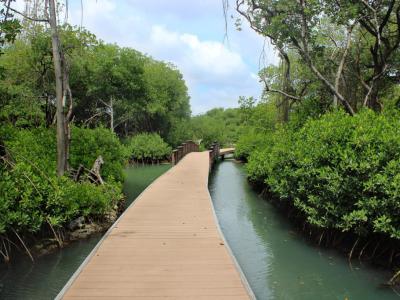
Rif Mangrove Park, located along the coastline of Willemstad, is a captivating natural sanctuary that beautifully showcases the resilience of nature. The park boasts a lush mangrove forest with winding walking trails, providing an educational and enchanting experience for visitors.
What once served as the exit point for Otrobanda's sewage has transformed into a thriving ecosystem, highlighting the remarkable ability of nature to rebound. As you explore the park, the vibrant and healthy mangrove trees reflect in the backwater, creating a picturesque setting.
The wooden boardwalk meanders through various parts of the Rif Mangrove Park, offering a delightful stroll. Benches along the way invite visitors to pause, immerse themselves in nature, and appreciate the serene surroundings. An observation tower within the park provides an excellent vantage point to admire the entire area, making it an ideal spot for birdwatching.
The park is a haven for bird enthusiasts, as diverse bird species inhabit the mangrove forest. The approximately 2-kilometer hiking trail, taking around 40 minutes to complete, allows you to discover the wonders of this unique ecosystem.
What once served as the exit point for Otrobanda's sewage has transformed into a thriving ecosystem, highlighting the remarkable ability of nature to rebound. As you explore the park, the vibrant and healthy mangrove trees reflect in the backwater, creating a picturesque setting.
The wooden boardwalk meanders through various parts of the Rif Mangrove Park, offering a delightful stroll. Benches along the way invite visitors to pause, immerse themselves in nature, and appreciate the serene surroundings. An observation tower within the park provides an excellent vantage point to admire the entire area, making it an ideal spot for birdwatching.
The park is a haven for bird enthusiasts, as diverse bird species inhabit the mangrove forest. The approximately 2-kilometer hiking trail, taking around 40 minutes to complete, allows you to discover the wonders of this unique ecosystem.
