Custom Walk in Brussels, Belgium by carolynmbisop_77cf4 created on 2025-06-21
Guide Location: Belgium » Brussels
Guide Type: Custom Walk
# of Sights: 7
Tour Duration: 2 Hour(s)
Travel Distance: 4.3 Km or 2.7 Miles
Share Key: AGBSR
Guide Type: Custom Walk
# of Sights: 7
Tour Duration: 2 Hour(s)
Travel Distance: 4.3 Km or 2.7 Miles
Share Key: AGBSR
How It Works
Please retrieve this walk in the GPSmyCity app. Once done, the app will guide you from one tour stop to the next as if you had a personal tour guide. If you created the walk on this website or come to the page via a link, please follow the instructions below to retrieve the walk in the app.
Retrieve This Walk in App
Step 1. Download the app "GPSmyCity: Walks in 1K+ Cities" on Apple App Store or Google Play Store.



Step 2. In the GPSmyCity app, download(or launch) the guide "Brussels Map and Walking Tours".
Step 3. Tap the menu button located at upper right corner of the "Walks" screen and select "Retrieve custom walk". Enter the share key: AGBSR
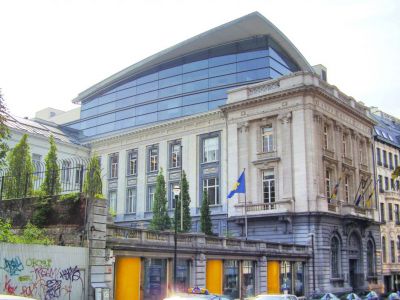
1) Parlement de Bruxelles (Brussels Parliament Building)
The Regional Parliament, often referred to as the Brussels Parliament, is a complex of buildings that offers intriguing architecture. While the majority of the structures date from the early 20th century, certain wings within the complex trace their origins back to the 17th century. The overall architectural style of the edifice is neoclassical, with a very modern hemicycle (horse shoe-shaped debating chamber) on the top floor.
Originally, the Regional Parliament was situated at the Maes family mansion, which was destroyed in 1695 during the bombardment of Brussels by the French troops under King Louis XIV. The remnants of the old mansion were acquired by Count Charles van den Berghe, who then built a new mansion on the site, complete with an enclosed courtyard and garden. In 1823, the mansion was purchased by the authorities to house the Brabant government and serve as the residence for the governor. Over time, it fell into disrepair and required substantial modifications.
In 1995, Brussels became an independent region, separating from the Brabant province, and established its own regional legislature. The Federal state subsequently transferred the building to Brussels to serve as the parliament; however, it was deemed unsuitable for this purpose and underwent further renovations. As part of these renovations, local authorities commissioned eleven artists to enhance and embellish various parts of the structure.
Tip:
Individual visitors can freely access the parliamentary chambers during business hours without a reservation. During the summer, you can begin your visit at any time, while for the rest of the year, visits are scheduled at specific hourly intervals. Guided tours of the building are also available at certain times. If you have a keen interest in the parliamentary proceedings, you can observe live sessions on a first-come, first-served basis.
Originally, the Regional Parliament was situated at the Maes family mansion, which was destroyed in 1695 during the bombardment of Brussels by the French troops under King Louis XIV. The remnants of the old mansion were acquired by Count Charles van den Berghe, who then built a new mansion on the site, complete with an enclosed courtyard and garden. In 1823, the mansion was purchased by the authorities to house the Brabant government and serve as the residence for the governor. Over time, it fell into disrepair and required substantial modifications.
In 1995, Brussels became an independent region, separating from the Brabant province, and established its own regional legislature. The Federal state subsequently transferred the building to Brussels to serve as the parliament; however, it was deemed unsuitable for this purpose and underwent further renovations. As part of these renovations, local authorities commissioned eleven artists to enhance and embellish various parts of the structure.
Tip:
Individual visitors can freely access the parliamentary chambers during business hours without a reservation. During the summer, you can begin your visit at any time, while for the rest of the year, visits are scheduled at specific hourly intervals. Guided tours of the building are also available at certain times. If you have a keen interest in the parliamentary proceedings, you can observe live sessions on a first-come, first-served basis.
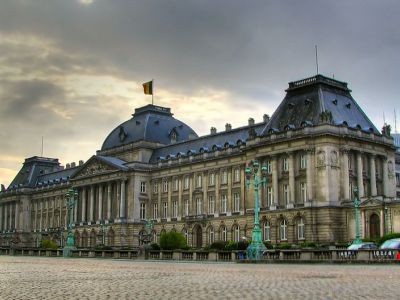
2) Palais Royal (Royal Palace) (must see)
Just around the corner from the Royal Square stands the grand and somewhat unwieldy Royal Palace, a rather solemn conversion of late 18th-century townhouses from the 19th century. The extensive project was initiated by King William I, who ruled both Belgium and the Netherlands from 1815 to 1830. However, the Belgian rebellion of 1830 marked the end of the joint kingdom, and since then, the kings of independent Belgium have spent little time in this palace. In fact, while it remains their official residence, the royal family resides at the Royal Castle of Laeken, just outside Brussels.
Each year, during the summer months (usually from late July to early September), the Royal Palace opens its doors to the public. Visitors can tour several of the palace's rooms and learn about the history of the Belgian monarchy.
A visit here can be worthwhile for a few reasons: the tapestries designed by Goya; the magnificent chandeliers in the Throne Room; and the captivating "Heaven of Delight" ceiling fresco, in the Mirror Room, composed of over a million jewel scarab beetles in radiating green and blue colors.
An even more intriguing option is to explore one of the mansions within the Royal Palace complex, the Hôtel Bellevue, at the corner of Palace Square and Royal Street. This mansion has been transformed into the BELvue Museum, which delves into the brief history of independent Belgium, with corridor displays focusing on the country's kings and rooms dedicated to Belgium as a whole.
The building's location is historically significant, as it was from here that rebellious Belgians fired upon the Dutch army as it attempted to cross Brussels Park in 1830. Original artifacts such as photographs, documents, and letters are on display.
Each year, during the summer months (usually from late July to early September), the Royal Palace opens its doors to the public. Visitors can tour several of the palace's rooms and learn about the history of the Belgian monarchy.
A visit here can be worthwhile for a few reasons: the tapestries designed by Goya; the magnificent chandeliers in the Throne Room; and the captivating "Heaven of Delight" ceiling fresco, in the Mirror Room, composed of over a million jewel scarab beetles in radiating green and blue colors.
An even more intriguing option is to explore one of the mansions within the Royal Palace complex, the Hôtel Bellevue, at the corner of Palace Square and Royal Street. This mansion has been transformed into the BELvue Museum, which delves into the brief history of independent Belgium, with corridor displays focusing on the country's kings and rooms dedicated to Belgium as a whole.
The building's location is historically significant, as it was from here that rebellious Belgians fired upon the Dutch army as it attempted to cross Brussels Park in 1830. Original artifacts such as photographs, documents, and letters are on display.
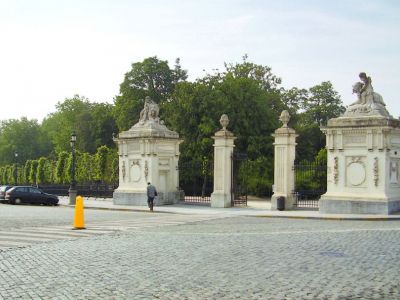
3) Parc de Bruxelles (Brussels Park)
Brussels Park, often still called the Royal Park, is the largest urban public park in Brussels, spanning over 13 hectares. The city’s first public park is bordered by major streets and the Belgian House of Parliament. The park is landscaped with plane, chestnut, maple, beech, and trellised lime trees and has a central pond linked by avenues that provide views toward the city's key landmarks such as the Palace of Justice and the Royal Palace.
The park's origins trace back to the former Palace of Coudenberg's gardens, used since the Middle Ages as hunting grounds by the Dukes of Brabant. Under the reign of Archduchess Maria Elisabeth of Austria, the governor of the Austrian Netherlands, the area was adorned with water basins, fountains, imitation rock caves, and numerous statues, making it one of Europe's most beautiful parks. Between 1776 and 1783, it was redesigned in a neoclassical style, featuring a complete overhaul with the felling and replanting of thousands of trees.
Throughout its history, Brussels Park has witnessed significant events, from destruction during the French Revolution to serving as a refuge during the Belgian Revolution. The year 1830 marked a pivotal moment in history when the park saw a major confrontation between revolutionary forces and the Dutch army which ultimately led to Belgian independence from the Netherlands. The revolutionaries emerged victorious, and on September 27, 1830, the nation of Belgium was born.
Inside the park, there are several significant cultural structures like the Royal Park Theatre and Vauxhall of Brussels. The former, established in 1782 at the park's northern end, initially served as a literary hub and a venue for diverse performances, including ballets and operas. After a fire in 1998, it underwent renovations, in the year 2000, to enhance its classical theatre focus. Adjacent to it, the Vauxhall, constructed in the 1780s, has been a prestigious site for concerts and social gatherings. It was revitalized in 1913, featuring distinctive green trelliswork. Nearby, the Vauxhall bandstand, redesigned in 1913 in a neo-Moorish style, briefly hosted summer concerts. The park's primary bandstand, built in 1841, as well as two historic water basins adorned with fountains and busts of Hermes, further exemplify the blend of artistic and natural beauty.
Brussels Park also features around sixty sculptures, mostly Greco-Roman mythological figures. Originally sourced from the Castle of Tervuren's park, these statues bore the brunt of wars, vandalism, and pollution, leading to most of them being replaced by replicas.
The park's origins trace back to the former Palace of Coudenberg's gardens, used since the Middle Ages as hunting grounds by the Dukes of Brabant. Under the reign of Archduchess Maria Elisabeth of Austria, the governor of the Austrian Netherlands, the area was adorned with water basins, fountains, imitation rock caves, and numerous statues, making it one of Europe's most beautiful parks. Between 1776 and 1783, it was redesigned in a neoclassical style, featuring a complete overhaul with the felling and replanting of thousands of trees.
Throughout its history, Brussels Park has witnessed significant events, from destruction during the French Revolution to serving as a refuge during the Belgian Revolution. The year 1830 marked a pivotal moment in history when the park saw a major confrontation between revolutionary forces and the Dutch army which ultimately led to Belgian independence from the Netherlands. The revolutionaries emerged victorious, and on September 27, 1830, the nation of Belgium was born.
Inside the park, there are several significant cultural structures like the Royal Park Theatre and Vauxhall of Brussels. The former, established in 1782 at the park's northern end, initially served as a literary hub and a venue for diverse performances, including ballets and operas. After a fire in 1998, it underwent renovations, in the year 2000, to enhance its classical theatre focus. Adjacent to it, the Vauxhall, constructed in the 1780s, has been a prestigious site for concerts and social gatherings. It was revitalized in 1913, featuring distinctive green trelliswork. Nearby, the Vauxhall bandstand, redesigned in 1913 in a neo-Moorish style, briefly hosted summer concerts. The park's primary bandstand, built in 1841, as well as two historic water basins adorned with fountains and busts of Hermes, further exemplify the blend of artistic and natural beauty.
Brussels Park also features around sixty sculptures, mostly Greco-Roman mythological figures. Originally sourced from the Castle of Tervuren's park, these statues bore the brunt of wars, vandalism, and pollution, leading to most of them being replaced by replicas.
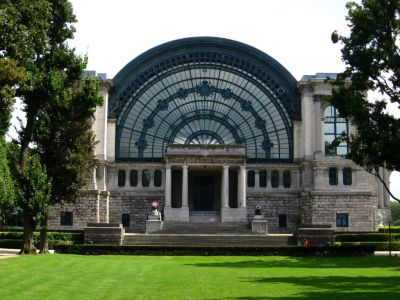
4) Musee Royal de l'Armee (Royal Military Museum) (must see)
In the northern wing of Jubilee Park, opposite the Triumphal Arch and distinct from the nearby museums, this institution offers a comprehensive exploration of the history of the Belgian armed forces, spanning from their inception to the modern era. It achieves this through an extensive collection of weapons, uniforms, and paintings, presented in a large and well-organized, albeit somewhat formal, manner.
The museum's exhibits encompass a range of historical topics, including the participation of "Belgian" regiments in the Austrian and Napoleonic armies, as well as the pivotal role played by volunteers during the 1830 revolution. Particularly noteworthy is the hall dedicated to World War I, featuring a diverse array of uniforms and equipment representing various nations involved in the conflict. This section also showcases an impressive array of field artillery, an early British tank from 1917, and a replica of a German Fokker aircraft (naturally painted in red).
While the exterior courtyard has a squadron of tanks and armored vehicles from the 1940s, representing British, American, and German forces, the largest hall within the museum focuses on aviation – not only military aircraft but also civilian ones, though the highlights are undoubtedly the jet fighters, including a Belgian air force F16, a Mirage, and a MIG23, as well as iconic World War II aircraft such as the Hurricane and Spitfire.
Overlooking the park, a substantial hall is dedicated to World War II, covering the events leading up to the war, the Belgian experience of fascism and collaboration, and featuring striking photographs of the war's conclusion and liberation. A noteworthy bonus is the opportunity to access the triumphal arch, offering expansive panoramic views of the city from its terrace, accessible via lift or stairs.
Why You Should Visit:
Holds a surprising array of rare and unique artifacts, particularly in its collection of aircraft, tanks, and armored vehicles.
A good reminder of humanity's resource-intensive history in the pursuit of new and inventive ways to wage war.
Tip: Take time to enjoy the surrounding park and its serene ambiance while visiting the museum.
The museum's exhibits encompass a range of historical topics, including the participation of "Belgian" regiments in the Austrian and Napoleonic armies, as well as the pivotal role played by volunteers during the 1830 revolution. Particularly noteworthy is the hall dedicated to World War I, featuring a diverse array of uniforms and equipment representing various nations involved in the conflict. This section also showcases an impressive array of field artillery, an early British tank from 1917, and a replica of a German Fokker aircraft (naturally painted in red).
While the exterior courtyard has a squadron of tanks and armored vehicles from the 1940s, representing British, American, and German forces, the largest hall within the museum focuses on aviation – not only military aircraft but also civilian ones, though the highlights are undoubtedly the jet fighters, including a Belgian air force F16, a Mirage, and a MIG23, as well as iconic World War II aircraft such as the Hurricane and Spitfire.
Overlooking the park, a substantial hall is dedicated to World War II, covering the events leading up to the war, the Belgian experience of fascism and collaboration, and featuring striking photographs of the war's conclusion and liberation. A noteworthy bonus is the opportunity to access the triumphal arch, offering expansive panoramic views of the city from its terrace, accessible via lift or stairs.
Why You Should Visit:
Holds a surprising array of rare and unique artifacts, particularly in its collection of aircraft, tanks, and armored vehicles.
A good reminder of humanity's resource-intensive history in the pursuit of new and inventive ways to wage war.
Tip: Take time to enjoy the surrounding park and its serene ambiance while visiting the museum.
5) Parc du Cinquantenaire (Jubilee Park) (must see)
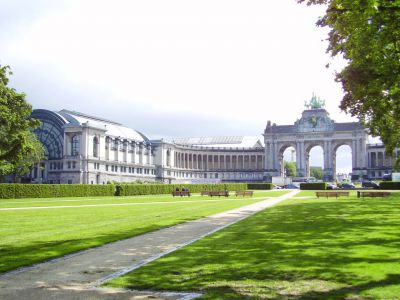
The Jubilee Park features expansive, leafy lawns that slope upward to a colossal triumphal arch crowned with a massive bronze sculpture called "Brabant Raising the National Flag". This arch, along with the two substantial stone buildings it connects, makes up Le Cinquantenaire ("Fiftieth Anniversary"), established by King Léopold II to commemorate the golden jubilee of the Belgian state in 1880. The exhibition at the time showcased products from Belgium and its colonies and was a great success. Today, the park continues to host various shows and trade fairs, while the buildings house extensive collections of art and applied art, weapons, and cars, displayed across three separate museums.
One notable attraction within the park itself is the Pavillon Horta, tucked away in the northwest corner. This Neoclassical structure, covered in graffiti, is known as the "pavilion of human passions" due to the controversial sculpture inside, created by Jef Lambeaux in 1886, which depicts writhing naked figures overseen by a shrouded Death. The pavilion was specifically designed to house this provocative work and was architect Victor Horta's first public commission, quite different from the later organic decorative style for which he became renowned. Interestingly, the building was closed just three days after opening due to the controversy generated by the bold artwork.
Next to the pavilion is a large cream-colored building, which houses Brussels' main mosque. This modern Arabic-style mosque was built in 1978 by a Tunisian architect, serving as a replacement for an earlier structure dating back to 1897.
Why You Should Visit:
A great place to relax, jog, enjoy picturesque views, and explore the diverse range of museums.
It's also a perfect spot for picnicking, especially on weekends when people and dog watching are popular activities.
Tip:
Visitors to the Royal Military Museum can take an elevator to the top of the Arch to enjoy wonderful views of Brussels, and this access is free of charge.
One notable attraction within the park itself is the Pavillon Horta, tucked away in the northwest corner. This Neoclassical structure, covered in graffiti, is known as the "pavilion of human passions" due to the controversial sculpture inside, created by Jef Lambeaux in 1886, which depicts writhing naked figures overseen by a shrouded Death. The pavilion was specifically designed to house this provocative work and was architect Victor Horta's first public commission, quite different from the later organic decorative style for which he became renowned. Interestingly, the building was closed just three days after opening due to the controversy generated by the bold artwork.
Next to the pavilion is a large cream-colored building, which houses Brussels' main mosque. This modern Arabic-style mosque was built in 1978 by a Tunisian architect, serving as a replacement for an earlier structure dating back to 1897.
Why You Should Visit:
A great place to relax, jog, enjoy picturesque views, and explore the diverse range of museums.
It's also a perfect spot for picnicking, especially on weekends when people and dog watching are popular activities.
Tip:
Visitors to the Royal Military Museum can take an elevator to the top of the Arch to enjoy wonderful views of Brussels, and this access is free of charge.
6) Arc de Triomphe (Triumphal Arch) (must see)
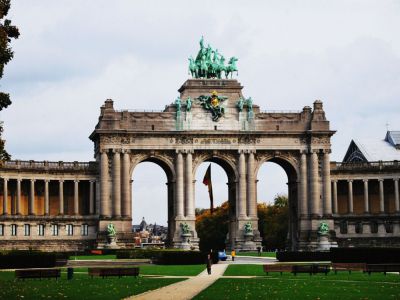
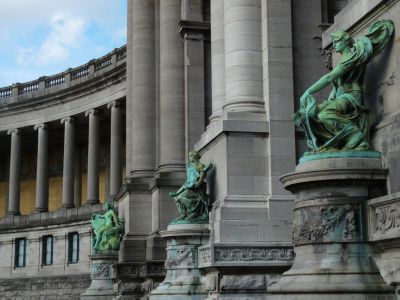
The wide and verdant lawns of Jubilee Park ("Parc du Cinquantenaire") slope upward to meet a grandiose triumphal arch of monumental proportions. Crowning this arch is a colossal bronze statue titled "Brabant Raising the National Flag", featuring a chariot drawn by four horses, symbolizing the Brabant province. Statues representing other provinces are positioned at the base of the columns surrounding the arch, whose sides are adorned with "galleries of the columns", embellished with mosaics illustrating Belgium's commitment to peace.
Le Cinquantenaire, which comprises the arch and the two substantial stone buildings it connects, was established by King Leopold II to commemorate the golden jubilee of the Belgian state in 1880. While the arch was intended to serve as a new entrance gate to the area, its funding and construction sparked controversy, as the king aspired to create an exceedingly extravagant structure, while the government was reluctant to allocate excessive funds. The financing and construction process proved protracted, spanning 25 years until its completion in 1905, with King Leopold II and private donors ultimately covering the costs.
On a positive note, Jubilee Park continues to host a variety of shows and trade fairs, maintaining its role as a versatile public space. The buildings within the park now house extensive collections of art and applied art, weaponry, and automobiles, exhibited across three distinct museums.
Why You Should Visit:
Because the best things in life are free.
Tip:
Just head to the top of the arch to admire Brussels' interesting panorama.
Le Cinquantenaire, which comprises the arch and the two substantial stone buildings it connects, was established by King Leopold II to commemorate the golden jubilee of the Belgian state in 1880. While the arch was intended to serve as a new entrance gate to the area, its funding and construction sparked controversy, as the king aspired to create an exceedingly extravagant structure, while the government was reluctant to allocate excessive funds. The financing and construction process proved protracted, spanning 25 years until its completion in 1905, with King Leopold II and private donors ultimately covering the costs.
On a positive note, Jubilee Park continues to host a variety of shows and trade fairs, maintaining its role as a versatile public space. The buildings within the park now house extensive collections of art and applied art, weaponry, and automobiles, exhibited across three distinct museums.
Why You Should Visit:
Because the best things in life are free.
Tip:
Just head to the top of the arch to admire Brussels' interesting panorama.
7) Musee Art et Histoire (Art and History Museum)
The Museum of Art & History may have a simple name, but it boasts an impressive and diverse collection from around the globe, spanning from Greece to modern-day Peru. Visitors are often drawn to the stunning Art Nouveau and Art Deco pieces, showcased in display cases designed by Victor Horta. Other galleries are dedicated to Romanesque, Renaissance, and Baroque art, as well as a rotating collection of tapestries. A whole gallery showcases clocks and astronomical instruments, and there's a charming collection of 35 painted sledges from the 1930s and '40s.
The extensive collection of antiquities encompasses ancient Egyptian treasures, including ten mummies and sarcophagi, along with a substantial assortment of Belgian artifacts dating back to the earliest human settlements in the region. However, the standout attraction is the Roman Syrian gallery, featuring a large and vivid mosaic from AD 415 depicting the hunting of tigers and lions being pursued by dogs.
The Non-European Civilizations section offers an even more impressive array, featuring pre-Columbian art, Native American headdresses, Jainist, Hindu, and Buddhist deities, Chinese ceramics, rare Islamic textiles, Byzantine art, and Coptic fabrics. One of the most striking exhibits is the Easter Island sculpture, a massive 6-tonne stone giant collected during a Franco-Belgian expedition in the 1930s, which seems somewhat out of place but adds to the museum's eclectic charm.
For fans of Tintin, the museum is a must-visit, as it inspired several elements in Hergé's famous comic series. Notably, a skeleton mummy served as inspiration for 'The Seven Crystal Balls', and 'The Broken Ear' drew from a wooden votive figure on display in the galleries.
Why You Should Visit:
Exceptional permanent collection that caters to history enthusiasts and art lovers alike, as well as an outstanding rotation of temporary exhibitions.
Good on-site restaurant with reasonable prices and a diverse menu of food & drinks, and the gift shop is quite spacious, offering a wide array of items to suit every taste and preference.
Tips:
To make the most of your visit, it's advisable to plan what you want to see in advance, as the museum's vast collection can be overwhelming.
If you're not fluent in French or Dutch, consider getting the English-language audioguide (available for an additional €3).
After your visit, you can enjoy a short stroll to Rue Balliard, where you'll find Grand Central, with its two floors of buffet-style dining open from morning until late at night.
The extensive collection of antiquities encompasses ancient Egyptian treasures, including ten mummies and sarcophagi, along with a substantial assortment of Belgian artifacts dating back to the earliest human settlements in the region. However, the standout attraction is the Roman Syrian gallery, featuring a large and vivid mosaic from AD 415 depicting the hunting of tigers and lions being pursued by dogs.
The Non-European Civilizations section offers an even more impressive array, featuring pre-Columbian art, Native American headdresses, Jainist, Hindu, and Buddhist deities, Chinese ceramics, rare Islamic textiles, Byzantine art, and Coptic fabrics. One of the most striking exhibits is the Easter Island sculpture, a massive 6-tonne stone giant collected during a Franco-Belgian expedition in the 1930s, which seems somewhat out of place but adds to the museum's eclectic charm.
For fans of Tintin, the museum is a must-visit, as it inspired several elements in Hergé's famous comic series. Notably, a skeleton mummy served as inspiration for 'The Seven Crystal Balls', and 'The Broken Ear' drew from a wooden votive figure on display in the galleries.
Why You Should Visit:
Exceptional permanent collection that caters to history enthusiasts and art lovers alike, as well as an outstanding rotation of temporary exhibitions.
Good on-site restaurant with reasonable prices and a diverse menu of food & drinks, and the gift shop is quite spacious, offering a wide array of items to suit every taste and preference.
Tips:
To make the most of your visit, it's advisable to plan what you want to see in advance, as the museum's vast collection can be overwhelming.
If you're not fluent in French or Dutch, consider getting the English-language audioguide (available for an additional €3).
After your visit, you can enjoy a short stroll to Rue Balliard, where you'll find Grand Central, with its two floors of buffet-style dining open from morning until late at night.
