Custom Walk in Barcelona, Spain by issypartridge171_b92c6 created on 2025-06-23
Guide Location: Spain » Barcelona
Guide Type: Custom Walk
# of Sights: 7
Tour Duration: 3 Hour(s)
Travel Distance: 7.7 Km or 4.8 Miles
Share Key: JKUD3
Guide Type: Custom Walk
# of Sights: 7
Tour Duration: 3 Hour(s)
Travel Distance: 7.7 Km or 4.8 Miles
Share Key: JKUD3
How It Works
Please retrieve this walk in the GPSmyCity app. Once done, the app will guide you from one tour stop to the next as if you had a personal tour guide. If you created the walk on this website or come to the page via a link, please follow the instructions below to retrieve the walk in the app.
Retrieve This Walk in App
Step 1. Download the app "GPSmyCity: Walks in 1K+ Cities" on Apple App Store or Google Play Store.



Step 2. In the GPSmyCity app, download(or launch) the guide "Barcelona Map and Walking Tours".
Step 3. Tap the menu button located at upper right corner of the "Walks" screen and select "Retrieve custom walk". Enter the share key: JKUD3
1) Catedral de Barcelona (Barcelona Cathedral) (must see)
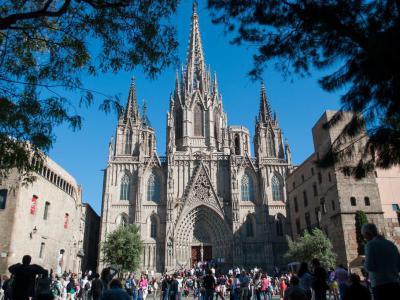
The Cathedral of the Holy Cross and Saint Eulalia, commonly known as Barcelona Cathedral, is a delightful combination of a church, mini-park, and a house of prayer, offering a serene alternative to the renowned La Sagrada Família. As the seat of the Archbishop of Barcelona, it was primarily constructed between the 13th and 15th centuries.
The cathedral has a pseudo-basilica layout with five aisles and a raised high altar. It is dedicated to Saint Eulalia, a young martyr whose relics are housed in the white marble sarcophagus inside the crypt. An intriguing feature is the presence of 13 geese in the cloister, symbolizing Saint Eulàlia's age at the time of her death.
Inside, the cathedral showcases choir stalls adorned with the coats-of-arms of the Order of the Golden Fleece. The Chapel of the Holy Sacrament contains a cross associated with the 1571 Battle of Lepanto and has been reconstructed to hold the tomb of San Olegarius, a former bishop of Barcelona.
The cathedral’s origins trace back to an early Christian and Visigothic complex that was damaged during a Muslim attack on Barcelona in 985. It was replaced with a Romanesque church in 1046 before the current Gothic cathedral began construction in 1298. The cathedral took 150 years to complete yet its neo-Gothic façade, featuring gargoyles and other mythical creatures, was finished only in 1913. Unlike many other churches in Barcelona destroyed during the Civil War, this Gothic temple was spared.
An exemplary piece of Catalan Gothic architecture, emphasizing balanced proportions over verticality, the cathedral measures 93 meters long, 40 meters wide, and 28 meters high at its central nave, with bell towers reaching 54 meters and the central peak at 70 meters.
The Cathedral of Barcelona is also famous for giving rise to the unique Catalan tradition of "dancing egg." Observed during the feast of Corpus Christi (also known as the Solemnity of the Most Holy Body and Blood of Christ), this tradition features an egg balanced on a water fountain’s jet.
The cathedral's cloister contains a gift shop. Cellular phones have been banned from the Chapel of Lepanto and other chapels. While exploring the cathedral's interior, make sure to venture up to the lofty roof terrace. You will be rewarded with views of the cathedral's towers, pinnacles, cimborio, and the Cloister, and a 360-degree view of the city!
Tip:
Cathedral Visit (including Choir entrance + Access to the rooftop, Chapter hall, and Virtual Audio guide) is €9.00.
Cathedral + Museum (including Choir entrance + Access to the rooftop + Chapter hall + Virtual Audio guide + Museum) is €15.00.
The cathedral has a pseudo-basilica layout with five aisles and a raised high altar. It is dedicated to Saint Eulalia, a young martyr whose relics are housed in the white marble sarcophagus inside the crypt. An intriguing feature is the presence of 13 geese in the cloister, symbolizing Saint Eulàlia's age at the time of her death.
Inside, the cathedral showcases choir stalls adorned with the coats-of-arms of the Order of the Golden Fleece. The Chapel of the Holy Sacrament contains a cross associated with the 1571 Battle of Lepanto and has been reconstructed to hold the tomb of San Olegarius, a former bishop of Barcelona.
The cathedral’s origins trace back to an early Christian and Visigothic complex that was damaged during a Muslim attack on Barcelona in 985. It was replaced with a Romanesque church in 1046 before the current Gothic cathedral began construction in 1298. The cathedral took 150 years to complete yet its neo-Gothic façade, featuring gargoyles and other mythical creatures, was finished only in 1913. Unlike many other churches in Barcelona destroyed during the Civil War, this Gothic temple was spared.
An exemplary piece of Catalan Gothic architecture, emphasizing balanced proportions over verticality, the cathedral measures 93 meters long, 40 meters wide, and 28 meters high at its central nave, with bell towers reaching 54 meters and the central peak at 70 meters.
The Cathedral of Barcelona is also famous for giving rise to the unique Catalan tradition of "dancing egg." Observed during the feast of Corpus Christi (also known as the Solemnity of the Most Holy Body and Blood of Christ), this tradition features an egg balanced on a water fountain’s jet.
The cathedral's cloister contains a gift shop. Cellular phones have been banned from the Chapel of Lepanto and other chapels. While exploring the cathedral's interior, make sure to venture up to the lofty roof terrace. You will be rewarded with views of the cathedral's towers, pinnacles, cimborio, and the Cloister, and a 360-degree view of the city!
Tip:
Cathedral Visit (including Choir entrance + Access to the rooftop, Chapter hall, and Virtual Audio guide) is €9.00.
Cathedral + Museum (including Choir entrance + Access to the rooftop + Chapter hall + Virtual Audio guide + Museum) is €15.00.
2) Mercat de la Boqueria (La Boqueria Market) (must see)
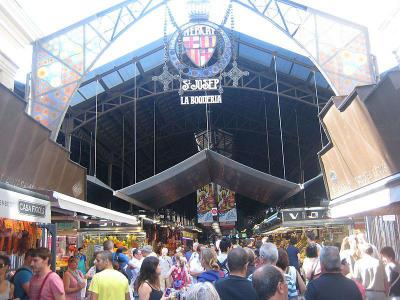
Situated to the north of La Rambla and a few blocks south of Catalonia Square, the Market of Saint Joseph de La Boqueria is extremely busy no matter what time of day or season you come. Colloquially referred to simply as La Boqueria, this large public market is one of Barcelona's foremost tourist landmarks with a broad choice of goods on offer.
Initially, the area was an unofficial extension of the New Square market. The name "Boqueria" possibly originates from the Catalan word "boc" for goat, indicating a place for selling goat meat. Indeed, the first mention of La Boqueria, as the meat market near the old city gate, dates back to 1217. By 1470, it was renamed “pig market” and afterward remained known as a straw market, up until 1794.
In 1826, the market gained an official status, and in 1835, plans were made for a formal structure on La Rambla. Construction began in 1840 and the market officially opened the same year. After several modifications, the building was inaugurated in 1853. A new fish market was added in 1911, and the current metal roof was installed in 1914, giving the market its present look.
Despite the constant flow of visitors, the experienced vendors efficiently handle the crowds, and the market's spacious layout helps ensure an enjoyable shopping experience. La Boqueria offers a fantastic opportunity to explore traditional Catalan cuisine. Here, you can take yourself on a tapas tour, sample exquisite jamón with cheese, purchase the world's freshest saffron (sold in various-sized small boxes), and enjoy local seafood (except for Sundays and Mondays when no fish is sold), plus discover many other culinary delights.
Also, don't miss the chance to try the freshly cooked fish at Kiosko Universal (a sit-down counter and bar-like place) or indulge in the wide variety of olives and delicious fresh fruits. Venture deep into the market to find the best stalls and taste a little bit of everything – you won't be disappointed.
Tip:
Keep in mind that the area is known for pickpocketing incidents, so whether you're alone or with friends, it is recommended to be vigilant and keep a close eye on your belongings.
Initially, the area was an unofficial extension of the New Square market. The name "Boqueria" possibly originates from the Catalan word "boc" for goat, indicating a place for selling goat meat. Indeed, the first mention of La Boqueria, as the meat market near the old city gate, dates back to 1217. By 1470, it was renamed “pig market” and afterward remained known as a straw market, up until 1794.
In 1826, the market gained an official status, and in 1835, plans were made for a formal structure on La Rambla. Construction began in 1840 and the market officially opened the same year. After several modifications, the building was inaugurated in 1853. A new fish market was added in 1911, and the current metal roof was installed in 1914, giving the market its present look.
Despite the constant flow of visitors, the experienced vendors efficiently handle the crowds, and the market's spacious layout helps ensure an enjoyable shopping experience. La Boqueria offers a fantastic opportunity to explore traditional Catalan cuisine. Here, you can take yourself on a tapas tour, sample exquisite jamón with cheese, purchase the world's freshest saffron (sold in various-sized small boxes), and enjoy local seafood (except for Sundays and Mondays when no fish is sold), plus discover many other culinary delights.
Also, don't miss the chance to try the freshly cooked fish at Kiosko Universal (a sit-down counter and bar-like place) or indulge in the wide variety of olives and delicious fresh fruits. Venture deep into the market to find the best stalls and taste a little bit of everything – you won't be disappointed.
Tip:
Keep in mind that the area is known for pickpocketing incidents, so whether you're alone or with friends, it is recommended to be vigilant and keep a close eye on your belongings.
3) Palau Guell (Guell Palace) (must see)
Nestled in a discreet corner off the bustling La Rambla, the Güell Palace is an inaugural masterpiece of the architect Antoni Gaudí in Barcelona, which swiftly propelled him to international acclaim.
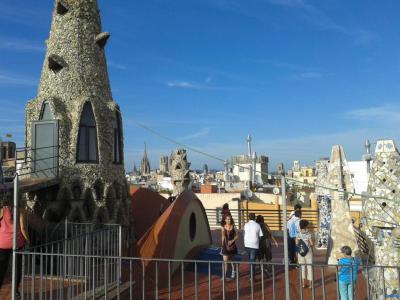
Now part of the UNESCO World Heritage Site called the "Works of Antoni Gaudí", this mansion was built between 1886 and 1888 for the industrial tycoon and Gaudí's lifelong patron, Eusebi Güell. The building showcases Gaudí's innovative use of iron supports as decorative elements, featuring twisted columns, arches, and intricate ceilings, topped with a whimsical array of tiled chimneys on the roof terrace.
Designed for high-society gatherings, the home’s central room has a tall ceiling, soaring three floors high, with a cupola. At night, to produce the appearance of a starlit sky, lanterns were hung from the outside through the small holes near the top. Arriving in horse-drawn carriages, guests entered the property through grand oval gates adorned with ironwork resembling seaweed. Horses were taken to a livery stable in the basement, while guests ascended to the receiving room. The walls and ceilings of this room contain discreet observation holes, allowing the owner to view guests from above before making an entrance.
With no budget constraints, Gaudí utilized the finest materials and craftsmanship to create a space that blends function and artistry seamlessly. This residence served as a preview of Gaudí’s future architectural innovations and his flair for combining structural elements with imaginative design.
Being slightly tucked away from the renowned La Rambla promenade, this lesser-known gem attracts fewer tourists, while offering a delightful opportunity to admire Gaudí's work in the charming old quarter of the city.
Tip:
The building's highlight is the rooftop terrace and its colorful chimneys adorned with mosaic and broken tiles. Note: on a rainy day, the rooftop may be closed, so it's advisable to check in advance the weather forecast to ensure a pleasant visit.
Now part of the UNESCO World Heritage Site called the "Works of Antoni Gaudí", this mansion was built between 1886 and 1888 for the industrial tycoon and Gaudí's lifelong patron, Eusebi Güell. The building showcases Gaudí's innovative use of iron supports as decorative elements, featuring twisted columns, arches, and intricate ceilings, topped with a whimsical array of tiled chimneys on the roof terrace.
Designed for high-society gatherings, the home’s central room has a tall ceiling, soaring three floors high, with a cupola. At night, to produce the appearance of a starlit sky, lanterns were hung from the outside through the small holes near the top. Arriving in horse-drawn carriages, guests entered the property through grand oval gates adorned with ironwork resembling seaweed. Horses were taken to a livery stable in the basement, while guests ascended to the receiving room. The walls and ceilings of this room contain discreet observation holes, allowing the owner to view guests from above before making an entrance.
With no budget constraints, Gaudí utilized the finest materials and craftsmanship to create a space that blends function and artistry seamlessly. This residence served as a preview of Gaudí’s future architectural innovations and his flair for combining structural elements with imaginative design.
Being slightly tucked away from the renowned La Rambla promenade, this lesser-known gem attracts fewer tourists, while offering a delightful opportunity to admire Gaudí's work in the charming old quarter of the city.
Tip:
The building's highlight is the rooftop terrace and its colorful chimneys adorned with mosaic and broken tiles. Note: on a rainy day, the rooftop may be closed, so it's advisable to check in advance the weather forecast to ensure a pleasant visit.
4) La Rambla (must see)
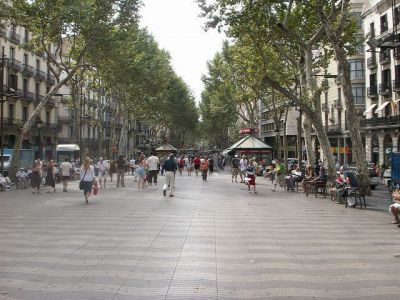
Pulsating with energy, particularly during the peak tourist season, La Rambla is the most famous street in Barcelona and one of Europe’s most lively urban promenades. Stretching 1.2 kilometers from Catalonia Square to the Christopher Columbus Monument at the Old Port, it cuts through the Gothic Quarter and El Raval neighborhoods. Legendary Spanish poet Federico García Lorca famously described this bustling thoroughfare, teeming with colorful shops, charming pavement cafes, souvenir kiosks, and an eclectic mix of visitors, as “the only street in the world which I wish would never end.”
La Rambla is composed of several smaller sections, known collectively as “Les Rambles.” These include Canaletes Rambla, known for its fountain; Rambla of Studies, the site of a former Jesuit university; Rambla of Saint Joseph, home to a flower market; Rambla of the Capuchins, featuring the Liceu opera house; and Rambla of Santa Mònica, named after a local convent.
Originally a sewage-filled stream, La Rambla’s name comes from the Arabic word for "sand," dating back to the times when it functioned as a rainwater drain. By the late 14th century, the city expanded its walls to include La Rambla, which later transformed into a lively promenade.
Over time, La Rambla became a hub for festivals and commerce. Trees were planted along its path in 1703, with plane trees, in particular, added in 1859. Notable local landmarks include the Liceu Grand Theatre, Barcelona's renowned opera house, and the Palace of the Viceroy, a Baroque mansion now hosting exhibitions and events. The street also features a Joan Miró pavement mosaic and connects to the famous La Boqueria market, offering a plethora of local delicacies, as well as the Royal Square popular for its nightlife.
Prices at La Rambla are a bit steeper than elsewhere in the city, but then again, excitement comes at a price, and La Rambla sure gives tonnes of it.
Tip:
As you stroll along, remain vigilant against the occasional presence of pickpockets-keeping your eyes open is always a good idea.
For excellent food at more affordable prices and the opportunity to savor your meal in a relaxed setting, venture to the Santa Caterina market, just a 10-minute walk away from La Boqueria.
La Rambla is composed of several smaller sections, known collectively as “Les Rambles.” These include Canaletes Rambla, known for its fountain; Rambla of Studies, the site of a former Jesuit university; Rambla of Saint Joseph, home to a flower market; Rambla of the Capuchins, featuring the Liceu opera house; and Rambla of Santa Mònica, named after a local convent.
Originally a sewage-filled stream, La Rambla’s name comes from the Arabic word for "sand," dating back to the times when it functioned as a rainwater drain. By the late 14th century, the city expanded its walls to include La Rambla, which later transformed into a lively promenade.
Over time, La Rambla became a hub for festivals and commerce. Trees were planted along its path in 1703, with plane trees, in particular, added in 1859. Notable local landmarks include the Liceu Grand Theatre, Barcelona's renowned opera house, and the Palace of the Viceroy, a Baroque mansion now hosting exhibitions and events. The street also features a Joan Miró pavement mosaic and connects to the famous La Boqueria market, offering a plethora of local delicacies, as well as the Royal Square popular for its nightlife.
Prices at La Rambla are a bit steeper than elsewhere in the city, but then again, excitement comes at a price, and La Rambla sure gives tonnes of it.
Tip:
As you stroll along, remain vigilant against the occasional presence of pickpockets-keeping your eyes open is always a good idea.
For excellent food at more affordable prices and the opportunity to savor your meal in a relaxed setting, venture to the Santa Caterina market, just a 10-minute walk away from La Boqueria.
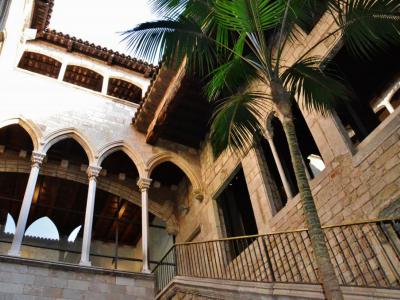
5) Museu Picasso (Picasso Museum)
For an unparalleled experience of early Picasso, the Picasso Museum in Barcelona is the ultimate destination. Established in 1961, this museum presents a remarkable collection of over 4,300 works by the renowned master, showcasing his formative years and highlighting the profound connection he shared with Barcelona, the city that greatly shaped his character and largely influenced his art.
Picasso harbored a deep desire to leave his artistic imprint on the fabric of Barcelona, and this wish was graciously fulfilled by his colleagues and friends, most notably Jaime Sabartés, who adorned the city with the magnificent works of one of history's greatest artists.
While the majority of the artworks exhibited at the museum represent Picasso's early endeavors, the overall collection looks quite impressive. Encompassing the period from 1917, it includes iconic series such as Las Meninas, highlighting the artist's extraordinary talent. In 2008, the museum also unveiled a significant display of Picasso's prints.
If you have a keen interest in Picasso's artistic journey and wish to witness his remarkable progression from a young prodigy to a mature artist, expressed through paintings, sculptures, ceramics, and various other mediums, a visit to this museum is an absolute must.
Tip:
And if you do visit, be sure to venture into the museum shop, as it offers fascinating and unique items not easily found elsewhere.
Picasso harbored a deep desire to leave his artistic imprint on the fabric of Barcelona, and this wish was graciously fulfilled by his colleagues and friends, most notably Jaime Sabartés, who adorned the city with the magnificent works of one of history's greatest artists.
While the majority of the artworks exhibited at the museum represent Picasso's early endeavors, the overall collection looks quite impressive. Encompassing the period from 1917, it includes iconic series such as Las Meninas, highlighting the artist's extraordinary talent. In 2008, the museum also unveiled a significant display of Picasso's prints.
If you have a keen interest in Picasso's artistic journey and wish to witness his remarkable progression from a young prodigy to a mature artist, expressed through paintings, sculptures, ceramics, and various other mediums, a visit to this museum is an absolute must.
Tip:
And if you do visit, be sure to venture into the museum shop, as it offers fascinating and unique items not easily found elsewhere.
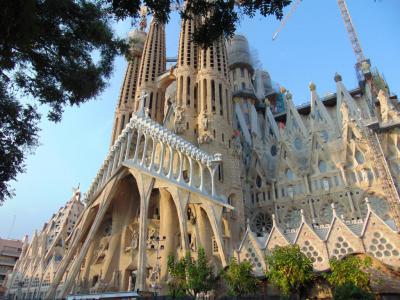
6) La Sagrada Familia (Basilica of the Holy Family) (must see)
The Basilica and Expiatory Temple of the Holy Family, commonly known as La Sagrada Família, is an iconic, unfinished church in Barcelona designed by Catalan Modernist architect Antoni Gaudí. Construction began in 1882 with architect Francisco de Paula del Villar, who envisioned a Gothic revival-style church. Upon taking over the project in 1883, Gaudí transformed the design into a unique blend of Gothic and Art Nouveau styles. Despite spending an impressive 43 years of his life designing this monument, by the time of Gaudí's death in 1926, only 15-25% of the basilica had been completed.
Relied on private donations, the construction has faced multiple interruptions like the Spanish Civil War in the 1930s. Modern technology has sped up the progress, however, and the church is now set to be finished by 2026, with further decorative work expected until 2034.
The Sagrada Família features eighteen planned spires symbolizing the Twelve Apostles, four Evangelists, the Virgin Mary, and Jesus Christ. Thirteen spires have been completed so far. The basilica’s three façades-the Nativity, Passion, and Glory-each represent different phases of Christ’s life and showcase a blend of naturalistic and minimalist styles.
The interior, designed as a Latin cross with five aisles, showcases Gaudí’s mastery of geometry and organic forms. The central nave vaults reach 45 meters, while the apse vault extends to 75 meters. The columns, which change shape as they rise, contribute to the basilica’s distinct look. Gaudí's use of hyperboloid structures and ruled surfaces enhances both the stability and aesthetic appeal of the building.
As of 2017, visitors can book tickets online to access various parts of the basilica, including the Nave, Crypt, and museum, as well as the Passion and Nativity steeples. A visit to the steeples includes a challenging descent through a narrow spiral staircase of over 300 steps. Also of note is the museum below, offering a wealth of information, including audiovisual presentations about the Sagrada Família project's history, plans, and Gaudí himself. You may also want to visit the small school built by Antoni Gaudí for the children of the construction workers right on the site.
Once completed, the Sagrada Família is to become the tallest church in the world and a lasting testament to Gaudí’s vision of blending architecture, nature, and spirituality.
Tip:
Please note that children under 6 are not permitted to ascend the towers; some adults may find the spiral staircase challenging too. If you decide to climb, ask the staff for directions to the "backside elevator", as it is usually less crowded.
Relied on private donations, the construction has faced multiple interruptions like the Spanish Civil War in the 1930s. Modern technology has sped up the progress, however, and the church is now set to be finished by 2026, with further decorative work expected until 2034.
The Sagrada Família features eighteen planned spires symbolizing the Twelve Apostles, four Evangelists, the Virgin Mary, and Jesus Christ. Thirteen spires have been completed so far. The basilica’s three façades-the Nativity, Passion, and Glory-each represent different phases of Christ’s life and showcase a blend of naturalistic and minimalist styles.
The interior, designed as a Latin cross with five aisles, showcases Gaudí’s mastery of geometry and organic forms. The central nave vaults reach 45 meters, while the apse vault extends to 75 meters. The columns, which change shape as they rise, contribute to the basilica’s distinct look. Gaudí's use of hyperboloid structures and ruled surfaces enhances both the stability and aesthetic appeal of the building.
As of 2017, visitors can book tickets online to access various parts of the basilica, including the Nave, Crypt, and museum, as well as the Passion and Nativity steeples. A visit to the steeples includes a challenging descent through a narrow spiral staircase of over 300 steps. Also of note is the museum below, offering a wealth of information, including audiovisual presentations about the Sagrada Família project's history, plans, and Gaudí himself. You may also want to visit the small school built by Antoni Gaudí for the children of the construction workers right on the site.
Once completed, the Sagrada Família is to become the tallest church in the world and a lasting testament to Gaudí’s vision of blending architecture, nature, and spirituality.
Tip:
Please note that children under 6 are not permitted to ascend the towers; some adults may find the spiral staircase challenging too. If you decide to climb, ask the staff for directions to the "backside elevator", as it is usually less crowded.
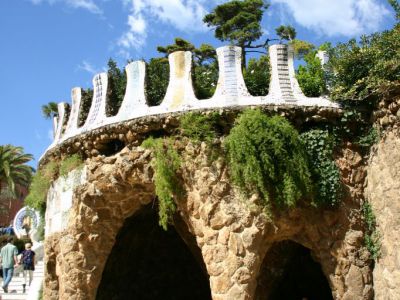
7) Park Guell (must see)
A treasure bestowed with the prestigious UNESCO World Heritage status, Park Güell stands as a testament to Antoni Gaudí's imaginative brilliance, representing the zenith of his naturalist phase and captivating the essence of his whimsical style. Originally envisioned in the 1890s as a grand garden city for Barcelona's affluent families, this visionary project remained unfinished. However, the marvel we behold today emerged through the dedicated efforts between 1910 and 1914, finally unveiling its allure to the public in 1922.
Nestled upon the picturesque slopes of Carmel Hill, Park Güell unfolds as a mesmerizing landscape adorned with Gaudí's ingenious creations. Among them, a pair of enchanting pavilions, a tiled salamander, and the world's longest bench beckon visitors into a realm reminiscent of a storybook. Noteworthy among these structures is the "Casa del Guarda" (Caretaker's House), crafted with meticulous detail.
While access to the Monumental Area, showcasing Gaudí's most remarkable works, requires a ticket, the verdant expanses surrounding this realm are open for exploration and free to wander. Venture into the Room of a Hundred Columns, a cavernous hall adorned with 84 gracefully curved pillars, originally conceived as the estate's marketplace. Above, the Gran Plaça Circular offers an open expanse with a sinuous balcony of mosaic patterns that offers breathtaking panoramic views of the city.
At the park's entry, two pavilions crafted by Gaudí greet visitors, while the Casa Museu Gaudí, a gingerbread-style abode that served as Gaudí's residence from 1906 to 1926, was built by architect Francesc Berenguer.
Why You Should Visit:
Amazing park with mesmerizing tiled designs, boasting a vibrant palette of colors. Perfect for any day when you seek to bask in the beauty of the outdoors.
Tip:
Within the park, you have the opportunity to capture the ultimate Barcelona photograph, presenting two enticing options: the iconic mosaic-covered salamander, a symbol of the park's charm, and the breathtaking vistas from the Gran Plaça Circular.
Nestled upon the picturesque slopes of Carmel Hill, Park Güell unfolds as a mesmerizing landscape adorned with Gaudí's ingenious creations. Among them, a pair of enchanting pavilions, a tiled salamander, and the world's longest bench beckon visitors into a realm reminiscent of a storybook. Noteworthy among these structures is the "Casa del Guarda" (Caretaker's House), crafted with meticulous detail.
While access to the Monumental Area, showcasing Gaudí's most remarkable works, requires a ticket, the verdant expanses surrounding this realm are open for exploration and free to wander. Venture into the Room of a Hundred Columns, a cavernous hall adorned with 84 gracefully curved pillars, originally conceived as the estate's marketplace. Above, the Gran Plaça Circular offers an open expanse with a sinuous balcony of mosaic patterns that offers breathtaking panoramic views of the city.
At the park's entry, two pavilions crafted by Gaudí greet visitors, while the Casa Museu Gaudí, a gingerbread-style abode that served as Gaudí's residence from 1906 to 1926, was built by architect Francesc Berenguer.
Why You Should Visit:
Amazing park with mesmerizing tiled designs, boasting a vibrant palette of colors. Perfect for any day when you seek to bask in the beauty of the outdoors.
Tip:
Within the park, you have the opportunity to capture the ultimate Barcelona photograph, presenting two enticing options: the iconic mosaic-covered salamander, a symbol of the park's charm, and the breathtaking vistas from the Gran Plaça Circular.
