Custom Walk in Kotor, Montenegro by smwoodbury_82d72 created on 2025-06-23
Guide Location: Montenegro » Kotor
Guide Type: Custom Walk
# of Sights: 12
Tour Duration: 2 Hour(s)
Travel Distance: 2.3 Km or 1.4 Miles
Share Key: PSMET
Guide Type: Custom Walk
# of Sights: 12
Tour Duration: 2 Hour(s)
Travel Distance: 2.3 Km or 1.4 Miles
Share Key: PSMET
How It Works
Please retrieve this walk in the GPSmyCity app. Once done, the app will guide you from one tour stop to the next as if you had a personal tour guide. If you created the walk on this website or come to the page via a link, please follow the instructions below to retrieve the walk in the app.
Retrieve This Walk in App
Step 1. Download the app "GPSmyCity: Walks in 1K+ Cities" on Apple App Store or Google Play Store.



Step 2. In the GPSmyCity app, download(or launch) the guide "Kotor Map and Walking Tours".
Step 3. Tap the menu button located at upper right corner of the "Walks" screen and select "Retrieve custom walk". Enter the share key: PSMET
1) Sjeverna vrata (North Gate / River Gate)
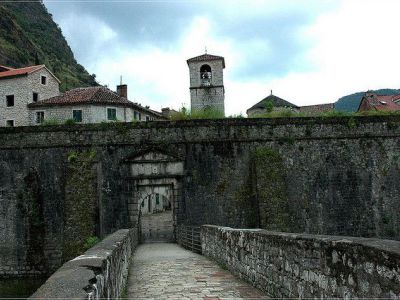
Next to the Sea Gate on the western side of the ramparts, Kotor had another gate along the northern sector, accessible solely from the sea, by the River Škurda. This gate also served as the only land link from the urban core to the north, leading towards Tabačina, where the gardens and orchards of Kotor's citizens thrived.
Here, the River Škurda originates from the steep cliffs of Mount Pestingrad, branching into two streams with numerous springs. The southern branch flows past the northern sector of the ramparts, forming a natural barrier for potential invaders.
Spanning this channel is a stone bridge with three arches, flanked by high walls featuring gunports and a roof, with two round guard towers positioned in the middle on each side. At the northern end of the bridge stands a low triangular-shaped shelter, while at the southern end, a portion of the bridge was made of wood and functioned as a drawbridge, severing access to the city from that direction if raised.
Compared to the Sea Gate, the North Gate is notably smaller, crafted with a frame of ashlar. Instead of a plain lintel beam, it has a Renaissance-inspired pediment depicting an imaginary fortress and the winged lion of Saint Mark. On special metopes are two Latin inscriptions commemorating the repulsion of the Ottoman fleet on August 15, 1539. During this event, the Ottoman Kapudan Pasha (admiral) Hayreddin Barbarossa attempted an unsuccessful attack on the city, sailing his ships into the northern branch of the Škurda River and targeting the North Gate.
From the vantage point of the stone bridge, one can admire the formidable defense structures and city walls, marveling at how intricately integrated they are into the surrounding mountain terrain. It's a prime location for capturing memorable photographs. Don't forget to glance into the crystal-clear river water-you're likely to catch a glimpse of numerous fish swimming below!
Here, the River Škurda originates from the steep cliffs of Mount Pestingrad, branching into two streams with numerous springs. The southern branch flows past the northern sector of the ramparts, forming a natural barrier for potential invaders.
Spanning this channel is a stone bridge with three arches, flanked by high walls featuring gunports and a roof, with two round guard towers positioned in the middle on each side. At the northern end of the bridge stands a low triangular-shaped shelter, while at the southern end, a portion of the bridge was made of wood and functioned as a drawbridge, severing access to the city from that direction if raised.
Compared to the Sea Gate, the North Gate is notably smaller, crafted with a frame of ashlar. Instead of a plain lintel beam, it has a Renaissance-inspired pediment depicting an imaginary fortress and the winged lion of Saint Mark. On special metopes are two Latin inscriptions commemorating the repulsion of the Ottoman fleet on August 15, 1539. During this event, the Ottoman Kapudan Pasha (admiral) Hayreddin Barbarossa attempted an unsuccessful attack on the city, sailing his ships into the northern branch of the Škurda River and targeting the North Gate.
From the vantage point of the stone bridge, one can admire the formidable defense structures and city walls, marveling at how intricately integrated they are into the surrounding mountain terrain. It's a prime location for capturing memorable photographs. Don't forget to glance into the crystal-clear river water-you're likely to catch a glimpse of numerous fish swimming below!
2) Crkva Svetog Luke (Church of St. Luke)
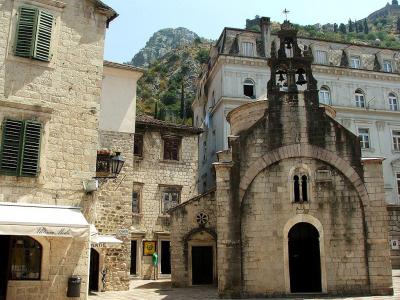
Alongside the Church of Saint Nicholas lies one of Kotor's five remaining sacred structures built in the Romanesque style. Dating back to 1195, during the Serbian Nemanjić dynasty, it has a single nave layout with a circular-based dome over the central aisle, a semicircular apse on the east end, and a portal on the west side. Despite its modest size compared to its neighbors, like the grand Saint Nicholas, this structure's smaller stature actually worked in its favor, sparing it from earthquake damage that affected many others in town.
Shortly after its completion, Saint Luke's was adorned with frescoes, though only fragments remain on the southern wall. The impressive iconostasis, crafted by Dimitrije Daskal, hails from the 17th-century Boka Kotorska painting school.
What further sets the church apart is its history of housing both Catholic and Orthodox altars. In 1657, during a Turkish invasion, the population of Grbalj sought refuge in Kotor, and the Venetian authorities allowed them to use the then-Catholic place of worship for Orthodox services. This led to the installation of two altars, which remained in use until the French occupation from 1807 to 1814.
An intriguing detail lies beneath your feet in this sacred spot – the floor is comprised of tombstones from communal graves of Kotor's residents. Burials took place within the church until the 1930s, adding another layer of history to this fascinating site.
Shortly after its completion, Saint Luke's was adorned with frescoes, though only fragments remain on the southern wall. The impressive iconostasis, crafted by Dimitrije Daskal, hails from the 17th-century Boka Kotorska painting school.
What further sets the church apart is its history of housing both Catholic and Orthodox altars. In 1657, during a Turkish invasion, the population of Grbalj sought refuge in Kotor, and the Venetian authorities allowed them to use the then-Catholic place of worship for Orthodox services. This led to the installation of two altars, which remained in use until the French occupation from 1807 to 1814.
An intriguing detail lies beneath your feet in this sacred spot – the floor is comprised of tombstones from communal graves of Kotor's residents. Burials took place within the church until the 1930s, adding another layer of history to this fascinating site.
3) Museum Maritimum (Maritime Museum - Grgurin Palace)
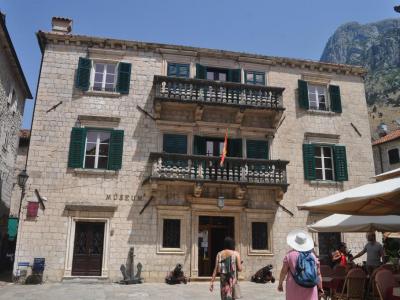
Kotor's rich maritime legacy takes center stage in a beautiful early-18th-century Baroque palace, housing three floors of captivating displays. With the help of an audio guide, you'll dive into a treasure trove of photographs, paintings, uniforms, intricately crafted weapons, fancy navigational gadgets, and ship models.
The sailing tradition in Kotor traces back to medieval times, and you can soak in the tales of Kotor's seafarer fraternity, known as the Boka Marine, dating all the way back to the 9th century. The museum is like a time capsule, preserving memories of the city's illustrious seafarers, artists, shipbuilders, craftsmen, politicians, and diplomats who bridged the gap between East and West.
Among the highlights are six bronze relief tables showcasing pivotal events and notable figures from Kotor's turbulent past. You'll also find geographic maps, engravings, and watercolors depicting coastal towns, along with an ethnographic collection that offers a glimpse into Kotor's maritime heyday from the 16th to the 18th century.
Right at the entrance of the palace, keep an eye out for two small cannons symbolizing the endless battle between seafarers and pirates.
The sailing tradition in Kotor traces back to medieval times, and you can soak in the tales of Kotor's seafarer fraternity, known as the Boka Marine, dating all the way back to the 9th century. The museum is like a time capsule, preserving memories of the city's illustrious seafarers, artists, shipbuilders, craftsmen, politicians, and diplomats who bridged the gap between East and West.
Among the highlights are six bronze relief tables showcasing pivotal events and notable figures from Kotor's turbulent past. You'll also find geographic maps, engravings, and watercolors depicting coastal towns, along with an ethnographic collection that offers a glimpse into Kotor's maritime heyday from the 16th to the 18th century.
Right at the entrance of the palace, keep an eye out for two small cannons symbolizing the endless battle between seafarers and pirates.
4) Katedrala Svetog Tripuna (Saint Tryphon Cathedral and Square) (must see)
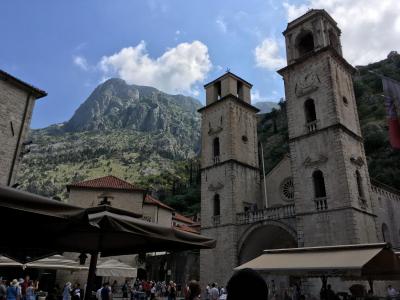
Tucked away amidst the winding alleys of Old Town, the magnificent Saint Tryphon Cathedral stands as one of Kotor’s top sights. Consecrated in 1166, this place of worship was built upon the ruins of an ancient 9th-century temple dedicated to the town's patron saint, offering a glimpse into Kotor's past as a bustling medieval seaport.
A three-nave structure, it has undergone extensive restoration over the centuries, particularly following the devastating 1667 earthquake that destroyed its bell towers and part of the façade. In the aftermath, new Baroque-style bell towers were erected, while the once Romanesque rose windows now feature captivating Gothic-Renaissance motifs.
Inside, you will find a remarkable collection of art paintings and precious gold and silver relics crafted by local artisans. Greek masters covered the interior with exquisite frescoes, but the centerpiece is undoubtedly the 14th-century Romanesque Gothic ciborium above the main altar. The Golden Altarpiece adorning the apse wall features depictions of Christ, the Virgin, Saint John the Baptist, Saint Tryphon, and sixteen other saints, standing as a testament to the masterful craftsmanship of Kotor's goldsmiths in the 15th century.
With the nominal entrance fee, visitors gain access to the Sacral Art Museum, housing some of Kotor's most cherished artworks and religious artifacts. This also helps maintain the serene atmosphere as a place of worship, rather than becoming overrun with tourists.
Outside, the nearby Bishop's Palace served as the official residence of the bishops and belonged to the Drago noble family.
A three-nave structure, it has undergone extensive restoration over the centuries, particularly following the devastating 1667 earthquake that destroyed its bell towers and part of the façade. In the aftermath, new Baroque-style bell towers were erected, while the once Romanesque rose windows now feature captivating Gothic-Renaissance motifs.
Inside, you will find a remarkable collection of art paintings and precious gold and silver relics crafted by local artisans. Greek masters covered the interior with exquisite frescoes, but the centerpiece is undoubtedly the 14th-century Romanesque Gothic ciborium above the main altar. The Golden Altarpiece adorning the apse wall features depictions of Christ, the Virgin, Saint John the Baptist, Saint Tryphon, and sixteen other saints, standing as a testament to the masterful craftsmanship of Kotor's goldsmiths in the 15th century.
With the nominal entrance fee, visitors gain access to the Sacral Art Museum, housing some of Kotor's most cherished artworks and religious artifacts. This also helps maintain the serene atmosphere as a place of worship, rather than becoming overrun with tourists.
Outside, the nearby Bishop's Palace served as the official residence of the bishops and belonged to the Drago noble family.
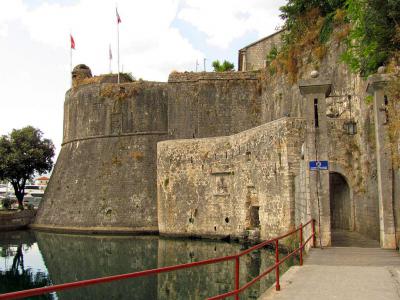
5) Vrata od Gurdicа (Gurdic Gate / South Gate)
This ancient city gate, nestled within the Old Town of Kotor, has stood since the 16th century, strategically positioned on a narrow stretch of land between the steep mountain and the deep waters of the bay. Once the guardian of Kotor's connection to the outside world, it now stands as an inviting entry point for visitors eager to delve into the city's historical splendor.
With fewer tourists venturing into the surroundings, the quaint streets leading to the gate and bastion create a captivating atmosphere, transporting you back several centuries in time. It's a delightful area to wander and soak in the ambiance of a bygone era.
The southern passage to Kotor has a triple system of locks, hinting at its significant role in the city's defense. Equipped with a drawbridge, the gate earned its name from the "odd" Gurdić River, meandering around the fortress's southern edge. Its peculiarity lies in its intermittent flow – during heavy rains, water rushes fiercely from its cave, flooding into the bay, while in dry summers, the river's source dries up, filling in reverse with seawater.
With fewer tourists venturing into the surroundings, the quaint streets leading to the gate and bastion create a captivating atmosphere, transporting you back several centuries in time. It's a delightful area to wander and soak in the ambiance of a bygone era.
The southern passage to Kotor has a triple system of locks, hinting at its significant role in the city's defense. Equipped with a drawbridge, the gate earned its name from the "odd" Gurdić River, meandering around the fortress's southern edge. Its peculiarity lies in its intermittent flow – during heavy rains, water rushes fiercely from its cave, flooding into the bay, while in dry summers, the river's source dries up, filling in reverse with seawater.
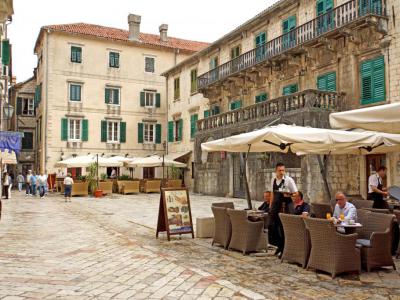
6) Trg od Brasna (Flour Square)
Known for its historical function as a flour storage area, this square houses three notable buildings: the Saint Nicholas of Seamen Church, Pima Palace, and Buća Palace.
In the old days of Kotor, each influential family flaunted their wealth through grand palaces. The Buća family, particularly Mihailo, the city's wealthiest resident, owned a magnificent edifice in the 14th century; however, following a devastating earthquake in the 17th century, the family lacked the funds to fully restore it. Now operating as a boutique hotel, the palace comprises three distinct buildings, each with varying heights, facades, and architectural styles, making it difficult to believe they were once one structure.
Across the street, the Pima Palace was once the residence of the noble Pima family, counting famous poets Jerome and Bernard among its members. Despite enduring damage from numerous earthquakes over the centuries, the edifice was rebuilt after the devastating tremor of 1667 and again after the one in 1979. Its main portal still displays the Pima family coat of arms, supported by two angels.
Under house number 328, excavations uncovered the remnants of a church. Initially a chapel belonging to the Buća family, it was later donated to the Fraternity of Saint Nicholas of Seamen, a group eventually known as the Bokelian Navy. Around 1000 AD, this seafaring guild played a pivotal role in advancing maritime affairs in the city. Their contributions are commemorated every June 26th.
In the old days of Kotor, each influential family flaunted their wealth through grand palaces. The Buća family, particularly Mihailo, the city's wealthiest resident, owned a magnificent edifice in the 14th century; however, following a devastating earthquake in the 17th century, the family lacked the funds to fully restore it. Now operating as a boutique hotel, the palace comprises three distinct buildings, each with varying heights, facades, and architectural styles, making it difficult to believe they were once one structure.
Across the street, the Pima Palace was once the residence of the noble Pima family, counting famous poets Jerome and Bernard among its members. Despite enduring damage from numerous earthquakes over the centuries, the edifice was rebuilt after the devastating tremor of 1667 and again after the one in 1979. Its main portal still displays the Pima family coat of arms, supported by two angels.
Under house number 328, excavations uncovered the remnants of a church. Initially a chapel belonging to the Buća family, it was later donated to the Fraternity of Saint Nicholas of Seamen, a group eventually known as the Bokelian Navy. Around 1000 AD, this seafaring guild played a pivotal role in advancing maritime affairs in the city. Their contributions are commemorated every June 26th.
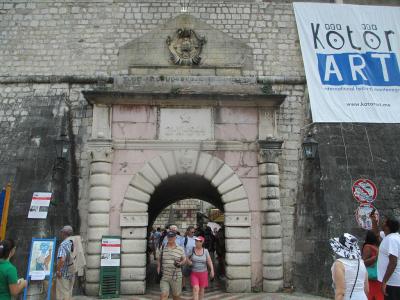
7) Morska vrata (Sea Gate / Main Gate)
The main entrance to Kotor's fortified city was constructed in 1555 during Venetian rule (1420–1797). You'll notice the winged lion of Saint Mark, Venice's symbol, proudly displayed on the walls here and in a few other spots around town. Above the gate, there's a nod to history with a communist star and a post-World War II inscription that reads, "What belongs to others we don't want, what is ours we will never surrender" – credited to Yugoslav leader Tito. There's also a huge (and quite random) bench outside, perfect for some goofy photos.
Take a look up from outside and picture the old fortified wall in all its former glory. Sure, some parts have crumbled away over time, but it's still pretty amazing to think about how it was built centuries ago. Previously only accessible by sea, the gate has sunk over 70 centimeters since it was erected, all thanks to the weight of its stone blocks!
Additionally, don't miss the beautiful 15th-century stone relief of the Madonna and Child, flanked by Saint Tryphon and Saint Bernard, as you walk through. From there, you're immediately immersed in the charming cobblestone streets of Old Town Kotor – Arms Square!
Take a look up from outside and picture the old fortified wall in all its former glory. Sure, some parts have crumbled away over time, but it's still pretty amazing to think about how it was built centuries ago. Previously only accessible by sea, the gate has sunk over 70 centimeters since it was erected, all thanks to the weight of its stone blocks!
Additionally, don't miss the beautiful 15th-century stone relief of the Madonna and Child, flanked by Saint Tryphon and Saint Bernard, as you walk through. From there, you're immediately immersed in the charming cobblestone streets of Old Town Kotor – Arms Square!
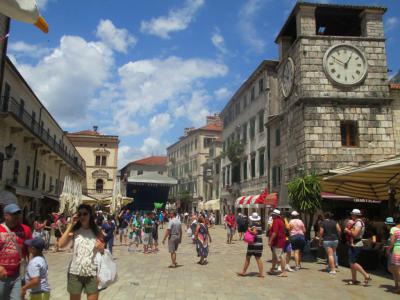
8) Trg od Oruzja (Arms Square) (must see)
This is the big city square you'll step into when entering the walled city of Kotor through the Sea Gate. It's a hub of activity with shops, banks, cafes, restaurants, and some pretty significant historical landmarks. Back in the Venetian days, this place was all about making and storing weapons, especially in the Arsenal building, with the Prince's Palace and Town Guard Tower backing up the military effort.
Soldiers who defended the city would gather here to gear up with weapons and stand their ground. One of the most legendary moments was when they held off the Turkish pirate Hajrudin Barbarossa for three intense days back in 1539.
Besides the Sea Gate, which is the biggest of the three entrances to the city, you'll also spot the 17th-century clock tower (looking older than it really is, thanks to its mix of Baroque and Gothic styles) and a medieval pillar located adjacent. On the west side of the square stands the Rector's Palace, now part of Hotel Cattaro, while the Napoleon Theatre, originally built in 1762 for storing military supplies and food, became one of the very first theaters in the Balkans during the French occupation.
Soldiers who defended the city would gather here to gear up with weapons and stand their ground. One of the most legendary moments was when they held off the Turkish pirate Hajrudin Barbarossa for three intense days back in 1539.
Besides the Sea Gate, which is the biggest of the three entrances to the city, you'll also spot the 17th-century clock tower (looking older than it really is, thanks to its mix of Baroque and Gothic styles) and a medieval pillar located adjacent. On the west side of the square stands the Rector's Palace, now part of Hotel Cattaro, while the Napoleon Theatre, originally built in 1762 for storing military supplies and food, became one of the very first theaters in the Balkans during the French occupation.
9) Napoleonovo pozoriste (Napoleon's Theatre)
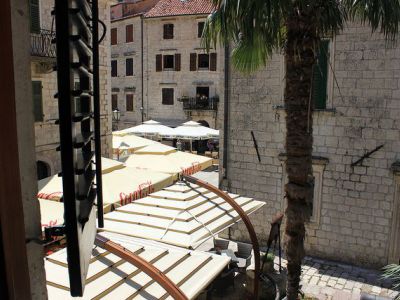
Situated in the main city square, Napoleon's Theatre has been an integral part of Kotor's cultural landscape since its construction in the 18th century. Built adjacent to the city walls, it has a history that reflects the region’s changing fortunes.
Following the downfall of the Venetian Republic, French authorities took control of the town. In 1810, they erected a permanent theater building, marking a significant milestone for both Kotor and the broader Balkan region.
While the theater played a large role in fostering cultural awareness, attendance was largely limited to the affluent residents. Nonetheless, it remained a symbol of artistic expression and sophistication for the community until the late 19th century, hosting a variety of performances and events.
During the 20th century, the building transitioned into a different role, serving as the Town Hall for a period. Today, it has been repurposed to house the reception area of Hotel Cattaro, preserving its historical significance while adapting to modern needs.
Following the downfall of the Venetian Republic, French authorities took control of the town. In 1810, they erected a permanent theater building, marking a significant milestone for both Kotor and the broader Balkan region.
While the theater played a large role in fostering cultural awareness, attendance was largely limited to the affluent residents. Nonetheless, it remained a symbol of artistic expression and sophistication for the community until the late 19th century, hosting a variety of performances and events.
During the 20th century, the building transitioned into a different role, serving as the Town Hall for a period. Today, it has been repurposed to house the reception area of Hotel Cattaro, preserving its historical significance while adapting to modern needs.
10) Crkva Svete Klare (Monastery and Church of St. Clare)
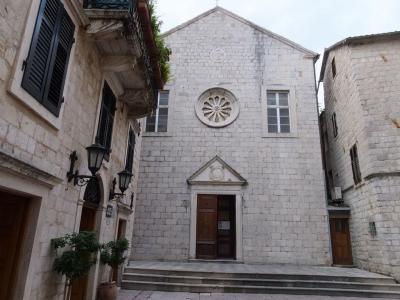
Adjacent to the city walls, this place of worship, erected in the 17th century, is one of the few Catholic churches in Kotor. Its unassuming stone and brick exterior hide a stunning interior containing the grand Baroque main altar crafted from white and red marble by Francesco Cabianca in 1708. The side altars, adorned with paintings by Venetian artists, also exhibit Baroque characteristics. Additionally, a large painting depicting Saint Clare and the four evangelists, was more recently created by local painter Špiro Đuranović.
Originally, the site housed a Benedictine monastery, which was handed over to the nuns of Saint Clare from the 14th to the 16th century; however, due to a lack of interest in joining the order, it was eventually entrusted to the Franciscans. The monastery's chambers have undergone numerous reconstructions, demolitions, and renovations spanning from the 14th to the 19th century.
Over time, the church itself has undergone several renovations, with its current appearance dating back to the 18th century. Featuring Renaissance-inspired spatial design and a Baroque interior, the central part of the church reveals a dynamic scene populated by numerous figures, including an Italo-Byzantine icon and realistic-looking marble curtains drawn by cherubs.
Within the church treasury, numerous valuable paintings, icons, and artistic artifacts are safeguarded. Notably, among them is the painting "Ecce Homo", attributed to the Spanish painter Morales, famously known as El Divino. Furthermore, the Franciscan library contains a rich collection of manuscripts and ancient printed books, including a significant number of incunabula.
Despite enduring extensive demolitions and undergoing multiple reconstructions, the Franciscan monastery complex has managed to retain its fundamental spatial-architectural and cultural-historical significance.
Originally, the site housed a Benedictine monastery, which was handed over to the nuns of Saint Clare from the 14th to the 16th century; however, due to a lack of interest in joining the order, it was eventually entrusted to the Franciscans. The monastery's chambers have undergone numerous reconstructions, demolitions, and renovations spanning from the 14th to the 19th century.
Over time, the church itself has undergone several renovations, with its current appearance dating back to the 18th century. Featuring Renaissance-inspired spatial design and a Baroque interior, the central part of the church reveals a dynamic scene populated by numerous figures, including an Italo-Byzantine icon and realistic-looking marble curtains drawn by cherubs.
Within the church treasury, numerous valuable paintings, icons, and artistic artifacts are safeguarded. Notably, among them is the painting "Ecce Homo", attributed to the Spanish painter Morales, famously known as El Divino. Furthermore, the Franciscan library contains a rich collection of manuscripts and ancient printed books, including a significant number of incunabula.
Despite enduring extensive demolitions and undergoing multiple reconstructions, the Franciscan monastery complex has managed to retain its fundamental spatial-architectural and cultural-historical significance.
11) Crkva Svetog Nikole (Church of St. Nicholas)
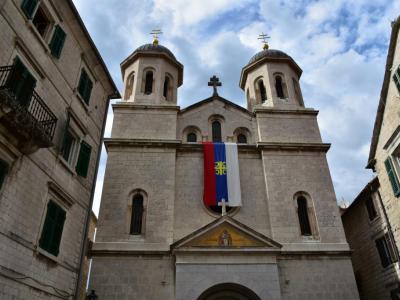
The Church of Saint Nicholas, up in the northern part of Kotor's Old Town, catches the eye of believers, history buffs, and regular tourists alike. It started going up in 1902, replacing a church from the 17th century that got wiped out by a fire on Christmas Eve in 1896. You can't miss its grand presence, flanked by two big bell towers capped with black domes sporting shiny gold crosses gifted from Russia.
The mastermind behind the project was the famous architectural engineer Ćiril Iveković, who has left his mark all over the Adriatic coast, from Zadar to Kotor, working on churches, rectories, and other public buildings. A prominent name in the art and architecture scene, he taught at Zagreb's Technical University until passing away in 1933.
The structure itself, designed in Byzantine style, stands tall behind the city wall. Inside, you're in for a treat with the stunning iconostasis finished in 1908 and a vast collection of icons, among which the most famous is the Icon of the Holy Mother of God Trojeručica. Plus, there are many religious texts, artworks, and treasures donated by wealthy Kotor families.
This is the only Orthodox church in Kotor where daily liturgies take place, and best of all, admission won't cost you a dime. You'll see the flag of the Serbian Orthodox Church flying proudly from the front facade.
The mastermind behind the project was the famous architectural engineer Ćiril Iveković, who has left his mark all over the Adriatic coast, from Zadar to Kotor, working on churches, rectories, and other public buildings. A prominent name in the art and architecture scene, he taught at Zagreb's Technical University until passing away in 1933.
The structure itself, designed in Byzantine style, stands tall behind the city wall. Inside, you're in for a treat with the stunning iconostasis finished in 1908 and a vast collection of icons, among which the most famous is the Icon of the Holy Mother of God Trojeručica. Plus, there are many religious texts, artworks, and treasures donated by wealthy Kotor families.
This is the only Orthodox church in Kotor where daily liturgies take place, and best of all, admission won't cost you a dime. You'll see the flag of the Serbian Orthodox Church flying proudly from the front facade.
12) Tvrdava Svetog Ivana (St. John's Castle) (must see)
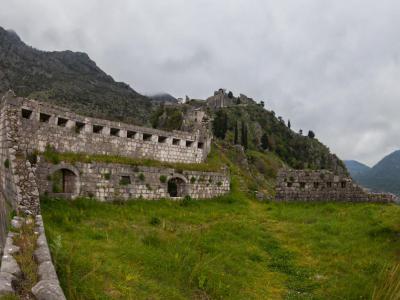
Perched atop the hill behind Kotor, 260 meters (or 850 feet) above sea level, stands this fortress, reachable by navigating a series of bends and conquering some 1,300 steps. The breathtaking panorama from the summit rewards the climb: the terracotta rooftops of the Old Town, the meandering ria, and the pine-clad mountains stretching beyond.
The fortress derives its name from the church situated within its main citadel, first mentioned in 1440 and dedicated to Saint John the Baptist, which served the needs of the army stationed to guard the city walls. The ramparts span over four kilometers in total length, with thickness varying from two to sixteen meters and heights soaring up to twenty meters in certain spots.
Constructed over centuries, the fortress and its ramparts evolved into a formidable fortification complex. The city walls themselves are attributed to the Roman Emperor Justinian in the 6th century, while their current appearance took shape during the 17th century.
On your ascent, you'll encounter the quaint Church of Our Lady of Health, built in the 1500s as a safeguard against the plague. Along the way, four chapels once held paintings depicting feasts dedicated to the Blessed Virgin Mary, now housed within the church itself.
Tip:
Wear sturdy walking shoes and bring plenty of water for the journey – you'll need it!
The fortress derives its name from the church situated within its main citadel, first mentioned in 1440 and dedicated to Saint John the Baptist, which served the needs of the army stationed to guard the city walls. The ramparts span over four kilometers in total length, with thickness varying from two to sixteen meters and heights soaring up to twenty meters in certain spots.
Constructed over centuries, the fortress and its ramparts evolved into a formidable fortification complex. The city walls themselves are attributed to the Roman Emperor Justinian in the 6th century, while their current appearance took shape during the 17th century.
On your ascent, you'll encounter the quaint Church of Our Lady of Health, built in the 1500s as a safeguard against the plague. Along the way, four chapels once held paintings depicting feasts dedicated to the Blessed Virgin Mary, now housed within the church itself.
Tip:
Wear sturdy walking shoes and bring plenty of water for the journey – you'll need it!
