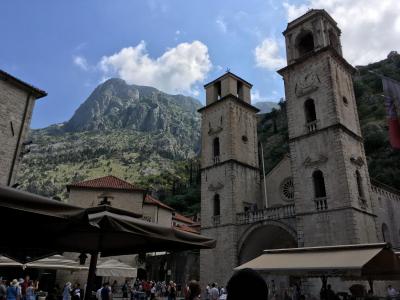


Katedrala Svetog Tripuna (Saint Tryphon Cathedral and Square), Kotor (must see)
Saint Tryphon Cathedral is one of the city’s most important historical monuments, consecrated in 1166 and built on the site of an earlier 9th-century church dedicated to Saint Tryphon, Kotor’s patron saint.
The cathedral is a three-nave Romanesque structure that has undergone multiple phases of restoration. The most significant changes followed the 1667 earthquake, which damaged much of the facade and caused the collapse of the original bell towers. The towers were rebuilt in a Baroque style, giving the cathedral its present silhouette, while the facade retains Romanesque elements alongside later decorative additions. The rose windows, altered over time, reflect a blend of stylistic influences rather than a single medieval form.
Inside, the cathedral preserves an important collection of religious art and liturgical objects made of gold and silver, many produced by local craftsmen. Traces of medieval fresco decoration, attributed to Greek-trained painters, survive, though much has been lost. One of the interior’s focal points is the 14th-century ciborium above the main altar, combining Romanesque and Gothic features. Behind it stands the Golden Altarpiece, depicting Christ, the Virgin Mary, Saint John the Baptist, Saint Tryphon, and sixteen additional saints, a key work of Kotor’s goldsmith tradition.
Access to the cathedral includes entry to the Sacral Art Collection, which displays reliquaries, icons, manuscripts, and vestments associated with the cathedral’s history. The modest entrance fee supports conservation while allowing the cathedral to function primarily as a place of worship.
Adjacent to the cathedral is the Bishop’s Palace, historically the residence of Kotor’s bishops. The building incorporates elements of earlier noble residences, including associations with the Drago family, reflecting the close ties between ecclesiastical authority and local aristocracy.
The cathedral is a three-nave Romanesque structure that has undergone multiple phases of restoration. The most significant changes followed the 1667 earthquake, which damaged much of the facade and caused the collapse of the original bell towers. The towers were rebuilt in a Baroque style, giving the cathedral its present silhouette, while the facade retains Romanesque elements alongside later decorative additions. The rose windows, altered over time, reflect a blend of stylistic influences rather than a single medieval form.
Inside, the cathedral preserves an important collection of religious art and liturgical objects made of gold and silver, many produced by local craftsmen. Traces of medieval fresco decoration, attributed to Greek-trained painters, survive, though much has been lost. One of the interior’s focal points is the 14th-century ciborium above the main altar, combining Romanesque and Gothic features. Behind it stands the Golden Altarpiece, depicting Christ, the Virgin Mary, Saint John the Baptist, Saint Tryphon, and sixteen additional saints, a key work of Kotor’s goldsmith tradition.
Access to the cathedral includes entry to the Sacral Art Collection, which displays reliquaries, icons, manuscripts, and vestments associated with the cathedral’s history. The modest entrance fee supports conservation while allowing the cathedral to function primarily as a place of worship.
Adjacent to the cathedral is the Bishop’s Palace, historically the residence of Kotor’s bishops. The building incorporates elements of earlier noble residences, including associations with the Drago family, reflecting the close ties between ecclesiastical authority and local aristocracy.
Want to visit this sight? Check out these Self-Guided Walking Tours in Kotor. Alternatively, you can download the mobile app "GPSmyCity: Walks in 1K+ Cities" from Apple App Store or Google Play Store. The app turns your mobile device to a personal tour guide and it works offline, so no data plan is needed when traveling abroad.
Download The GPSmyCity App



Katedrala Svetog Tripuna (Saint Tryphon Cathedral and Square) on Map
Sight Name: Katedrala Svetog Tripuna (Saint Tryphon Cathedral and Square)
Sight Location: Kotor, Montenegro (See walking tours in Kotor)
Sight Type: Attraction/Landmark
Guide(s) Containing This Sight:
Sight Location: Kotor, Montenegro (See walking tours in Kotor)
Sight Type: Attraction/Landmark
Guide(s) Containing This Sight:
Nearby Sights
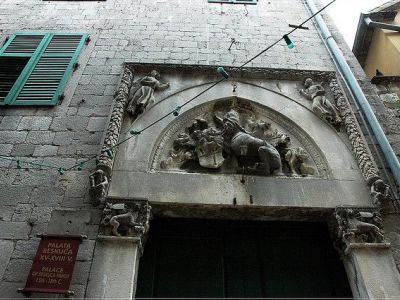
Walking Tours in Kotor, Montenegro

Create Your Own Walk in Kotor
Creating your own self-guided walk in Kotor is easy and fun. Choose the city attractions that you want to see and a walk route map will be created just for you. You can even set your hotel as the start point of the walk.
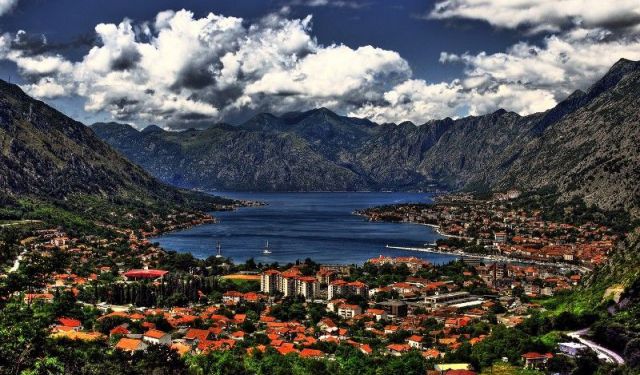
Kotor Old City Walking Tour
English poet Lord Byron once said: “The most beautiful contact between the earth and sea took place at the Montenegrin littoral”.
Kotor is one of the oldest urban centers on the eastern Adriatic, with a history shaped by its sheltered position at the end of the Bay of Kotor and by centuries of shifting political control. The town’s origins go back to antiquity. In Roman times it was... view more
Tour Duration: 2 Hour(s)
Travel Distance: 2.2 Km or 1.4 Miles
Kotor is one of the oldest urban centers on the eastern Adriatic, with a history shaped by its sheltered position at the end of the Bay of Kotor and by centuries of shifting political control. The town’s origins go back to antiquity. In Roman times it was... view more
Tour Duration: 2 Hour(s)
Travel Distance: 2.2 Km or 1.4 Miles
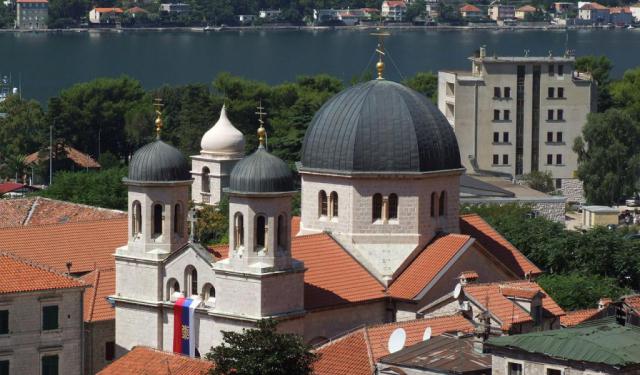
Kotor's Historical Churches Walking Tour
Kotor, a picturesque coastal town in Montenegro, albeit small, nonetheless, boasts a surprising number of historical churches that beautifully reflect its centuries-old heritage. Many of these temples are richly decorated with frescoes, some dating as far back as the 1300s.
At the heart of the town lies Saint Tryphon Square dominated by the eponymous cathedral, an iconic landmark from the 12th... view more
Tour Duration: 1 Hour(s)
Travel Distance: 0.5 Km or 0.3 Miles
At the heart of the town lies Saint Tryphon Square dominated by the eponymous cathedral, an iconic landmark from the 12th... view more
Tour Duration: 1 Hour(s)
Travel Distance: 0.5 Km or 0.3 Miles
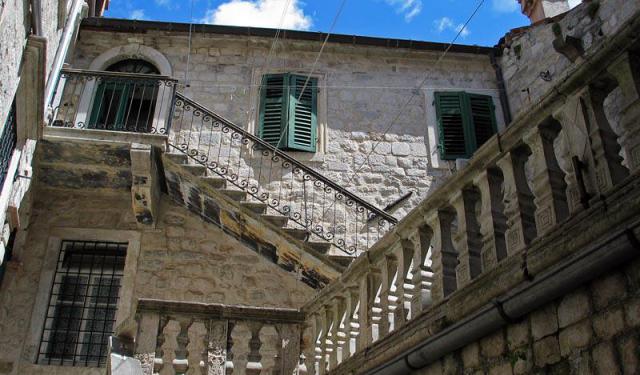
Kotor Palaces Walking Tour
This magnificent historic city is home to a number of wonderful palaces. Many of these beautifully ornamented mansions belonged to wealthy and influential families. Visitors can trace the history of each building by looking at the coats of arms of noble families and the paintings on the walls. Take this self-guided tour to see these beautiful historical palaces in Kotor.
Tour Duration: 1 Hour(s)
Travel Distance: 0.4 Km or 0.2 Miles
Tour Duration: 1 Hour(s)
Travel Distance: 0.4 Km or 0.2 Miles