Custom Walk in Paris, France by kkkotha8385 created on 2025-06-26
Guide Location: France » Paris
Guide Type: Custom Walk
# of Sights: 6
Tour Duration: 3 Hour(s)
Travel Distance: 6.2 Km or 3.9 Miles
Share Key: CTS7H
Guide Type: Custom Walk
# of Sights: 6
Tour Duration: 3 Hour(s)
Travel Distance: 6.2 Km or 3.9 Miles
Share Key: CTS7H
How It Works
Please retrieve this walk in the GPSmyCity app. Once done, the app will guide you from one tour stop to the next as if you had a personal tour guide. If you created the walk on this website or come to the page via a link, please follow the instructions below to retrieve the walk in the app.
Retrieve This Walk in App
Step 1. Download the app "GPSmyCity: Walks in 1K+ Cities" on Apple App Store or Google Play Store.



Step 2. In the GPSmyCity app, download(or launch) the guide "Paris Map and Walking Tours".
Step 3. Tap the menu button located at upper right corner of the "Walks" screen and select "Retrieve custom walk". Enter the share key: CTS7H
1) Musee du Louvre (Louvre Museum) (must see)
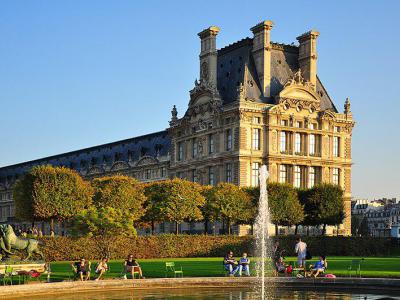
The Louvre Museum, or simply the Louvre, is perhaps the most famous art museum in the world. Originally built as a fortress in the late 12th century, under King Philip II, it later transitioned into a royal residence under King Francis I, in 1546. The Louvre’s current palace structure developed through multiple expansions, although it ceased being a royal residence in 1682 when Louis XIV moved his household to Versailles.
In 1692, the Louvre became home to the Academy of Inscriptions and Fine Writing and the Royal Academy of Painting and Sculpture, which held public exhibitions, or “salons,” marking its early transformation into a public cultural space. During the French Revolution, it was formally established as a museum by the National Assembly, with an initial exhibition of 537 works, mostly from royal and church collections. Following its brief closure due to structural concerns, the Louvre reopened and rapidly expanded its collection under Napoleon Bonaparte, who renamed it Napoleon Museum. Though many seized artworks had to be returned after Napoleon's fall, subsequent monarchs continued to add to the collection, and acquisitions continued through donations and bequests during the Third Republic (between 1870 and 1940).
Today, the Louvre’s collection comprises approximately 500,000 objects housed in over 72,000 square meters of space, with 35,000 pieces displayed at any given time. Divided into eight departments-ranging from Egyptian and Near Eastern Antiquities to Paintings and Islamic Art-the museum showcases everything from sculptures and ornamental works of art to paintings and archaeological artifacts from around the globe. Key masterpieces here include the "Venus de Milo," the "Winged Victory of Samothrace," "The Raft of the Medusa," and, famously, Leonardo da Vinci's "Mona Lisa." For many, the chance to see the Mona Lisa is the main reason for visiting.
Beyond the high-profile pieces, the Louvre's lesser-visited Sully and Richelieu wings reveal the full extent of its treasures. The Richelieu wing is particularly celebrated for its elegant design, glass-covered courtyards, and grand architecture. Its centerpiece is the Napoleon III apartments, adorned with immense chandeliers, red velvet, intricate moldings, and lavish gilded decor-a testament to the opulence that impresses all who enter.
With almost 9 million visitors in 2023, the Louvre remains the most-visited museum globally, surpassing even the Vatican Museums. For those planning to visit, advance ticket purchases are essential, and using the quieter Lions Gate helps ease entry. For a more serene experience, Friday afternoons, when the museum stays open late, are ideal. Once inside, a map is crucial for navigating the expansive galleries, allowing visitors to prioritize the exhibits that resonate most.
In 1692, the Louvre became home to the Academy of Inscriptions and Fine Writing and the Royal Academy of Painting and Sculpture, which held public exhibitions, or “salons,” marking its early transformation into a public cultural space. During the French Revolution, it was formally established as a museum by the National Assembly, with an initial exhibition of 537 works, mostly from royal and church collections. Following its brief closure due to structural concerns, the Louvre reopened and rapidly expanded its collection under Napoleon Bonaparte, who renamed it Napoleon Museum. Though many seized artworks had to be returned after Napoleon's fall, subsequent monarchs continued to add to the collection, and acquisitions continued through donations and bequests during the Third Republic (between 1870 and 1940).
Today, the Louvre’s collection comprises approximately 500,000 objects housed in over 72,000 square meters of space, with 35,000 pieces displayed at any given time. Divided into eight departments-ranging from Egyptian and Near Eastern Antiquities to Paintings and Islamic Art-the museum showcases everything from sculptures and ornamental works of art to paintings and archaeological artifacts from around the globe. Key masterpieces here include the "Venus de Milo," the "Winged Victory of Samothrace," "The Raft of the Medusa," and, famously, Leonardo da Vinci's "Mona Lisa." For many, the chance to see the Mona Lisa is the main reason for visiting.
Beyond the high-profile pieces, the Louvre's lesser-visited Sully and Richelieu wings reveal the full extent of its treasures. The Richelieu wing is particularly celebrated for its elegant design, glass-covered courtyards, and grand architecture. Its centerpiece is the Napoleon III apartments, adorned with immense chandeliers, red velvet, intricate moldings, and lavish gilded decor-a testament to the opulence that impresses all who enter.
With almost 9 million visitors in 2023, the Louvre remains the most-visited museum globally, surpassing even the Vatican Museums. For those planning to visit, advance ticket purchases are essential, and using the quieter Lions Gate helps ease entry. For a more serene experience, Friday afternoons, when the museum stays open late, are ideal. Once inside, a map is crucial for navigating the expansive galleries, allowing visitors to prioritize the exhibits that resonate most.
2) Galleries Lafayette (Lafayette Galleries)
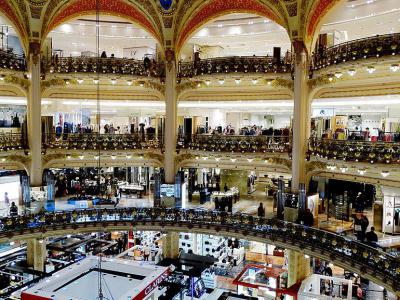
Galeries Lafayette boasts a breathtaking neo-Byzantine stained-glass domed ceiling dating back to 1912, with opulent gilded balconies that steal the show. To behold this grand centerpiece, simply make your way to the center of the main store, surrounded by perfumes and cosmetics, and look up. Alternatively, ascend the escalators to the 7th-floor rooftop for a panoramic view over the back of Opéra Garnier.
If shopping isn't your cup of tea, visit the first-floor Galerie des Galeries, a free art gallery dedicated to fashion, applied arts, and design. And when you need a break, indulge in one of the restaurants, which include a rooftop bar and restaurant in the main store offering some of the city's most magnificent panoramic views.
On your way down, the top floor of the main store is an excellent spot to pick up interesting Parisian souvenirs. Across the street at Galeries Maison, the gourmet food hall boasts one of the city's finest selections of delicacies and several restaurants, such as the elegant Maison de la Truffe lunch bar. YC Café Yann Couvreur's popular teatime features classic madeleines filled with pistachio or lemon. Bar Kaspia, a luxurious eatery located beneath the main building's famous dome, specializes in caviar and seafood. And don't forget to check out Duclot La Cave on the first floor of Galeries Maison/Gourmet, displaying 2,500 bottles of wine from France and around the world.
If shopping isn't your cup of tea, visit the first-floor Galerie des Galeries, a free art gallery dedicated to fashion, applied arts, and design. And when you need a break, indulge in one of the restaurants, which include a rooftop bar and restaurant in the main store offering some of the city's most magnificent panoramic views.
On your way down, the top floor of the main store is an excellent spot to pick up interesting Parisian souvenirs. Across the street at Galeries Maison, the gourmet food hall boasts one of the city's finest selections of delicacies and several restaurants, such as the elegant Maison de la Truffe lunch bar. YC Café Yann Couvreur's popular teatime features classic madeleines filled with pistachio or lemon. Bar Kaspia, a luxurious eatery located beneath the main building's famous dome, specializes in caviar and seafood. And don't forget to check out Duclot La Cave on the first floor of Galeries Maison/Gourmet, displaying 2,500 bottles of wine from France and around the world.
3) Rue des Francs-Bourgeois (Bourgeoisie Franks Street)
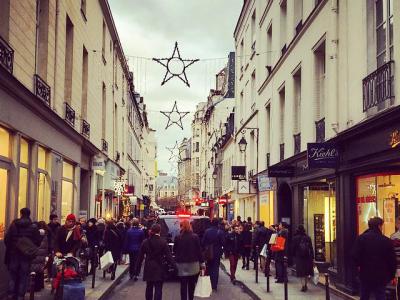
Bourgeoisie Franks Street, one of the longer streets in Le Marais district, runs along the route of Philippe Auguste's old city walls and marks the boundary between the 3rd and 4th administrative districts of Paris. Known for its blend of historical and modern elements, this street characterizes the transition from the city's traditional architecture to a trendy shopping area of fashion. Dotted with many designer stores, often housed in beautiful old townhouses (some of which are set back in the courtyards), you can find numerous French clothing, jewelry, and perfume brands here.
American novelist and poet Jack Kerouac playfully dubbed it the "street of the outspoken middle class," highlighting its blend of cultural history and bourgeois charm.
Tracing its origins back to the 14th century, the street was initially a weaver’s lane called Pulley Street. Its evolution over the centuries is marked by significant changes, notably its transformation into a haven for the tax-exempt poor, known as "francs-bourgeois," through the establishment of almshouses in 1334. The street's name has changed multiple times, incorporating roads like New Saint-Catherine Street and Paradise-in-the-Marsh Street in 1868, expanding its reach and influence within the capital.
The street itself and the surrounding area boast a wealth of cafés and restaurants set against the backdrop of magnificent mansion facades (such as Soubise, Rohan-Strasbourg, and others). The architectural landscape of Bourgeoisie Franks features an eclectic mix of old-time houses and modern boutiques. Notable buildings such as Hôtel Carnavalet, at No. 16, currently a museum of Paris history, and Hôtel d'Angoulême Lamoignon, at No. 14, illustrate the street’s rich heritage. The presence of the Swiss Cultural Center and the House of Europe at Nos. 34-37 also emphasizes its role as a cultural hub.
Despite the 19th-century urban modifications that pushed buildings back from their original alignments, creating an irregular street line, Bourgeoisie Franks Street maintains its historical integrity. It is also one of the few Parisian streets that largely ignore France's strong tradition of Sunday closure and is a popular location for weekend brunches, walks, and people watching.
American novelist and poet Jack Kerouac playfully dubbed it the "street of the outspoken middle class," highlighting its blend of cultural history and bourgeois charm.
Tracing its origins back to the 14th century, the street was initially a weaver’s lane called Pulley Street. Its evolution over the centuries is marked by significant changes, notably its transformation into a haven for the tax-exempt poor, known as "francs-bourgeois," through the establishment of almshouses in 1334. The street's name has changed multiple times, incorporating roads like New Saint-Catherine Street and Paradise-in-the-Marsh Street in 1868, expanding its reach and influence within the capital.
The street itself and the surrounding area boast a wealth of cafés and restaurants set against the backdrop of magnificent mansion facades (such as Soubise, Rohan-Strasbourg, and others). The architectural landscape of Bourgeoisie Franks features an eclectic mix of old-time houses and modern boutiques. Notable buildings such as Hôtel Carnavalet, at No. 16, currently a museum of Paris history, and Hôtel d'Angoulême Lamoignon, at No. 14, illustrate the street’s rich heritage. The presence of the Swiss Cultural Center and the House of Europe at Nos. 34-37 also emphasizes its role as a cultural hub.
Despite the 19th-century urban modifications that pushed buildings back from their original alignments, creating an irregular street line, Bourgeoisie Franks Street maintains its historical integrity. It is also one of the few Parisian streets that largely ignore France's strong tradition of Sunday closure and is a popular location for weekend brunches, walks, and people watching.
4) Rue des Rosiers (Rosebushes Street)
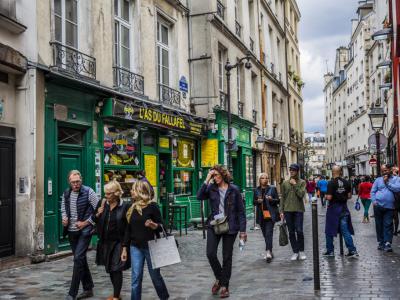
Paris's Rosebushes Street is steeped in history dating back to its construction along the Philippe Auguste ramparts around 1230. The street's name originates from the rose bushes that once adorned the neighboring gardens.
Spanning 303 meters, it serves as the central artery of Paris’s Jewish quarter, known colloquially as "the Pletzl" (or "little place" in Yiddish). Unique to this area, shops and cafés open on Sundays and holidays to accommodate the Jewish Sabbath on Saturday, drawing large crowds seeking its vibrant cultural offerings. Over the years, Rosebushes Street has been a sanctuary for the Jewish community, with significant numbers arriving between 1881 and 1914, fleeing persecution from Eastern Europe. This influx established a robust Ashkenazi presence, complemented by a lesser-known Sephardic community.
Historically, the street also bore signs of Christian worship, including a statue of the Virgin Mary that stood until the French Revolution. Architecturally, the street has managed to preserve its historical integrity, avoiding major changes during Baron Haussmann’s reconfiguration of Paris in the 19th century. Today, it proudly displays remnants of medieval fortifications, particularly in the park known as the Rose Garden – Joseph-Migneret.
Rosebushes Street today juxtaposes its rich historical past with modern influences. Renovations in 2007 enhanced the street's ambiance with new paving, lighting, and added greenery, while the creation of the Rose Garden – Joseph-Migneret park in 2014 introduced a public space incorporating several historic private gardens. Despite recent changes that have seen traditional Jewish shops replaced by fashionable boutiques, the street remains a culinary hotspot, famed for introducing falafel to France and hosting a competitive scene of restaurants specializing in this dish.
Spanning 303 meters, it serves as the central artery of Paris’s Jewish quarter, known colloquially as "the Pletzl" (or "little place" in Yiddish). Unique to this area, shops and cafés open on Sundays and holidays to accommodate the Jewish Sabbath on Saturday, drawing large crowds seeking its vibrant cultural offerings. Over the years, Rosebushes Street has been a sanctuary for the Jewish community, with significant numbers arriving between 1881 and 1914, fleeing persecution from Eastern Europe. This influx established a robust Ashkenazi presence, complemented by a lesser-known Sephardic community.
Historically, the street also bore signs of Christian worship, including a statue of the Virgin Mary that stood until the French Revolution. Architecturally, the street has managed to preserve its historical integrity, avoiding major changes during Baron Haussmann’s reconfiguration of Paris in the 19th century. Today, it proudly displays remnants of medieval fortifications, particularly in the park known as the Rose Garden – Joseph-Migneret.
Rosebushes Street today juxtaposes its rich historical past with modern influences. Renovations in 2007 enhanced the street's ambiance with new paving, lighting, and added greenery, while the creation of the Rose Garden – Joseph-Migneret park in 2014 introduced a public space incorporating several historic private gardens. Despite recent changes that have seen traditional Jewish shops replaced by fashionable boutiques, the street remains a culinary hotspot, famed for introducing falafel to France and hosting a competitive scene of restaurants specializing in this dish.
5) Rue de Rivoli (Rivoli Street)
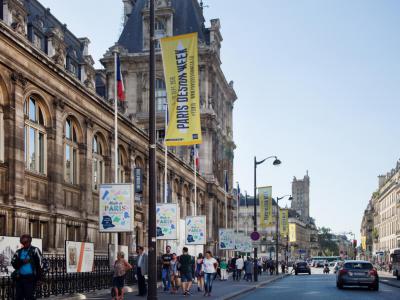
Rivoli Street, a prominent commercial artery in central Paris, replete with high-end fashion boutiques, carries a great deal of historical significance. It commemorates Napoleon Bonaparte's momentous triumph over the Austrian army at the Battle of Rivoli in January 1797. Initially developed by Napoleon, the novel street carved through the heart of Paris parallel to the north wing of the Louvre Palace and the Tuileries Gardens, marking a pivotal shift in urban planning.
Napoleon’s project created a wide, elegant street that showcased a blend of Paris's rich historical monuments and the emerging modern city layout. His original plan was later extended eastward by the restored Bourbon King Charles X, followed by his successor King Louis-Philippe. Lastly, Emperor Napoleon III incorporated it into the 17th-century district of Le Marais. Underneath Rivoli lies a significant part of Paris’s famed sewer system, which includes sidewalks for maintenance workers.
The area around Rivoli Street is home to major landmarks, such as the Opera Garnier, and nearby department stores like Galeries Lafayette and Printemps.
Further east, at Pyramids Square, a statue of Joan of Arc stands near the site where she was wounded in 1429. The street is also linked to other dark moments in French history. A plaque at No. 144 marks the spot where the Huguenot leader Admiral Gaspard de Coligny was assassinated during the Saint Bartholomew's Day massacre – a wave of Catholic mob violence against the Huguenots during the French Wars of Religion – in 1572.
While the Rivoli section near the Louvre is more commercial, offering a greater variety of shopping and dining options, its stretch in the Le Marais area is more tranquil and picturesque. It provides an authentic Parisian experience, with serene café-brasseries such as La Tartine – a local favorite with an extensive wine list. Either way, a leisurely walk on the Rivoli promises a worthwhile experience.
Napoleon’s project created a wide, elegant street that showcased a blend of Paris's rich historical monuments and the emerging modern city layout. His original plan was later extended eastward by the restored Bourbon King Charles X, followed by his successor King Louis-Philippe. Lastly, Emperor Napoleon III incorporated it into the 17th-century district of Le Marais. Underneath Rivoli lies a significant part of Paris’s famed sewer system, which includes sidewalks for maintenance workers.
The area around Rivoli Street is home to major landmarks, such as the Opera Garnier, and nearby department stores like Galeries Lafayette and Printemps.
Further east, at Pyramids Square, a statue of Joan of Arc stands near the site where she was wounded in 1429. The street is also linked to other dark moments in French history. A plaque at No. 144 marks the spot where the Huguenot leader Admiral Gaspard de Coligny was assassinated during the Saint Bartholomew's Day massacre – a wave of Catholic mob violence against the Huguenots during the French Wars of Religion – in 1572.
While the Rivoli section near the Louvre is more commercial, offering a greater variety of shopping and dining options, its stretch in the Le Marais area is more tranquil and picturesque. It provides an authentic Parisian experience, with serene café-brasseries such as La Tartine – a local favorite with an extensive wine list. Either way, a leisurely walk on the Rivoli promises a worthwhile experience.
6) Cathedrale Notre-Dame (Notre-Dame Cathedral) (must see)
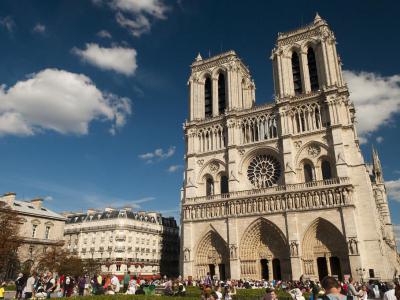
While the Eiffel Tower is an instantly recognizable symbol of France, the Notre-Dame Cathedral is an unmistakable symbol of Paris. Notre-Dame de Paris, or "Our Lady of Paris," is a medieval Catholic church renowned for its French Gothic appearance. Among other features, this cathedral showcases period architectural innovations such as the rib vault and flying buttress, as well as large rose windows and rich sculptural decoration. Notre-Dame’s architectural and historical significance is underscored by its vast pipe organs, iconic bells, and its role in hosting significant ceremonies like Napoleon’s coronation, the celebration of the Liberation of Paris in 1944, and the funerals of presidents Charles de Gaulle and François Mitterrand.
Before Notre-Dame, a temple to Jupiter and later a cathedral dedicated to Saint Étienne occupied the site. Construction of Notre-Dame began in 1163 and concluded in 1260, incorporating architectural advancements in four major stages, with additions in the 13th century enhancing stability and light. At the time of its construction, it was the most ambitious cathedral project ever undertaken in France, its vaults rising over 33 meters and holding a national height record for several decades.
In 1431, Notre-Dame saw the coronation of King Henry VI, and during the French Revolution, suffered vandalism when it was repurposed as a warehouse. In the 19th century, Victor Hugo’s novel, The Hunchback of Notre-Dame, spurred its restoration, largely preserving Notre-Dame’s legacy.
Amid the Second World War, upon the Fall of France, there were fears that the German invaders might destroy the freshly renovated stained glass of the rose window. As a result, the lion's portion of it was hidden and re-installed only after the war.
In 2019, a fire severely damaged the cathedral's oak roof and spire. Firefighters saved much of the building, including the world's biggest 13th-century glass window and other artifacts and relics which were temporarily removed for safety. Though many decorations have been removed over time, the cathedral retains Gothic, Baroque, and 19th-century sculptures, altarpieces, and revered relics, including the Crown of Thorns and fragments from the True Cross.
As a symbol of Paris and France, Notre-Dame is renowned for its traditional Lent sermons since the 1830s and attracts annually around 12 million visitors.
Before Notre-Dame, a temple to Jupiter and later a cathedral dedicated to Saint Étienne occupied the site. Construction of Notre-Dame began in 1163 and concluded in 1260, incorporating architectural advancements in four major stages, with additions in the 13th century enhancing stability and light. At the time of its construction, it was the most ambitious cathedral project ever undertaken in France, its vaults rising over 33 meters and holding a national height record for several decades.
In 1431, Notre-Dame saw the coronation of King Henry VI, and during the French Revolution, suffered vandalism when it was repurposed as a warehouse. In the 19th century, Victor Hugo’s novel, The Hunchback of Notre-Dame, spurred its restoration, largely preserving Notre-Dame’s legacy.
Amid the Second World War, upon the Fall of France, there were fears that the German invaders might destroy the freshly renovated stained glass of the rose window. As a result, the lion's portion of it was hidden and re-installed only after the war.
In 2019, a fire severely damaged the cathedral's oak roof and spire. Firefighters saved much of the building, including the world's biggest 13th-century glass window and other artifacts and relics which were temporarily removed for safety. Though many decorations have been removed over time, the cathedral retains Gothic, Baroque, and 19th-century sculptures, altarpieces, and revered relics, including the Crown of Thorns and fragments from the True Cross.
As a symbol of Paris and France, Notre-Dame is renowned for its traditional Lent sermons since the 1830s and attracts annually around 12 million visitors.
