Custom Walk in Edinburgh, Scotland by meltem_akbas_90_2c723 created on 2025-06-27
Guide Location: Scotland » Edinburgh
Guide Type: Custom Walk
# of Sights: 5
Tour Duration: 1 Hour(s)
Travel Distance: 1.9 Km or 1.2 Miles
Share Key: HE5CY
Guide Type: Custom Walk
# of Sights: 5
Tour Duration: 1 Hour(s)
Travel Distance: 1.9 Km or 1.2 Miles
Share Key: HE5CY
How It Works
Please retrieve this walk in the GPSmyCity app. Once done, the app will guide you from one tour stop to the next as if you had a personal tour guide. If you created the walk on this website or come to the page via a link, please follow the instructions below to retrieve the walk in the app.
Retrieve This Walk in App
Step 1. Download the app "GPSmyCity: Walks in 1K+ Cities" on Apple App Store or Google Play Store.



Step 2. In the GPSmyCity app, download(or launch) the guide "Edinburgh Map and Walking Tours".
Step 3. Tap the menu button located at upper right corner of the "Walks" screen and select "Retrieve custom walk". Enter the share key: HE5CY
1) Museum of Edinburgh
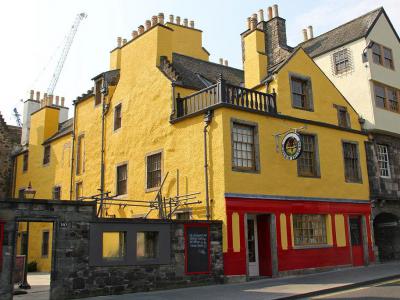
If you're meandering down the Royal Mile and wondering where to get your history fix with a side of scandal, the Museum of Edinburgh is your spot. Housed in the delightfully crooked 16th-century Huntly House-once the home of the city’s hammer-wielding Guild of Hammermen-this place is Edinburgh’s memory palace, packed with everything from Roman relics to rogue biographies.
Inside, you’ll find numerous silverware that practically glows with civic pride, glassware engraved just down the road in Canongate, some pottery that’s almost too pretty to have survived Scottish winters, and a Sedan chair that reminds us how people once got carried away-literally. There are also clocks so stately they make your smartwatch feel wildly inadequate. And don’t miss the costume corner, where you're invited to play dress-up through the ages. Georgian elegance? Victorian gloom? Just pick your century.
Among the many treasures, you’ll stumble across fragments from a 1st-century Roman settlement dug up in Cramond-yes, the Romans beat the tourists to this small village north-west of Edinburgh by about 2,000 years. You’ll also lay eyes on the original National Covenant (that’s serious ink), James Craig’s neatly sketched vision for the New Town, and even Greyfriars Bobby’s food bowl and collar-proof that loyalty earns you legend status in this city.
There is also a “rogues’ gallery” of sorts, where Edinburgh’s darker side grins back at you. Meet Deacon Brodie, respectable tradesman by day, burglar by night-basically Jekyll and Hyde, with better tailoring. And don’t forget Burke and Hare, the notorious body snatchers who supplied fresh corpses to Dr. Knox of the Medicine University, no questions asked...
So, yes, the Museum of Edinburgh has all the drama, dignity, and delightful weirdness this city’s history has to offer-and then some...
Inside, you’ll find numerous silverware that practically glows with civic pride, glassware engraved just down the road in Canongate, some pottery that’s almost too pretty to have survived Scottish winters, and a Sedan chair that reminds us how people once got carried away-literally. There are also clocks so stately they make your smartwatch feel wildly inadequate. And don’t miss the costume corner, where you're invited to play dress-up through the ages. Georgian elegance? Victorian gloom? Just pick your century.
Among the many treasures, you’ll stumble across fragments from a 1st-century Roman settlement dug up in Cramond-yes, the Romans beat the tourists to this small village north-west of Edinburgh by about 2,000 years. You’ll also lay eyes on the original National Covenant (that’s serious ink), James Craig’s neatly sketched vision for the New Town, and even Greyfriars Bobby’s food bowl and collar-proof that loyalty earns you legend status in this city.
There is also a “rogues’ gallery” of sorts, where Edinburgh’s darker side grins back at you. Meet Deacon Brodie, respectable tradesman by day, burglar by night-basically Jekyll and Hyde, with better tailoring. And don’t forget Burke and Hare, the notorious body snatchers who supplied fresh corpses to Dr. Knox of the Medicine University, no questions asked...
So, yes, the Museum of Edinburgh has all the drama, dignity, and delightful weirdness this city’s history has to offer-and then some...
2) Museum of Childhood
Tired of dragging the kids through yet another castle or gallery where the only thing they can touch is the “Exit” sign? Then it’s time to swap stone walls for teddy bears at the Museum of Childhood on the Royal Mile.
This place owes its existence to Patrick Murray, a forward-thinking Edinburgh councillor in the 1950s who noticed children weren’t exactly thrilled to be hauled into draughty museums on rainy days. His solution was to build a museum entirely about childhood-school, play, health, and above all, toys. By 1955, his dream opened its doors, offering something that could entertain both fidgety kids and their weary parents.
Inside, five floors of nostalgia and discovery are waiting. There’s an Education section where kids can peer into classrooms from the 1950s onwards, complete with old uniforms and the infamous birch rod-yes, the one used for “discipline.” But don’t worry, this museum has swapped punishment for play. Around the corner, there’s a dressing-up room, a puppet theatre, and, naturally, toys galore.
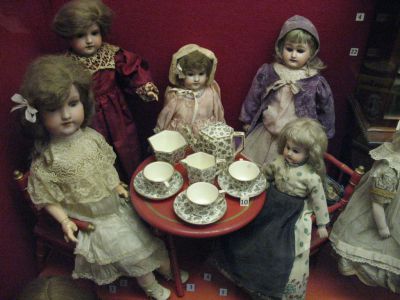
From dolls and teddy bears to tin soldiers with matchstick cannons, train sets, and board games, the displays stretch across centuries and continents. Children can see what kept their parents and grandparents happy before the age of screens, while adults are quietly hit with a wave of nostalgia they themselves find hard to admit to.
And when you think the fun is over, the toy shop on the ground floor will remind you otherwise. Kids can pick out a new favourite, and grown-ups might even find a stand-in for that long-lost teddy they still think about.
Why visit, if you're all by yourself? Because this isn’t just a family stop-it’s a time machine filled with joy. Entry is free, though donation boxes and quirky souvenirs await near the exit. Consider it pocket money well spent...
This place owes its existence to Patrick Murray, a forward-thinking Edinburgh councillor in the 1950s who noticed children weren’t exactly thrilled to be hauled into draughty museums on rainy days. His solution was to build a museum entirely about childhood-school, play, health, and above all, toys. By 1955, his dream opened its doors, offering something that could entertain both fidgety kids and their weary parents.
Inside, five floors of nostalgia and discovery are waiting. There’s an Education section where kids can peer into classrooms from the 1950s onwards, complete with old uniforms and the infamous birch rod-yes, the one used for “discipline.” But don’t worry, this museum has swapped punishment for play. Around the corner, there’s a dressing-up room, a puppet theatre, and, naturally, toys galore.
From dolls and teddy bears to tin soldiers with matchstick cannons, train sets, and board games, the displays stretch across centuries and continents. Children can see what kept their parents and grandparents happy before the age of screens, while adults are quietly hit with a wave of nostalgia they themselves find hard to admit to.
And when you think the fun is over, the toy shop on the ground floor will remind you otherwise. Kids can pick out a new favourite, and grown-ups might even find a stand-in for that long-lost teddy they still think about.
Why visit, if you're all by yourself? Because this isn’t just a family stop-it’s a time machine filled with joy. Entry is free, though donation boxes and quirky souvenirs await near the exit. Consider it pocket money well spent...
3) National Museum of Scotland (must see)
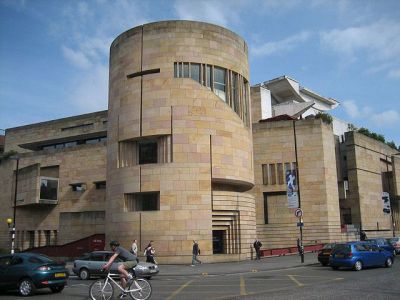
Right off Chambers Street and sidling up to George IV Bridge, the National Museum of Scotland seems like an entire universe cleverly disguised as one building. As the country’s crown jewel of curiosity, it houses everything from ancient artefacts, science and technology to Elton John’s finest feathered fashion. Indeed, sequins and sarcophagi under one roof...
The museum, in its current all-in-one glory, came to life in 2006 when the Royal Museum and the Museum of Scotland decided to merge (believing they’d work better as roommates). Having linked internally by utilizing some repurposed storage space, they created the stunning Grand Gallery-a light-drenched cathedral of wonder, stretching from basement to rooftop. The vaulted Entrance Hall alone is a whopping 1,400 square metres of pure “whoa.”
Wandering into the Grand Gallery, you’re bound to find some big stuff-literally! Oversized treasures too large for the regular exhibits-like the 20-metre-tall Window on the World, a vertical buffet of 800+ oddities-camp out here in joyful disarray. On its sides, Scotland shows off its brainpower in the form of “Discoveries” made by local inventors.
It’s a feast for all ages and attention spans. One moment you’re peering at ancient Egyptian mummies (CT scans included, like historical X-ray vision, revealing everything that is hidden under their wrappings), and the next you’re staring at something extravagant that once belonged to a glam rock legend. The Natural History floor, meanwhile, is a dino-lover’s paradise, complete with extinct beasts and bones the size of furniture.
In 2011, they added 16 shiny new galleries, just to keep things fresh-resulting in over 8,000 original objects awaiting your awe. Bonus points is that the entry is completely free. So, you can marvel at the mysteries of the universe and still afford a snack from the on-site café & bistro, if you are feeling peckish or just want to take a break from exploring.
By far not a typical museum-but rather an “everythingium”-it’s a real treat both inside and out, especially following its hefty £47-million refurbishment and extension. Definitely more than just a place to learn-but a place to linger...
Top Tips:
Get there early. Start on the top floor and descend like an archaeologist of modern wonder. There are some great 'hands-on' exhibits, so take your time if you are with kids. And if you're feeling fancy, book a private guided tour. Just check ahead for any exhibits that may cost extra-they’re rare, and usually a bargain.
The museum, in its current all-in-one glory, came to life in 2006 when the Royal Museum and the Museum of Scotland decided to merge (believing they’d work better as roommates). Having linked internally by utilizing some repurposed storage space, they created the stunning Grand Gallery-a light-drenched cathedral of wonder, stretching from basement to rooftop. The vaulted Entrance Hall alone is a whopping 1,400 square metres of pure “whoa.”
Wandering into the Grand Gallery, you’re bound to find some big stuff-literally! Oversized treasures too large for the regular exhibits-like the 20-metre-tall Window on the World, a vertical buffet of 800+ oddities-camp out here in joyful disarray. On its sides, Scotland shows off its brainpower in the form of “Discoveries” made by local inventors.
It’s a feast for all ages and attention spans. One moment you’re peering at ancient Egyptian mummies (CT scans included, like historical X-ray vision, revealing everything that is hidden under their wrappings), and the next you’re staring at something extravagant that once belonged to a glam rock legend. The Natural History floor, meanwhile, is a dino-lover’s paradise, complete with extinct beasts and bones the size of furniture.
In 2011, they added 16 shiny new galleries, just to keep things fresh-resulting in over 8,000 original objects awaiting your awe. Bonus points is that the entry is completely free. So, you can marvel at the mysteries of the universe and still afford a snack from the on-site café & bistro, if you are feeling peckish or just want to take a break from exploring.
By far not a typical museum-but rather an “everythingium”-it’s a real treat both inside and out, especially following its hefty £47-million refurbishment and extension. Definitely more than just a place to learn-but a place to linger...
Top Tips:
Get there early. Start on the top floor and descend like an archaeologist of modern wonder. There are some great 'hands-on' exhibits, so take your time if you are with kids. And if you're feeling fancy, book a private guided tour. Just check ahead for any exhibits that may cost extra-they’re rare, and usually a bargain.
4) Writers' Museum & Makar’s Court
Many a people dream of being successful authors with the riches and acclaim that go with the job. A visit to the Writer’s Museum on the Mound probably won’t help anyone on this way, but it will certainly give a great insight into some of Scotland’s most distinguished writers, so you shouldn’t miss visiting it.
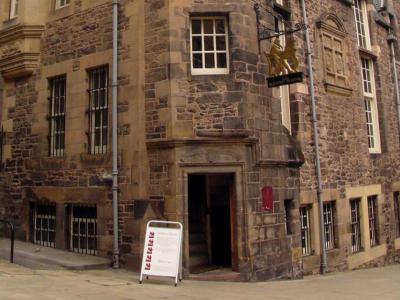
You will find the museum in the Lady Stair’s House in the Close of the same name. The house was built in 1622 and was bought by the Dowager Countess of Stair in the late 18th century. Her descendants donated the property to the city of Edinburgh in 1907 on the premise that they use it for a museum of some sort.
Subsequently, they turned it into a museum dedicated to Robert Burns, Sir Walter Scott, and Robert Louis Stevenson, showcasing mementoes of these and other Scottish writers. The house is beautifully decorated in clear colours and gives visitors the feeling of stepping back in time.
The museum's collection features primarily the personal items of these three great writers, including a plaster cast of Robert Burns’ skull, Sir Walter Scott’s wooden rocking horse, a book won by Robert Louis Stevenson when he was at school, and more.
You will see Scott’s dining room, taken from his house and lovingly recreated here, along with his chessboard and the original printing press where his Waverley novels were printed. There is also a scale model of the Scott Monument.
On Robert Burns’ writing desk, you will find manuscripts and rough copies of his works, with mistakes neatly crossed out and jottings in the margins of the pages. Also displayed here are the favourite fishing rod of Robert Stevenson and the photos of his life in Samoa.
There are many temporary exhibitions displaying the works of contemporary Scottish writers, plus a terrific gift shop where you can buy copies of the writers’ books.
Makars' Court is the courtyard next to the Writers' Museum. It forms part of Lady Stair's Close, which connects the Lawnmarket with The Mound to the North. Described as an "evolving national literary monument", the courtyard incorporates quotations from Scottish literature inscribed onto paving slabs. The quotations represent works in the languages used by Scots past and present: Gaelic, Scots, English, and Latin.
You will find the museum in the Lady Stair’s House in the Close of the same name. The house was built in 1622 and was bought by the Dowager Countess of Stair in the late 18th century. Her descendants donated the property to the city of Edinburgh in 1907 on the premise that they use it for a museum of some sort.
Subsequently, they turned it into a museum dedicated to Robert Burns, Sir Walter Scott, and Robert Louis Stevenson, showcasing mementoes of these and other Scottish writers. The house is beautifully decorated in clear colours and gives visitors the feeling of stepping back in time.
The museum's collection features primarily the personal items of these three great writers, including a plaster cast of Robert Burns’ skull, Sir Walter Scott’s wooden rocking horse, a book won by Robert Louis Stevenson when he was at school, and more.
You will see Scott’s dining room, taken from his house and lovingly recreated here, along with his chessboard and the original printing press where his Waverley novels were printed. There is also a scale model of the Scott Monument.
On Robert Burns’ writing desk, you will find manuscripts and rough copies of his works, with mistakes neatly crossed out and jottings in the margins of the pages. Also displayed here are the favourite fishing rod of Robert Stevenson and the photos of his life in Samoa.
There are many temporary exhibitions displaying the works of contemporary Scottish writers, plus a terrific gift shop where you can buy copies of the writers’ books.
Makars' Court is the courtyard next to the Writers' Museum. It forms part of Lady Stair's Close, which connects the Lawnmarket with The Mound to the North. Described as an "evolving national literary monument", the courtyard incorporates quotations from Scottish literature inscribed onto paving slabs. The quotations represent works in the languages used by Scots past and present: Gaelic, Scots, English, and Latin.
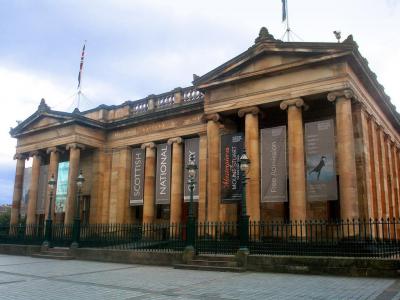
5) Scottish National Gallery (must see)
For all art lovers-yes, even the ones who can’t tell a Botticelli from a biscotti (an Italian almond biscuit for those unaware)-the Scottish National Gallery is a must-do cultural pitstop. Perched elegantly on the Mound right next to the Royal Scottish Academy, this temple of fine art has been dazzling eyeballs since 1859. Back then, it was a bit of a packed house: the gallery, the academy, and even the Portrait Gallery all cozied up under one neoclassical roof. Eventually, the Portrait Gallery moved to its new location, and by 1906, the academy shuffled next door too-because elbow room really matters when you’re hanging a Titian...
The gallery was entirely renovated in 1912. Today it boasts a collection of over 30,000 artworks, featuring both Scottish and European art-from Renaissance to Romanticism, with a few moody Impressionists thrown in for flair. Among them are Bassano, Botticelli, Bernini, Cézanne, Degas, da Vinci, and... deep breath... El Greco, Titian, and Tiepolo, too. Want something bolder? Don’t miss Gauguin’s “Vision of the Sermon.” And if you fancy some sculptural marble drama, Canova’s “Three Graces” has you covered.
The gallery also houses the Research Library-one of the world's finest reference libraries-which is a treasure trove of over 50,000 books, journals, and oddities spanning seven centuries from the 1300s. Meanwhile, the Western Link connects the gallery to the academy via a sleek underground space with a lecture theatre, a classy café, and a shop full of irresistible arty bits. Plus, there's an interactive IT Gallery, where, using touch-screens, you can swipe your way through the gallery’s entire collection like a very refined dating app.
So, whenever you feel like getting up close with a da Vinci sketch and still having time for tea, check out this place. It’s free to enter the permanent exhibits, and the cozy layout makes for a perfect rainy-day escape.
Insider tip:
Make sure you visit both the main Gallery and the Academy behind it.
Note the grand Turner watercolor exhibition that goes on show every January-some truly wonderful insights into his travels around Europe. It’s like Europe through the eyes of a genius-with less fog and more flair...
The gallery was entirely renovated in 1912. Today it boasts a collection of over 30,000 artworks, featuring both Scottish and European art-from Renaissance to Romanticism, with a few moody Impressionists thrown in for flair. Among them are Bassano, Botticelli, Bernini, Cézanne, Degas, da Vinci, and... deep breath... El Greco, Titian, and Tiepolo, too. Want something bolder? Don’t miss Gauguin’s “Vision of the Sermon.” And if you fancy some sculptural marble drama, Canova’s “Three Graces” has you covered.
The gallery also houses the Research Library-one of the world's finest reference libraries-which is a treasure trove of over 50,000 books, journals, and oddities spanning seven centuries from the 1300s. Meanwhile, the Western Link connects the gallery to the academy via a sleek underground space with a lecture theatre, a classy café, and a shop full of irresistible arty bits. Plus, there's an interactive IT Gallery, where, using touch-screens, you can swipe your way through the gallery’s entire collection like a very refined dating app.
So, whenever you feel like getting up close with a da Vinci sketch and still having time for tea, check out this place. It’s free to enter the permanent exhibits, and the cozy layout makes for a perfect rainy-day escape.
Insider tip:
Make sure you visit both the main Gallery and the Academy behind it.
Note the grand Turner watercolor exhibition that goes on show every January-some truly wonderful insights into his travels around Europe. It’s like Europe through the eyes of a genius-with less fog and more flair...
