Custom Walk in Chania, Greece by carmen_m_micallef_7579d created on 2025-06-29
Guide Location: Greece » Chania
Guide Type: Custom Walk
# of Sights: 14
Tour Duration: 11 Hour(s)
Travel Distance: 30.7 Km or 19.1 Miles
Share Key: VVHHP
Guide Type: Custom Walk
# of Sights: 14
Tour Duration: 11 Hour(s)
Travel Distance: 30.7 Km or 19.1 Miles
Share Key: VVHHP
How It Works
Please retrieve this walk in the GPSmyCity app. Once done, the app will guide you from one tour stop to the next as if you had a personal tour guide. If you created the walk on this website or come to the page via a link, please follow the instructions below to retrieve the walk in the app.
Retrieve This Walk in App
Step 1. Download the app "GPSmyCity: Walks in 1K+ Cities" on Apple App Store or Google Play Store.



Step 2. In the GPSmyCity app, download(or launch) the guide "Chania Map and Walking Tours".
Step 3. Tap the menu button located at upper right corner of the "Walks" screen and select "Retrieve custom walk". Enter the share key: VVHHP
1) Firkas Fortress
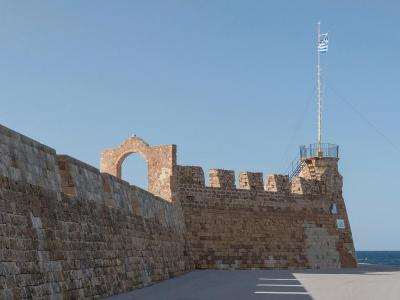
Firkas Fortress, also known as Revellino del Porto, is a historic fortress located in Chania. It was built by the Venetians between 1610 and 1629 to fortify the harbor and protect it from raiders. The name "Firkas" comes from the Turkish word for "barrack," as the building was used as barracks for the Turkish army during their occupation of Chania.
Today, the fortress is home to the Maritime Museum of Crete, which showcases the history and culture of Crete's maritime traditions. However, the fortress has also played an important role in the island's history. In 1913, the Greek flag was raised on the corner watchtower in celebration of the union of Crete with the rest of Greece.
Firkas Fortress offers a panoramic view of the Venetian harbor of Chania and is a great spot for photography enthusiasts. Until recently, the "Kerkelos," a large iron ring to which one end of the chain closing off the harbor mouth was attached, was located beneath the fortress. The other end of the chain was attached to the lighthouse. The fortress was also used as a prison during the Turkish occupation and the civil war.
The interior of the fortress was organized into barracks and ammunition storage areas, and it served as the headquarters of the Commander in Chief of the city's army. The northern side of the wall features six arched openings that included cannons for the protection of the harbor entrance. A large domed water tank that gathered rainwater from the roofs is located in the center of the courtyard.
Today, the fortress is home to the Maritime Museum of Crete, which showcases the history and culture of Crete's maritime traditions. However, the fortress has also played an important role in the island's history. In 1913, the Greek flag was raised on the corner watchtower in celebration of the union of Crete with the rest of Greece.
Firkas Fortress offers a panoramic view of the Venetian harbor of Chania and is a great spot for photography enthusiasts. Until recently, the "Kerkelos," a large iron ring to which one end of the chain closing off the harbor mouth was attached, was located beneath the fortress. The other end of the chain was attached to the lighthouse. The fortress was also used as a prison during the Turkish occupation and the civil war.
The interior of the fortress was organized into barracks and ammunition storage areas, and it served as the headquarters of the Commander in Chief of the city's army. The northern side of the wall features six arched openings that included cannons for the protection of the harbor entrance. A large domed water tank that gathered rainwater from the roofs is located in the center of the courtyard.
2) German Bird Memorial
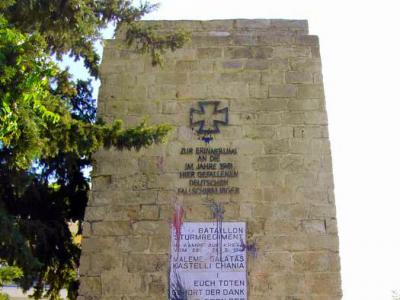
The German Bird Memorial was erected in 1941 by German occupation forces to honor the paratroopers who died during the ten-day Battle of Crete. The Cretans came to call it the "German Bird" or more ominously, the "Evil Bird".
Originally, the structure featured a tall pedestal built of stone blocks, topped with a concrete eagle in a diving posture-a replica of the Luftwaffe paratrooper insignia-clutching a swastika between its talons. This striking silhouette was accessed via a series of stone steps ascending to the small hill upon which it stood.
After Crete's liberation, the swastika was quickly concealed with cement. The memorial remained largely intact until a severe storm in November 2000 toppled the eagle. Today, the pedestal stands derelict, frequently defaced with graffiti, and has sparked ongoing debates about whether it should be restored or removed entirely.
This monument has transcended its original function as a wartime tribute to become a complex emotional landmark: a physical reminder of conflict, occupation, and memory in post-war Crete. Despite its controversial origins, it remains a tangible touchstone for reflection on the island’s turbulent past.
Originally, the structure featured a tall pedestal built of stone blocks, topped with a concrete eagle in a diving posture-a replica of the Luftwaffe paratrooper insignia-clutching a swastika between its talons. This striking silhouette was accessed via a series of stone steps ascending to the small hill upon which it stood.
After Crete's liberation, the swastika was quickly concealed with cement. The memorial remained largely intact until a severe storm in November 2000 toppled the eagle. Today, the pedestal stands derelict, frequently defaced with graffiti, and has sparked ongoing debates about whether it should be restored or removed entirely.
This monument has transcended its original function as a wartime tribute to become a complex emotional landmark: a physical reminder of conflict, occupation, and memory in post-war Crete. Despite its controversial origins, it remains a tangible touchstone for reflection on the island’s turbulent past.
3) Iguana Beach
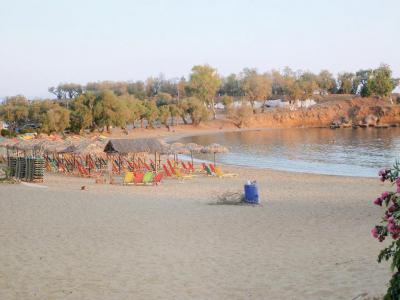
Iguana Beach is a popular destination for both locals and tourists due to its stunning location just a few kilometers west of the city center. Situated next to Golden Beach and only a few meters off the road from Chania to Platanias, it is easily accessible by car or bus.
This picturesque urban beach boasts crystal-clear turquoise waters and golden sand, making it perfect for a relaxing day by the sea. The smooth entrance to the water is suitable for all ages, from families with children to seniors and lone travelers. During the high season, the beach can get partially crowded, but it still maintains a serene atmosphere.
Visitors to Iguana Beach can enjoy a range of amenities, including loungers and umbrellas, a beach restaurant, changing rooms, showers, and toilets. The beach is also supervised by a lifeguard during the season, ensuring a safe and enjoyable swimming experience.
In addition to swimming and sunbathing, there are other activities to enjoy at Iguana Beach. The area nearby is suitable for wild camping, and visitors can also take part in water sports such as paddleboarding, kayaking, and snorkeling.
This picturesque urban beach boasts crystal-clear turquoise waters and golden sand, making it perfect for a relaxing day by the sea. The smooth entrance to the water is suitable for all ages, from families with children to seniors and lone travelers. During the high season, the beach can get partially crowded, but it still maintains a serene atmosphere.
Visitors to Iguana Beach can enjoy a range of amenities, including loungers and umbrellas, a beach restaurant, changing rooms, showers, and toilets. The beach is also supervised by a lifeguard during the season, ensuring a safe and enjoyable swimming experience.
In addition to swimming and sunbathing, there are other activities to enjoy at Iguana Beach. The area nearby is suitable for wild camping, and visitors can also take part in water sports such as paddleboarding, kayaking, and snorkeling.
4) Skridlof Street (Leather Street)
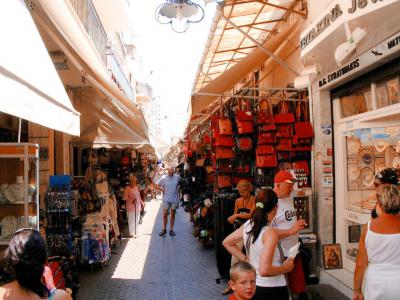
Skridlof Street, better known as Leather Lane, is one of those places where history lingers in the air even as the present bustles around it. Tucked into the Old Town near the Municipal Market, the lane earned its reputation in the 19th century when shoemakers and bootmakers set up their workshops here. Their craft was legendary-this was the birthplace of the tall Cretan boots known as stivania, worn by shepherds roaming the White Mountains and later by rebels fighting for independence. The clatter of hammers on wooden lasts and the earthy scent of hides once filled the alley, giving it both its name and its identity.
Although the golden age of the bootmakers has long passed, echoes of it remain. Family-run shops still display traditional footwear alongside belts, bags, and sandals, some hand-made by descendants of those earlier craftsmen. Ordering a custom pair of boots, complete with the traditional wide trousers and headscarf that once accompanied them, is still possible for those who want a piece of living heritage.
Over time, the street has expanded beyond leather goods, and today its stalls and shops also sell jewelry, embroidery, and keepsakes of Crete. Yet Leather Street retains its role as a bridge between Chania’s mercantile traditions and modern life. Walking its narrow length, with shops pressing close and voices carrying down the alley, visitors glimpse how one trade once shaped a whole neighborhood and how its legacy still weaves into the city’s story.
Although the golden age of the bootmakers has long passed, echoes of it remain. Family-run shops still display traditional footwear alongside belts, bags, and sandals, some hand-made by descendants of those earlier craftsmen. Ordering a custom pair of boots, complete with the traditional wide trousers and headscarf that once accompanied them, is still possible for those who want a piece of living heritage.
Over time, the street has expanded beyond leather goods, and today its stalls and shops also sell jewelry, embroidery, and keepsakes of Crete. Yet Leather Street retains its role as a bridge between Chania’s mercantile traditions and modern life. Walking its narrow length, with shops pressing close and voices carrying down the alley, visitors glimpse how one trade once shaped a whole neighborhood and how its legacy still weaves into the city’s story.
5) Assumption Cathedral
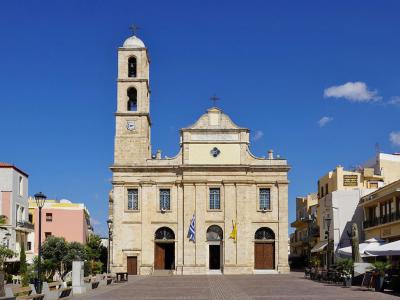
The Assumption Cathedral of Chania carries with it the layered story of the city itself. Long before it became the main Orthodox church of Crete’s western capital, the site belonged to a Venetian church dedicated to the Virgin Mary. When the Ottomans seized Chania in the mid-17th century, the church was stripped of its sacred role and converted into a soap factory. Local lore tells of the factory’s owner, who, after falling on hard times, vowed to return the building to the Christian community if fortune smiled on him again. In 1850, true to his promise, the site was restored to its religious use-an act that spoke to the endurance of Chania’s Christian population under foreign rule.
The present cathedral rose gradually in the decades that followed, shaped by the political changes of Crete. By 1860, it had taken on its recognizable form as a three-aisled basilica dedicated to the Assumption of the Virgin Mary, earning the local nickname “Trimartiri,” or “three martyrs.” It was consecrated as the city’s cathedral in 1874, only to face damage from earthquakes and require rebuilding. The 19th-century design combined Byzantine tradition with neoclassical influences, a reflection of the island’s desire to tie its future with Greece while still honoring its past.
Beyond its architecture, the cathedral has always been part of daily life in Chania. Ceremonies, festivals, and quiet devotions unfold inside, while outside Athinagora Square remains one of the Old Town’s busiest crossroads. To walk here is to see how faith has persisted through conquest, siege, and political change. For today’s visitors, the Assumption Cathedral is not only a monument but a living witness to Chania’s resilience, its dome and icons still anchoring the city’s spiritual heart.
The present cathedral rose gradually in the decades that followed, shaped by the political changes of Crete. By 1860, it had taken on its recognizable form as a three-aisled basilica dedicated to the Assumption of the Virgin Mary, earning the local nickname “Trimartiri,” or “three martyrs.” It was consecrated as the city’s cathedral in 1874, only to face damage from earthquakes and require rebuilding. The 19th-century design combined Byzantine tradition with neoclassical influences, a reflection of the island’s desire to tie its future with Greece while still honoring its past.
Beyond its architecture, the cathedral has always been part of daily life in Chania. Ceremonies, festivals, and quiet devotions unfold inside, while outside Athinagora Square remains one of the Old Town’s busiest crossroads. To walk here is to see how faith has persisted through conquest, siege, and political change. For today’s visitors, the Assumption Cathedral is not only a monument but a living witness to Chania’s resilience, its dome and icons still anchoring the city’s spiritual heart.
6) Etz Hayyim Synagogue
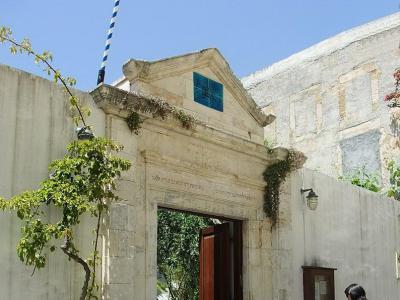
The Etz Hayyim Synagogue stands as the sole surviving remnant of Crete's centuries-old Romaniote Jewish community. Originally constructed in the 17th century, the synagogue occupies a building once used as a Venetian-era church before being transformed into a place of Jewish worship.
With the tragic deportation and subsequent drowning of Chania’s Jewish population during World War II, the synagogue fell into neglect-serving grimly as a storage area, a dump, and even a stable. In the mid-1990s, spurred by the efforts of Nicholas Stavroulakis and support from international heritage programs, a dedicated restoration began. It culminated in a heartfelt rededication in October 1999, with prominent religious leaders and dignitaries in attendance.
Today, the Synagogue is an active place of prayer used for Shabbat services, Jewish holidays, and modeled on both Romaniote and Sephardic traditions. Beyond worship, it has blossomed into a center for reconciliation, education, and cross-cultural engagement, hosting concerts, lectures, exhibitions, and serving as a welcoming space for Jews and non-Jews alike.
The synagogue complex includes tranquil courtyards, a ritual bath, and a small library overflowing with volumes on Jewish, Christian, and Islamic history-offering deeper insight into Crete’s multicultural past. It is also a space of learning, with its archives aiding researchers and visitors in tracing Jewish heritage across the island.
With the tragic deportation and subsequent drowning of Chania’s Jewish population during World War II, the synagogue fell into neglect-serving grimly as a storage area, a dump, and even a stable. In the mid-1990s, spurred by the efforts of Nicholas Stavroulakis and support from international heritage programs, a dedicated restoration began. It culminated in a heartfelt rededication in October 1999, with prominent religious leaders and dignitaries in attendance.
Today, the Synagogue is an active place of prayer used for Shabbat services, Jewish holidays, and modeled on both Romaniote and Sephardic traditions. Beyond worship, it has blossomed into a center for reconciliation, education, and cross-cultural engagement, hosting concerts, lectures, exhibitions, and serving as a welcoming space for Jews and non-Jews alike.
The synagogue complex includes tranquil courtyards, a ritual bath, and a small library overflowing with volumes on Jewish, Christian, and Islamic history-offering deeper insight into Crete’s multicultural past. It is also a space of learning, with its archives aiding researchers and visitors in tracing Jewish heritage across the island.
7) Old Venetian Harbor (must see)
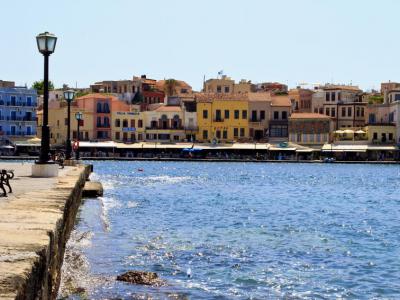
Long before Venetian galleys filled the bay, this stretch of Crete’s north coast sheltered the Minoans of Kydonia, who traded here as early as the 14th century BC. By the time the Venetians arrived in 1320, they saw not just a natural inlet but a jewel worth fortifying. Over the next three centuries, they poured stone and sweat into creating one of the strongest ports in the eastern Mediterranean. The harbor became both a marketplace and a fortress, where merchants unloaded cloth and spices under the shadow of warships waiting in the basins.
The eastern side rang with the sound of shipbuilding inside the great arsenals. Seventeen vast halls rose between 1467 and 1599, their arched openings facing the sea so galleys could be hauled inside for repair. In 1607, three more-called the Moro Docks-were added, just as the Republic of Venice prepared for renewed conflict with the Ottomans. Sailors’ songs and hammer strikes once filled those halls, a contrast to the art exhibitions they house today.
At the harbor’s mouth, a lighthouse was added between 1570 and 1590, its flame guiding ships returning from Venice or Alexandria. In 1645, during the Ottoman siege of Chania, it stood as a witness to weeks of bombardment that reduced much of the city to rubble. When the Ottomans triumphed, they raised mosques and hammams around the waterfront, leaving their own imprint on the Venetian skeleton. The lighthouse itself would later be rebuilt by the Egyptians in the 19th century, giving it the curious blend of Venetian bones and Ottoman-Egyptian dress that survives today.
Every corner of the harbor carries such stories: the Firkas Fortress, where the Venetian banner once flew, now holds a Nautical Museum with a replica Minoan ship; the Yali Tzamii Mosque recalls centuries of Ottoman prayer; and the café-lined promenade still hums with conversation much like it did when sailors struck bargains over wine. Walk the mole to the lighthouse at sunset, and the layers of history fall into place-the Minoan traders, the Venetian shipwrights, the Ottoman conquerors-all bound to this same stretch of sea.
The eastern side rang with the sound of shipbuilding inside the great arsenals. Seventeen vast halls rose between 1467 and 1599, their arched openings facing the sea so galleys could be hauled inside for repair. In 1607, three more-called the Moro Docks-were added, just as the Republic of Venice prepared for renewed conflict with the Ottomans. Sailors’ songs and hammer strikes once filled those halls, a contrast to the art exhibitions they house today.
At the harbor’s mouth, a lighthouse was added between 1570 and 1590, its flame guiding ships returning from Venice or Alexandria. In 1645, during the Ottoman siege of Chania, it stood as a witness to weeks of bombardment that reduced much of the city to rubble. When the Ottomans triumphed, they raised mosques and hammams around the waterfront, leaving their own imprint on the Venetian skeleton. The lighthouse itself would later be rebuilt by the Egyptians in the 19th century, giving it the curious blend of Venetian bones and Ottoman-Egyptian dress that survives today.
Every corner of the harbor carries such stories: the Firkas Fortress, where the Venetian banner once flew, now holds a Nautical Museum with a replica Minoan ship; the Yali Tzamii Mosque recalls centuries of Ottoman prayer; and the café-lined promenade still hums with conversation much like it did when sailors struck bargains over wine. Walk the mole to the lighthouse at sunset, and the layers of history fall into place-the Minoan traders, the Venetian shipwrights, the Ottoman conquerors-all bound to this same stretch of sea.

8) Grand Arsenal
The Grand Arsenal in Chania stands as both a survivor and a storyteller of the city’s long maritime past. Built in 1600 as the final and grandest of the Venetian dockyards, it was designed during a time when Venice’s empire was under pressure from Ottoman expansion. Alongside the row of arched ship sheds that once stretched across the harbor, the Grand Arsenal distinguished itself with its imposing scale and thick stone walls, a fortress-like hall where Venetian galleys could be repaired and safeguarded. For the Venetians, Chania was not just a port but a lifeline, and the Arsenal was a symbol of their determination to hold the island.
The tides of history soon changed. In 1645, after a brutal siege, the Ottomans took Chania, and the building was stripped of its naval role. It became a military hospital, later a school, and eventually adapted to civic life under different administrations. In the 19th and early 20th centuries, it served as a Christian school, a municipal hospital, even Chania’s City Hall. Yet the building suffered again during World War II, when German bombardments left it damaged and neglected.
Its fortunes revived in the late 20th century, when a careful restoration returned the Arsenal to life. Reopened in 2002, it now houses the Center of Mediterranean Architecture, a venue for exhibitions, performances, and cultural events. Standing on the harbor, the Grand Arsenal tells of Venetian ambition, Ottoman conquest, wartime devastation, and modern rebirth. For today’s visitors, it is more than a relic-it is a living reminder of Chania’s ability to adapt, endure, and reinvent itself across the centuries.
The tides of history soon changed. In 1645, after a brutal siege, the Ottomans took Chania, and the building was stripped of its naval role. It became a military hospital, later a school, and eventually adapted to civic life under different administrations. In the 19th and early 20th centuries, it served as a Christian school, a municipal hospital, even Chania’s City Hall. Yet the building suffered again during World War II, when German bombardments left it damaged and neglected.
Its fortunes revived in the late 20th century, when a careful restoration returned the Arsenal to life. Reopened in 2002, it now houses the Center of Mediterranean Architecture, a venue for exhibitions, performances, and cultural events. Standing on the harbor, the Grand Arsenal tells of Venetian ambition, Ottoman conquest, wartime devastation, and modern rebirth. For today’s visitors, it is more than a relic-it is a living reminder of Chania’s ability to adapt, endure, and reinvent itself across the centuries.
9) Church of Saint Nicholas
The Church of Saint Nicholas in Chania is unlike any other in Greece, a building that carries the marks of conquest, faith, and resilience all at once. Its story begins in 1320, when Dominican monks raised it as a Catholic church during the Venetian era, serving the Latin community within the fortified quarter of Splantzia. For centuries it stood as a symbol of Western Christianity on Crete, until the island’s turbulent fate took another turn.
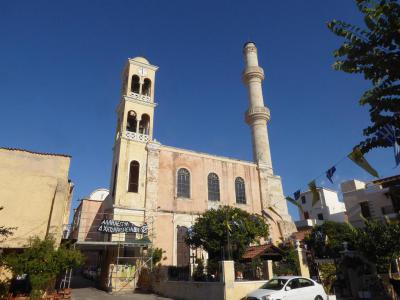
In 1645, Chania fell to the Ottomans after a brutal siege, and the Dominicans were forced out. The church was converted into the Ibrahim Mosque, named for Sultan Ibrahim, and a towering minaret was built alongside the existing bell tower. The two structures together created a sight unique in Greece-a Christian steeple and an Islamic minaret rising side by side. Local lore still recalls the image of a dervish climbing the tower with a sword, declaring faith to the four winds as the Ottomans claimed the city.
The mosque remained central to Chania’s Muslim community until 1913, when Crete joined modern Greece. By 1918, the building was rededicated as the Orthodox Church of Saint Nicholas, patron of sailors, echoing Chania’s eternal bond with the sea. During World War II, the church was bombed in the Battle of Crete, yet it endured, later restored and reopened for worship.
Today, standing in Splantzia Square, the church is as much a symbol of coexistence as it is of conflict. Cafés and tavernas spill into the square, framing a monument that tells the story of a city shaped by Venetians, Ottomans, and Greeks. The bell tower and minaret remain side by side, reminders of how Chania’s long history continues to live in its stones.
In 1645, Chania fell to the Ottomans after a brutal siege, and the Dominicans were forced out. The church was converted into the Ibrahim Mosque, named for Sultan Ibrahim, and a towering minaret was built alongside the existing bell tower. The two structures together created a sight unique in Greece-a Christian steeple and an Islamic minaret rising side by side. Local lore still recalls the image of a dervish climbing the tower with a sword, declaring faith to the four winds as the Ottomans claimed the city.
The mosque remained central to Chania’s Muslim community until 1913, when Crete joined modern Greece. By 1918, the building was rededicated as the Orthodox Church of Saint Nicholas, patron of sailors, echoing Chania’s eternal bond with the sea. During World War II, the church was bombed in the Battle of Crete, yet it endured, later restored and reopened for worship.
Today, standing in Splantzia Square, the church is as much a symbol of coexistence as it is of conflict. Cafés and tavernas spill into the square, framing a monument that tells the story of a city shaped by Venetians, Ottomans, and Greeks. The bell tower and minaret remain side by side, reminders of how Chania’s long history continues to live in its stones.
10) Greek National Football Museum (must see)
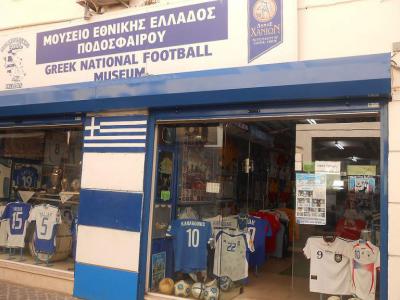
The Greek National Football Museum in Chania hides in plain sight, behind the modest façade of what looks like another Old Town souvenir shop. Its unassuming setting only adds to the sense of discovery, for inside lies a treasure trove of stories, victories, and emotions tied to Greece’s most beloved sport. The museum exists thanks to the passion of Nikos Pantelis, a lifelong collector whose childhood hobby of gathering shirts and memorabilia grew into one of the most complete football archives in Greece. His decision to root the collection in Chania, rather than Athens or Thessaloniki, reflects both his Cretan ties and the city’s deep love for the game.
The rooms are packed with jerseys, balls, and relics that carry the weight of memory. More than 1,000 Greek shirts and hundreds of foreign ones line the displays, many donated by players and fans. Among the standout pieces is the jersey David Beckham wore when he scored a famous last-minute free kick, an item visitors can even try on. Yet the undisputed jewel is the complete set of shirts from Greece’s European Championship 2004 squad, the underdog team that stunned the continent by winning the championship. Alongside them rests the autographed match ball from the final in Lisbon, a relic that recalls one of the proudest moments in modern Greek history.
But the museum stretches beyond that single triumph. Signed jerseys of Pelé, Maradona, and Ronaldo hang as reminders of football’s global stage, while domestic relics evoke the passion of Greek derbies and qualifiers. More than statistics or tactics, the collection tells stories-of joy, heartbreak, and resilience. For visitors, stepping into the museum feels like entering football’s living memory, where Chania’s narrow streets echo with both local pride and the roar of distant stadiums.
The rooms are packed with jerseys, balls, and relics that carry the weight of memory. More than 1,000 Greek shirts and hundreds of foreign ones line the displays, many donated by players and fans. Among the standout pieces is the jersey David Beckham wore when he scored a famous last-minute free kick, an item visitors can even try on. Yet the undisputed jewel is the complete set of shirts from Greece’s European Championship 2004 squad, the underdog team that stunned the continent by winning the championship. Alongside them rests the autographed match ball from the final in Lisbon, a relic that recalls one of the proudest moments in modern Greek history.
But the museum stretches beyond that single triumph. Signed jerseys of Pelé, Maradona, and Ronaldo hang as reminders of football’s global stage, while domestic relics evoke the passion of Greek derbies and qualifiers. More than statistics or tactics, the collection tells stories-of joy, heartbreak, and resilience. For visitors, stepping into the museum feels like entering football’s living memory, where Chania’s narrow streets echo with both local pride and the roar of distant stadiums.
11) Chatzimichali Ntaliani Street
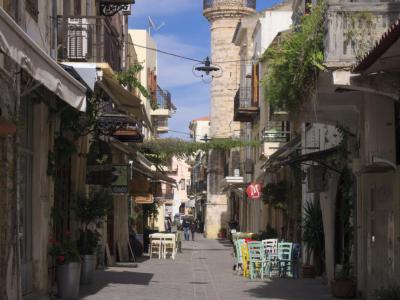
Chatzimichali Ntaliani Street-better known to locals as Daliani Street-winds through Chania’s Old Town with a character that feels both historic and alive. The name honors Hatzimichalis Dalianis, a revolutionary hero from Epirus who fought for Crete’s freedom in 1828 and died in battle. His story lingers in the background, reminding visitors that beneath the easy charm of this lane lies the memory of Crete’s long struggle for independence.
During Ottoman times, this was part of the Turkish quarter, and its past still lingers in the atmosphere. Low houses, arched doorways, and hints of Venetian and Ottoman design recall the street’s layered heritage. For generations, it was a working-class neighborhood, filled with workshops and tavernas that anchored daily life. Though it fell into decline in the early 20th century, restoration and renewed energy have transformed it into one of Chania’s most vibrant corners.
By day, the street hums softly with cafés, souvenir shops, and the slow pace of Old Town wanderers. But as evening arrives, it comes alive in full force. Taverns and mezedopoleia set tables along the narrow passage, locals and travelers mingle over food and wine, and the sound of music often drifts into the night. Adding to the atmosphere, the Minaret of Ahmet Aga rises nearby, one of the last Ottoman minarets in Chania, while the 16th-century Venetian Monastery of Karolo adds yet another layer of history.
Walking down Daliani Street today is less about monuments and more about spirit-an experience where centuries of change blend seamlessly with the lively rhythm of modern Chania.
During Ottoman times, this was part of the Turkish quarter, and its past still lingers in the atmosphere. Low houses, arched doorways, and hints of Venetian and Ottoman design recall the street’s layered heritage. For generations, it was a working-class neighborhood, filled with workshops and tavernas that anchored daily life. Though it fell into decline in the early 20th century, restoration and renewed energy have transformed it into one of Chania’s most vibrant corners.
By day, the street hums softly with cafés, souvenir shops, and the slow pace of Old Town wanderers. But as evening arrives, it comes alive in full force. Taverns and mezedopoleia set tables along the narrow passage, locals and travelers mingle over food and wine, and the sound of music often drifts into the night. Adding to the atmosphere, the Minaret of Ahmet Aga rises nearby, one of the last Ottoman minarets in Chania, while the 16th-century Venetian Monastery of Karolo adds yet another layer of history.
Walking down Daliani Street today is less about monuments and more about spirit-an experience where centuries of change blend seamlessly with the lively rhythm of modern Chania.
12) Archaeological Museum of Chania
The Archaeological Museum stands as a prominent contemporary cultural venue, housing around 6,000 m² of displays spread across three ground-floor galleries and a fourth on the upper level. First opened in 1962 within a Venetian monastery, it moved to its modern premises in 2022 to present western Crete’s archaeological heritage in a more fitting setting.
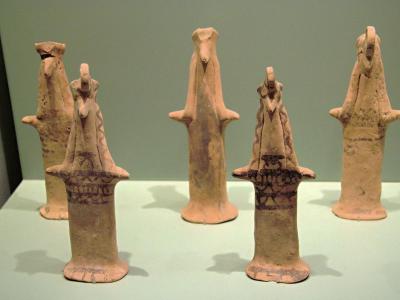
Upon entering the first gallery, you'll step into the dawn of human presence in the region. Artifacts from the Neolithic, Minoan, and Mycenaean eras-including Linear A and B tablets, distinctive pottery, jewelry, and burial artifacts-highlight the early development and cultural foundations of Kydonia (ancient Chania).
As you progress through the second and third halls, the narrative unfolds further-spanning the Geometric, Archaic, Classical, and Hellenistic periods. Here, you'll find ornate sculptures, funerary monuments, coins, lab ware, terracotta, and even an earthquake-damaged home reconstruction from 365 BC, which enriches your immersion into domestic and sacred life.
Finally, the museum's upper gallery showcases rare treasures, including part of the Konstantinos, Marika, and Kyriakos Mitsotakis collection, which features towering Minoan and post‑Minoan artifacts. The collection further extends into pieces from the Roman era-like a splendid floor mosaic depicting Dionysus and Ariadne, busts of Roman figures, and an exquisitely preserved Late Minoan sarcophagus.
The museum, created by architect Theofanis Bobotis and his team, features bold, linear forms that seem to rise from the ground, evoking the hidden strata of past civilizations. Situated about 98 meters above sea level, it offers expansive views across the city and its waterfront.
Upon entering the first gallery, you'll step into the dawn of human presence in the region. Artifacts from the Neolithic, Minoan, and Mycenaean eras-including Linear A and B tablets, distinctive pottery, jewelry, and burial artifacts-highlight the early development and cultural foundations of Kydonia (ancient Chania).
As you progress through the second and third halls, the narrative unfolds further-spanning the Geometric, Archaic, Classical, and Hellenistic periods. Here, you'll find ornate sculptures, funerary monuments, coins, lab ware, terracotta, and even an earthquake-damaged home reconstruction from 365 BC, which enriches your immersion into domestic and sacred life.
Finally, the museum's upper gallery showcases rare treasures, including part of the Konstantinos, Marika, and Kyriakos Mitsotakis collection, which features towering Minoan and post‑Minoan artifacts. The collection further extends into pieces from the Roman era-like a splendid floor mosaic depicting Dionysus and Ariadne, busts of Roman figures, and an exquisitely preserved Late Minoan sarcophagus.
The museum, created by architect Theofanis Bobotis and his team, features bold, linear forms that seem to rise from the ground, evoking the hidden strata of past civilizations. Situated about 98 meters above sea level, it offers expansive views across the city and its waterfront.
13) Venizelos Graves
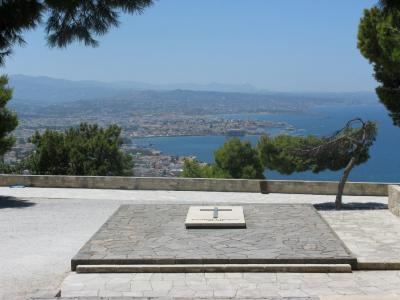
The Venizelos Graves in Chania are a significant historical site that attract many visitors. They are located on a hilltop on the way from Chania Town to Akrotiri and the airport, offering a breathtaking panoramic view of the town, the Aegean Sea, and the White Mountains. The tombs are dedicated to two great politicians of Greece, Eleftherios Venizelos and his son, Sophocles Venizelos.
Eleftherios Venizelos was born in Crete in 1864, during the Ottoman occupation of the island. He played a vital role in the liberation of Crete and negotiated with the Turks on behalf of the locals. He served as prime minister of Greece seven times and was a key figure in modernizing the country and expanding its territories. Venizelos died in 1936 while living in self-imposed exile in Paris. He had expressed a desire to be buried on the hilltop overlooking Chania, and his wish was granted.
Sophocles Venizelos was the son of Eleftherios Venizelos and also served as prime minister of Greece, from 1943 to 1952. He is buried next to his father's tomb on the same hilltop. The site is of great significance to the people of Crete and Greece, who hold Eleftherios Venizelos in high regard for his contributions to the country's modernization.
The Venizelos Graves are located near the Monastery of Prophet Elias, which dates back to the 16th century. The monastery played a role in the last Cretan revolution in 1897, when the flag of the revolution was raised at its bell tower. In memory of this event, there is a statue of Spyros Kayales or Kayaledakis, a fighter who used his body as a flagpole to hold the Greek flag during the bombardment of the revolutionaries by the Great Powers.
Visitors to the Venizelos Graves can take in the stunning views of Chania and its surroundings while paying their respects to these two great politicians of Greece. The site is a testament to the legacy of Eleftherios Venizelos and his family and the important role they played in the country's history.
Eleftherios Venizelos was born in Crete in 1864, during the Ottoman occupation of the island. He played a vital role in the liberation of Crete and negotiated with the Turks on behalf of the locals. He served as prime minister of Greece seven times and was a key figure in modernizing the country and expanding its territories. Venizelos died in 1936 while living in self-imposed exile in Paris. He had expressed a desire to be buried on the hilltop overlooking Chania, and his wish was granted.
Sophocles Venizelos was the son of Eleftherios Venizelos and also served as prime minister of Greece, from 1943 to 1952. He is buried next to his father's tomb on the same hilltop. The site is of great significance to the people of Crete and Greece, who hold Eleftherios Venizelos in high regard for his contributions to the country's modernization.
The Venizelos Graves are located near the Monastery of Prophet Elias, which dates back to the 16th century. The monastery played a role in the last Cretan revolution in 1897, when the flag of the revolution was raised at its bell tower. In memory of this event, there is a statue of Spyros Kayales or Kayaledakis, a fighter who used his body as a flagpole to hold the Greek flag during the bombardment of the revolutionaries by the Great Powers.
Visitors to the Venizelos Graves can take in the stunning views of Chania and its surroundings while paying their respects to these two great politicians of Greece. The site is a testament to the legacy of Eleftherios Venizelos and his family and the important role they played in the country's history.
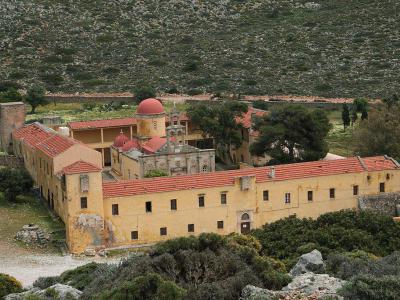
14) Gouverneto Monastery
Gouverneto is among Crete’s oldest surviving monastic sites, founded during the Venetian era in either 1537 or 1548. A census from 1637 recorded around 60 monks residing there, affirming its importance as one of the island’s largest monasteries at the time.
Architecturally, the monastery impresses with its fortress-like structure: stone walls, corner towers-of which only two remain-and a rectangular courtyard encircled by monastic cells. Its centerpiece is the katholikon, a domed church dedicated to the Virgin Mary, featuring a richly ornamented Venetian façade and possibly some of Crete’s oldest surviving frescoes.
Beyond its religious and architectural value, the monastery carries deep historical resonance. During World War II, German forces used it as a guard post. Since 2005, monks have overseen restoration efforts to honor its heritage and retain its function as an active religious site.
For those seeking more than stone and prayer, the monastery serves as the gateway to the Avlaki Gorge: a scenic footpath that winds down to the sea, past the evocative Arkoudiotissa Cave (named for its bear-shaped stalagmite and once associated with Artemis), and culminating at the ancient, cliff‑carved ruins of the Katholiko Monastery.
Architecturally, the monastery impresses with its fortress-like structure: stone walls, corner towers-of which only two remain-and a rectangular courtyard encircled by monastic cells. Its centerpiece is the katholikon, a domed church dedicated to the Virgin Mary, featuring a richly ornamented Venetian façade and possibly some of Crete’s oldest surviving frescoes.
Beyond its religious and architectural value, the monastery carries deep historical resonance. During World War II, German forces used it as a guard post. Since 2005, monks have overseen restoration efforts to honor its heritage and retain its function as an active religious site.
For those seeking more than stone and prayer, the monastery serves as the gateway to the Avlaki Gorge: a scenic footpath that winds down to the sea, past the evocative Arkoudiotissa Cave (named for its bear-shaped stalagmite and once associated with Artemis), and culminating at the ancient, cliff‑carved ruins of the Katholiko Monastery.
