Custom Walk in Canterbury, England by coletteagombar_f447d created on 2025-06-30
Guide Location: England » Canterbury
Guide Type: Custom Walk
# of Sights: 6
Tour Duration: 2 Hour(s)
Travel Distance: 3.6 Km or 2.2 Miles
Share Key: U9JHM
Guide Type: Custom Walk
# of Sights: 6
Tour Duration: 2 Hour(s)
Travel Distance: 3.6 Km or 2.2 Miles
Share Key: U9JHM
How It Works
Please retrieve this walk in the GPSmyCity app. Once done, the app will guide you from one tour stop to the next as if you had a personal tour guide. If you created the walk on this website or come to the page via a link, please follow the instructions below to retrieve the walk in the app.
Retrieve This Walk in App
Step 1. Download the app "GPSmyCity: Walks in 1K+ Cities" on Apple App Store or Google Play Store.



Step 2. In the GPSmyCity app, download(or launch) the guide "Canterbury Map and Walking Tours".
Step 3. Tap the menu button located at upper right corner of the "Walks" screen and select "Retrieve custom walk". Enter the share key: U9JHM
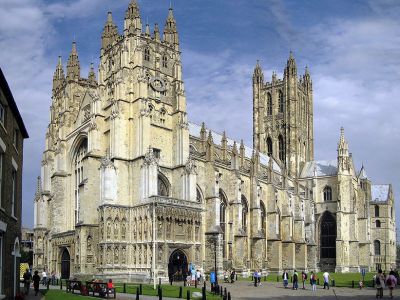
1) Canterbury Cathedral (must see)
The formal name of the Canterbury Cathedral is the Cathedral and Metropolitical Church of Christ at Canterbury. It is one of the oldest and most well-known Christian structures in all of England and it is a World Heritage Site.
It was originally founded in 597 and has been expanded and rebuilt many times in its history.
In its earliest days, the church was part of a Benedictine monastic community and was the seat of the archbishop. The first bishop was Augustine of Canterbury, a missionary sent in 596 by Pope Gregory I. He also founded Saint Augustine's Abbey, though it was not called that then, located outside the city walls.
The building as it is now was more or less laid out by Archbishop Lanfranc and dedicated in 1077 after the Norman Conquest. It was built from stone from France and designed to be like the Abbey of Saint-Étienne in Caen.
A pivotal moment in the Cathedral's history was the murder of Archbishop Thomas Becket. Becket was murdered in the northwest transept in 1170 by knights of King Henry II. The events transformed the Cathedral into a place of pilgrimage. Such pilgrims were depicted in Chaucer's Canterbury Tales.
Today the Archbishop of Canterbury serves as the global leader for the Anglican Communion and leader of the Church of England.
Why You Should Visit:
The Cathedral is a World Heritage Site and one of the most stunning examples of Gothic architecture in England.
Tips:
Plan to dedicate at least three hours to tour the Cathedral. GPSmyCity offers a self-guided tour to help you explore the Cathedral and its grounds.
Be sure to look up! Some of the most impressive examples of architecture lie in the fan vaulting, ornate carvings, and beautiful stained glassworks.
It was originally founded in 597 and has been expanded and rebuilt many times in its history.
In its earliest days, the church was part of a Benedictine monastic community and was the seat of the archbishop. The first bishop was Augustine of Canterbury, a missionary sent in 596 by Pope Gregory I. He also founded Saint Augustine's Abbey, though it was not called that then, located outside the city walls.
The building as it is now was more or less laid out by Archbishop Lanfranc and dedicated in 1077 after the Norman Conquest. It was built from stone from France and designed to be like the Abbey of Saint-Étienne in Caen.
A pivotal moment in the Cathedral's history was the murder of Archbishop Thomas Becket. Becket was murdered in the northwest transept in 1170 by knights of King Henry II. The events transformed the Cathedral into a place of pilgrimage. Such pilgrims were depicted in Chaucer's Canterbury Tales.
Today the Archbishop of Canterbury serves as the global leader for the Anglican Communion and leader of the Church of England.
Why You Should Visit:
The Cathedral is a World Heritage Site and one of the most stunning examples of Gothic architecture in England.
Tips:
Plan to dedicate at least three hours to tour the Cathedral. GPSmyCity offers a self-guided tour to help you explore the Cathedral and its grounds.
Be sure to look up! Some of the most impressive examples of architecture lie in the fan vaulting, ornate carvings, and beautiful stained glassworks.
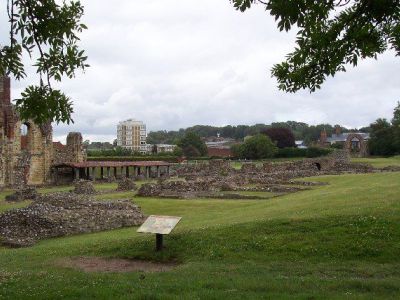
2) St. Augustine's Abbey (must see)
Saint Augustine arrived in England in 597. Pope Gregory I sent Saint Augustine to convert the Anglo-Saxons to Christianity. The King of Kent, Ethelbert, was married to Queen Bertha, who was already a Christian. King Ethelbert ordered the construction of a splendid church, and construction on Saint Augustine's Abbey began in 598. At that time, the Abbey was dedicated to Saints Peter and Paul.
While most structures in the area were quickly built with wood building materials, Saint Augustine wanted to build a church with stone to emulate the churches of Rome. Thus, Saint Augustine's Abbey became the main religious building in Kent. In addition, Saint Augustine's Abbey became known as a missionary school where learning and knowledge were celebrated.
Saint Augustine became the first Archbishop of Canterbury and was buried in Saint Augustine's Abbey.
In 978, Dunstan, the Archbishop of Canterbury, renovated and expanded the Abbey. Finally, he re-dedicated the Abbey to Saint Augustine, and the church became known as Saint Augustine's Abbey.
The Abbey gatehouse was rebuilt in 1309 and became known as Fyndon Gate. The chamber in the gatehouse was used as the state bed-chamber, and royalty stayed there on their travels. For example, King Charles I and Queen Henrietta Maria stayed here after their Canterbury Cathedral wedding in 1625. In 1660, Charles II and the Dukes of York and Gloucester stayed here.
Freedom Gate faces Lady Wootton's Green. This small square houses statues of King Ethelberht and Queen Bertha.
King Herny VIII dismantled England's monasteries to make way for the new Church of England. In 1538, Saint Augustine's Abbey became the property of the Crown after 940 years of existing as a monastery. Some of the Abbey was initially used as a residence by royal family members. Throughout the centuries, the Abbey was dismantled.
In 1844, Alexander James Beresford Hope bought the ruins and remaining buildings and began to preserve them. Unfortunately, the site was heavily damaged by World War II bombs.
Saint Augustine's Missionary College survived and is currently used by the King's School, Canterbury.
Why You Should Visit:
Saint Augustine's Abbey is part of the Canterbury World Heritage Site, along with the cathedral and Saint Martin's Church. Visitors can see the ruins of Saint Augustine's Abbey, as well as several important graves. Saint Augustine, Ethelberht of Kent, and early Archbishops of Canterbury are buried on the site.
Tips:
Visit the small on-site museum to get an idea of what the Abbey looked like 1,000 years ago. The museum also has audio tours of the ruins available.
While most structures in the area were quickly built with wood building materials, Saint Augustine wanted to build a church with stone to emulate the churches of Rome. Thus, Saint Augustine's Abbey became the main religious building in Kent. In addition, Saint Augustine's Abbey became known as a missionary school where learning and knowledge were celebrated.
Saint Augustine became the first Archbishop of Canterbury and was buried in Saint Augustine's Abbey.
In 978, Dunstan, the Archbishop of Canterbury, renovated and expanded the Abbey. Finally, he re-dedicated the Abbey to Saint Augustine, and the church became known as Saint Augustine's Abbey.
The Abbey gatehouse was rebuilt in 1309 and became known as Fyndon Gate. The chamber in the gatehouse was used as the state bed-chamber, and royalty stayed there on their travels. For example, King Charles I and Queen Henrietta Maria stayed here after their Canterbury Cathedral wedding in 1625. In 1660, Charles II and the Dukes of York and Gloucester stayed here.
Freedom Gate faces Lady Wootton's Green. This small square houses statues of King Ethelberht and Queen Bertha.
King Herny VIII dismantled England's monasteries to make way for the new Church of England. In 1538, Saint Augustine's Abbey became the property of the Crown after 940 years of existing as a monastery. Some of the Abbey was initially used as a residence by royal family members. Throughout the centuries, the Abbey was dismantled.
In 1844, Alexander James Beresford Hope bought the ruins and remaining buildings and began to preserve them. Unfortunately, the site was heavily damaged by World War II bombs.
Saint Augustine's Missionary College survived and is currently used by the King's School, Canterbury.
Why You Should Visit:
Saint Augustine's Abbey is part of the Canterbury World Heritage Site, along with the cathedral and Saint Martin's Church. Visitors can see the ruins of Saint Augustine's Abbey, as well as several important graves. Saint Augustine, Ethelberht of Kent, and early Archbishops of Canterbury are buried on the site.
Tips:
Visit the small on-site museum to get an idea of what the Abbey looked like 1,000 years ago. The museum also has audio tours of the ruins available.
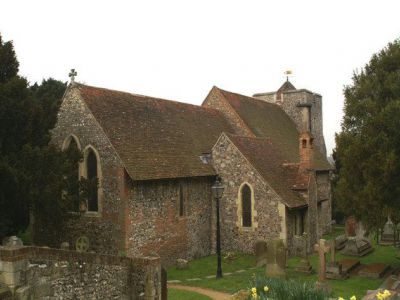
3) St. Martin's Church (must see)
Saint Martin's Church is known as England's oldest church still used as a church and the oldest parish church in the English-speaking world. Records indicate the church building originated during the fifth or sixth century.
King Ethelberht and Queen Bertha of Kent renovated this Romano-British building around AD 580. The church was dedicated to Saint Martin of Tours.
Saint Augustine of Canterbury arrived in 597 and expanded the church. Saint Augustine was on a mission to convert the English to Christianity, and he baptized King Ethelberht in Saint Martin's.
Saint Martin's construction includes Roman tiles and reused Roman bricks. In addition, the remains of a Roman tomb were integrated into the building.
The church has been modified over the centuries. The blocked square-headed doorway in the chancel might have been the entrance to the church during Queen Bertha's time. Parts of the church wall, including the nave, were built in the seventh or eighth century. The tower was built in the 14th century in the English Gothic style.
Why You Should Visit:
Saint Martin's has been a place for Christians to gather since the sixth century. It was here that Saint Augustine first arrived to spread the message of Christianity.
Tips:
Don't miss visiting the church graveyard. Well-known gravesites include artist Thomas Sidney Cooper and writer Mary Tourtel, Rupert Bear's creator.
King Ethelberht and Queen Bertha of Kent renovated this Romano-British building around AD 580. The church was dedicated to Saint Martin of Tours.
Saint Augustine of Canterbury arrived in 597 and expanded the church. Saint Augustine was on a mission to convert the English to Christianity, and he baptized King Ethelberht in Saint Martin's.
Saint Martin's construction includes Roman tiles and reused Roman bricks. In addition, the remains of a Roman tomb were integrated into the building.
The church has been modified over the centuries. The blocked square-headed doorway in the chancel might have been the entrance to the church during Queen Bertha's time. Parts of the church wall, including the nave, were built in the seventh or eighth century. The tower was built in the 14th century in the English Gothic style.
Why You Should Visit:
Saint Martin's has been a place for Christians to gather since the sixth century. It was here that Saint Augustine first arrived to spread the message of Christianity.
Tips:
Don't miss visiting the church graveyard. Well-known gravesites include artist Thomas Sidney Cooper and writer Mary Tourtel, Rupert Bear's creator.
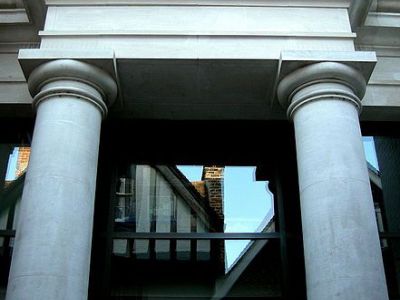
4) Roman Museum (must see)
The Roman Museum features a Roman courtyard house and a Roman pavement. The museum was initially founded in 1961.
The Romans captured a settlement here in the first century AD. They laid out a settlement on a partial grid and included a theatre, forum, temple, and baths. By the third century, they had also built a town wall with seven gates to defend against barbarians. The Romans occupied Canterbury until about 410 AD.
A World War II bomb exposed the Roman mosaic pavement. The excavation revealed a Roman townhouse that had several rooms, corridors, and mosaics.
The museum aims to show people what Roman city life was like. Because the city has been raised many times since Roman times, the pavement is located under the present-day pavement. Therefore, each step visitors take down to the Roman pavement represents 100 years of the archaeological layer.
Today, visitors can see the three mosaic pavement panels, as well as other excavated artifacts. Household deities are on display. Visitors will find objects such as an ax, dice, spoons, roof tiles, and a calvary harness. Silver from the Westgate Gardens silver hoard is also on display.
The museum features a reconstructed Roman house with a kitchen. A Roman marketplace reconstruction has a cobbler, greengrocer, fast food vendor, and haberdasher.
Visitors can also check out a computer game which also guests to use Roman technology.
The Romans captured a settlement here in the first century AD. They laid out a settlement on a partial grid and included a theatre, forum, temple, and baths. By the third century, they had also built a town wall with seven gates to defend against barbarians. The Romans occupied Canterbury until about 410 AD.
A World War II bomb exposed the Roman mosaic pavement. The excavation revealed a Roman townhouse that had several rooms, corridors, and mosaics.
The museum aims to show people what Roman city life was like. Because the city has been raised many times since Roman times, the pavement is located under the present-day pavement. Therefore, each step visitors take down to the Roman pavement represents 100 years of the archaeological layer.
Today, visitors can see the three mosaic pavement panels, as well as other excavated artifacts. Household deities are on display. Visitors will find objects such as an ax, dice, spoons, roof tiles, and a calvary harness. Silver from the Westgate Gardens silver hoard is also on display.
The museum features a reconstructed Roman house with a kitchen. A Roman marketplace reconstruction has a cobbler, greengrocer, fast food vendor, and haberdasher.
Visitors can also check out a computer game which also guests to use Roman technology.
5) Westgate Gardens and Tower House (must see)
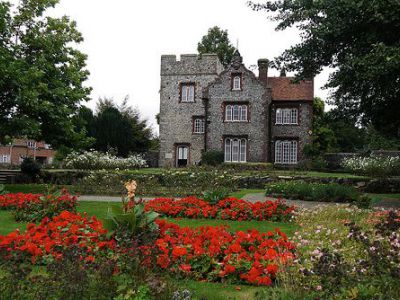
A peaceful haven just steps from Canterbury West train station, Westgate Gardens is one of the city’s most beloved public green spaces. Set beside the River Stour, the gardens are known for their vibrant floral displays, tree-lined paths, and proximity to the ancient Westgate Towers. Visitors are drawn year-round to this tranquil park, which is particularly popular in spring and summer when the flower beds come alive and the riverside footpaths fill with life. Fans of the anime Sakura Quest also make pilgrimages here, as one of the park’s views inspired a scene in the series.
The park is spacious enough to never feel crowded, with broad lawns ideal for sunbathing, picnicking, or simply lounging beneath towering redwoods, beech, walnut, and tulip trees. One of the park’s oldest residents is the Oriental Plane Tree, easily spotted by its thick, sculptural trunk. The River Stour flows through the gardens, and punting tours offered by Westgate Punts provide a gentle way to learn about the area’s history or enjoy the scenery-open seasonally from March through October. Keep an eye out for Alluvia, an underwater sculpture by Jason deCaires Taylor resting in the riverbed.
Overlooking the park is Tower House, a handsome historic building that now serves as a venue for weddings and private events. During summer, it hosts a mobile café with outdoor seating, adding to the park’s welcoming atmosphere. Families can also venture to the Toddler’s Cove playground, while walkers can follow the riverside path to the charming village of Chartham.
Westgate Gardens is more than just a beauty spot-it’s also a place of remembrance and community. A physic garden and several memorial gardens, including one honoring WWII medal recipients, provide quiet spaces for reflection. The park regularly hosts seasonal art exhibitions, performances, and community gatherings, making it a dynamic part of Canterbury’s cultural life as well as a serene escape.
The park is spacious enough to never feel crowded, with broad lawns ideal for sunbathing, picnicking, or simply lounging beneath towering redwoods, beech, walnut, and tulip trees. One of the park’s oldest residents is the Oriental Plane Tree, easily spotted by its thick, sculptural trunk. The River Stour flows through the gardens, and punting tours offered by Westgate Punts provide a gentle way to learn about the area’s history or enjoy the scenery-open seasonally from March through October. Keep an eye out for Alluvia, an underwater sculpture by Jason deCaires Taylor resting in the riverbed.
Overlooking the park is Tower House, a handsome historic building that now serves as a venue for weddings and private events. During summer, it hosts a mobile café with outdoor seating, adding to the park’s welcoming atmosphere. Families can also venture to the Toddler’s Cove playground, while walkers can follow the riverside path to the charming village of Chartham.
Westgate Gardens is more than just a beauty spot-it’s also a place of remembrance and community. A physic garden and several memorial gardens, including one honoring WWII medal recipients, provide quiet spaces for reflection. The park regularly hosts seasonal art exhibitions, performances, and community gatherings, making it a dynamic part of Canterbury’s cultural life as well as a serene escape.

6) The Marlowe Theatre (must see)
The Marlowe Theatre is Canterbury’s premier performance venue and cultural beacon, nestled in the heart of this historic cathedral city. Named after the illustrious Elizabethan playwright Christopher Marlowe, the modern theatre reopened in October 2011 after an extensive rebuild designed by Keith Williams Architects, boasting a 1,200-seat auditorium, a striking fly-tower, and a sleek glass-fronted foyer that complements the skyline alongside Canterbury Cathedral’s majestic spires.
With first-class acoustics and sightlines praised by reviewers, Marlowe Theatre delivers a world-class experience across a diverse programme. From touring West End musicals, Shakespearean drama via the Royal Shakespeare Company, and grand opera by Glyndebourne, to contemporary dance, comedy, and family pantomime, there’s something for every theatre-lover. The intimate 150-seat studio offers cutting-edge drama and fringe performances, championing new writing in the spirit of Canterbury’s creative heritage.
Beyond performances, the venue is deeply rooted in the local community: it houses The Poor Priests’ Hospital creative learning centre, supports youth programmes, bursaries, and open workshops, and proudly operates as a registered charity under The Marlowe Trust, championing access and inclusion in the arts. The striking “Muse of Poetry” statue outside-Christopher Marlowe memorialised in bronze-adds a poetic flourish to the public space.
Whether you’re drawn by world-class performances, architectural elegance, or community spirit, The Marlowe Theatre is an unmissable highlight of any Canterbury visit.
With first-class acoustics and sightlines praised by reviewers, Marlowe Theatre delivers a world-class experience across a diverse programme. From touring West End musicals, Shakespearean drama via the Royal Shakespeare Company, and grand opera by Glyndebourne, to contemporary dance, comedy, and family pantomime, there’s something for every theatre-lover. The intimate 150-seat studio offers cutting-edge drama and fringe performances, championing new writing in the spirit of Canterbury’s creative heritage.
Beyond performances, the venue is deeply rooted in the local community: it houses The Poor Priests’ Hospital creative learning centre, supports youth programmes, bursaries, and open workshops, and proudly operates as a registered charity under The Marlowe Trust, championing access and inclusion in the arts. The striking “Muse of Poetry” statue outside-Christopher Marlowe memorialised in bronze-adds a poetic flourish to the public space.
Whether you’re drawn by world-class performances, architectural elegance, or community spirit, The Marlowe Theatre is an unmissable highlight of any Canterbury visit.
