Custom Walk in Bari, Italy by catherinefrogneux_b5776 created on 2025-07-06
Guide Location: Italy » Bari
Guide Type: Custom Walk
# of Sights: 12
Tour Duration: 3 Hour(s)
Travel Distance: 4.5 Km or 2.8 Miles
Share Key: 93C5G
Guide Type: Custom Walk
# of Sights: 12
Tour Duration: 3 Hour(s)
Travel Distance: 4.5 Km or 2.8 Miles
Share Key: 93C5G
How It Works
Please retrieve this walk in the GPSmyCity app. Once done, the app will guide you from one tour stop to the next as if you had a personal tour guide. If you created the walk on this website or come to the page via a link, please follow the instructions below to retrieve the walk in the app.
Retrieve This Walk in App
Step 1. Download the app "GPSmyCity: Walks in 1K+ Cities" on Apple App Store or Google Play Store.



Step 2. In the GPSmyCity app, download(or launch) the guide "Bari Map and Walking Tours".
Step 3. Tap the menu button located at upper right corner of the "Walks" screen and select "Retrieve custom walk". Enter the share key: 93C5G
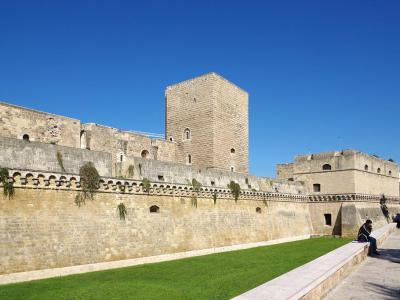
1) Castello Normanno-Svevo (Swabian Castle) (must see)
The Swabian Castle of Bari, sometimes called the Hohenstaufen Castle, has stood in one form or another for nearly nine centuries, its stones carrying the weight of both destruction and rebirth. Its origins go back to around 1132, when the Norman king Roger II ordered its construction to secure Bari’s harbor and surrounding lands. But in 1156, William I of Sicily-nicknamed “the Wicked”-swept through the city, razing much of it to the ground, including the fortress. What could have been its end became instead a turning point, for in 1233 Emperor Frederick II rebuilt the castle on a grander scale, transforming it into one of the strongest symbols of his reign in southern Italy.
The fortress was more than a military outpost. It doubled as a royal residence, a place where rulers held court and where alliances were forged. One of its most famous anecdotes comes from 1221, when St. Francis of Assisi is said to have stayed here as Frederick’s guest. According to legend, the emperor-skeptical of Francis’s holiness-sent a courtesan to tempt him. But when she approached his bed, she saw it engulfed in flames and fled in terror. Frederick, secretly watching, was so struck by what he saw that he never doubted Francis again. The story, half miracle and half morality play, still lingers in the castle’s lore.
Over the centuries, the castle passed through many hands-the Angevins, the Aragonese, and later rulers of Spain and Naples-all of whom modified it to suit their purposes. Its moat and towers reflect a history of defense, while its courtyards and hallways recall a time of ceremony and rule.
Nowadays, the Swabian Castle no longer bristles with cannons, but it remains a cornerstone of Bari’s identity. Visitors wander through its courtyards, exhibitions, and echoing halls, while its towers still command views toward the Adriatic. To walk here is to step into layers of history-Norman ambition, Frederick’s authority, Francis’s legend-all fused into one enduring monument. It is not only stone and battlements, but a living reminder of Bari’s resilience and place on the frontier between empires.
The fortress was more than a military outpost. It doubled as a royal residence, a place where rulers held court and where alliances were forged. One of its most famous anecdotes comes from 1221, when St. Francis of Assisi is said to have stayed here as Frederick’s guest. According to legend, the emperor-skeptical of Francis’s holiness-sent a courtesan to tempt him. But when she approached his bed, she saw it engulfed in flames and fled in terror. Frederick, secretly watching, was so struck by what he saw that he never doubted Francis again. The story, half miracle and half morality play, still lingers in the castle’s lore.
Over the centuries, the castle passed through many hands-the Angevins, the Aragonese, and later rulers of Spain and Naples-all of whom modified it to suit their purposes. Its moat and towers reflect a history of defense, while its courtyards and hallways recall a time of ceremony and rule.
Nowadays, the Swabian Castle no longer bristles with cannons, but it remains a cornerstone of Bari’s identity. Visitors wander through its courtyards, exhibitions, and echoing halls, while its towers still command views toward the Adriatic. To walk here is to step into layers of history-Norman ambition, Frederick’s authority, Francis’s legend-all fused into one enduring monument. It is not only stone and battlements, but a living reminder of Bari’s resilience and place on the frontier between empires.
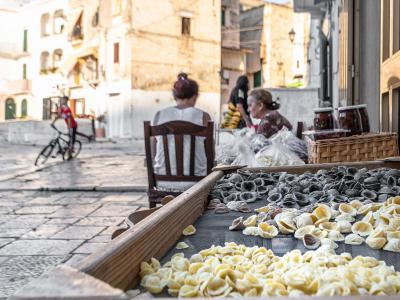
2) Strada delle Orecchiette ("Ears" Pasta Street)
They say that to truly know Bari, you must pass through the Low Arch and find yourself on the Street of the “Little Ears.” This narrow stretch of Old Bari, hidden among twisting lanes, carries a timeless atmosphere where everyday life and tradition unfold openly before visitors’ eyes. Here, the “orecchiette” pasta-so named for its little ear shape-has been made for generations by women who set up wooden tables right outside their doorways. With nimble thumbs, they press and flick the dough into shape, chatting with neighbors, keeping an eye on children, and occasionally selling bags of fresh pasta to passersby. It is not performance, but routine, a tradition woven into family life that has endured for centuries.
The street’s location near the Basilica of Saint Nicholas is telling. For pilgrims who once walked through these alleys, the sight of women working pasta became part of the city’s rhythm-faith, food, and community inseparable. One anecdote often shared is how grandmothers teach their granddaughters the thumb-rolling technique by having them practice on tiny lumps of dough, reminding them that “orecchiette must hold the sauce like a cradle.” In this way, skill and culture are passed down at the kitchen table as naturally as conversation.
Pasta Street is less about sightseeing and more about immersion. The earthy scent of semolina drifts through the air, knives clatter on wooden boards, and the warmth of neighborhood life surrounds you. Buying a bag of fresh orecchiette, or even sitting down for a home-cooked meal, offers not just food but a taste of Bari’s enduring spirit-simple, generous, and alive in its oldest streets.
The street’s location near the Basilica of Saint Nicholas is telling. For pilgrims who once walked through these alleys, the sight of women working pasta became part of the city’s rhythm-faith, food, and community inseparable. One anecdote often shared is how grandmothers teach their granddaughters the thumb-rolling technique by having them practice on tiny lumps of dough, reminding them that “orecchiette must hold the sauce like a cradle.” In this way, skill and culture are passed down at the kitchen table as naturally as conversation.
Pasta Street is less about sightseeing and more about immersion. The earthy scent of semolina drifts through the air, knives clatter on wooden boards, and the warmth of neighborhood life surrounds you. Buying a bag of fresh orecchiette, or even sitting down for a home-cooked meal, offers not just food but a taste of Bari’s enduring spirit-simple, generous, and alive in its oldest streets.
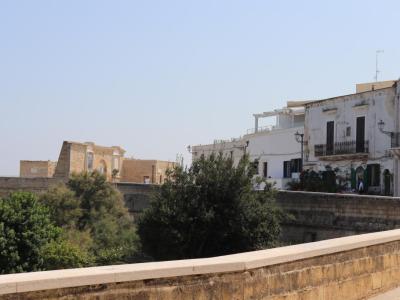
3) Muraglia di Bari Vecchia (Wall of Old Bari)
Constructed around the 4th century BC, Venice Street (via Venezia), also known as the Wall of Old Bari (Muraglia di Bari Vecchia), was originally built to safeguard and defend the city of Bari. Over time, it has transformed into one of the primary attractions of the historic city.
In the 19th century, Gioacchino Murat, the Former King of Naples, undertook the restoration of the city walls, which now serve as a boundary separating the old town from the surrounding urban area. Stretching along the seaside until the port area of the capital of Apulia, these walls extend for 400 meters. However, the existing defensive walls represent only a small fraction of the original fortification. The walls used to encircle the entire perimeter of the city, spanning 1.2 kilometers with its twisting and turning path, featuring semicircular towers and four bastions at its far ends.
From the balconies that offer breathtaking views, where the sea penetrates through the walls, the wives of fishermen used to gaze out, praying, protecting, and awaiting the safe return of their loved ones. The Wall of Old Bari has now evolved into a meeting point and promenade, offering glimpses of the maze-like streets and alleys of the old town. It features bastions, forts, and charming buildings adorned with flower-filled balconies and colorful drapes.
In the 19th century, Gioacchino Murat, the Former King of Naples, undertook the restoration of the city walls, which now serve as a boundary separating the old town from the surrounding urban area. Stretching along the seaside until the port area of the capital of Apulia, these walls extend for 400 meters. However, the existing defensive walls represent only a small fraction of the original fortification. The walls used to encircle the entire perimeter of the city, spanning 1.2 kilometers with its twisting and turning path, featuring semicircular towers and four bastions at its far ends.
From the balconies that offer breathtaking views, where the sea penetrates through the walls, the wives of fishermen used to gaze out, praying, protecting, and awaiting the safe return of their loved ones. The Wall of Old Bari has now evolved into a meeting point and promenade, offering glimpses of the maze-like streets and alleys of the old town. It features bastions, forts, and charming buildings adorned with flower-filled balconies and colorful drapes.
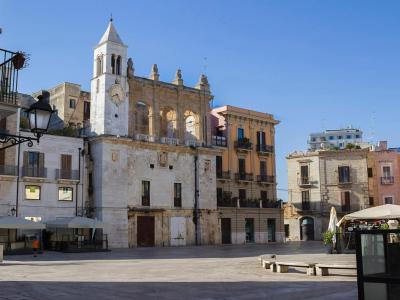
4) Piazza Mercantile (Merchant Square)
Merchant Square has been the stage for Bari’s public life for centuries, a place where power, trade, and daily routine came together in full view of the Adriatic. Established in the 13th century at the edge of the Old Town, it quickly grew into the city’s commercial heart. Merchants set up stalls, officials read out proclamations, and townspeople crowded the space to hear news or celebrate feast days. It was also the starting point of the Francigena street, the medieval pilgrims’ route leading to the Cathedral of Saint Nicholas, tying the square to both faith and commerce. Linked to the port by the fortified Tower of Sant’Antonio, the square was a gateway for traders and travelers alike.
The square also carried a darker side of justice. For centuries, the Pillar of Justice stood in plain sight, where bankrupt debtors were chained as a warning to others. This ritual of shame left an indelible mark on the memory of the place, a reminder that commerce in Bari was not only opportunity but also risk. Over time, the square took on layers of meaning-Palazzo del Sedile housed the city council, while its clock tower marked the hours of both labor and leisure.
Even catastrophe could not silence the square. After the fire and explosions of 1601, the ruling House of Sforza oversaw a renewal that gave Merchant Square new life, linking it directly to Ferrarese Square and reinforcing its role as the city’s business center.
The square no longer chains debtors, but it still chains people’s attention. Cafés and restaurants spill out onto the stones, and journalist Lino Patruno once compared it to a model that never stops winning hearts, “as if it were for the first time.” For visitors, Merchant Square remains what it always was: the beating civic and social heart of Bari.
The square also carried a darker side of justice. For centuries, the Pillar of Justice stood in plain sight, where bankrupt debtors were chained as a warning to others. This ritual of shame left an indelible mark on the memory of the place, a reminder that commerce in Bari was not only opportunity but also risk. Over time, the square took on layers of meaning-Palazzo del Sedile housed the city council, while its clock tower marked the hours of both labor and leisure.
Even catastrophe could not silence the square. After the fire and explosions of 1601, the ruling House of Sforza oversaw a renewal that gave Merchant Square new life, linking it directly to Ferrarese Square and reinforcing its role as the city’s business center.
The square no longer chains debtors, but it still chains people’s attention. Cafés and restaurants spill out onto the stones, and journalist Lino Patruno once compared it to a model that never stops winning hearts, “as if it were for the first time.” For visitors, Merchant Square remains what it always was: the beating civic and social heart of Bari.
5) Colonna Infame (Infamous Column)
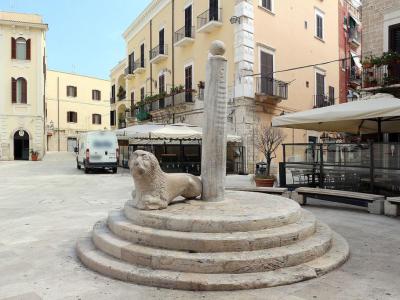
The Infamous Column, stands as a compelling relic of the city's judicial and civic past. Dating back to the mid-16th century, the column was commissioned by the Spanish Viceroy Pietro di Toledo and is widely associated with public shaming practices aimed at insolvent debtors.
Though concrete documentation is scarce, tradition holds that those unable to pay their debts were once displayed here-hands bound to the column and humiliation enforced. Today, it serves as a reminder of how communities once balanced justice and spectacle.
Architecturally, the monument features a white marble column rising from four concentric steps, crowned by a spherical finial. At its base reclines an ancient lion sculpted from Apulian limestone breccia-likely repurposed from a Roman tomb dating to between the 1st century B.C. and 1st century A.D. The inscription on its collar, “guardian of justice”, reinforces its symbolic role in watching over the city.
Originally placed near the Sea Gate by the old port, the Colonna Infame later found a home in its current location, aligning with the area’s historical role as Bari’s civic and commercial heart.
Though concrete documentation is scarce, tradition holds that those unable to pay their debts were once displayed here-hands bound to the column and humiliation enforced. Today, it serves as a reminder of how communities once balanced justice and spectacle.
Architecturally, the monument features a white marble column rising from four concentric steps, crowned by a spherical finial. At its base reclines an ancient lion sculpted from Apulian limestone breccia-likely repurposed from a Roman tomb dating to between the 1st century B.C. and 1st century A.D. The inscription on its collar, “guardian of justice”, reinforces its symbolic role in watching over the city.
Originally placed near the Sea Gate by the old port, the Colonna Infame later found a home in its current location, aligning with the area’s historical role as Bari’s civic and commercial heart.
6) Piazza del Ferrarese (Ferrarese Square)
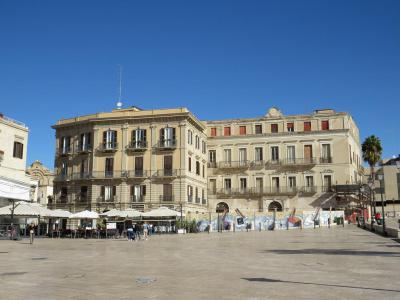
Ferrarese Square, opened in 1612, has always been more than just an open space in Bari-it is where the city’s commercial, spiritual, and social rhythms meet. It owes its name to Stefano Fabri, a 17th-century merchant from Ferrara whose trade house anchored the square and linked it closely to the port. From the beginning, it was conceived as an extension of the Merchant Square, helping to handle the flow of goods and people arriving from the Adriatic. Its position, right at the edge of the old city walls, made it a natural threshold between medieval Bari and the expanding neighborhoods that grew outside the fortifications.
The square’s layered history is still visible today. Parts of the Roman Trajan's Appian Way, the road that once tied Rome to the Adriatic, were uncovered during recent renovations. Baroque facades, 19th-century buildings, and the Vallisa Church apse stand nearby, while the Starita Palace, built over an old arsenal, reminds visitors of Bari’s centuries as a seafaring hub. Over time, Ferrarese Square became the backdrop for markets and gatherings, and it still carries that energy forward, now filled with cafés, restaurants, and the hum of nightlife.
The square also plays a central role in Bari’s devotion to Saint Nicholas. Each May, during the saint’s feast, pilgrims crowd into the square as the statue of the beloved patron arrives by boat, greeted with fireworks over the Adriatic. For many, this moment blends faith with celebration, turning the square into a stage for both devotion and joy.
Today, to linger in Ferrarese Square is to feel Bari’s past and present in one glance: Roman stones underfoot, Venetian and Baroque walls around, and locals chatting over espresso as music and festivals animate the air. It is the kind of place where the city’s story is not just remembered-it is lived.
The square’s layered history is still visible today. Parts of the Roman Trajan's Appian Way, the road that once tied Rome to the Adriatic, were uncovered during recent renovations. Baroque facades, 19th-century buildings, and the Vallisa Church apse stand nearby, while the Starita Palace, built over an old arsenal, reminds visitors of Bari’s centuries as a seafaring hub. Over time, Ferrarese Square became the backdrop for markets and gatherings, and it still carries that energy forward, now filled with cafés, restaurants, and the hum of nightlife.
The square also plays a central role in Bari’s devotion to Saint Nicholas. Each May, during the saint’s feast, pilgrims crowd into the square as the statue of the beloved patron arrives by boat, greeted with fireworks over the Adriatic. For many, this moment blends faith with celebration, turning the square into a stage for both devotion and joy.
Today, to linger in Ferrarese Square is to feel Bari’s past and present in one glance: Roman stones underfoot, Venetian and Baroque walls around, and locals chatting over espresso as music and festivals animate the air. It is the kind of place where the city’s story is not just remembered-it is lived.
7) Teatro Margherita (Margaret Theatre)
Margaret Theatre (Teatro Margherita) is a former theatre in Bari transformed into a museum of contemporary art. Its history dates back to the early 20th century when it was constructed to replace the Varietà Margherita, a wooden theater that faced strong criticism from local entrepreneurs and the Petruzzelli family, who saw it as a potential rival to their own Petruzzelli Theater.
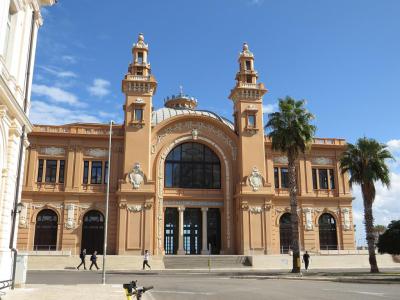
Built between 1912 and 1914 near Bari's Old Port, the Margherita Theater was designed in the Art Nouveau style by architect Francesco De Giglio. It was a pioneering structure in Bari, utilizing reinforced concrete and featuring a unique construction on pillars. To access the theater, a pier connected it to the mainland due to its surrounding water. The grand opening of the theater took place on August 22, 1914.
The building itself showcases Art Nouveau influences, with a rectangular layout and a prominent façade adorned with a wide arch. Flanking the arch are two towers with decorative pinnacles, complemented by large windows bordered by pilasters featuring Corinthian capitals. Upon entering, visitors are greeted by a spacious entrance hall crowned by a dome embellished with stucco and frescoes dating back to its inauguration in 1914.
Built between 1912 and 1914 near Bari's Old Port, the Margherita Theater was designed in the Art Nouveau style by architect Francesco De Giglio. It was a pioneering structure in Bari, utilizing reinforced concrete and featuring a unique construction on pillars. To access the theater, a pier connected it to the mainland due to its surrounding water. The grand opening of the theater took place on August 22, 1914.
The building itself showcases Art Nouveau influences, with a rectangular layout and a prominent façade adorned with a wide arch. Flanking the arch are two towers with decorative pinnacles, complemented by large windows bordered by pilasters featuring Corinthian capitals. Upon entering, visitors are greeted by a spacious entrance hall crowned by a dome embellished with stucco and frescoes dating back to its inauguration in 1914.

8) Lungomare e Murat (Bari Promenade) (must see)
The Bari Promenade stretches for kilometers along the Adriatic, curving like a ribbon between the sea and the city. Its origins lie in the 1920s and ’30s, when Bari was being reshaped under Fascist rule to look modern and monumental. The waterfront, once hemmed in by medieval walls, was opened up into a wide, sweeping promenade meant to show Bari’s role as both a regional capital and a city that embraced the sea. Even as politics and architecture changed, the Lungomare quickly became what locals fondly call their “front porch.”
Generations of Baresi have come here to walk, talk, and watch the horizon. Old photographs show Sunday promenades with families dressed in their best, while fishermen sat on the stone balustrades, swapping news of the day’s catch. One story often repeated is how young couples would sneak away from the crowded squares into the quieter stretches of the Promenade, finding a bench or a corner of sea wall to claim as their own, with the sunset as witness. Such rituals helped make the promenade not just a street but a stage for everyday life.
Along the way, landmarks rise into view: the medieval walls of Bari Vecchia, the Basilica of Saint Nicholas, Ferrarese and Merchant Squares, the Swabian Castle, and the more modern architecture of the Murat Quarter, itself the result of Napoleon’s brother-in-law, Joachim Murat, who ordered a new district built in the early 19th century. The promenade has framed all these layers for nearly a century, giving Bari one long walkway through its history.
The seafront still pulses with life. Cafés spill into the street, fishermen mend their nets in the sun, and at night the lamps curve like pearls along the seafront. For visitors, a stroll here is less about reaching a destination than about stepping into Bari’s rhythm, where sea and city have always belonged to one another.
Generations of Baresi have come here to walk, talk, and watch the horizon. Old photographs show Sunday promenades with families dressed in their best, while fishermen sat on the stone balustrades, swapping news of the day’s catch. One story often repeated is how young couples would sneak away from the crowded squares into the quieter stretches of the Promenade, finding a bench or a corner of sea wall to claim as their own, with the sunset as witness. Such rituals helped make the promenade not just a street but a stage for everyday life.
Along the way, landmarks rise into view: the medieval walls of Bari Vecchia, the Basilica of Saint Nicholas, Ferrarese and Merchant Squares, the Swabian Castle, and the more modern architecture of the Murat Quarter, itself the result of Napoleon’s brother-in-law, Joachim Murat, who ordered a new district built in the early 19th century. The promenade has framed all these layers for nearly a century, giving Bari one long walkway through its history.
The seafront still pulses with life. Cafés spill into the street, fishermen mend their nets in the sun, and at night the lamps curve like pearls along the seafront. For visitors, a stroll here is less about reaching a destination than about stepping into Bari’s rhythm, where sea and city have always belonged to one another.

9) Corso Vittorio Emanuele II (Vittorio Emanuele II Lane)
Vittorio Emanuele II Lane may look like a typical boulevard at first glance, but it carries the imprint of Bari’s leap into modernity. In the 19th century, as Italy had just unified under King Vittorio Emanuele II, Bari was reshaping itself to match the ambitions of a new nation. The old town still kept its winding alleys and medieval pace, but this new street cut boldly through the Murat Quarter with straight lines and broad views. It was a declaration that Bari was ready to step beyond its ancient walls and claim its role as a modern capital of the Adriatic.
The street had even earlier roots, tied to a grand plan of Ferdinand II of the Two Sicilies, who dreamed of lining it with imposing public buildings. Only a few, like the Prefecture and Puccini Theatre, were ever realized, but after unification the road was renamed for the new king and took on a fresh purpose. Government offices, cafés, and shops filled its length, and it quickly became both a civic stage and a social promenade. Bari’s parades marched here, speeches echoed from its steps, and in the evenings locals made strolling the lane almost a ritual-pausing to chat beneath palms or in front of cafés.
By the 20th century, the addition of the Margaret Theatre at one end anchored the boulevard, turning it into a lively corridor between Garibaldi Square and the Adriatic. For visitors today, the lane is more than a busy street; it’s a walk through Bari’s 19th-century ambitions, where the pulse of a new Italy still beats beneath the rhythm of modern city life.
The street had even earlier roots, tied to a grand plan of Ferdinand II of the Two Sicilies, who dreamed of lining it with imposing public buildings. Only a few, like the Prefecture and Puccini Theatre, were ever realized, but after unification the road was renamed for the new king and took on a fresh purpose. Government offices, cafés, and shops filled its length, and it quickly became both a civic stage and a social promenade. Bari’s parades marched here, speeches echoed from its steps, and in the evenings locals made strolling the lane almost a ritual-pausing to chat beneath palms or in front of cafés.
By the 20th century, the addition of the Margaret Theatre at one end anchored the boulevard, turning it into a lively corridor between Garibaldi Square and the Adriatic. For visitors today, the lane is more than a busy street; it’s a walk through Bari’s 19th-century ambitions, where the pulse of a new Italy still beats beneath the rhythm of modern city life.
10) Teatro Piccinni (Piccinni Theatre)
The Piccinni Theatre, located in Bari, was dedicated to honoring the renowned composer Niccolò Piccinni, who was born in Bari in the eighteenth century.
During the early 19th century, Bari's Municipality had its theater located in the ancient Seat Palace (Palazzo del Sedile), dating back to the 16th century, in the old city. However, this theater was in a deteriorated state and unsuitable for accommodating a large audience. Additionally, with the expansion of the city beyond the old walls due to the establishment of the Murattian village, a new theater was needed.
Construction of the new theater began in 1836 but was only completed in 1854. On May 30th of that year, the theater was inaugurated, though it did not yet have an official name. The opening performance featured Gaetano Donizetti's tragic opera Poliuto.
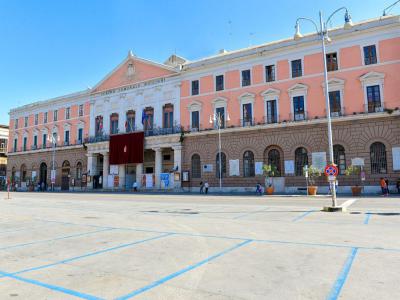
The architecture of the Piccinni Theatre is notable for its grand and elegant design, characteristic of many 19th-century theaters. The façade is impressive and features a Neoclassical style, common in theaters of that era. The exterior is adorned with ornate architectural details, including columns, pediments, and decorative sculptures. These elements add a touch of grandeur to the building and create a sense of anticipation for the artistic experiences that await inside.
Upon entering the theater, visitors are greeted by a spacious and opulent lobby. The interior design reflects the architectural style of the time, with luxurious embellishments and intricate details. The auditorium itself is designed in a traditional horseshoe shape, providing excellent sightlines and acoustics for the audience. The seating arrangement is tiered, allowing for a clear view of the stage from every angle.
During the early 19th century, Bari's Municipality had its theater located in the ancient Seat Palace (Palazzo del Sedile), dating back to the 16th century, in the old city. However, this theater was in a deteriorated state and unsuitable for accommodating a large audience. Additionally, with the expansion of the city beyond the old walls due to the establishment of the Murattian village, a new theater was needed.
Construction of the new theater began in 1836 but was only completed in 1854. On May 30th of that year, the theater was inaugurated, though it did not yet have an official name. The opening performance featured Gaetano Donizetti's tragic opera Poliuto.
The architecture of the Piccinni Theatre is notable for its grand and elegant design, characteristic of many 19th-century theaters. The façade is impressive and features a Neoclassical style, common in theaters of that era. The exterior is adorned with ornate architectural details, including columns, pediments, and decorative sculptures. These elements add a touch of grandeur to the building and create a sense of anticipation for the artistic experiences that await inside.
Upon entering the theater, visitors are greeted by a spacious and opulent lobby. The interior design reflects the architectural style of the time, with luxurious embellishments and intricate details. The auditorium itself is designed in a traditional horseshoe shape, providing excellent sightlines and acoustics for the audience. The seating arrangement is tiered, allowing for a clear view of the stage from every angle.
11) Palazzo Fizzarotti (Fizzarotti Palace)
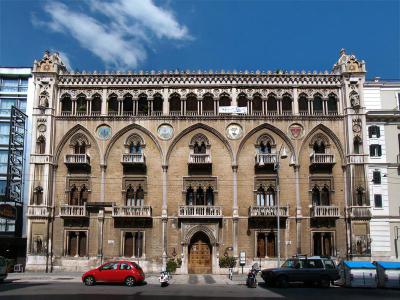
Fizzarotti Palace (Palazzo Fizzarotti), located in Bari, is a notable historical edifice. Constructed in 1910 at the heart of the city, it was commissioned by Emanuele Fizzarotti, a prominent banker and entrepreneur. The design of the building was entrusted to Ettore Bernich, a renowned architect known for his leadership in Italian eclecticism. The palace boasts lavishly adorned interior rooms, each showcasing distinct artistic styles and incorporating a variety of materials and techniques.
Situated above the underground spring known as "Mare Isabella," Fizzarotti Palace exhibits multiple architectural layers. Inside, remnants from the 13th century can be observed, reflecting the presence of former convents and refreshment stations that existed outside the medieval city walls. In 1850, Nicola Lagattola facilitated the connection of two separate areas of land through the demolition of the medieval walls and the expansion of the city into the Murattian quarter.
The palace's four reception rooms are particularly captivating, drawing interest and admiration. These include the Hall of Arts and Crafts (Salone del Arti e del Lavoro), the 14th-century Salone, the Pink Hall (Salone Rosa), and the Fireplace Hall (Salone del Caminetto). Access to the latter is gained through the so-called waiting room, which features a remarkable floor mosaic depicting the winged head of Mercury, the god of Commerce. This portrayal serves as a clear allusion to the prosperous financial activities of the building's owner, who played a significant role in the modernization of Bari.
Situated above the underground spring known as "Mare Isabella," Fizzarotti Palace exhibits multiple architectural layers. Inside, remnants from the 13th century can be observed, reflecting the presence of former convents and refreshment stations that existed outside the medieval city walls. In 1850, Nicola Lagattola facilitated the connection of two separate areas of land through the demolition of the medieval walls and the expansion of the city into the Murattian quarter.
The palace's four reception rooms are particularly captivating, drawing interest and admiration. These include the Hall of Arts and Crafts (Salone del Arti e del Lavoro), the 14th-century Salone, the Pink Hall (Salone Rosa), and the Fireplace Hall (Salone del Caminetto). Access to the latter is gained through the so-called waiting room, which features a remarkable floor mosaic depicting the winged head of Mercury, the god of Commerce. This portrayal serves as a clear allusion to the prosperous financial activities of the building's owner, who played a significant role in the modernization of Bari.
12) Porto di Bari (Port of Bari)
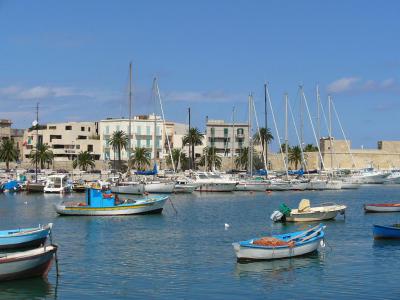
Perched strategically on Italy’s southeastern coast, the Port of Bari has long served as a vital maritime hub-often considered "Europe’s door to the Balkan Peninsula and the Middle East". This multipurpose port handles a wide range of operations-from cargo and passenger ferries to cruise liner arrivals-making it one of the largest and busiest ports along the Adriatic Sea.
Visitors arriving by sea are welcomed at a modern cruise terminal. It provides check-in facilities, transportation services, and shops-making the transition into the city both seamless and convenient. From there, travelers can easily walk along the scenic seafront promenade or take a quick bus or taxi ride to reach Bari Vecchia, home to landmarks like the Norman‑Swabian Castle and the Basilica of Saint Nicholas.
The port also offers extensive ferry services, connecting Bari with countries across the Adriatic. For food‑lovers and culture enthusiasts, the Old Port area provides a vivid glimpse into Bari’s maritime traditions. Here, a bustling fish market features fresh catches and the popular local custom of tasting seafood right on the spot. As evening falls, the harbor transforms into a lively meeting point.
Visitors arriving by sea are welcomed at a modern cruise terminal. It provides check-in facilities, transportation services, and shops-making the transition into the city both seamless and convenient. From there, travelers can easily walk along the scenic seafront promenade or take a quick bus or taxi ride to reach Bari Vecchia, home to landmarks like the Norman‑Swabian Castle and the Basilica of Saint Nicholas.
The port also offers extensive ferry services, connecting Bari with countries across the Adriatic. For food‑lovers and culture enthusiasts, the Old Port area provides a vivid glimpse into Bari’s maritime traditions. Here, a bustling fish market features fresh catches and the popular local custom of tasting seafood right on the spot. As evening falls, the harbor transforms into a lively meeting point.
