Custom Walk in Belfast, Ireland by pzsls_6f245 created on 2025-07-11
Guide Location: Ireland » Belfast
Guide Type: Custom Walk
# of Sights: 5
Tour Duration: 6 Hour(s)
Travel Distance: 16.9 Km or 10.5 Miles
Share Key: YUXWH
Guide Type: Custom Walk
# of Sights: 5
Tour Duration: 6 Hour(s)
Travel Distance: 16.9 Km or 10.5 Miles
Share Key: YUXWH
How It Works
Please retrieve this walk in the GPSmyCity app. Once done, the app will guide you from one tour stop to the next as if you had a personal tour guide. If you created the walk on this website or come to the page via a link, please follow the instructions below to retrieve the walk in the app.
Retrieve This Walk in App
Step 1. Download the app "GPSmyCity: Walks in 1K+ Cities" on Apple App Store or Google Play Store.



Step 2. In the GPSmyCity app, download(or launch) the guide "Belfast Map and Walking Tours".
Step 3. Tap the menu button located at upper right corner of the "Walks" screen and select "Retrieve custom walk". Enter the share key: YUXWH
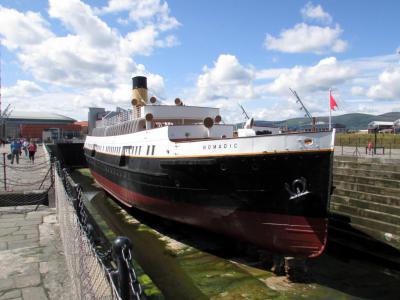
1) SS Nomadic (must see)
The SS Nomadic is a beautifully restored steamship berthed in Hamilton Dock, a must-see attraction for anyone exploring the Titanic Quarter. Launched in April 1911 by Harland & Wolff, the same legendary shipyard responsible for RMS Titanic and RMS Olympic, this 67‑metre tender served as a crucial shuttle, ferrying first‑ and second‑class passengers, luggage, mail, and provisions from Cherbourg to the mighty liners anchored offshore. Admiring her from the dock, you’ll appreciate her graceful, scaled‑down elegance – she’s often affectionately dubbed Titanic’s “little sister”.
Since returning to her birthplace in 2006, Nomadic has undergone an extensive restoration, finishing in 2013, to revive her Edwardian-era splendour. Today, she is the only surviving vessel of the White Star Line and the sole remaining ship crafted by Thomas Andrews – the man behind Titanic’s design. Abundant period charm awaits visitors: richly decorated first‑class lounges, original brass portholes, and a clear demarcation of third‑class quarters illustrate a fascinating slice of social history onboard.
A visit to Nomadic is included with the Titanic Belfast ticket, offering a complementary and hands‑on experience to the museum’s exhibits. Named “The Nomadic Experience”, tours are immersive and family-friendly, featuring interactive storytelling, character performances like a first‑class barman, audio guides in multiple languages, and plenty of deck space to explore. This makes it ideal for both history buffs and families.
Paired with the neighbouring Titanic Belfast attraction, a stroll past the iconic Samson and Goliath cranes, or a café stop in Titanic Quarter, this visit becomes more than satisfying-it becomes essential to understanding Belfast’s rich maritime heritage.
Since returning to her birthplace in 2006, Nomadic has undergone an extensive restoration, finishing in 2013, to revive her Edwardian-era splendour. Today, she is the only surviving vessel of the White Star Line and the sole remaining ship crafted by Thomas Andrews – the man behind Titanic’s design. Abundant period charm awaits visitors: richly decorated first‑class lounges, original brass portholes, and a clear demarcation of third‑class quarters illustrate a fascinating slice of social history onboard.
A visit to Nomadic is included with the Titanic Belfast ticket, offering a complementary and hands‑on experience to the museum’s exhibits. Named “The Nomadic Experience”, tours are immersive and family-friendly, featuring interactive storytelling, character performances like a first‑class barman, audio guides in multiple languages, and plenty of deck space to explore. This makes it ideal for both history buffs and families.
Paired with the neighbouring Titanic Belfast attraction, a stroll past the iconic Samson and Goliath cranes, or a café stop in Titanic Quarter, this visit becomes more than satisfying-it becomes essential to understanding Belfast’s rich maritime heritage.
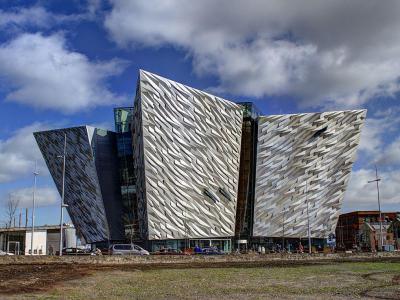
2) Titanic Belfast (must see)
Nestled in the heart of Belfast’s revitalized Titanic Quarter, Titanic Belfast stands as a striking modern monument to one of history’s most famous ocean liners. Opened in 2012 on the very site where RMS Titanic was designed, built, and launched, the building’s jagged silvery exterior-crafted from over 3,000 aluminum shards-evokes the image of ship bows cutting through water and shimmering ice crystals.
Inside, the visitor experience unfolds across nine immersive galleries that chronicle Titanic’s entire journey-from conception and engineering marvels in Belfast’s bustling shipyards, through its tragic maiden voyage in 1912, to the discovery of its wreck and the evolution of modern maritime safety. Interactive displays, atmospheric dark-rides, full-scale cabin recreations and a rotating 7.6 meters scale model bring the narrative to life. A returning visitor on Reddit noted the focus is more on Titanic’s birthplace and industrial heritage, rather than the tragedy itself, which might influence your expectations.
Your ticket also includes access to SS Nomadic, the last surviving White Star Line vessel and Titanic’s original tender, moored nearby in Hamilton Dock. For a deeper dive, the optional Discovery Walking Tour guides you through the original Harland & Wolff drawing offices, historic slipways, and the launch site, with compelling architectural metaphors embedded in the building’s exterior.
Titanic Belfast is more than a museum-it’s the cultural heart of the Titanic Quarter, a regeneration success story and a gateway to Belfast’s evolving maritime narrative. Pair your visit with a stop at the Galley Café or Bistro 401 for locally sourced fare, and don’t miss the gift shop filled with artisan goods.
Inside, the visitor experience unfolds across nine immersive galleries that chronicle Titanic’s entire journey-from conception and engineering marvels in Belfast’s bustling shipyards, through its tragic maiden voyage in 1912, to the discovery of its wreck and the evolution of modern maritime safety. Interactive displays, atmospheric dark-rides, full-scale cabin recreations and a rotating 7.6 meters scale model bring the narrative to life. A returning visitor on Reddit noted the focus is more on Titanic’s birthplace and industrial heritage, rather than the tragedy itself, which might influence your expectations.
Your ticket also includes access to SS Nomadic, the last surviving White Star Line vessel and Titanic’s original tender, moored nearby in Hamilton Dock. For a deeper dive, the optional Discovery Walking Tour guides you through the original Harland & Wolff drawing offices, historic slipways, and the launch site, with compelling architectural metaphors embedded in the building’s exterior.
Titanic Belfast is more than a museum-it’s the cultural heart of the Titanic Quarter, a regeneration success story and a gateway to Belfast’s evolving maritime narrative. Pair your visit with a stop at the Galley Café or Bistro 401 for locally sourced fare, and don’t miss the gift shop filled with artisan goods.
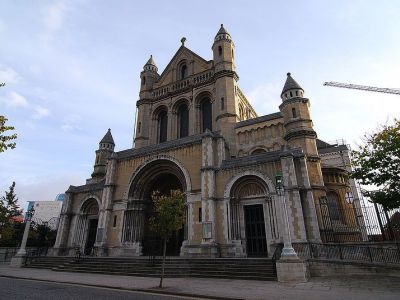
3) Belfast Cathedral (must see)
Belfast Cathedral, also known as Saint Anne’s Cathedral, stands as one of the city’s most striking landmarks, blending spiritual significance with architectural beauty. Located in the Cathedral Quarter-the historic heart of Belfast-this Anglican cathedral was founded in 1899 and has since become both a place of worship and a cultural hub. With its grand Romanesque Revival design, intricate mosaics, and commanding presence, the cathedral offers visitors a serene yet awe-inspiring atmosphere that reflects the city’s rich history and enduring spirit.
The building itself tells a story of resilience and ambition. Constructed over many decades, it combines late Victorian foundations with additions made throughout the 20th century, including the striking Spire of Hope, a modern stainless-steel spire added in 2007 that soars 40 meters into the sky. This striking feature, visible from across the city, symbolizes both faith and renewal. Inside, light streams through a kaleidoscope of stained glass, illuminating exquisite stonework and creating a setting that feels at once majestic and contemplative.
Visitors can explore remarkable artistic treasures, such as the elaborate mosaics designed by Sir Charles Nicholson and the stunning Chapel of the Holy Spirit, dedicated to those who lost their lives in the First World War. Another highlight is the “Spire of Hope” piercing through the cathedral roof, representing the city’s resilience and looking toward a brighter future. The cathedral also hosts concerts, exhibitions, and community events, extending its role beyond a sacred space to a vibrant gathering point for locals and visitors.
For travelers exploring Belfast, a stop at Saint Anne’s Cathedral provides not just a glimpse into the city’s religious heritage but also a chance to admire centuries of craftsmanship. Whether you’re drawn by its artistry, its peaceful atmosphere, or its role as a beacon of Belfast’s cultural life, the cathedral offers a moment of reflection and connection in the heart of Northern Ireland’s capital.
The building itself tells a story of resilience and ambition. Constructed over many decades, it combines late Victorian foundations with additions made throughout the 20th century, including the striking Spire of Hope, a modern stainless-steel spire added in 2007 that soars 40 meters into the sky. This striking feature, visible from across the city, symbolizes both faith and renewal. Inside, light streams through a kaleidoscope of stained glass, illuminating exquisite stonework and creating a setting that feels at once majestic and contemplative.
Visitors can explore remarkable artistic treasures, such as the elaborate mosaics designed by Sir Charles Nicholson and the stunning Chapel of the Holy Spirit, dedicated to those who lost their lives in the First World War. Another highlight is the “Spire of Hope” piercing through the cathedral roof, representing the city’s resilience and looking toward a brighter future. The cathedral also hosts concerts, exhibitions, and community events, extending its role beyond a sacred space to a vibrant gathering point for locals and visitors.
For travelers exploring Belfast, a stop at Saint Anne’s Cathedral provides not just a glimpse into the city’s religious heritage but also a chance to admire centuries of craftsmanship. Whether you’re drawn by its artistry, its peaceful atmosphere, or its role as a beacon of Belfast’s cultural life, the cathedral offers a moment of reflection and connection in the heart of Northern Ireland’s capital.
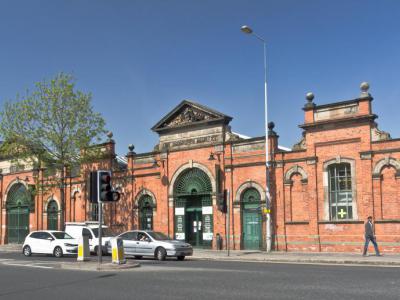
4) St. George's Market (must see)
Saint George's Market is the last surviving Victorian covered market in Belfast. It was built in three phases between 1890 and 1896. Before 1890, Saint George's Market was an open market and most likely contained a slaughterhouse and a meat market.
The original (pre 1890) market was smaller than the new structure. It was built in red brick with sandstone dressing. Externally it features Roman styled arches with Latin and Irish inscriptions - the City’s Latin motto "what shall we give in return for so much?" and the Irish phrase "Red Hand of Ireland".
The main entrance arch displays the Belfast Coat of Arms. This newly covered market opened to the public on 20 June 1890. By the 1980s, Saint George’s Market had developed into a general market and it became the last of Belfast’s thriving Victorian markets.
Today Saint George’s Market is primarily used as a food market, however a number of other events are held at the site. These range from food festivals, art initiatives, exhibitions, charity launches, fashion shoots and live music events. The market also regularly holds music concerts. Acts including Duffy, Newton Faulkner, Deep Purple, Biffy Clyro and Mark Ronson have played the venue.
The original (pre 1890) market was smaller than the new structure. It was built in red brick with sandstone dressing. Externally it features Roman styled arches with Latin and Irish inscriptions - the City’s Latin motto "what shall we give in return for so much?" and the Irish phrase "Red Hand of Ireland".
The main entrance arch displays the Belfast Coat of Arms. This newly covered market opened to the public on 20 June 1890. By the 1980s, Saint George’s Market had developed into a general market and it became the last of Belfast’s thriving Victorian markets.
Today Saint George’s Market is primarily used as a food market, however a number of other events are held at the site. These range from food festivals, art initiatives, exhibitions, charity launches, fashion shoots and live music events. The market also regularly holds music concerts. Acts including Duffy, Newton Faulkner, Deep Purple, Biffy Clyro and Mark Ronson have played the venue.
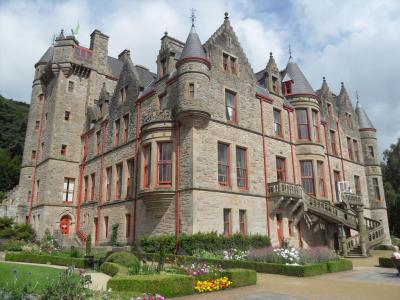
5) Belfast Castle (must see)
Belfast Castle is a striking 19th-century estate located on the slopes of Cave Hill, offering sweeping views over the city and Belfast Lough. Completed in 1870, the current structure was commissioned by the 3rd Marquess of Donegall after the original city-centre castle was destroyed by fire. Designed in the Scottish Baronial style, the castle features turrets, gables, and ornate stonework, reflecting the Victorian taste for romantic architecture and countryside retreats.
The castle grounds are part of the larger Cave Hill Country Park, a scenic expanse popular with hikers and nature lovers. Several walking trails lead through wooded areas and past dramatic cliffs, eventually reaching the summit of Cave Hill itself, famously believed to have inspired Jonathan Swift’s Gulliver’s Travels. The castle’s elevated position provides one of the best panoramic views of Belfast, making it a popular stop for photographers and visitors seeking a peaceful break from the urban centre.
Inside the castle, visitors can explore a small exhibition on its history and enjoy refreshments at the cellar café. The estate is also known for its manicured gardens and whimsical cat-themed sculptures, which pay homage to a local legend claiming good fortune for any home that houses a white cat. Outdoor picnic areas and a playground make the site family-friendly, while the formal rooms and banquet facilities continue to serve as a venue for weddings and events.
Belfast Castle is open daily and free to enter, offering a blend of local legend, architecture, and natural beauty within easy reach of the city.
The castle grounds are part of the larger Cave Hill Country Park, a scenic expanse popular with hikers and nature lovers. Several walking trails lead through wooded areas and past dramatic cliffs, eventually reaching the summit of Cave Hill itself, famously believed to have inspired Jonathan Swift’s Gulliver’s Travels. The castle’s elevated position provides one of the best panoramic views of Belfast, making it a popular stop for photographers and visitors seeking a peaceful break from the urban centre.
Inside the castle, visitors can explore a small exhibition on its history and enjoy refreshments at the cellar café. The estate is also known for its manicured gardens and whimsical cat-themed sculptures, which pay homage to a local legend claiming good fortune for any home that houses a white cat. Outdoor picnic areas and a playground make the site family-friendly, while the formal rooms and banquet facilities continue to serve as a venue for weddings and events.
Belfast Castle is open daily and free to enter, offering a blend of local legend, architecture, and natural beauty within easy reach of the city.
