Custom Walk in Rio de Janeiro, Brazil by sandiholl_6f2da created on 2025-07-06
Guide Location: Brazil » Rio de Janeiro
Guide Type: Custom Walk
# of Sights: 12
Tour Duration: 2 Hour(s)
Travel Distance: 4.2 Km or 2.6 Miles
Share Key: 8UE4Z
Guide Type: Custom Walk
# of Sights: 12
Tour Duration: 2 Hour(s)
Travel Distance: 4.2 Km or 2.6 Miles
Share Key: 8UE4Z
How It Works
Please retrieve this walk in the GPSmyCity app. Once done, the app will guide you from one tour stop to the next as if you had a personal tour guide. If you created the walk on this website or come to the page via a link, please follow the instructions below to retrieve the walk in the app.
Retrieve This Walk in App
Step 1. Download the app "GPSmyCity: Walks in 1K+ Cities" on Apple App Store or Google Play Store.



Step 2. In the GPSmyCity app, download(or launch) the guide "Rio de Janeiro Map and Walking Tours".
Step 3. Tap the menu button located at upper right corner of the "Walks" screen and select "Retrieve custom walk". Enter the share key: 8UE4Z
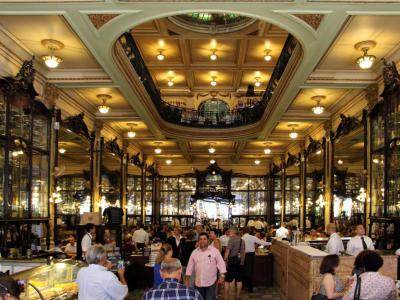
1) Confeitaria Colombo (Colombo Confectionery) (must see)
Confeitaria Colombo has been named one of the most beautiful cafes in the world. It was founded in 1894, and its architecture was inspired by European cafes. The design represents the belle epoque, or beautiful age before World War I.
In the early 20th century, the interior was renovated to emulate the trendy Art Nouveau style. Artisan Antonio Borsoi painstakingly handcrafted the wooden furniture used in the interior. An upper floor and tearoom were added in 1922. The ceiling features a gorgeous stained glass skylight from France. The towering mirrors were imported from Belgium and feature jacaranda frames. The Portuguese tiles are gorgeous.
The Confeitaria Colombo has long been a meeting place for important discussions. Heads of state and royalty such as Queen Elizabeth II of England, King Albert I of Belgium, and Brazillian Presidents Getulio Vargas and Juscelino Kubitschek have visited the Confeitaria Colombo.
It also served as a gathering place for Brazilian artists, musicians, and writers. Composer, conductor, and musicians Villa-Lobos, Chiquinha Gonzaga, and writers Lima Barreto and José do Patrocínio would often meet here.
The cafe remains committed to its elegant history and serves fabulous coffee and tea. Breakfast, brunch, lunch, and desserts are also offered.
Why You Should Visit:
Feast your eyes on the stunning interior while enjoying a memorable beverage. There's no better place to sit down for a cup of coffee or tea while enjoying some people watching. This cafe sees the whos-who of Rio's social scene, from the city's working people to the rich and powerful.
Tips:
Try the brigadeiro for dessert. This delicious Brazillian sweet is made with condensed milk and chocolate and is sure to delight!
In the early 20th century, the interior was renovated to emulate the trendy Art Nouveau style. Artisan Antonio Borsoi painstakingly handcrafted the wooden furniture used in the interior. An upper floor and tearoom were added in 1922. The ceiling features a gorgeous stained glass skylight from France. The towering mirrors were imported from Belgium and feature jacaranda frames. The Portuguese tiles are gorgeous.
The Confeitaria Colombo has long been a meeting place for important discussions. Heads of state and royalty such as Queen Elizabeth II of England, King Albert I of Belgium, and Brazillian Presidents Getulio Vargas and Juscelino Kubitschek have visited the Confeitaria Colombo.
It also served as a gathering place for Brazilian artists, musicians, and writers. Composer, conductor, and musicians Villa-Lobos, Chiquinha Gonzaga, and writers Lima Barreto and José do Patrocínio would often meet here.
The cafe remains committed to its elegant history and serves fabulous coffee and tea. Breakfast, brunch, lunch, and desserts are also offered.
Why You Should Visit:
Feast your eyes on the stunning interior while enjoying a memorable beverage. There's no better place to sit down for a cup of coffee or tea while enjoying some people watching. This cafe sees the whos-who of Rio's social scene, from the city's working people to the rich and powerful.
Tips:
Try the brigadeiro for dessert. This delicious Brazillian sweet is made with condensed milk and chocolate and is sure to delight!
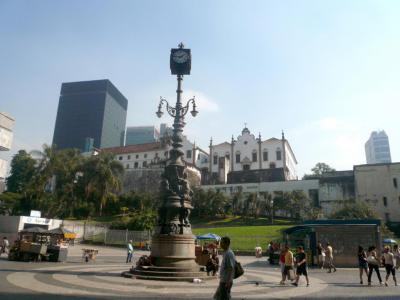
2) Largo da Carioca (Carioca Place)
Largo da Carioca is a vibrant square. It seems like most residents of Rio de Janeiro pass through this square every day, and they probably do. The subway stop here brings a large amount of pedestrian traffic, coming and going. This central square is considered the heart of Rio de Janeiro. It is surrounded by a mix of newer buildings and striking historical buildings.
The Convento de Santo Antônio (Convent of Saint Anthony) was constructed between 1608 and 1620 on top of a hill. The hill overlooked a pond, which was drained to become the present-day plaza. The interior of the convent features one nave and beautiful gilded carvings. The Petrobras building is one of the modern structures facing the square. Petrobras is the largest oil company in the region.
Visitors will be fascinated by the Metropolitan Cathedral. This beehive-shaped building is a very non-traditional look for the city's Catholic cathedral. The Presbyterian Cathedral looks much more traditional. Missionaries from the United States constructed this church in 1862.
The Convento de Santo Antônio (Convent of Saint Anthony) was constructed between 1608 and 1620 on top of a hill. The hill overlooked a pond, which was drained to become the present-day plaza. The interior of the convent features one nave and beautiful gilded carvings. The Petrobras building is one of the modern structures facing the square. Petrobras is the largest oil company in the region.
Visitors will be fascinated by the Metropolitan Cathedral. This beehive-shaped building is a very non-traditional look for the city's Catholic cathedral. The Presbyterian Cathedral looks much more traditional. Missionaries from the United States constructed this church in 1862.

3) Cinelandia Square
Officially named Praça Floriano Peixoto, after Brazil's second president, this area of town is more commonly called Cinelandia Square. Around the spacious public square, you'll find a variety of historic landmark buildings, like the opera house and theater.
Originally, this square was simply the site of the Ajuda Convent, built in 1750. When Rio de Janeiro was named the capital of Brazil in the early 20th century, the square began to take shape. Several grand cinemas stood in the square. While most of the cinemas have closed, the Cinelandia (cinema land) name remains.
Important and architecturally interesting buildings in the square are the Teatro Municipal, the Palacio Pedro Ernesto, the Biblioteca Nacional, and the Tribunal Superior.
Visitors will find an impressive statue of Marshal Floriano Peixoto, Brazil's second president, for whom the square is officially named. This bronze statue was designed by Eduardo Sa and commemorated in 1910. The statue incorporates a scene portraying different events from Brazilian history.
A 19th-century Brazilian composer, Carlos Gomes, is also immortalized in a bronze statue.
Today, the square has theatres, museums, and nearby restaurants and bars. It's a lively place where locals often hold peaceful gatherings.
Originally, this square was simply the site of the Ajuda Convent, built in 1750. When Rio de Janeiro was named the capital of Brazil in the early 20th century, the square began to take shape. Several grand cinemas stood in the square. While most of the cinemas have closed, the Cinelandia (cinema land) name remains.
Important and architecturally interesting buildings in the square are the Teatro Municipal, the Palacio Pedro Ernesto, the Biblioteca Nacional, and the Tribunal Superior.
Visitors will find an impressive statue of Marshal Floriano Peixoto, Brazil's second president, for whom the square is officially named. This bronze statue was designed by Eduardo Sa and commemorated in 1910. The statue incorporates a scene portraying different events from Brazilian history.
A 19th-century Brazilian composer, Carlos Gomes, is also immortalized in a bronze statue.
Today, the square has theatres, museums, and nearby restaurants and bars. It's a lively place where locals often hold peaceful gatherings.
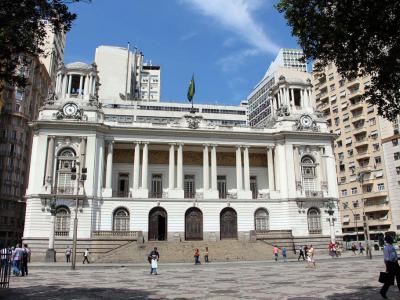
4) Palácio Pedro Ernesto / Câmara Municipal
The Palácio Pedro Ernesto was completed in 1923 in the newly organized Cinelandia Square. This fabulous and imposing building was constructed in the French Beaux-Arts style. The Brazillian Parliament first occupied the building. Today, it is used by the City Council, and it is also known as Câmara Municipal do Rio de Janeiro.
The stunning Palácio Pedro Ernesto is one of the most photographed buildings in Rio de Janeiro. However, its beauty came at a cost. Historian Brasil Gérson called the Palácio Pedro Ernesto a golden cage due to its extremely high expense. The design and building cost twice as much as the nearby Municipal Theater of Rio de Janeiro.
Stairs lead to the first level, which features three entry arches. The second level features ten grand columns. Two symmetrical towers stand on either side of the facade.
Visitors are welcome to view the gorgeous interior; guided tours are available. The interior features a grand staircase with ornate floral handrails. Fabulous sculptures and paintings decorate the luxurious lounges, and marble floors add to the building's elegance.
Don't miss seeing the Palácio Pedro Ernesto illuminated at night.
The stunning Palácio Pedro Ernesto is one of the most photographed buildings in Rio de Janeiro. However, its beauty came at a cost. Historian Brasil Gérson called the Palácio Pedro Ernesto a golden cage due to its extremely high expense. The design and building cost twice as much as the nearby Municipal Theater of Rio de Janeiro.
Stairs lead to the first level, which features three entry arches. The second level features ten grand columns. Two symmetrical towers stand on either side of the facade.
Visitors are welcome to view the gorgeous interior; guided tours are available. The interior features a grand staircase with ornate floral handrails. Fabulous sculptures and paintings decorate the luxurious lounges, and marble floors add to the building's elegance.
Don't miss seeing the Palácio Pedro Ernesto illuminated at night.
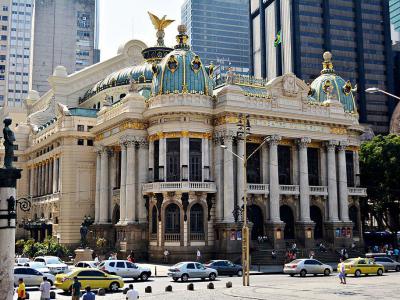
5) Theatro Municipal (Municipal Theatre) (must see)
The Theatro Municipal of Rio de Janeiro was inaugurated in 1909. Located in Cinelandia Square, this beautiful building serves as an opera house and theatre. It is one of the most important theatres in Brazil. Today, most of the productions focus on classical music and ballet performances.
The architectural design was inspired by the Palais Garnier, which was built to house the Paris Opera in France. Brazillian painters and sculptors decorated the Theatro Municipal with fabulous appointments. The exterior has inscriptions bearing the names of classic Brazillian and European artists. A gilded bird watches over the theatre from atop an embellished dome.
The interior is equally spectacular. You'll find priceless artworks, paintings, and sculptures. Eliseu Visconti exquisitely painted the foyer ceiling, nave ceiling, and the frieze on the proscenium.
Tip:
Guided multilingual tours lasting 45 mins are offered Tue-Fri (12pm/2:30pm/4pm) and on Sat (11am/12pm/1pm/4pm). Call ahead to confirm availability of an English-speaking guide. If you want to take the guided tour, try to get there at 10am sharp. Even if you want the 1pm tour, tickets get sold out pretty fast, since the place only supports up to 50 people.
The architectural design was inspired by the Palais Garnier, which was built to house the Paris Opera in France. Brazillian painters and sculptors decorated the Theatro Municipal with fabulous appointments. The exterior has inscriptions bearing the names of classic Brazillian and European artists. A gilded bird watches over the theatre from atop an embellished dome.
The interior is equally spectacular. You'll find priceless artworks, paintings, and sculptures. Eliseu Visconti exquisitely painted the foyer ceiling, nave ceiling, and the frieze on the proscenium.
Tip:
Guided multilingual tours lasting 45 mins are offered Tue-Fri (12pm/2:30pm/4pm) and on Sat (11am/12pm/1pm/4pm). Call ahead to confirm availability of an English-speaking guide. If you want to take the guided tour, try to get there at 10am sharp. Even if you want the 1pm tour, tickets get sold out pretty fast, since the place only supports up to 50 people.
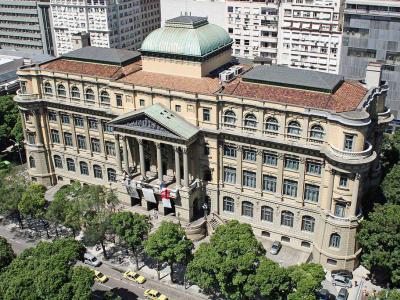
6) Biblioteca Nacional (National Library)
The Biblioteca Nacional is the largest library in Latin America. With over 900 million titles, it is also the seventh most extensive library collection in the world. This impressive collection began after an earthquake in 1755 damaged the Royal Library of Portugal in Lisbon. The Portuguese then decided to move parts of its collection to Brazil. The collection was stored in several different buildings until the current library was completed in 1910.
The neoclassical and art nouveau-style building is absolutely gorgeous. Visitors are welcome to view the library's collection and admire its stunning architecture. You can climb the impressive staircases and be inspired by the colors in the stained glass. The skylights add a delightful light to the stunning location.
Visitors will love the artistry evident in every interior vista. Walls feature elegant ornamentation, artwork, and sculptures. Art exhibitions are often held in various heritage rooms.
Visitors can wander on their own or take a guided tour. Tours are free and are available in both English and Spanish. Guides speak to the history and heritage of the museum and its collection, making the tour a great cultural experience.
The neoclassical and art nouveau-style building is absolutely gorgeous. Visitors are welcome to view the library's collection and admire its stunning architecture. You can climb the impressive staircases and be inspired by the colors in the stained glass. The skylights add a delightful light to the stunning location.
Visitors will love the artistry evident in every interior vista. Walls feature elegant ornamentation, artwork, and sculptures. Art exhibitions are often held in various heritage rooms.
Visitors can wander on their own or take a guided tour. Tours are free and are available in both English and Spanish. Guides speak to the history and heritage of the museum and its collection, making the tour a great cultural experience.
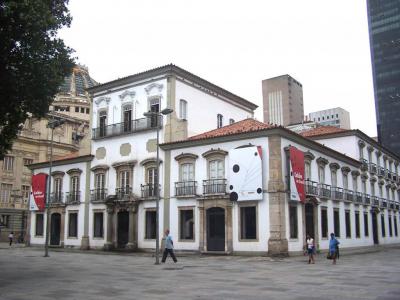
7) Paco Imperial (Imperial Palace)
The Paco Imperial was previously known as the Royal Palace of Rio de Janeiro and the Palace of the Viceroys. It was built in 1743 as the Governor's House. The Paco Imperial is built in the baroque style with an impressive portal made from Portuguese marble. The palace also has several inner courtyards.
In 1763, the Portuguese colonial government transferred from Salvador to Rio de Janeiro, and the building became the Viceroy's Palace. In 1808, the Prince Regent (later King John VI) arrived in Brazil to escape Napoleon. At that time, the building became the Royal Palace. King John VI, Pedro I, and Pedro II were all crowned at the Paco Imperial.
In 1822, Brazil gained independence from Portugal and became the Empire of Brazil. The building was named the Imperial Palace. In 1888, Imperial Princess Isabel signed the Lei Auera, or Golden Law here. This law abolished slavery in Brazil. When Brazil became a republic in 1889, the building was used as Rio de Janeiro's central mail office. Today, it is a cultural center with art exhibits. The Paulo Santos library is also housed here.
Tip:
From the small courtyard, where there is a fairly good "bistro", take the stairwell to where there are some models showing what the local area looked like over time as well as a large, very modern exhibition area displaying modern art.
In 1763, the Portuguese colonial government transferred from Salvador to Rio de Janeiro, and the building became the Viceroy's Palace. In 1808, the Prince Regent (later King John VI) arrived in Brazil to escape Napoleon. At that time, the building became the Royal Palace. King John VI, Pedro I, and Pedro II were all crowned at the Paco Imperial.
In 1822, Brazil gained independence from Portugal and became the Empire of Brazil. The building was named the Imperial Palace. In 1888, Imperial Princess Isabel signed the Lei Auera, or Golden Law here. This law abolished slavery in Brazil. When Brazil became a republic in 1889, the building was used as Rio de Janeiro's central mail office. Today, it is a cultural center with art exhibits. The Paulo Santos library is also housed here.
Tip:
From the small courtyard, where there is a fairly good "bistro", take the stairwell to where there are some models showing what the local area looked like over time as well as a large, very modern exhibition area displaying modern art.
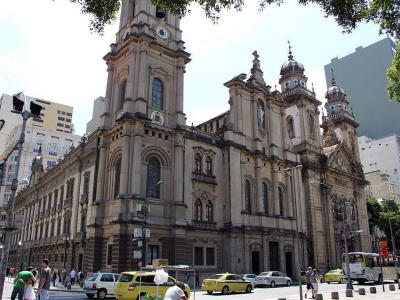
8) Old Cathedral of Rio de Janeiro
Located in the Praça XV square, in downtown Rio, the Old Cathedral of Rio de Janeiro dedicated to Our Lady of Mount Carmel is an old Carmelite church which served as the city's cathedral (Sé) from around 1808 until 1976. During the 19th century, it was also used successively as the Royal and Imperial Chapel by the Portuguese royal family and the Brazilian imperial family, respectively. It is one of the most important historical buildings in the city.
Apart from being of exceptional historical value for the city and the country, this former cathedral has one of the most harmonious interior decorations among the churches in Rio. The walls, chapels and ceiling are covered with ornate Rococo (late Baroque) woodwork showing lightness and unity in style. The decoration was executed after 1785, mainly by one of Rio's best Rococo wood carvers of the period, Inácio Ferreira Pinto, who was also responsible for the main altarpiece. The upper walls of the one-aisled nave have a series of balconies and oval paintings of the Apostles by painter José Leandro de Carvalho. Later reforms did not substantially alter the inner decoration, but the façades were almost completely remodeled in the early 20th century.
Why You Should Visit:
Whilst this church might seem a bit simple from the outside, entry into it reveals a beautifully restored interior.
Decoration includes fine painted ceilings and ornate gilt work balanced by areas of plain white wall.
The overall effect is quite beautifully elegant.
Tip:
There are a number of other things to see in the complex, including an archaeological dig.
Not all of them are open all the time; the most important is the Third Order church immediately adjacent to the Old Cathedral.
Apart from being of exceptional historical value for the city and the country, this former cathedral has one of the most harmonious interior decorations among the churches in Rio. The walls, chapels and ceiling are covered with ornate Rococo (late Baroque) woodwork showing lightness and unity in style. The decoration was executed after 1785, mainly by one of Rio's best Rococo wood carvers of the period, Inácio Ferreira Pinto, who was also responsible for the main altarpiece. The upper walls of the one-aisled nave have a series of balconies and oval paintings of the Apostles by painter José Leandro de Carvalho. Later reforms did not substantially alter the inner decoration, but the façades were almost completely remodeled in the early 20th century.
Why You Should Visit:
Whilst this church might seem a bit simple from the outside, entry into it reveals a beautifully restored interior.
Decoration includes fine painted ceilings and ornate gilt work balanced by areas of plain white wall.
The overall effect is quite beautifully elegant.
Tip:
There are a number of other things to see in the complex, including an archaeological dig.
Not all of them are open all the time; the most important is the Third Order church immediately adjacent to the Old Cathedral.
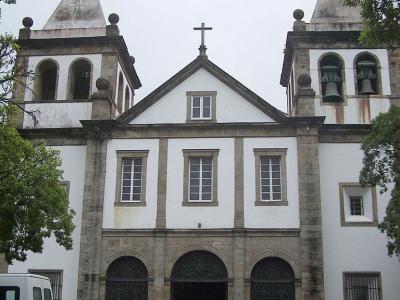
9) Sao Bento Church and Monastery (must see)
Mosteiro de São Bento (Monastery of Saint Benedict) is officially called the Abbey of Our Lady of Monserrat. This Benedictine abbey's history began in 1590 when the land was donated to the monks. Work began in 1633 and was completed in 1671. An annex was completed in 1755.
The abbey's design is a gorgeous example of Mannerist-style Portuguese colonial architecture. The facade features an edifice with three entrance archways and a triangular gable. Two towers with pyramidal spires surround the entryway. After passing through the archway, visitors will be welcome to a tiled porch with 19th-century iron gates.
The interior is embellished with elaborate gold leaf. Friar Ricardo do Pilar created beautiful hand-painted tiles depicting Benedictine saints between 1676 and 1684. These are on display in the main chapel. In the sacristy, visitors will admire a 1690 masterpiece by painter Friar Ricardo.
Friar Domingos da Conceição created statues of Saint Benedict, Saint Scholastica, and Our Lady of Mount Serrat. Artist Inácio Ferreira Pinto re-did the main chapel from 1787-1794. Master Valentim created the main chapel's stunning chandeliers in the 1780s. The Chapel of the Holy Sacrament was embellished by Inácio Ferreira Pinto from 1795-1800.
Visitors will find seven interior chapels: Chapel of Our Lady of the Immaculate Conception, Chapel of Saint Gertrude, Chapel of Our Lady of Pilar, Chapel of Saint Lawrence, Chapel of Saint Braz, Chapel of Saint Caetano, and Chapel of Saint Amaro.
Why You Should Visit:
The São Bento Church and Monastery has a simple exterior but an absolutely divine gilded baroque interior. Visitors will relish the hundreds of years of Brazillian history and stunning architectural details.
Tips:
Take part in a traditional Sunday 10:00 am mass--complete with Gregorian chanting and organ music.
The abbey's design is a gorgeous example of Mannerist-style Portuguese colonial architecture. The facade features an edifice with three entrance archways and a triangular gable. Two towers with pyramidal spires surround the entryway. After passing through the archway, visitors will be welcome to a tiled porch with 19th-century iron gates.
The interior is embellished with elaborate gold leaf. Friar Ricardo do Pilar created beautiful hand-painted tiles depicting Benedictine saints between 1676 and 1684. These are on display in the main chapel. In the sacristy, visitors will admire a 1690 masterpiece by painter Friar Ricardo.
Friar Domingos da Conceição created statues of Saint Benedict, Saint Scholastica, and Our Lady of Mount Serrat. Artist Inácio Ferreira Pinto re-did the main chapel from 1787-1794. Master Valentim created the main chapel's stunning chandeliers in the 1780s. The Chapel of the Holy Sacrament was embellished by Inácio Ferreira Pinto from 1795-1800.
Visitors will find seven interior chapels: Chapel of Our Lady of the Immaculate Conception, Chapel of Saint Gertrude, Chapel of Our Lady of Pilar, Chapel of Saint Lawrence, Chapel of Saint Braz, Chapel of Saint Caetano, and Chapel of Saint Amaro.
Why You Should Visit:
The São Bento Church and Monastery has a simple exterior but an absolutely divine gilded baroque interior. Visitors will relish the hundreds of years of Brazillian history and stunning architectural details.
Tips:
Take part in a traditional Sunday 10:00 am mass--complete with Gregorian chanting and organ music.
10) Candelária Church (must see)
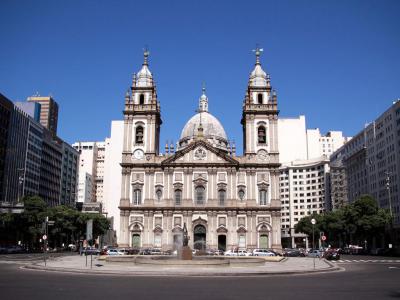
The Candelária Church is an important historical Roman Catholic church in the city of Rio de Janeiro. Built and decorated during a long period, from 1775 to the late 19th century, the church combines a Baroque façade with Neoclassical and Neo-Renaissance interior elements.
The quasi-legendary history about the establishment of the church is that in the beginning of the 17th century a ship called Candelária almost sank during a storm on the sea. Upon arriving in Rio de Janeiro, a Portuguese couple sponsored the building of a small chapel, fulfilling the oath they made during the storm. This small chapel, dedicated to Our Lady of Candelária, was built around 1609.
Other elements of interest include: the main altar by Brazilian architect Archimedes Memória; the various German stained-glass windows; the bronze doors (c. 1901) of the main entrance, by Portuguese sculptor António Teixeira Lopes; and the two monumental bronze pulpits in the Art-Nouveau style, by Portuguese sculptor Rodolfo Pinto do Couto (1931).
Tip:
Closed in the afternoon so the best time to visit would be in the morning or early noon.
Due to the great acoustics, attending a concert/ organ recital here comes highly recommended.
The quasi-legendary history about the establishment of the church is that in the beginning of the 17th century a ship called Candelária almost sank during a storm on the sea. Upon arriving in Rio de Janeiro, a Portuguese couple sponsored the building of a small chapel, fulfilling the oath they made during the storm. This small chapel, dedicated to Our Lady of Candelária, was built around 1609.
Other elements of interest include: the main altar by Brazilian architect Archimedes Memória; the various German stained-glass windows; the bronze doors (c. 1901) of the main entrance, by Portuguese sculptor António Teixeira Lopes; and the two monumental bronze pulpits in the Art-Nouveau style, by Portuguese sculptor Rodolfo Pinto do Couto (1931).
Tip:
Closed in the afternoon so the best time to visit would be in the morning or early noon.
Due to the great acoustics, attending a concert/ organ recital here comes highly recommended.
11) Saara Shopping District
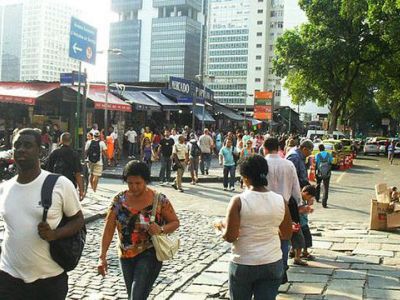
This area is one of the most renowned shopping districts in the world. Saara is an acronym for Sociedade de Amigos das Adjacências da Rua da Alfândega, which translates to “Society of Friends of the Alfândega Street and Surroundings”. This area was originally lived in by immigrants who opened up enterprising shops and businesses.
Today, you'll find both locals and tourists looking for the perfect item. This extensive shopping area offers unlimited possibilities, with over 600 shops selling everything from candles to clothing, shoes, and Carnival costumes. You'll probably walk away with at least one pair of Havaianas (iconic Brazilian flip flops) and souvenirs for the whole family.
Shop for soccer jerseys, t-shirts, and hats. If you need beach accessories such as a Brazilian bikini or an extra-large beach towel, you'll be spoilt for choice. This is an excellent place for bargain finds, and vendors are open to further bargaining.
There's also a delightful mix of cafes and restaurants serving Brazilian food.
Today, you'll find both locals and tourists looking for the perfect item. This extensive shopping area offers unlimited possibilities, with over 600 shops selling everything from candles to clothing, shoes, and Carnival costumes. You'll probably walk away with at least one pair of Havaianas (iconic Brazilian flip flops) and souvenirs for the whole family.
Shop for soccer jerseys, t-shirts, and hats. If you need beach accessories such as a Brazilian bikini or an extra-large beach towel, you'll be spoilt for choice. This is an excellent place for bargain finds, and vendors are open to further bargaining.
There's also a delightful mix of cafes and restaurants serving Brazilian food.
12) Royal Portuguese Cabinet of Reading
The Royal Portuguese Cabinet of Reading is revered as one of the most beautiful libraries in the world. It has the most expansive collection of Portuguese literature outside Portugal.
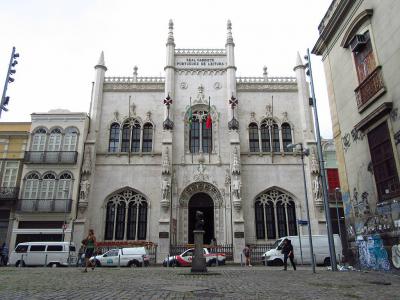
The building was finished in 1887 in the Neo-Manueline style. This design is reminiscent of the Gothic-Renaissance style popular during the reign of King Manuel (from 1495-1521). During this time, the Portuguese were beginning to discover the New World.
Emperor Pedro II laid the cornerstone in 1880, and Imperial Princess Isabel inaugurated the building in 1887. The Jerónimos Monastery inspired the facade in Lisbon. It was made from local stone in Lisbon and then transferred by ship to Rio de Janeiro. Four statues decorate the exterior. They represent Prince Henry the Navigator, Vasco da Gama, Luís de Camões, and Pedro Álvares Cabral.
The interior is spectacular, with the book collection towering three stories tall around the reading area. The reading room features a stained-glass skylight with a cast iron frame, allowing natural light to illuminate the library. An elegant chandelier hangs from the Reading Room's ceiling. A statue of Pedro Álvares Cabral, credited as the European discoverer of Brazil, stands in the reading room.
The building was finished in 1887 in the Neo-Manueline style. This design is reminiscent of the Gothic-Renaissance style popular during the reign of King Manuel (from 1495-1521). During this time, the Portuguese were beginning to discover the New World.
Emperor Pedro II laid the cornerstone in 1880, and Imperial Princess Isabel inaugurated the building in 1887. The Jerónimos Monastery inspired the facade in Lisbon. It was made from local stone in Lisbon and then transferred by ship to Rio de Janeiro. Four statues decorate the exterior. They represent Prince Henry the Navigator, Vasco da Gama, Luís de Camões, and Pedro Álvares Cabral.
The interior is spectacular, with the book collection towering three stories tall around the reading area. The reading room features a stained-glass skylight with a cast iron frame, allowing natural light to illuminate the library. An elegant chandelier hangs from the Reading Room's ceiling. A statue of Pedro Álvares Cabral, credited as the European discoverer of Brazil, stands in the reading room.
