Custom Walk in Rome, Italy by kas81slayer_a6a7b created on 2025-07-09
Guide Location: Italy » Rome
Guide Type: Custom Walk
# of Sights: 9
Tour Duration: 2 Hour(s)
Travel Distance: 4.5 Km or 2.8 Miles
Share Key: YRFQ3
Guide Type: Custom Walk
# of Sights: 9
Tour Duration: 2 Hour(s)
Travel Distance: 4.5 Km or 2.8 Miles
Share Key: YRFQ3
How It Works
Please retrieve this walk in the GPSmyCity app. Once done, the app will guide you from one tour stop to the next as if you had a personal tour guide. If you created the walk on this website or come to the page via a link, please follow the instructions below to retrieve the walk in the app.
Retrieve This Walk in App
Step 1. Download the app "GPSmyCity: Walks in 1K+ Cities" on Apple App Store or Google Play Store.



Step 2. In the GPSmyCity app, download(or launch) the guide "Rome Map and Walking Tours".
Step 3. Tap the menu button located at upper right corner of the "Walks" screen and select "Retrieve custom walk". Enter the share key: YRFQ3
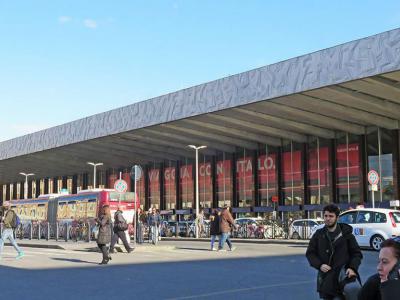
1) Roma Termini (Rome's main railway station)
Roma Termini, also known as Stazione Termini, stands as the central hub of Rome's railway system. Located in the district bearing the same name, which is derived from the ancient Baths of Diocletian ("thermae" in Latin), the station boasts a prime position just across the street from this historic site.
With an impressive 29 platforms and an extensive network of daily services reaching destinations throughout Italy and beyond, Roma Termini is one of the largest railway stations in Europe. It provides travelers with numerous amenities and seamless connections, including ItaliaRail's exclusive VIP oasis, the ItaliaPass Lounge situated at the beginning of Track 25.
As you enter the station from Piazza dei Cinquecento, you'll find a bustling entrance hall adorned with restaurants, a spacious ticket office, travel agencies, currency exchange booths, as well as a vibrant cluster of shops that shops remain open until 10pm, even on Sundays, making it a convenient "shop before you hop" destination. From popular chains like Mango, Moleskine, and Sephora to bookstores offering a wide selection of English-language bestsellers, you'll find a diverse range of options. Additionally, there is a grocery store and a well-stocked food court, providing a variety of culinary delights to satisfy your cravings.
With an impressive 29 platforms and an extensive network of daily services reaching destinations throughout Italy and beyond, Roma Termini is one of the largest railway stations in Europe. It provides travelers with numerous amenities and seamless connections, including ItaliaRail's exclusive VIP oasis, the ItaliaPass Lounge situated at the beginning of Track 25.
As you enter the station from Piazza dei Cinquecento, you'll find a bustling entrance hall adorned with restaurants, a spacious ticket office, travel agencies, currency exchange booths, as well as a vibrant cluster of shops that shops remain open until 10pm, even on Sundays, making it a convenient "shop before you hop" destination. From popular chains like Mango, Moleskine, and Sephora to bookstores offering a wide selection of English-language bestsellers, you'll find a diverse range of options. Additionally, there is a grocery store and a well-stocked food court, providing a variety of culinary delights to satisfy your cravings.
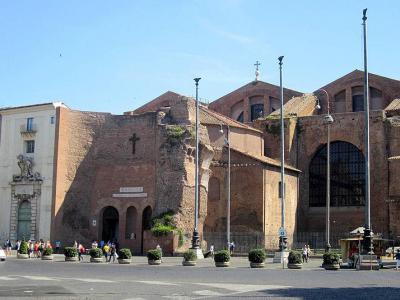
2) Basilica di Santa Maria degli Angeli e dei Martiri (St. Mary of the Angels and the Martyrs)
Constructed atop the ruins of the Baths of Diocletian, the Basilica of Saint Mary of the Angels showcases a captivating blend of history and architectural brilliance. Conceived by Michelangelo in 1563, shortly before his death, this magnificent edifice pays homage to both recognized and anonymous Christian martyrs, its imposing presence providing a remarkable glimpse into the grandeur and vastness of the original bath complex.
The distinctive crescent-shaped facade of the basilica stands as a testament to the former caldarium, while the expansive transept, now an integral part of the basilica, was once the tepidarium. Eight colossal pink-granite pillars, original remnants of the ancient structure, add a sense of awe-inspiring authenticity. In 1749, Luigi Vanvitelli undertook the task of reconfiguring the interior, skillfully capturing Michelangelo's visionary designs. The resulting ambiance is a harmonious fusion of artistic brilliance, paying homage to the artistic legacies of both architects.
Within the basilica, an intriguing feature awaits- the meridian. This diagonal line, traversing the floor of the south transept, once served as the official time regulator for the people of Rome. While its timekeeping role has faded, a daily cannon shot fired from Janiculum Hill at noon continues to echo the passage of time, carrying on a centuries-old tradition.
Why You Should Visit:
A mysterious and fascinating place, which also houses some fine contemporary works.
Tip:
Don't miss the chapel within the chapel, and the thornless rose garden with its interesting story.
The distinctive crescent-shaped facade of the basilica stands as a testament to the former caldarium, while the expansive transept, now an integral part of the basilica, was once the tepidarium. Eight colossal pink-granite pillars, original remnants of the ancient structure, add a sense of awe-inspiring authenticity. In 1749, Luigi Vanvitelli undertook the task of reconfiguring the interior, skillfully capturing Michelangelo's visionary designs. The resulting ambiance is a harmonious fusion of artistic brilliance, paying homage to the artistic legacies of both architects.
Within the basilica, an intriguing feature awaits- the meridian. This diagonal line, traversing the floor of the south transept, once served as the official time regulator for the people of Rome. While its timekeeping role has faded, a daily cannon shot fired from Janiculum Hill at noon continues to echo the passage of time, carrying on a centuries-old tradition.
Why You Should Visit:
A mysterious and fascinating place, which also houses some fine contemporary works.
Tip:
Don't miss the chapel within the chapel, and the thornless rose garden with its interesting story.
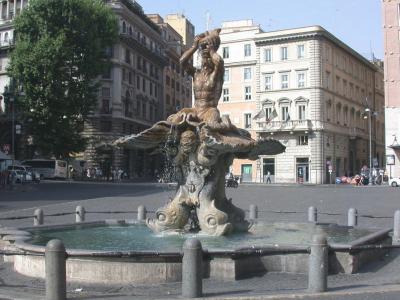
3) Piazza Barberini & Fontana del Tritone (Barberini Square & Triton Fountain)
Piazza Barberini takes its name from one of Rome's most powerful Renaissance-era families, who claimed the square as part of their residential palace from 1625 onwards (the palace now houses the National Gallery of Ancient Art). Notably, one of the Barberini sons later ascended to become Pope Urban VIII, known for his controversial persecution of Galileo Galilei, the inventor of the telescope and advocate of the heliocentric model.
Despite this historical context, Pope Urban VIII had an ambition to embellish Rome with several fountains. In 1642, he entrusted Gian Lorenzo Bernini with the task of designing and constructing the fountain located in Barberini Square, now counted among Bernini's masterpieces. Bernini closely adhered to the Pope's instructions, drawing inspiration from a passage in Book I of Ovid's renowned work, "Metamorphoses." The passage described Triton, a mythical sea god, commanding the waters to recede after the Deluge, ushering in a sense of order and peace.
Crafted from travertine, a type of limestone formed by hot springs, the fountain portrays the majestic Triton as a merman, kneeling atop the tails of four dolphins. He holds a conch shell to his lips, as if playing it like a trumpet.
The central base of the fountain features four intertwined dolphins, encircling the Papal Tiara and crossed keys, while below, the Barberini family's heraldic symbol of bees can be observed.
This fountain stands out as the first freestanding thematic fountain to be sculpted outside of private gardens. During that time, public fountains were typically plain and unremarkable. However, Pope Urban VIII desired something more striking outside his family's residence. The Triton Fountain immediately imparted a sense of grandeur to the entire square, serving as a beacon for those approaching from the city center.
Despite this historical context, Pope Urban VIII had an ambition to embellish Rome with several fountains. In 1642, he entrusted Gian Lorenzo Bernini with the task of designing and constructing the fountain located in Barberini Square, now counted among Bernini's masterpieces. Bernini closely adhered to the Pope's instructions, drawing inspiration from a passage in Book I of Ovid's renowned work, "Metamorphoses." The passage described Triton, a mythical sea god, commanding the waters to recede after the Deluge, ushering in a sense of order and peace.
Crafted from travertine, a type of limestone formed by hot springs, the fountain portrays the majestic Triton as a merman, kneeling atop the tails of four dolphins. He holds a conch shell to his lips, as if playing it like a trumpet.
The central base of the fountain features four intertwined dolphins, encircling the Papal Tiara and crossed keys, while below, the Barberini family's heraldic symbol of bees can be observed.
This fountain stands out as the first freestanding thematic fountain to be sculpted outside of private gardens. During that time, public fountains were typically plain and unremarkable. However, Pope Urban VIII desired something more striking outside his family's residence. The Triton Fountain immediately imparted a sense of grandeur to the entire square, serving as a beacon for those approaching from the city center.
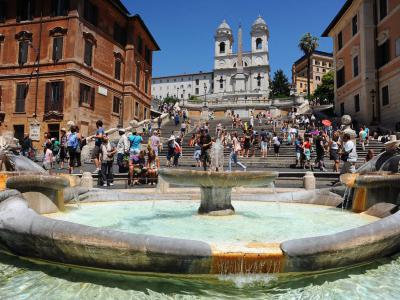
4) Scalinata di Trinita dei Monti (Spanish Steps) (must see)
The Spanish Steps, a monumental stairway of 135 steps, holds the distinction of being the longest and widest in Europe. The steps link Spanish Square, at the base, with the Trinity of the Mountains Square at the top.
The stairway was completed under Pope Clement XI in 1717, deriving its name from the nearby Spanish Embassy to the Holy See. Financed in part by a French diplomat, it features Baroque elements, inspired by garden stairs, and incorporates symbolic decorations such as the Bourbon heraldic lily flowers and papal eagles.
As a cultural and seasonal hub hosting public events such as Christmas cribs, spring azalea displays, and a flower market, the Spanish Steps have captivated artists and people of letters since the 18th century. Among them was the renowned English poet, John Keats, who lived and died practically next door. His house, at the base of the steps (located to the right, if you face the stairs), is now a museum.
Other nearby landmarks include the Ferrari di Valbona Palace, redesigned in 1936, and Babington's tea room, a resilient establishment that has withstood two world wars and numerous adversities, ultimately becoming a beloved tourist attraction.
The steps' cinematic appeal also made them a backdrop for numerous films, including the Hollywood blockbuster “Roman Holiday” made in 1953, starring Audrey Hepburn and Gregory Peck. In the scene where Joe Bradley, played by Peck, meets Princess Ann, played by Hepburn, she sits on the steps, enjoying the view and eating ice cream. Fresh after the haircut, the princess takes compliments for her new look and makes up a story that she has run away from school. She accepts his proposal to spend the day together before she returns, and thus the Roman Holiday story begins!
Other filmmakers also made a mark on the steps, such as “The Talented Mr. Ripley” movie with Matt Damon, shot in 1999, and “Mission: Impossible – Dead Reckoning Part One,” featuring Tom Cruise, which premiered at the steps on June 19, 2023.
Consequently, the Spanish Steps became a magnet for aspiring models, affluent Romans, international travelers, and people from all walks of life. The tradition of gathering here is deeply ingrained in the locals and visitors alike. Today, the steps are protected by strict regulations against loitering, eating, or damaging, with heavy fines introduced to maintain decorum.
Tip:
The staircase offers picturesque views of Rome from its pinnacle, particularly at sunset-a truly unbeatable sight!
The afternoon and late hours are the best for visiting, so to avoid the heat of the day.
Alongside tourist activities such as carriage rides, you'll find nearby an array of shops and bars worth exploring.
The stairway was completed under Pope Clement XI in 1717, deriving its name from the nearby Spanish Embassy to the Holy See. Financed in part by a French diplomat, it features Baroque elements, inspired by garden stairs, and incorporates symbolic decorations such as the Bourbon heraldic lily flowers and papal eagles.
As a cultural and seasonal hub hosting public events such as Christmas cribs, spring azalea displays, and a flower market, the Spanish Steps have captivated artists and people of letters since the 18th century. Among them was the renowned English poet, John Keats, who lived and died practically next door. His house, at the base of the steps (located to the right, if you face the stairs), is now a museum.
Other nearby landmarks include the Ferrari di Valbona Palace, redesigned in 1936, and Babington's tea room, a resilient establishment that has withstood two world wars and numerous adversities, ultimately becoming a beloved tourist attraction.
The steps' cinematic appeal also made them a backdrop for numerous films, including the Hollywood blockbuster “Roman Holiday” made in 1953, starring Audrey Hepburn and Gregory Peck. In the scene where Joe Bradley, played by Peck, meets Princess Ann, played by Hepburn, she sits on the steps, enjoying the view and eating ice cream. Fresh after the haircut, the princess takes compliments for her new look and makes up a story that she has run away from school. She accepts his proposal to spend the day together before she returns, and thus the Roman Holiday story begins!
Other filmmakers also made a mark on the steps, such as “The Talented Mr. Ripley” movie with Matt Damon, shot in 1999, and “Mission: Impossible – Dead Reckoning Part One,” featuring Tom Cruise, which premiered at the steps on June 19, 2023.
Consequently, the Spanish Steps became a magnet for aspiring models, affluent Romans, international travelers, and people from all walks of life. The tradition of gathering here is deeply ingrained in the locals and visitors alike. Today, the steps are protected by strict regulations against loitering, eating, or damaging, with heavy fines introduced to maintain decorum.
Tip:
The staircase offers picturesque views of Rome from its pinnacle, particularly at sunset-a truly unbeatable sight!
The afternoon and late hours are the best for visiting, so to avoid the heat of the day.
Alongside tourist activities such as carriage rides, you'll find nearby an array of shops and bars worth exploring.
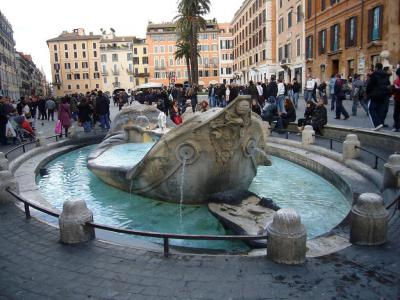
5) Piazza di Spagna & Fontana della Barcaccia (Spanish Square & Fountain of the Longboat)
The Spanish Square is one of Rome's most popular destinations, known for its blend of historical and cultural significance. Dominated by the iconic Spanish Steps next to it, the square also serves as a hub for high fashion, with designer boutiques lining the surrounding streets.
At the base of the Spanish Steps lies the "Fountain of the Longboat," an Early Baroque masterpiece created between 1627 and 1629. Commissioned by Pope Urban VIII as part of a project to install fountains in Rome’s major squares, it was designed by Pietro Bernini, possibly with assistance from his son, Gian Lorenzo. The fountain’s design, a half-sunken boat overflowing with water, was inspired by a local legend. During a devastating flood of the River Tiber in 1598, a small boat was reportedly carried to the square and left there as the waters receded. The fountain’s water flows gently due to the low pressure of the Acqua Vergine aqueduct, adding a soothing charm.
The fountain also features symbolic details, such as the Barberini family's papal coat of arms, honoring Pope Urban VIII’s ancestry. Its intricate design includes water flowing from seven points, with streams emerging from central balusters, human-faced suns inside the boat, and external spouts. This harmonious blend of engineering and artistry reflects the Baroque era's grandeur.
The Spanish Square is steeped in literary history as well. Adjacent to the fountain is the former residence of English poet John Keats, who died there in 1821. Now a museum, the house preserves memorabilia of the Romantic generation. Keats found solace in the sound of the fountain’s water, which inspired the epitaph on his tombstone: "Here lies one whose name was writ in water."
On the right side of the square stands the Ferrari di Valbona Palace, once home to Cardinal Lorenzo Cybo de Mari. The building, remodeled in 1936 under Fascist-era designs, showcases modern terraces that complement the surrounding Baroque architecture.
Spanish Square invites visitors to relax, bask in the sun, and enjoy its timeless beauty. The gentle gurgle of the Longboat Fountain and its rich history make it a serene yet captivating centerpiece of Rome.
At the base of the Spanish Steps lies the "Fountain of the Longboat," an Early Baroque masterpiece created between 1627 and 1629. Commissioned by Pope Urban VIII as part of a project to install fountains in Rome’s major squares, it was designed by Pietro Bernini, possibly with assistance from his son, Gian Lorenzo. The fountain’s design, a half-sunken boat overflowing with water, was inspired by a local legend. During a devastating flood of the River Tiber in 1598, a small boat was reportedly carried to the square and left there as the waters receded. The fountain’s water flows gently due to the low pressure of the Acqua Vergine aqueduct, adding a soothing charm.
The fountain also features symbolic details, such as the Barberini family's papal coat of arms, honoring Pope Urban VIII’s ancestry. Its intricate design includes water flowing from seven points, with streams emerging from central balusters, human-faced suns inside the boat, and external spouts. This harmonious blend of engineering and artistry reflects the Baroque era's grandeur.
The Spanish Square is steeped in literary history as well. Adjacent to the fountain is the former residence of English poet John Keats, who died there in 1821. Now a museum, the house preserves memorabilia of the Romantic generation. Keats found solace in the sound of the fountain’s water, which inspired the epitaph on his tombstone: "Here lies one whose name was writ in water."
On the right side of the square stands the Ferrari di Valbona Palace, once home to Cardinal Lorenzo Cybo de Mari. The building, remodeled in 1936 under Fascist-era designs, showcases modern terraces that complement the surrounding Baroque architecture.
Spanish Square invites visitors to relax, bask in the sun, and enjoy its timeless beauty. The gentle gurgle of the Longboat Fountain and its rich history make it a serene yet captivating centerpiece of Rome.
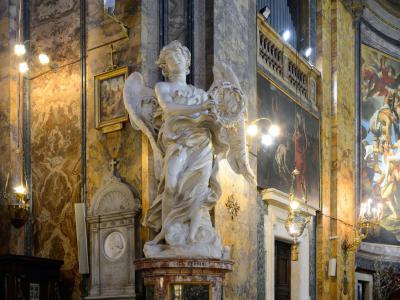
6) Basilica di Sant'Andrea delle Fratte (Basilica of St. Andrew of the Thickets)
Originally located at the northernmost boundary of Rome, Basilica of St. Andrew of the Thickets was constructed in the 1100s. Although the church now resides firmly within the city, its name, which translates to "thickets" in English, harkens back to its initial setting.
During the 17th century, the church underwent a complete reconstruction, with Baroque architect Francesco Borromini playing a significant role in the project. The bell tower and dome, distinguished by their intricate concave and convex surfaces, offer a remarkable sight. The bell tower, in particular, showcases a fanciful design adorned with angel caryatids, flaming torches, and elaborate scrolls reminiscent of semi-folded hearts, all supporting a spiky crown.
In 1842, a Jewish banker purportedly witnessed an apparition of the Virgin Mary within the church, prompting his swift conversion to Christianity and subsequent missionary work. Inside the church, the Miraculous Madonna chapel immediately catches the eye.
However, St. Andrew of the Thickets is most renowned for housing the angels sculpted by Bernini, a rival of Borromini, for the Saint Angelo Bridge. These angelic sculptures were deemed too exquisite to face the harsh weather conditions, leading them to remain under Bernini's family's care until 1729. Eventually, they found their permanent home in the church, where they were positioned on either side of the high altar under the decree of Pope Clement IX.
During the 17th century, the church underwent a complete reconstruction, with Baroque architect Francesco Borromini playing a significant role in the project. The bell tower and dome, distinguished by their intricate concave and convex surfaces, offer a remarkable sight. The bell tower, in particular, showcases a fanciful design adorned with angel caryatids, flaming torches, and elaborate scrolls reminiscent of semi-folded hearts, all supporting a spiky crown.
In 1842, a Jewish banker purportedly witnessed an apparition of the Virgin Mary within the church, prompting his swift conversion to Christianity and subsequent missionary work. Inside the church, the Miraculous Madonna chapel immediately catches the eye.
However, St. Andrew of the Thickets is most renowned for housing the angels sculpted by Bernini, a rival of Borromini, for the Saint Angelo Bridge. These angelic sculptures were deemed too exquisite to face the harsh weather conditions, leading them to remain under Bernini's family's care until 1729. Eventually, they found their permanent home in the church, where they were positioned on either side of the high altar under the decree of Pope Clement IX.
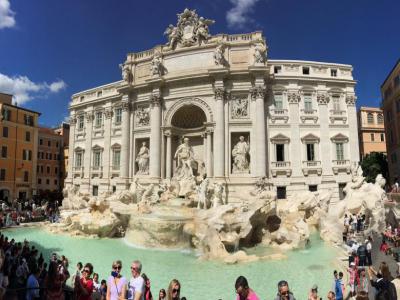
7) Piazza di Trevi & Fontana di Trevi (Trevi Square & Trevi Fountain) (must see)
The Trevi Fountain is one of Rome’s most iconic landmarks, drawing visitors to the eponymous Trevi Square all day long. Surprisingly, the fountain was not initially built in the heart of the city; instead, the city grew around it. Its name derives from the Latin word "trivium," which means “three streets,” as it sits at the junction of three streets: De Crocicchi, Poli, and Delle Muratte.
The fountain’s history dates back to 1629 when Pope Urban VIII commissioned Gian Lorenzo Bernini to redesign it, though his plans were never realized. Later, Pope Clement XII organized a competition in 1730, leading to Nicola Salvi's selection for the project, who incorporated the fountain into the rear of the Poli Palace. Salvi passed away before its completion. Giuseppe Pannini and other artists finalized the work in 1762.
Measuring over 26 meters in height and 49 meters in width, it is the largest Baroque fountain in Rome.
The Trevi Fountain features a Corinthian façade and bas-reliefs depicting the origins of the Acqua Vergine aqueduct, constructed in 19 BC. According to legend, a virgin guided Roman engineers to the aqueduct’s source, an event depicted in the fountain’s bas-reliefs. The aqueduct, which survived the Gothic invasions and was restored during the Middle Ages, still supplies water to the fountain today.
At the heart of the fountain is Oceanus, depicted riding a shell-shaped chariot drawn by two horses and guided by Tritons. The horses symbolize the sea’s contrasting moods-calm and turbulent. Flanking Oceanus are the statues of Abundance and Salubrity, representing prosperity and health. The symmetrical Rococo design combines dynamic artistry with Baroque grandeur, reflecting 18th-century European trends.
The Trevi Fountain is also known for the tradition of tossing coins, which promises a return to Rome. Popularized by the 1954 Hollywood film "Three Coins in the Fountain," visitors toss coins over their left shoulder with their right hand, generating daily about €3,000. This money, collected by municipal authorities, is donated to charity.
Celebrated in films like Roman Holiday and La Dolce Vita, the Trevi Fountain’s global fame is further evidenced by replicas worldwide. Access to the fountain is now limited to 400 visitors at a time, ensuring a more enjoyable visit to this timeless masterpiece. Surrounding the fountain are charming shops, restaurants, and gelaterias, making it a delightful spot to soak in Rome’s vibrant atmosphere.
Tip:
The fountain holds particular allure at night, especially after 10 pm when it is beautifully illuminated and the crowds dissipate, allowing you to enjoy the site almost exclusively.
The fountain’s history dates back to 1629 when Pope Urban VIII commissioned Gian Lorenzo Bernini to redesign it, though his plans were never realized. Later, Pope Clement XII organized a competition in 1730, leading to Nicola Salvi's selection for the project, who incorporated the fountain into the rear of the Poli Palace. Salvi passed away before its completion. Giuseppe Pannini and other artists finalized the work in 1762.
Measuring over 26 meters in height and 49 meters in width, it is the largest Baroque fountain in Rome.
The Trevi Fountain features a Corinthian façade and bas-reliefs depicting the origins of the Acqua Vergine aqueduct, constructed in 19 BC. According to legend, a virgin guided Roman engineers to the aqueduct’s source, an event depicted in the fountain’s bas-reliefs. The aqueduct, which survived the Gothic invasions and was restored during the Middle Ages, still supplies water to the fountain today.
At the heart of the fountain is Oceanus, depicted riding a shell-shaped chariot drawn by two horses and guided by Tritons. The horses symbolize the sea’s contrasting moods-calm and turbulent. Flanking Oceanus are the statues of Abundance and Salubrity, representing prosperity and health. The symmetrical Rococo design combines dynamic artistry with Baroque grandeur, reflecting 18th-century European trends.
The Trevi Fountain is also known for the tradition of tossing coins, which promises a return to Rome. Popularized by the 1954 Hollywood film "Three Coins in the Fountain," visitors toss coins over their left shoulder with their right hand, generating daily about €3,000. This money, collected by municipal authorities, is donated to charity.
Celebrated in films like Roman Holiday and La Dolce Vita, the Trevi Fountain’s global fame is further evidenced by replicas worldwide. Access to the fountain is now limited to 400 visitors at a time, ensuring a more enjoyable visit to this timeless masterpiece. Surrounding the fountain are charming shops, restaurants, and gelaterias, making it a delightful spot to soak in Rome’s vibrant atmosphere.
Tip:
The fountain holds particular allure at night, especially after 10 pm when it is beautifully illuminated and the crowds dissipate, allowing you to enjoy the site almost exclusively.
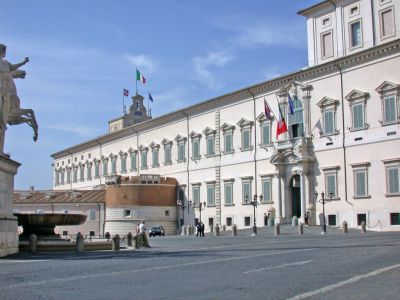
8) Palazzo del Quirinale (Quirinal Palace)
Sitting atop the highest of ancient Rome's renowned seven hills, the Quirinale, stands the magnificent Palazzo Quirinale, a colossal 16th-century structure that was once the residence of the popes until 1870 and now serves as Italy's presidential palace. This hill holds historical significance as the Romans constructed temples dedicated to various deities, including Flora and Quirinus, after whom the hill was named.
In the 1500s, due to the Vatican's reputation for being an unhealthy area plagued by malaria, Pope Gregory XIII chose the Quirinale as a papal summer residence. Construction of the palace began in 1573, with the involvement of numerous renowned architects. Spanning an impressive area of 110,500 square meters, it stands as the 6th largest palace in the world in terms of size.
Visitors can explore the interior of the palace through two guided tours. The first tour, lasting 80 minutes, starts with a glimpse of a fragment from Melozzo da Forlì's 15th-century fresco of Christ, originally painted for the apse of Santi Apostoli. It then proceeds to showcase the sumptuous rooms of the piano nobile, including the illustrious Hall of Mirrors and the Hall of Tapestries. The second tour, lasting 140 minutes, continues to the palace's porcelain collection, a museum of carriages, and the exquisite gardens.
The focal point of the piazza outside the palace is the monumental statue of the Dioscuri, also known as Castor and Pollux. These 5-meter-tall Roman replicas of classical Greek statues were brought to this location by Pope Sixtus V in the early 16th century. The piazza is enclosed by buildings on three sides, while the fourth side offers a splendid open view of the city, allowing visitors to take in the majestic panorama.
In the 1500s, due to the Vatican's reputation for being an unhealthy area plagued by malaria, Pope Gregory XIII chose the Quirinale as a papal summer residence. Construction of the palace began in 1573, with the involvement of numerous renowned architects. Spanning an impressive area of 110,500 square meters, it stands as the 6th largest palace in the world in terms of size.
Visitors can explore the interior of the palace through two guided tours. The first tour, lasting 80 minutes, starts with a glimpse of a fragment from Melozzo da Forlì's 15th-century fresco of Christ, originally painted for the apse of Santi Apostoli. It then proceeds to showcase the sumptuous rooms of the piano nobile, including the illustrious Hall of Mirrors and the Hall of Tapestries. The second tour, lasting 140 minutes, continues to the palace's porcelain collection, a museum of carriages, and the exquisite gardens.
The focal point of the piazza outside the palace is the monumental statue of the Dioscuri, also known as Castor and Pollux. These 5-meter-tall Roman replicas of classical Greek statues were brought to this location by Pope Sixtus V in the early 16th century. The piazza is enclosed by buildings on three sides, while the fourth side offers a splendid open view of the city, allowing visitors to take in the majestic panorama.
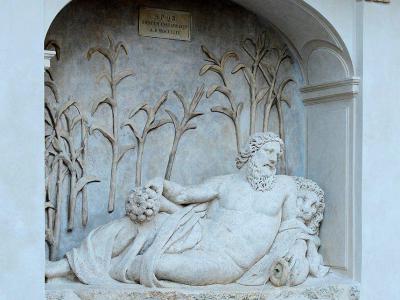
9) Quattro Fontane (The Four Fountains)
They say, good things come in pairs. Well, in the case of Via delle Quattro Fontane, they seem to double that. Just as the name suggests, the "Street of Four Fountains" proudly showcases four late Renaissance fountains, commissioned by Pope Sixtus V between 1588 and 1593. The quartet of represents the Tiber River, symbolizing Rome; the Arno River, symbolizing Florence; the Goddess Juno, symbolizing strength; and the Goddess Diana, symbolizing chastity.
Domenico Fontana is credited with the creation of the fountains depicting the two rivers and Juno, while Pietro da Cortona sculpted the statue of Diana. Adjacent to these captivating fountains stands the Baroque-style Church of St. Charles (San Carlino alle Quattro Fontane) designed by the renowned Francesco Borromini.
A comprehensive interpretation of the fountains' statues aligns them with Bernini's Four Rivers Fountain (Fontana dei Quattro Fiumi). In this theory, each statue represents a nymph or river god symbolizing a generic river from one of the four known parts of the world during that time. This notion finds further support in the alignment of the statues with the four cardinal points, adding a conceptual depth to the symbolism they embody.
Domenico Fontana is credited with the creation of the fountains depicting the two rivers and Juno, while Pietro da Cortona sculpted the statue of Diana. Adjacent to these captivating fountains stands the Baroque-style Church of St. Charles (San Carlino alle Quattro Fontane) designed by the renowned Francesco Borromini.
A comprehensive interpretation of the fountains' statues aligns them with Bernini's Four Rivers Fountain (Fontana dei Quattro Fiumi). In this theory, each statue represents a nymph or river god symbolizing a generic river from one of the four known parts of the world during that time. This notion finds further support in the alignment of the statues with the four cardinal points, adding a conceptual depth to the symbolism they embody.
