Custom Walk in Manila, Philippines by dalideve_97998 created on 2025-07-13
Guide Location: Philippines » Manila
Guide Type: Custom Walk
# of Sights: 6
Tour Duration: 2 Hour(s)
Travel Distance: 3.1 Km or 1.9 Miles
Share Key: MN2YG
Guide Type: Custom Walk
# of Sights: 6
Tour Duration: 2 Hour(s)
Travel Distance: 3.1 Km or 1.9 Miles
Share Key: MN2YG
How It Works
Please retrieve this walk in the GPSmyCity app. Once done, the app will guide you from one tour stop to the next as if you had a personal tour guide. If you created the walk on this website or come to the page via a link, please follow the instructions below to retrieve the walk in the app.
Retrieve This Walk in App
Step 1. Download the app "GPSmyCity: Walks in 1K+ Cities" on Apple App Store or Google Play Store.



Step 2. In the GPSmyCity app, download(or launch) the guide "Manila Map and Walking Tours".
Step 3. Tap the menu button located at upper right corner of the "Walks" screen and select "Retrieve custom walk". Enter the share key: MN2YG
1) Rizal Park (must see)
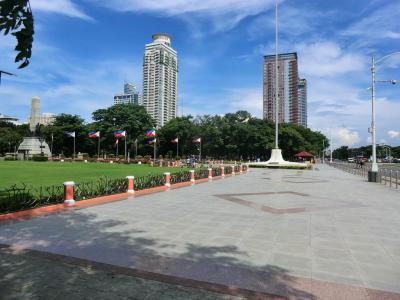
Rizal Park is one of the largest urban parks in Asia. At 140 acres, the park is home to the National Museum Complex, the Rizal Monument, a series of gardens, public art and event venues.
The National Museum Complex consists of the National Museums of Fine Arts, Anthropology and Natural History. This complex is held in a series of buildings that were once part of the Filipino government.
The gardens in Rizal Park are in a variety of styles. Including among these gardens are the Orchidarium and Butterfly Pavilion, Japanese Garden and Chinese Garden. The Children's Playground offer multi-color slides, swings and climbing structures.
The Rizal Monument is a memorial and the final resting place of Filipino nationalist, Jose Rizal. The monument is an obelisk that holds Rizal's cremated remains, his two novels and a statue in his honor. The monument is arguably the most famous sculptural landmark in the Philippines.
The National Museum Complex consists of the National Museums of Fine Arts, Anthropology and Natural History. This complex is held in a series of buildings that were once part of the Filipino government.
The gardens in Rizal Park are in a variety of styles. Including among these gardens are the Orchidarium and Butterfly Pavilion, Japanese Garden and Chinese Garden. The Children's Playground offer multi-color slides, swings and climbing structures.
The Rizal Monument is a memorial and the final resting place of Filipino nationalist, Jose Rizal. The monument is an obelisk that holds Rizal's cremated remains, his two novels and a statue in his honor. The monument is arguably the most famous sculptural landmark in the Philippines.
2) Baluarte de San Diego
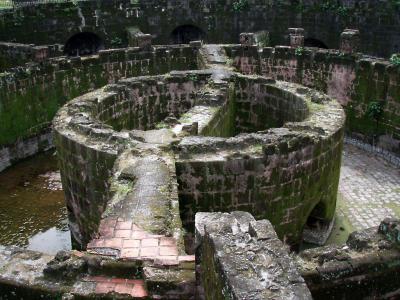
Baluarte de San Diego is a bastion that was built on the southwestern corner of Intramuros, the walled city of the Philippines. The structure dates to the 16th century.
The bastion was meant to be part of a much larger fort, which was not completed. The bastion itself includes an outward projecting face and flanks that would have connected the bastion's face to the curtain wall.
Though it was built in 1587, the structure was altered many times over the years. These changes were documented in writings by Antonio de Morga. They were also evidenced by the archaeological excavation that uncovered the Baluarte de San Diego. That excavation began in 1979 and was completed in 1982.
The small park containing the Baluarte de San Diego includes gardens, landmarks, monuments and fountains.
The bastion was meant to be part of a much larger fort, which was not completed. The bastion itself includes an outward projecting face and flanks that would have connected the bastion's face to the curtain wall.
Though it was built in 1587, the structure was altered many times over the years. These changes were documented in writings by Antonio de Morga. They were also evidenced by the archaeological excavation that uncovered the Baluarte de San Diego. That excavation began in 1979 and was completed in 1982.
The small park containing the Baluarte de San Diego includes gardens, landmarks, monuments and fountains.
3) San Agustin Church - Intramuros (must see)
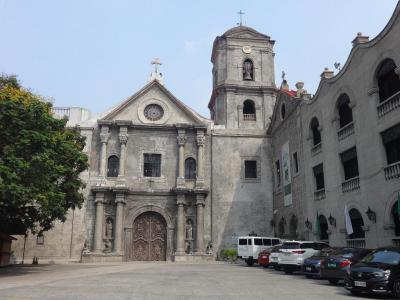
Behind the wall of the Intramuros, the oldest walled city within Manila is one of the oldest surviving churches of the country. The San Agustin Church, built by the Spanish during their colonial reign, represents the city’s rich and vibrant past.
The San Agustin Church has come a long way since its inception in 1607. Initially built with bamboo and wood in the early 16th century, the structure was razed due to a fire and was reconstructed with wood, which also failed to survive. It was then that the Augustinians decided to build a solid structure made out of stone, with an adjacent monastery. Based on the design by architect, Juan Macías, construction started off in 1586. Although, the project started with zeal and enthusiasm, the same spirit was not seen with the inflow of funds. Construction took more than 2 decades and by the time it was completed, the Church lost its chief designer Macias.
Despite having a shaky start, the San Agustin Church had a very eventful history. Plundered by the British forces in the 18th century, the Church miraculously survived many devastating earthquakes that had left the city of Manila in shambles. As a matter of fact, the San Agustin Church was the only public building to survive the massive earthquake of 1863.
The San Agustin Church has come a long way since its inception in 1607. Initially built with bamboo and wood in the early 16th century, the structure was razed due to a fire and was reconstructed with wood, which also failed to survive. It was then that the Augustinians decided to build a solid structure made out of stone, with an adjacent monastery. Based on the design by architect, Juan Macías, construction started off in 1586. Although, the project started with zeal and enthusiasm, the same spirit was not seen with the inflow of funds. Construction took more than 2 decades and by the time it was completed, the Church lost its chief designer Macias.
Despite having a shaky start, the San Agustin Church had a very eventful history. Plundered by the British forces in the 18th century, the Church miraculously survived many devastating earthquakes that had left the city of Manila in shambles. As a matter of fact, the San Agustin Church was the only public building to survive the massive earthquake of 1863.
4) Intramuros
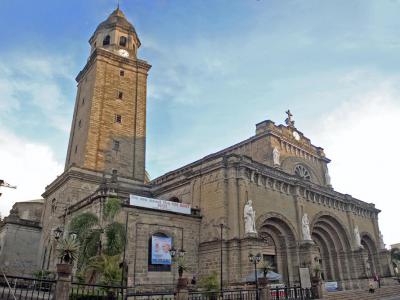
Once a fortified city in the European medieval style, Intramuros is now a distinctive landmark in Asia. Covering an area of 64 hectares, its imposing walls enclose a heritage site that is open to public visits, with unguided tours permitted.
Today, Intramuros consists of a historic district dating back centuries, entirely encompassed by fortifications. During the Spanish Empire, this area was considered the entirety of the City of Manila. Surrounding towns and suburbs beyond the walls, now districts of Manila, were known as extramuros, meaning "outside the walls" in Latin. These were independent towns that became part of Manila only in the early 20th century.
Intramuros served as the administrative center of the Captaincy General of the Philippines, a constituent realm of the Spanish Empire, hosting the governor-general from its establishment in 1571 until 1865, and the Real Audiencia of Manila until the end of Spanish rule during the Philippine Revolution of 1898.
The walled city was also the religious and educational hub of the Spanish East Indies. The original campuses of the University of Santo Tomas, Asia's oldest university, and the Ateneo de Manila were located within Intramuros before relocating in 1927 and 1932 respectively. Today, the area still houses the main campuses of the University of the City of Manila, Colegio de San Juan de Letran, Mapúa University, Philippine Nautical Training Colleges, Colegio de Santa Rosa, and Manila High School. Intramuros was also an economic hub; its port, now Plaza Mexico, was the Asian center of the Manila galleon trade, facilitating the exchange of goods between Manila and Acapulco in present-day Mexico.
Construction of the Spanish walled city began in the late 16th century under orders from the Spanish imperial government. Its purpose was to safeguard the city from foreign invasions, replacing the pre-Hispanic settlement of Maynila along the shores of Manila Bay, near the entrance to the Pasig River.
Today, Intramuros consists of a historic district dating back centuries, entirely encompassed by fortifications. During the Spanish Empire, this area was considered the entirety of the City of Manila. Surrounding towns and suburbs beyond the walls, now districts of Manila, were known as extramuros, meaning "outside the walls" in Latin. These were independent towns that became part of Manila only in the early 20th century.
Intramuros served as the administrative center of the Captaincy General of the Philippines, a constituent realm of the Spanish Empire, hosting the governor-general from its establishment in 1571 until 1865, and the Real Audiencia of Manila until the end of Spanish rule during the Philippine Revolution of 1898.
The walled city was also the religious and educational hub of the Spanish East Indies. The original campuses of the University of Santo Tomas, Asia's oldest university, and the Ateneo de Manila were located within Intramuros before relocating in 1927 and 1932 respectively. Today, the area still houses the main campuses of the University of the City of Manila, Colegio de San Juan de Letran, Mapúa University, Philippine Nautical Training Colleges, Colegio de Santa Rosa, and Manila High School. Intramuros was also an economic hub; its port, now Plaza Mexico, was the Asian center of the Manila galleon trade, facilitating the exchange of goods between Manila and Acapulco in present-day Mexico.
Construction of the Spanish walled city began in the late 16th century under orders from the Spanish imperial government. Its purpose was to safeguard the city from foreign invasions, replacing the pre-Hispanic settlement of Maynila along the shores of Manila Bay, near the entrance to the Pasig River.
5) Cathedral-Basilica (must see)
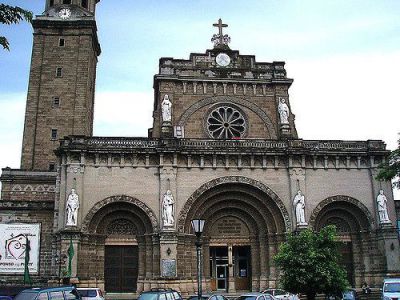
The Cathedral Basilica of the Immaculate Conception or the Manila Metropolitan Cathedral Basilica is one of the most important churches in Manila. Standing poignantly in the Intramuros district of Manila, the Cathedral has looked over the city for over 5 centuries. With its solid Neo-Romanesque architecture, one cannot ignore the almost over powering effect it has on its visitors and passersby. This is one of the many reasons that the Cathedral is one of the most famous venues for many locals as well as foreigners to share nuptials vows.
Despite its reputation and opulence, the Cathedral has had a very turbulent past. Although the Church has been on site since the early 16th century, the structure has changed several times over the years. The present, being the eighth reincarnated version of the original structure! The Cathedral was destroyed by earthquakes and terrible fires, but despite that, it has always managed to maintain that special possession not only in the city’s skyline, but also the hearts of the denizens.
With the Cathedral and the city having the same patroness, the Virgin Mary, the Metropolitan Cathedral Basilica is also the highest seat for the Archbishop of the country.
Despite its reputation and opulence, the Cathedral has had a very turbulent past. Although the Church has been on site since the early 16th century, the structure has changed several times over the years. The present, being the eighth reincarnated version of the original structure! The Cathedral was destroyed by earthquakes and terrible fires, but despite that, it has always managed to maintain that special possession not only in the city’s skyline, but also the hearts of the denizens.
With the Cathedral and the city having the same patroness, the Virgin Mary, the Metropolitan Cathedral Basilica is also the highest seat for the Archbishop of the country.
6) Binondo (Chinatown) (must see)
Binondo, established in 1594, is the oldest Chinatown in the world. It was established for Chinese residents during Spanish rule. The goal was both to have a space for the Spanish to confine Chinese immigrants and also to facilitate converting Chinese to Catholicism.
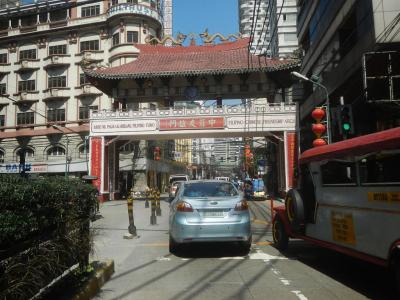
Binondo offers a number of unique and fascinating sites for visitors to the Philippines. Among these sites are the Plaza San Lorenzo Ruiz, Binondo Church, the Chinatown Arch and Jones Bridge.
Visitors hoping to find unique souvenirs while in the Philippines should visit Ongpin Street. There are numerous drugstores and shopping malls. Cafes that are largely geared toward tourists also line the street.
Escolta Street, just beyond the New Binondo Chinatown Arch (not to be confused with the Filipino-Chinese Friendship Arch), is an excellent spot to find authentic food. Escolta is also one of the oldest streets in Manila. Visitors can look for the First United Building, which is one of the few art deco style buildings in Manila. Other buildings to look for are the beaux arts-style Calvo and Natividad Buildings as well as the 1930's Capitol Theatre.
Binondo offers a number of unique and fascinating sites for visitors to the Philippines. Among these sites are the Plaza San Lorenzo Ruiz, Binondo Church, the Chinatown Arch and Jones Bridge.
Visitors hoping to find unique souvenirs while in the Philippines should visit Ongpin Street. There are numerous drugstores and shopping malls. Cafes that are largely geared toward tourists also line the street.
Escolta Street, just beyond the New Binondo Chinatown Arch (not to be confused with the Filipino-Chinese Friendship Arch), is an excellent spot to find authentic food. Escolta is also one of the oldest streets in Manila. Visitors can look for the First United Building, which is one of the few art deco style buildings in Manila. Other buildings to look for are the beaux arts-style Calvo and Natividad Buildings as well as the 1930's Capitol Theatre.
