Custom Walk in Aarhus, Denmark by kris_verbeeck_279ae created on 2025-07-16
Guide Location: Denmark » Aarhus
Guide Type: Custom Walk
# of Sights: 11
Tour Duration: 3 Hour(s)
Travel Distance: 7 Km or 4.3 Miles
Share Key: BZYLP
Guide Type: Custom Walk
# of Sights: 11
Tour Duration: 3 Hour(s)
Travel Distance: 7 Km or 4.3 Miles
Share Key: BZYLP
How It Works
Please retrieve this walk in the GPSmyCity app. Once done, the app will guide you from one tour stop to the next as if you had a personal tour guide. If you created the walk on this website or come to the page via a link, please follow the instructions below to retrieve the walk in the app.
Retrieve This Walk in App
Step 1. Download the app "GPSmyCity: Walks in 1K+ Cities" on Apple App Store or Google Play Store.



Step 2. In the GPSmyCity app, download(or launch) the guide "Aarhus Map and Walking Tours".
Step 3. Tap the menu button located at upper right corner of the "Walks" screen and select "Retrieve custom walk". Enter the share key: BZYLP
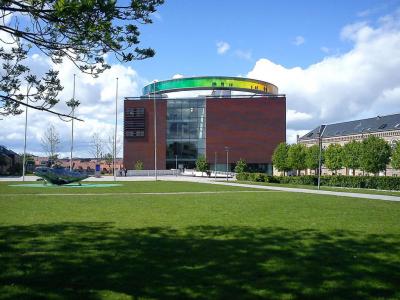
1) ARos Aarhus Kunstmuseum (ARoS Aarhus Art Mseum) (must see)
ARoS Aarhus Art Museum was first established in 1859. A new building was constructed in 2004 to provide space to the various exhibitions. The 10-story tall building was designed by architects Schmidt Hammer Lassen in a Modern architectural style. ARoS Aarhus Art Museum is now one of the largest art museums in Northern Europe.
The museum offers permanent and changing exhibitions. It also has a gift shop, a cafe and a restaurant. One of the most popular features of ARoS Aarhus Art Museum is the skywalk. Your Rainbow, crafted by Olafur Eliasson, offers a 360-degree view. It allows patrons to walk through the art installation and become part of the rainbow.
The permanent exhibit at ARoS Aarhus Art Museum includes art from the Danish Golden Age as well as from artists like Andy Warhol and Roy Lichtenstein. Revolving exhibits feature art, architecture and historical artifacts.
The museum offers permanent and changing exhibitions. It also has a gift shop, a cafe and a restaurant. One of the most popular features of ARoS Aarhus Art Museum is the skywalk. Your Rainbow, crafted by Olafur Eliasson, offers a 360-degree view. It allows patrons to walk through the art installation and become part of the rainbow.
The permanent exhibit at ARoS Aarhus Art Museum includes art from the Danish Golden Age as well as from artists like Andy Warhol and Roy Lichtenstein. Revolving exhibits feature art, architecture and historical artifacts.
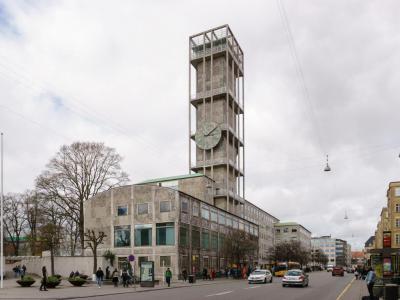
2) Aarhus City Hall
Aarhus City Hall was completed in 1941 from a design by architects Arne Jacobsen and Erik Moller. It was designed to replace the Old City Hall, built in 1857, which is now home to the Museum of Women's History.
The building includes a 196-foot tall tower and a tower clock with a face that is almost 23-feet wide. The city hall is made with concrete plated with grey marble imported from Porsgrunn in Norway. Architectural details are completed on the exterior in copper that has since been covered in verdigris.
The entrance of the Aarhus City Hall is in the City Hall Park. The park includes a cobbled plaza and an avenue lined in linden trees. City Hall Square offers a fountain and a sculpture known as Ceres Bronden.
The interior of the city hall has oak parquet floors, patterned ceramic tiles, glass walls and a large number of brass and bronze accents. Visitors can take guided tours inside the city hall on Tuesdays, Thursdays and Saturdays.
The building includes a 196-foot tall tower and a tower clock with a face that is almost 23-feet wide. The city hall is made with concrete plated with grey marble imported from Porsgrunn in Norway. Architectural details are completed on the exterior in copper that has since been covered in verdigris.
The entrance of the Aarhus City Hall is in the City Hall Park. The park includes a cobbled plaza and an avenue lined in linden trees. City Hall Square offers a fountain and a sculpture known as Ceres Bronden.
The interior of the city hall has oak parquet floors, patterned ceramic tiles, glass walls and a large number of brass and bronze accents. Visitors can take guided tours inside the city hall on Tuesdays, Thursdays and Saturdays.
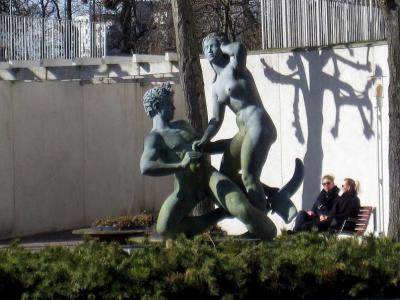
3) Agnete and the Merman
"Agnete and the Merman" (Agnete og Havmanden) is a notable bronze sculpture and fountain situated near the Aarhus City Hall in Park Allé, Aarhus. This intriguing work was sculpted by the Danish artist Johannes Clausen Bjerg and finished in 1940. Inspired by the dramatic and elongated forms characteristic of El Greco's paintings, Bjerg's sculpture offers a robust and slightly exaggerated depiction of human figures, enhancing the drama and motion embodied in the fountain's design.
The sculpture tells the story of Agnete, a woman from Danish folklore, who is seduced by a merman and lives with him under the sea. This narrative is captured in a traditional folk song and has been the subject of literary exploration by notable Danish writers like Adam Oehlenschläger and Hans Christian Andersen. In the sculpture, Agnete's love and eventual departure from the merman and their children are poignantly depicted, adding a layer of emotional depth and cultural resonance to the work.
Originally intended for placement at a swimming pool, the sculpture was instead unveiled on July 1, 1941, at its current location south of the newly built town hall. The sculpture has undergone several renovations, notably in 1955 and again in 1993 when it was temporarily moved to Copenhagen for restoration.
"Agnete and the Merman" is more than just a piece of public art; it actively participates in the cultural life of Aarhus. It is a popular site for city events, especially attracting new students and residents who often celebrate summer by bathing in its fountain, sometimes playfully adding bubble baths. This vibrant engagement with the local community underscores the sculpture's enduring appeal and its role as a focal point in Aarhus's cultural and social activities.
The sculpture tells the story of Agnete, a woman from Danish folklore, who is seduced by a merman and lives with him under the sea. This narrative is captured in a traditional folk song and has been the subject of literary exploration by notable Danish writers like Adam Oehlenschläger and Hans Christian Andersen. In the sculpture, Agnete's love and eventual departure from the merman and their children are poignantly depicted, adding a layer of emotional depth and cultural resonance to the work.
Originally intended for placement at a swimming pool, the sculpture was instead unveiled on July 1, 1941, at its current location south of the newly built town hall. The sculpture has undergone several renovations, notably in 1955 and again in 1993 when it was temporarily moved to Copenhagen for restoration.
"Agnete and the Merman" is more than just a piece of public art; it actively participates in the cultural life of Aarhus. It is a popular site for city events, especially attracting new students and residents who often celebrate summer by bathing in its fountain, sometimes playfully adding bubble baths. This vibrant engagement with the local community underscores the sculpture's enduring appeal and its role as a focal point in Aarhus's cultural and social activities.
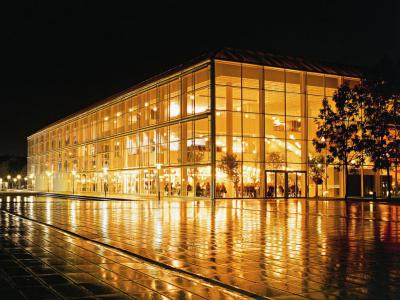
4) Concert Hall
The Concert Hall in Aarhus stands as Scandinavia's largest concert venue and a beacon of cultural vibrancy. Officially opened in 1982, this architectural gem was designed by the local firm Kjær & Richter and later expanded in 2007 to include additional halls and facilities by another local firm, C.F. Møller. Today, it spans an impressive 35,000 square meters, featuring nine concert halls, six stages, and 500 rooms, making it a central hub for musical and cultural education.
Home to the Royal Academy of Music in Aarhus, the Aarhus Symphony Orchestra, and the Danish National Opera, the Concert Hall enriches the musical landscape of the region. It hosts an astounding array of over 1,500 events annually, drawing up to a million guests each year. The diverse programming includes everything from pop, rock, and opera to baroque music, featuring both student performers and international stars.
Not just a venue for music, the Concert Hall of Aarhus offers a wide range of live experiences designed to evoke every emotion-from laughter to tears. Its lineup includes children’s shows, musicals, comedy, dance, theater, and more, alongside traditional concert performances. It also serves as a versatile space for meetings, business events, and conferences. Visitors can enjoy the free activities available, dine at the onsite café, or explore the flavors of the brasserie and cocktail bar, Maestro.
Over the years, the Concert Hall has hosted an impressive list of performers, including Bob Dylan, The Beach Boys, Tina Turner, and Placido Domingo, among others. This rich history of distinguished performances solidifies its reputation as not only a local cultural center but also an important venue on the international music scene.
Home to the Royal Academy of Music in Aarhus, the Aarhus Symphony Orchestra, and the Danish National Opera, the Concert Hall enriches the musical landscape of the region. It hosts an astounding array of over 1,500 events annually, drawing up to a million guests each year. The diverse programming includes everything from pop, rock, and opera to baroque music, featuring both student performers and international stars.
Not just a venue for music, the Concert Hall of Aarhus offers a wide range of live experiences designed to evoke every emotion-from laughter to tears. Its lineup includes children’s shows, musicals, comedy, dance, theater, and more, alongside traditional concert performances. It also serves as a versatile space for meetings, business events, and conferences. Visitors can enjoy the free activities available, dine at the onsite café, or explore the flavors of the brasserie and cocktail bar, Maestro.
Over the years, the Concert Hall has hosted an impressive list of performers, including Bob Dylan, The Beach Boys, Tina Turner, and Placido Domingo, among others. This rich history of distinguished performances solidifies its reputation as not only a local cultural center but also an important venue on the international music scene.
5) Godsbanen
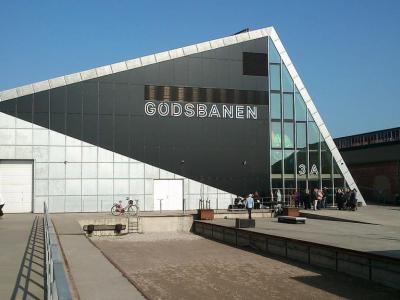
Godsbanen (Goods Station) in Aarhus is a cultural hub that has been operational since 2012, situated at the site of the former Aarhus Goods Station, which served from 1923 to 2000. Located at the terminus of a broad sidetrack from the central railway yard of Aarhus, the site embodies a blend of historical architecture and modern cultural life. Realdania, in partnership with Aarhus Municipality, announced in December 2010 the transformation of a former goods station into a cultural center.
Originally, the goods station moved from Aarhus Central Station to Mølleengen by the Aarhus River in the late 1890s. Construction began in 1920 on Skovgaardsgade, led by architect Heinrich Wenck. The main building, completed in 1922, features Neo-Baroque architecture with a red brick facade and distinctive roofline. By 1925, the site had added warehouses and a functional shunting yard, undergoing several modifications over the years.
Renovation of the site started in 2009, leading to the refurbishment of the warehouses and the construction of a new building linking them. This collection of old and new structures officially opened as Godsbanen Cultural Centre on March 30, 2012. It hosts a diverse range of cultural activities, including theater, dance, music, film, art exhibitions, printing, workshops, festivals, and business networking events, catering to the cultural needs of both the local community and the surrounding regions.
A central feature of Godsbanen has been its dining facilities, which have undergone several changes in ownership and concept since its opening. The most recent, Spiselauget, like its predecessors, focuses on sustainability and uses organic, seasonal, and local produce. This aligns with the cultural center's broader commitment to community engagement and environmental responsibility.
Today, Godsbanen stands as a testament to successful urban regeneration, blending historical preservation with contemporary cultural innovation, making it a key landmark in Aarhus's cultural and architectural landscape.
Originally, the goods station moved from Aarhus Central Station to Mølleengen by the Aarhus River in the late 1890s. Construction began in 1920 on Skovgaardsgade, led by architect Heinrich Wenck. The main building, completed in 1922, features Neo-Baroque architecture with a red brick facade and distinctive roofline. By 1925, the site had added warehouses and a functional shunting yard, undergoing several modifications over the years.
Renovation of the site started in 2009, leading to the refurbishment of the warehouses and the construction of a new building linking them. This collection of old and new structures officially opened as Godsbanen Cultural Centre on March 30, 2012. It hosts a diverse range of cultural activities, including theater, dance, music, film, art exhibitions, printing, workshops, festivals, and business networking events, catering to the cultural needs of both the local community and the surrounding regions.
A central feature of Godsbanen has been its dining facilities, which have undergone several changes in ownership and concept since its opening. The most recent, Spiselauget, like its predecessors, focuses on sustainability and uses organic, seasonal, and local produce. This aligns with the cultural center's broader commitment to community engagement and environmental responsibility.
Today, Godsbanen stands as a testament to successful urban regeneration, blending historical preservation with contemporary cultural innovation, making it a key landmark in Aarhus's cultural and architectural landscape.
6) Aarhus Botanical Gardens
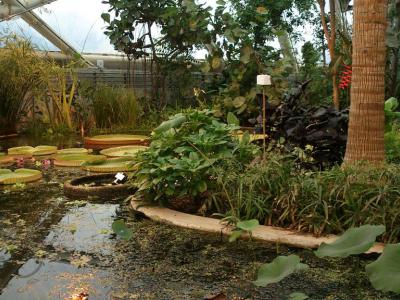
The Aarhus Botanical Gardens, nestled just west of Den Gamle By-the Urban Museum in central Aarhus, offers a verdant retreat open year-round. Established in 1873 initially for experimental cultivation of fruit trees and beneficial plants, the Gardens have evolved into The Garden Society of Jutland. This transformation marked a dedication to enhancing private gardens with robust and worthy plant varieties, underscoring a deep-rooted commitment to horticulture and ecological preservation.
Visitors to the Gardens can explore a rich tapestry of native Danish flora arranged according to their natural habitats. This organized display not only educates about regional botany but also showcases the diversity within Denmark's landscapes. Moreover, a special section dedicated to medicinal plants offers insights into the traditional and contemporary uses of various herbs.
Adding an international dimension, the central rockery presents a collection of mountain plants from around the globe, creating a striking contrast with the local species. This global aspect highlights the botanical variety and adaptability of alpine flora.
The Botanical Gardens are thoughtfully designed with visitor comfort in mind. Scattered throughout the area are tables and benches, some equipped with metal plates for disposable grills, making it a perfect spot for picnics. Environmentally conscious facilities ensure that visitors can grill and dine amidst nature without harming it.
The presence of the Hessel Brook adds a dynamic water element to the serene landscape. This brook, a continuation of the Aarhus and Egaa Streams, carves through the garden, enhancing its picturesque setting and providing a soothing backdrop.
With theme beds, bogs, beech woods, and dunes, the Gardens offer a comprehensive glimpse into various ecological systems and plant arrangements. Each visit can be both a tranquil retreat and an educational journey, reflecting the Garden’s historical mission and its ongoing contribution to botanical knowledge and environmental stewardship in Aarhus.
Visitors to the Gardens can explore a rich tapestry of native Danish flora arranged according to their natural habitats. This organized display not only educates about regional botany but also showcases the diversity within Denmark's landscapes. Moreover, a special section dedicated to medicinal plants offers insights into the traditional and contemporary uses of various herbs.
Adding an international dimension, the central rockery presents a collection of mountain plants from around the globe, creating a striking contrast with the local species. This global aspect highlights the botanical variety and adaptability of alpine flora.
The Botanical Gardens are thoughtfully designed with visitor comfort in mind. Scattered throughout the area are tables and benches, some equipped with metal plates for disposable grills, making it a perfect spot for picnics. Environmentally conscious facilities ensure that visitors can grill and dine amidst nature without harming it.
The presence of the Hessel Brook adds a dynamic water element to the serene landscape. This brook, a continuation of the Aarhus and Egaa Streams, carves through the garden, enhancing its picturesque setting and providing a soothing backdrop.
With theme beds, bogs, beech woods, and dunes, the Gardens offer a comprehensive glimpse into various ecological systems and plant arrangements. Each visit can be both a tranquil retreat and an educational journey, reflecting the Garden’s historical mission and its ongoing contribution to botanical knowledge and environmental stewardship in Aarhus.
7) Aarhus University
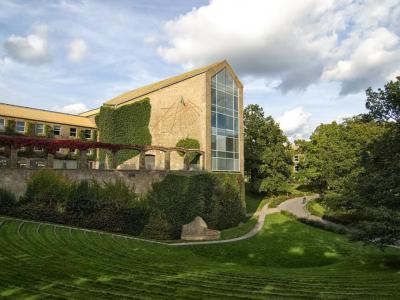
Aarhus University (Aarhus Universitet), founded in 1928, is a prominent public research university located in Aarhus. It is recognized as the largest and the second-oldest university in the country. The university is a member of several prestigious international and European academic associations such as the Coimbra Group, the Guild, the Utrecht Network, and the European University Association, underlining its significant role in the global academic community.
The university's academic structure includes five faculties-Arts, Natural Sciences, Technical Sciences, Health, and Business and Social Sciences-spanning twenty-seven departments. This broad spectrum of disciplines supports a rich environment for research and education, evident in its thirty internationally recognized research centers and fifteen Centres of Excellence funded by the Danish National Research Foundation.
Aarhus University has achieved international acclaim, being ranked among the top 100 universities worldwide. It is also noted for its aesthetic appeal, having been ranked in the top 10 of the most beautiful universities in Europe by Times Higher Education in 2018.
The university has an impressive list of alumni who have made significant contributions in various fields. Notable figures include Bjarne Stroustrup, the inventor of the C++ programming language; Queen Margrethe II of Denmark; Crown Prince Frederik of Denmark; and Anders Fogh Rasmussen, a former Prime Minister of Denmark and Secretary General of NATO. Additionally, the university has ties to Nobel Laureates such as Jens Christian Skou (Chemistry, 1997), who conducted his award-winning research on the Na/K-ATPase at the university, as well as Trygve Haavelmo (Economics, 1989), and Dale T. Mortensen (Economics, 2010), enhancing its reputation as a center of scholarly excellence.
The university's academic structure includes five faculties-Arts, Natural Sciences, Technical Sciences, Health, and Business and Social Sciences-spanning twenty-seven departments. This broad spectrum of disciplines supports a rich environment for research and education, evident in its thirty internationally recognized research centers and fifteen Centres of Excellence funded by the Danish National Research Foundation.
Aarhus University has achieved international acclaim, being ranked among the top 100 universities worldwide. It is also noted for its aesthetic appeal, having been ranked in the top 10 of the most beautiful universities in Europe by Times Higher Education in 2018.
The university has an impressive list of alumni who have made significant contributions in various fields. Notable figures include Bjarne Stroustrup, the inventor of the C++ programming language; Queen Margrethe II of Denmark; Crown Prince Frederik of Denmark; and Anders Fogh Rasmussen, a former Prime Minister of Denmark and Secretary General of NATO. Additionally, the university has ties to Nobel Laureates such as Jens Christian Skou (Chemistry, 1997), who conducted his award-winning research on the Na/K-ATPase at the university, as well as Trygve Haavelmo (Economics, 1989), and Dale T. Mortensen (Economics, 2010), enhancing its reputation as a center of scholarly excellence.
8) Aarhus Cathedral (must see)
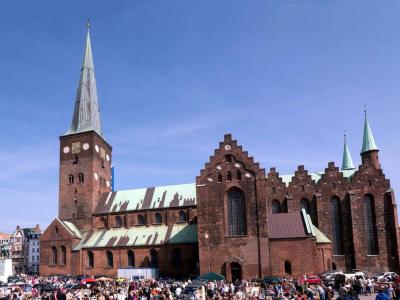
Aarhus Cathedral is a Church of Denmark cathedral that was previously a part of the Roman Catholic church. The Gothic and Romanesque cathedral was completed in 1300 and dedicated to Saint Clement, the patron saint of sailors.
Construction of the church started around 1190. It was built around Saint Clement's church, a timber church built in 1102. The Romanesque architectural style included half-rounded arches, a flat timber ceiling and four chapels.
The cathedral suffered great damage in 1330 when a fire burned much of Aarhus. It was abandoned until 1449 when it was renovated and enlarged. The new design of the church used Gothic vaulting with high windows and a lengthened nave. It is now both the tallest and longest church in Denmark at 305 feet long and 315 feet high. The current, 314-foot tower was built in 1931.
There are more frescoes in Aarhus Cathedral than in any church in the country. They were painted between 1470 and 1520. Likewise, the painting of Saint Christopher and Saint Clement are the tallest in Denmark. The cathedral's one stained glass window was created by Emanuel Vigeland in 1926. At almost 46-feet tall, it is the largest stained glass window in Denmark.
Construction of the church started around 1190. It was built around Saint Clement's church, a timber church built in 1102. The Romanesque architectural style included half-rounded arches, a flat timber ceiling and four chapels.
The cathedral suffered great damage in 1330 when a fire burned much of Aarhus. It was abandoned until 1449 when it was renovated and enlarged. The new design of the church used Gothic vaulting with high windows and a lengthened nave. It is now both the tallest and longest church in Denmark at 305 feet long and 315 feet high. The current, 314-foot tower was built in 1931.
There are more frescoes in Aarhus Cathedral than in any church in the country. They were painted between 1470 and 1520. Likewise, the painting of Saint Christopher and Saint Clement are the tallest in Denmark. The cathedral's one stained glass window was created by Emanuel Vigeland in 1926. At almost 46-feet tall, it is the largest stained glass window in Denmark.
9) Bispetorv (Bishop's Square)
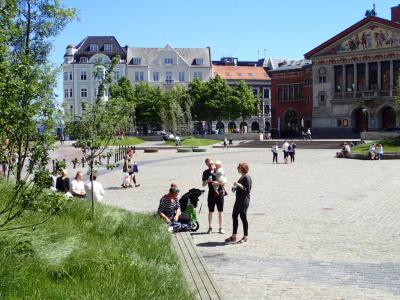
Bishop's Square is a city square near Aarhus Cathedral. It is also located near other well known attractions in Aarhus like the Aarhus Theatre, the Viking Museum and the Latin Quarter neighborhood. It is a wide, open square with plenty of room to roam on the cobbled ground or take advantage of shade from the trees along the southern wall.
The square was renovated in 2016 to create a public space that is used for concerts and gatherings. Prior to this, the square was used as a parking lot. However, it holds a much more important a place in the history of Aarhus.
In the late first century, Bishop's Square was a pagan burial site. Later, it was the seat of the Diocese of Aarhus. Aarhus Cathedral was built near the burial site, which turned the area into a spot that was largely dominated by the clergy. The land was purchased by the city of Aarhus in 1881.
An archaeological dig of the site in the 1960s uncovered many items from the Viking Age and they are now displayed in the Viking Museum near the square.
Bishop's Square is home to a statue of King Christian X atop a horse. During the German occupation of Denmark, Christian became a popular symbol of resistance. He used to ride daily through the streets of Copenhagen unaccompanied by guards and people stood and waved to him. The large statue is located in the grassy area northwest of the open square.
The square was renovated in 2016 to create a public space that is used for concerts and gatherings. Prior to this, the square was used as a parking lot. However, it holds a much more important a place in the history of Aarhus.
In the late first century, Bishop's Square was a pagan burial site. Later, it was the seat of the Diocese of Aarhus. Aarhus Cathedral was built near the burial site, which turned the area into a spot that was largely dominated by the clergy. The land was purchased by the city of Aarhus in 1881.
An archaeological dig of the site in the 1960s uncovered many items from the Viking Age and they are now displayed in the Viking Museum near the square.
Bishop's Square is home to a statue of King Christian X atop a horse. During the German occupation of Denmark, Christian became a popular symbol of resistance. He used to ride daily through the streets of Copenhagen unaccompanied by guards and people stood and waved to him. The large statue is located in the grassy area northwest of the open square.
10) Dokk1
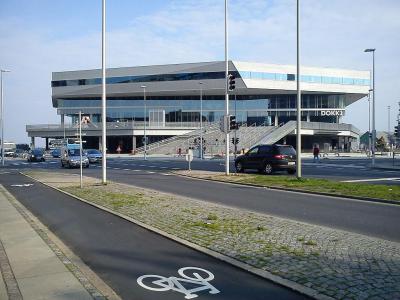
Dokk1 in Aarhus serves as a multifunctional space combining a government building, public library, and culture center. This iconic facility is situated at Hack Kampmanns Plads in the city's waterfront area, near the Custom House.
Designed by the renowned Schmidt Hammer Lassen Architects along with landscape architect Kristine Jensen, the construction of Dokk1 was managed by NCC AB. The groundwork began on June 8, 2011, and the facility was officially opened on June 20, 2015. The name "Dokk1," chosen through a public contest in the autumn of 2012, reflects its harborside location and history, suggesting "The Dock" or "Dock One."
The structure itself is a striking architectural achievement, characterized by its Neo-futuristic design resembling a heptagonal metal disc atop a glass prism. This design not only enhances its aesthetic appeal but also ensures transparency, allowing unobstructed views of the surrounding harbor, bay, forest, and cityscape. The building spans 60,000 square meters in total floor space, with the library occupying 17,500 square meters and another 10,500 square meters leased to businesses.
Dokk1's offerings include the Aarhus Main Library, municipal public services, various business spaces, theater scenes, and even a large automated parking garage. This eclectic mix of uses underscores a broader trend in Denmark of blending cultural, commercial, and municipal functionalities under one roof. Overall, Dokk1 stands as a testament to modern architectural innovation and civic utility in urban design.
Designed by the renowned Schmidt Hammer Lassen Architects along with landscape architect Kristine Jensen, the construction of Dokk1 was managed by NCC AB. The groundwork began on June 8, 2011, and the facility was officially opened on June 20, 2015. The name "Dokk1," chosen through a public contest in the autumn of 2012, reflects its harborside location and history, suggesting "The Dock" or "Dock One."
The structure itself is a striking architectural achievement, characterized by its Neo-futuristic design resembling a heptagonal metal disc atop a glass prism. This design not only enhances its aesthetic appeal but also ensures transparency, allowing unobstructed views of the surrounding harbor, bay, forest, and cityscape. The building spans 60,000 square meters in total floor space, with the library occupying 17,500 square meters and another 10,500 square meters leased to businesses.
Dokk1's offerings include the Aarhus Main Library, municipal public services, various business spaces, theater scenes, and even a large automated parking garage. This eclectic mix of uses underscores a broader trend in Denmark of blending cultural, commercial, and municipal functionalities under one roof. Overall, Dokk1 stands as a testament to modern architectural innovation and civic utility in urban design.
11) Kunsthal Aarhus (Aarhus Art Gallery)
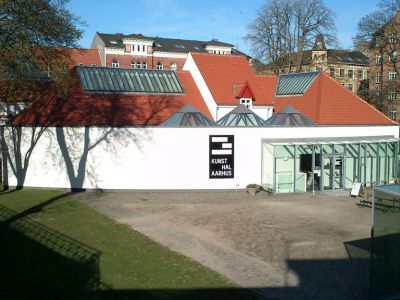
The Aarhus Art Gallery (Kunsthal Aarhus) is a prominent contemporary arts center in Aarhus. Established in 1917 on the initiative of the Aarhus Art Association, which dates back to 1847, the Art Gallery stands as both the sole arts center in Aarhus and one of the oldest in Denmark and Europe. The center was created with the mission to "inspire and promote a general knowledge of the fine arts," a goal that has resonated well with the public and firmly positioned the gallery at the forefront of the international contemporary art scene in Denmark.
Originally designed by the architect Axel Høeg-Hansen, the Art Gallery has undergone several expansions, notably under the guidance of C. F. Møller Architects in the 1990s and 2000s. These expansions have significantly enhanced the gallery's infrastructure, doubling its exhibition space to over 1,000 square meters. This makes it one of Denmark’s largest and most significant venues for contemporary art.
The Art Gallery showcases a diverse range of artistic expressions through solo exhibitions, thematic exhibitions, special exhibitions, and dialogue exhibitions that foster interaction between Danish and foreign artists. The artwork spans various mediums including painting, sculpture, photography, film, and video.
A significant milestone in its evolution came in 2013 with the development of a new visual identity, crafted in collaboration with the Danish design firm Designit. This rebranding marked a pivotal moment in aligning the institution’s rich heritage with its future aspirations, transitioning from its original name "Århus Kunstbygning" (Aarhus Art Building) to "Art Gallery Aarhus" (Kunsthal Aarhus). This change not only reflected a modern aesthetic but also rejuvenated its brand and connection with the community.
Originally designed by the architect Axel Høeg-Hansen, the Art Gallery has undergone several expansions, notably under the guidance of C. F. Møller Architects in the 1990s and 2000s. These expansions have significantly enhanced the gallery's infrastructure, doubling its exhibition space to over 1,000 square meters. This makes it one of Denmark’s largest and most significant venues for contemporary art.
The Art Gallery showcases a diverse range of artistic expressions through solo exhibitions, thematic exhibitions, special exhibitions, and dialogue exhibitions that foster interaction between Danish and foreign artists. The artwork spans various mediums including painting, sculpture, photography, film, and video.
A significant milestone in its evolution came in 2013 with the development of a new visual identity, crafted in collaboration with the Danish design firm Designit. This rebranding marked a pivotal moment in aligning the institution’s rich heritage with its future aspirations, transitioning from its original name "Århus Kunstbygning" (Aarhus Art Building) to "Art Gallery Aarhus" (Kunsthal Aarhus). This change not only reflected a modern aesthetic but also rejuvenated its brand and connection with the community.
